
Animals
The Bactrian camel stands as one of the most iconic desert dwellers on Earth, instantly recognizable by its distinctive twin humps that rise majestically above the arid landscape. These remarkable animals have served humanity for thousands of years, transporting goods and people across some of the world’s harshest environments. With their extraordinary capacity to endure extreme heat, scarce water, and sparse vegetation, Bactrian camels represent a triumph of evolutionary adaptation to one of the planet’s most unforgiving climates.
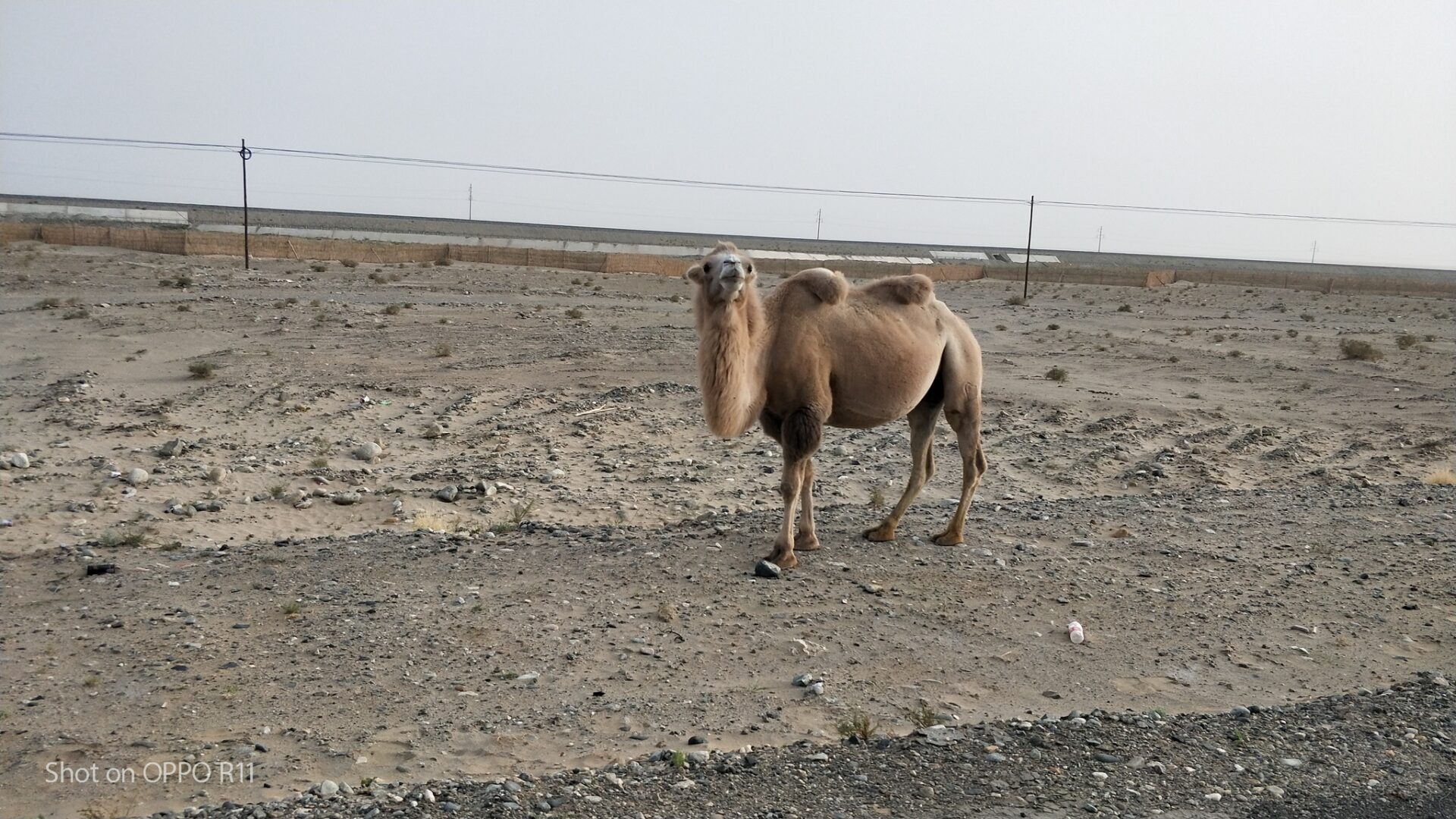
The Bactrian camel’s most striking feature is undoubtedly its pair of large, fatty humps that dominate its silhouette. These humps are not water reservoirs as commonly believed, but rather energy stores composed primarily of fat that the animal can metabolize during periods of scarcity. The body itself is heavily built and muscular, covered in thick, shaggy fur that varies in color from dark brown to tan, with a distinctive darker stripe running along the spine.
These imposing creatures are among the largest land mammals, with adults standing up to 3.5 meters tall at the hump and weighing between 400 to 700 kilograms. Their long, powerful legs are specially adapted for traversing sandy terrain, with broad, two-toed feet that spread to prevent sinking into soft sand. The head is relatively small compared to the body, featuring a distinctive elongated face with a split upper lip, large nostrils that can close to keep out sand and dust, and small, rounded ears set high on the head.
Their coat is particularly thick during winter months, providing insulation against harsh cold, and sheds considerably during warmer seasons. The fur around the neck and shoulders is especially dense, forming a shaggy mane that gives the animal an even more imposing appearance. Both males and females possess a single hump, distinguishing them from their single-humped dromedary cousins.
Bactrian camels are fundamentally social animals that typically move through their desert habitats in small herds, though they may gather in larger groups when water sources become available. Their daily routine is largely dictated by the extreme temperatures of their environment—they are most active during the cooler hours of early morning and late afternoon, seeking shelter or remaining relatively stationary during the scorching midday heat. This crepuscular activity pattern allows them to maximize foraging time while minimizing water loss through perspiration.
These animals demonstrate remarkable behavioral flexibility and intelligence, capable of learning routes to distant water sources and remembering them for years. They have been observed traveling up to 50 kilometers in a single day when necessary to reach water, then drinking enormous quantities—up to 135 liters in a single session—to replenish their reserves. Their ability to tolerate dehydration is extraordinary; they can lose up to 40 percent of their body weight in water without suffering fatal consequences, a capacity that would be lethal to most mammals.
Notable behavior: Bactrian camels communicate through a variety of vocalizations including grunts, snorts, and loud roars, particularly during the breeding season when males become notably more aggressive and territorial. They also employ body language, using their ears, tails, and posture to convey mood and intent to other herd members. Their temperament, while generally calm and docile when well-treated, can become unpredictable during the breeding season, when males may become dangerously aggressive toward rivals.
Historically native to the steppes and deserts of Central Asia, Bactrian camels today are found across a vast geographic range spanning from the Gobi Desert in Mongolia and China through Kazakhstan, Kyrgyzstan, and Tajikistan, extending westward into Iran, Afghanistan, and Uzbekistan. GBIF records document their presence across this expansive territory, with populations scattered throughout the arid and semi-arid regions of these countries. The species has also been introduced to various locations worldwide, including parts of Russia, the United States, and Europe, where they are maintained in zoos, wildlife parks, and private collections.
In their natural habitat, Bactrian camels occupy desert and steppe ecosystems characterized by sparse vegetation, extreme temperature fluctuations, and limited water availability. They are supremely adapted to elevations ranging from sea level to over 2,500 meters in mountainous desert regions. Their distribution reflects their remarkable tolerance for harsh conditions—they thrive in areas where few other large mammals can survive, making them perfectly suited to the challenging environments of Central Asia’s vast desert systems.
As herbivores, Bactrian camels are uniquely adapted to consume vegetation that most other animals find unpalatable or indigestible. Their diet consists primarily of tough, woody plants, thorny shrubs, and sparse grasses that characterize desert and semi-desert environments. They possess a specialized three-chambered stomach similar to other camelids, which allows them to extract maximum nutrition from fibrous plant material through a process of regurgitation and re-mastication, much like cattle and other ruminants.
These remarkable browsers can reach vegetation at heights inaccessible to other herbivores, using their long necks and split upper lips to grasp and manipulate thorny plants that would injure less specialized feeders. They consume approximately 5 to 7 kilograms of vegetation daily under normal conditions, though this can be dramatically reduced during periods of scarcity. Their ability to digest and survive on vegetation with minimal water content is extraordinary—they can extract moisture from plants and metabolize their stored fat reserves to produce water, allowing them to go weeks without drinking in extreme circumstances.
Bactrian camels reach sexual maturity at approximately four to five years of age, though males typically do not successfully breed until they are somewhat older and have established dominance within their social hierarchy. The breeding season occurs primarily during the winter months, typically from December through February, when cooler temperatures and slightly increased vegetation provide more favorable conditions for reproduction. During this period, males become noticeably more aggressive, fighting intensely with rivals for access to females, using their powerful necks and bodies to wrestle for dominance.
Females come into estrus during the breeding season and display receptivity to males through specific behavioral cues and pheromone signals. After a successful mating, the female undergoes a gestation period of approximately 13 months, the longest gestation period of any land mammal relative to body size. This extended pregnancy ensures that calves are born well-developed and capable of surviving the harsh desert environment.
A single calf is typically born, weighing around 35 to 40 kilograms, and is capable of standing and nursing within hours of birth. The mother exhibits strong maternal instincts, fiercely protecting her offspring from potential threats and teaching it essential survival skills, including locating water sources and selecting edible vegetation. Calves remain dependent on their mothers for milk for approximately one to two years, though they begin consuming vegetation within weeks of birth. Young camels stay with their mothers and the broader herd for several years, learning critical behaviors and social hierarchies before eventually establishing their own territories or joining bachelor groups.
The global population of Bactrian camels is estimated to be relatively stable, though precise numbers are difficult to determine due to the remote nature of many populations and challenges in conducting comprehensive surveys across their vast range. The species is classified as Vulnerable by conservation authorities, reflecting concerns about habitat degradation, climate change impacts, and the pressures of human development encroaching upon traditional camel lands. In their native Central Asian range, wild populations have declined significantly over the past century due to habitat loss, competition with livestock, and hunting.
A critical distinction exists between domesticated Bactrian camels, which number in the hundreds of thousands across Central Asia and remain economically important to pastoral communities, and wild populations, which are now extremely limited. The truly wild Bactrian camel, found primarily in remote regions of the Gobi Desert, represents a genetically distinct population that is far more endangered than its domesticated counterparts. Conservation efforts focus on protecting remaining wild populations and their habitats, maintaining genetic diversity, and supporting traditional pastoral practices that have sustained these animals for millennia.
Conservation note: Climate change poses an emerging threat to Bactrian camels, as shifting precipitation patterns and increasingly severe droughts stress their already marginal habitats. Protected areas in Mongolia and China provide crucial refuges for wild populations, though these reserves face ongoing pressure from mining operations, infrastructure development, and the expansion of human settlements. International cooperation between range countries is essential for ensuring the long-term survival of this iconic species.
Bactrian camels can drink up to 135 liters of water in a single session—enough to fill a bathtub—and can survive for weeks without drinking by metabolizing the fat stored in their humps into water and energy.
Their split upper lip, called a “cleft lip,” is not just a distinctive feature but a functional adaptation that allows them to grasp and manipulate thorny desert plants with precision while protecting their mouth tissues.
A Bactrian camel’s body temperature can fluctuate by up to 6 degrees Celsius throughout the day, an unusual adaptation that allows them to minimize water loss through sweating and panting during extreme heat.
These camels can close their nostrils and ears completely to keep out sand and dust during desert sandstorms, allowing them to navigate safely through conditions that would be lethal to most animals.
Bactrian camels have been used as military animals for thousands of years, with ancient armies recognizing their superior ability to traverse deserts compared to horses, and they continue to serve in military roles in some Central Asian nations today.
Their broad, two-toed feet act like natural snowshoes, spreading wide to distribute weight evenly across sand and preventing them from sinking, while also providing traction on rocky terrain.
A single Bactrian camel can carry loads of 200 to 300 kilograms for extended distances across desert terrain, making them invaluable to trading caravans and earning them the title “ships of the desert.”
Global Biodiversity Information Facility (GBIF). Camelus bactrianus species records and distribution data. Accessed February 2026.
iNaturalist Community. Bactrian Camel observations and photographs. Accessed February 2026.
International Union for Conservation of Nature (IUCN). Camelus bactrianus assessment and conservation status. IUCN Red List of Threatened Species.
Reading, R. P., & Lhagvasuren, B. (2014). “The ecology and conservation of the Bactrian camel.” Biological Conservation.
Wikidata. Camelus bactrianus taxonomic and natural history information. Accessed February 2026.