Animals
Home »
| Kingdom | Animalia |
|---|---|
| Phylum | Chordata |
| Order | Characiformes |
| Family | Characidae |
| Genus | Pristella |
| Species | Pristella maxillaris |
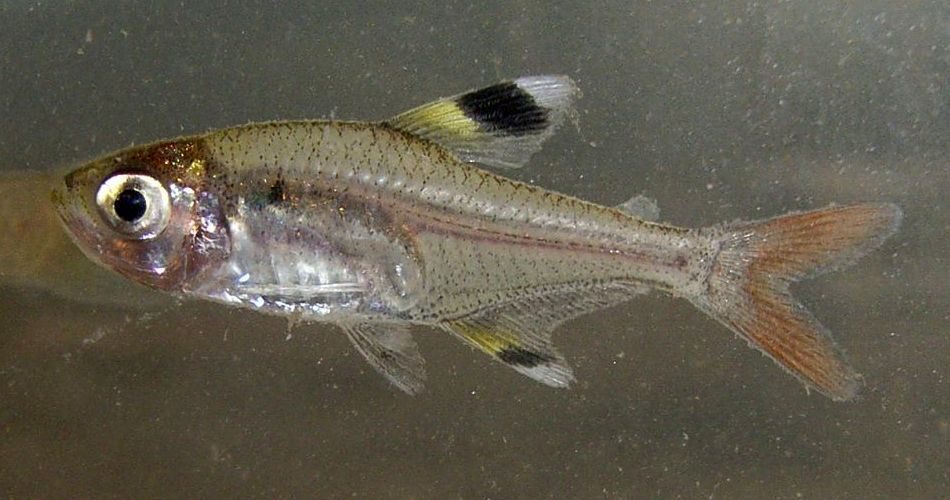
Imagine peering into a freshwater aquarium and witnessing a creature so transparent that you can see straight through its body to the skeletal structures within—a living ghost of silver and shadow. The X-ray tetra (Pristella maxillaris) is one of nature’s most mesmerizing optical illusions, a tiny fish that seems to defy the very laws of camouflage through radical transparency rather than concealment. Native to the slow-moving rivers and tributaries of South America’s northern regions, this remarkable characin has captivated aquarists and scientists alike with its otherworldly appearance and fascinating biology. With over 765 documented observations spanning from its native Guyana and Suriname to aquariums across the globe, the X-ray tetra represents both a window into tropical freshwater ecosystems and a testament to humanity’s enduring fascination with nature’s most unusual designs.
The X-ray tetra is a small fish, typically measuring just 4-5 centimeters in length—small enough to nestle comfortably in the palm of your hand. What makes this species truly extraordinary is not its size, but its remarkable transparency: the body appears almost completely see-through, revealing the delicate silvery organs, bones, and swim bladder beneath translucent flesh.
The fish’s coloration is a masterpiece of subtlety and sophistication:
Identification highlight: The combination of extreme transparency and the characteristic black striping on the dorsal and anal fins makes the X-ray tetra unmistakable among aquarium fish. The yellow coloration in the pectoral fins intensifies during breeding season, offering a subtle visual cue to their reproductive readiness.
Both males and females share this transparent body plan, though females tend to be slightly rounder and fuller-bodied, particularly when gravid with eggs. The sexual dimorphism is subtle—a testament to how evolution has prioritized transparency over the more obvious visual displays seen in many other fish species.
The X-ray tetra is fundamentally a creature of movement and community. In their natural habitat, these fish are schooling species, gathering in groups that can number in the dozens or even hundreds, moving through the water column like a coordinated silver cloud. This social structure isn’t merely a preference—it’s a survival strategy, as the collective vigilance of the group provides protection against predators.
These fish are diurnal foragers, most active during daylight hours when they search methodically through the water column and along vegetation for food. They exhibit a gentle, peaceful demeanor, rarely displaying aggression toward other fish or their own kind. Their movements are characteristically deliberate and graceful, with their translucent bodies seeming to glide through water almost like phantoms.
Notable behavior: In their native waters, X-ray tetras prefer areas with dense aquatic vegetation and slow-moving currents, where they can find shelter and abundant microorganisms. They are excellent indicators of water quality—thriving in clean, well-oxygenated environments and declining in polluted or stagnant waters. This sensitivity makes them valuable biomonitors for freshwater ecosystem health.
The X-ray tetra’s natural range spans the northern regions of South America, with populations documented across Guyana, Suriname, French Guiana, Venezuela, Colombia, and northern Brazil. These fish inhabit the slow-moving tributaries, blackwater streams, and floodplain habitats of the Amazon and Orinoco river basins, preferring areas with dense vegetation and slightly acidic water.
Their distribution reflects a preference for specific environmental conditions: warm tropical temperatures between 23-27°C, slightly acidic to neutral pH levels, and waters rich in organic matter from decomposing vegetation. The species thrives in the twilight zones of flooded forests and stream margins, where dappled light filters through the canopy and vegetation provides both shelter and feeding opportunities. While their native range is restricted to South America, the aquarium trade has introduced X-ray tetras to aquatic systems across the United States, Europe, Africa, and Asia—a global dispersal that speaks to their popularity among fish enthusiasts and their adaptability to captive conditions.
The X-ray tetra is an opportunistic omnivore with a particular fondness for small invertebrates and plant matter. In their natural habitat, these fish spend much of their daylight hours engaged in methodical foraging, using their small, terminal mouths to pluck tiny organisms from the water column and substrate.
Their preferred food sources include:
Feeding adaptation: The X-ray tetra’s small mouth and filter-feeding capabilities make them particularly well-suited for consuming the abundant microorganisms found in their native blackwater streams. In captive settings, they readily accept fine commercial flake foods, micro pellets, and live foods like brine shrimp and daphnia. Their small size means they require frequent, small meals—typically feeding several times daily in their natural environment, consuming whatever small prey items they encounter during their constant foraging movements.
The X-ray tetra reproduces through broadcast spawning, a reproductive strategy where males and females release gametes simultaneously into the water column. Breeding typically occurs during the rainy season in their native habitat, when water levels rise and food becomes abundant—environmental cues that trigger hormonal cascades preparing the fish for reproduction.
Courtship in X-ray tetras is a subtle affair, lacking the elaborate displays seen in many other fish species. Instead, males pursue females with gentle nudging and positioning, encouraging the female to release her eggs while he simultaneously releases sperm to fertilize them. A single female can produce hundreds of tiny eggs during a spawning event, scattering them among vegetation where they adhere to plant surfaces.
Reproductive note: The eggs are extremely small and transparent, hatching within 24-36 hours depending on water temperature. The larvae remain attached to vegetation for several days, living off their yolk sacs before becoming free-swimming. The parents provide no parental care, a common strategy among small characins where the sheer number of offspring produced ensures that some will survive to adulthood despite heavy predation. Sexual maturity is reached within 4-6 months under optimal conditions, allowing populations to recover quickly from environmental disturbances.
The X-ray tetra currently lacks a formal IUCN conservation assessment, though available data suggests populations in their native range remain relatively stable. The species demonstrates remarkable resilience in the face of habitat modification, persisting in degraded streams and even adapting to captive environments with surprising ease.
However, their future is not without concerns. Habitat loss through deforestation, water pollution from agricultural runoff and industrial development, and the collection pressure from the aquarium trade all pose potential threats to wild populations. The species’ preference for specific water conditions—slightly acidic, well-oxygenated streams with abundant vegetation—makes them vulnerable to the broad-scale habitat alterations occurring across the Amazon basin.
Conservation outlook: The good news is that X-ray tetras breed readily in captivity, meaning that populations in the aquarium hobby could potentially serve as genetic reservoirs if wild populations face severe declines. Their presence in millions of aquariums worldwide has created an unexpected conservation benefit: a distributed, redundant population that could theoretically be used for reintroduction efforts. Sustainable collection practices and habitat protection in key river systems remain essential for ensuring that this transparent wonder continues to thrive in its native waters for generations to come.
Transparent anatomy lesson: The X-ray tetra’s transparency is so complete that scientists can study its internal organs without dissection—the fish essentially serves as a living anatomy textbook, allowing researchers to observe organ development, digestion, and reproductive cycles in real time.
Ancient evolutionary strategy: This radical transparency likely evolved as a predator-avoidance mechanism in the dimly lit waters of the Amazon, where being invisible is far more effective than being camouflaged—a strategy so successful that it has remained virtually unchanged for millions of years.
Aquarium superstars: X-ray tetras are among the most popular aquarium fish in the world, with millions bred in captivity annually, making them one of the few fish species whoseive population likely exceeds its wild population many times over.
Schooling synchronization: These fish display remarkable coordination when moving in groups, with individuals maintaining precise distances from their neighbors and responding instantaneously to the movements of nearby fish—a behavior that confuses predators and improves feeding efficiency.
Bioaccumulation indicators: Scientists use X-ray tetras to monitor water quality and detect bioaccumulation of heavy metals and pollutants, as their transparent bodies make it possible to observe discoloration or damage to internal organs caused by contamination.
Temperature sensitivity: Despite their resilience, X-ray tetras are surprisingly sensitive to rapid temperature fluctuations, thriving best in stable conditions between 23-27°C—a preference that reflects their origin in the thermally stable waters of tropical river systems.
Longevity in captivity: With proper care, X-ray tetras can live 5-6 years in aquariums, an impressive lifespan for such a small fish and a testament to how well they adapt to human-maintained environments when conditions are appropriate.
Ulrey, W. (1894). “Notes on some American fishes.” Proceedings of the United States National Museum, 17), 349-367. — The original scientific description of Pristella maxillaris.
Ferraris, C. J. (2007). “Checklist of catfishes, recent and fossil (Osteichthyes: Siluriformes), and catalogue of siluriform primary types.” Zootaxa, 1418, 1-628. — Comprehensive taxonomic resource for characiformes and related groups.
Buckup, P. A. (2011). “The diversity of Neotropical fishes.” Journal of Fish Biology, 76(12), 2714-2740. — Detailed treatment of Amazon and Orinoco basin ichthyofauna including X-ray tetras.
Chao, N. L. (2001). “Freshwater fishes and fishing in Brazil.” Journal of Fish Biology, 39(s1), 1-22. — Regional distribution and ecological notes on South American freshwater fish species.
iNaturalist & GBIF databases. (2025). “Pristella maxillaris occurrence records.” Retrieved from www.inaturalist.org and www.gbif.org — Comprehensive observational data documenting global distribution and habitat preferences.