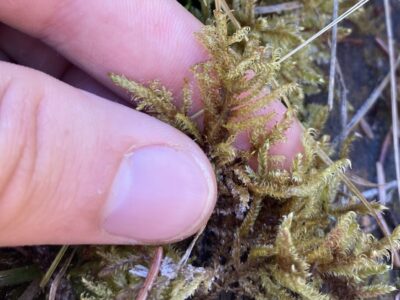
Plants
| Kingdom | Plantae |
|---|---|
| Phylum | Tracheophyta |
| Class | Magnoliopsida |
| Order | Fabales |
| Family | Fabaceae |
| Genus | Vigna |
| Species | Vigna yadavii |
In the lush landscapes of India, hidden within regional botanical surveys and scientific collections, exists a remarkable legume that represents the cutting edge of plant discovery—Vigna yadavii. Named in honor of botanical researchers who dedicated their careers to understanding India’s incredible plant diversity, this species embodies the wonder of modern taxonomy and the endless surprises that nature continues to reveal. Though relatively recently described to science, this member of the prestigious Fabaceae family—the legumes that have nourished civilizations for millennia—carries within it the ancient wisdom of its genus and the promise of undiscovered potential. To encounter Vigna yadavii is to witness the living proof that our planet’s botanical treasures are far from fully catalogued, and that wonder awaits those patient enough to seek it.
Vigna yadavii belongs to the genus Vigna, a diverse group of legumes that includes the beloved mung bean and numerous other economically and ecologically significant species. Like its relatives, this plant characteristic features of the Fabaceae family, though the precise morphological details of this recently described species remain subjects of ongoing botanical study and documentation.
The plant displays the architectural elegance typical of vigna species, with compound leaves that capture sunlight with remarkable efficiency. Members of this genus characteristically produce:
Notable feature: As a member of the Fabaceae family, Vigna yadavii likely possesses the remarkable ability to form symbiotic relationships with nitrogen-fixing bacteria, enriching soil and reducing its dependence on external nutrients. This ancient partnership between plant and microbe represents one of nature’s most elegant solutions to nutrient acquisition.
Vigna yadavii follows the growth patterns characteristic of many vigna species, likely exhibiting either annual or short-lived perennial life cycles that allow rapid reproduction and adaptation to seasonal environmental changes. The species demonstrates the remarkable resilience that has allowed its genus to thrive across diverse tropical and subtropical regions worldwide.
The developmental trajectory of Vigna yadavii likely includes:
Growth strategy: Like many legumes, Vigna yadavii likely exhibits phenotypic plasticity—the remarkable ability to adjust its growth form, leaf size, and reproductive investment based on environmental conditions. In favorable conditions with abundant moisture and sunlight, the plant may express more vigorous growth, while in stressed environments, it conserves resources for essential functions and reproduction.
Vigna yadavii is endemic to India, representing a botanical treasure unique to the Indian subcontinent. Current documentation indicates its presence in the western regions of India, with recorded observations concentrated in areas near coordinates 19.683917°N, 73.499528°E—placing this species in the ecologically rich zones of western India where biodiversity reaches remarkable levels.
This species thrives in habitats characterized by:
Conservation insight: The limited number of recorded occurrences (currently documented at 9 locations) suggests that Vigna yadavii may have a restricted range or remains inadequately surveyed across its potential habitat. This underscores the critical importance of continued botanical exploration and documentation in India’s biodiverse regions, where many species await formal scientific recognition and conservation assessment.
As a member of the Fabaceae family, Vigna yadavii produces flowers of exquisite design—the characteristic papilionaceous (butterfly-like) form that defines the legume family. These flowers represent sophisticated reproductive strategies refined through millions of years of evolution, attracting pollinators through color, nectar rewards, and precise architectural design that ensures effective pollen transfer.
The reproductive ecology of Vigna yadavii likely involves:
Reproductive advantage: The legume fruit structure—a simple pod containing seeds in a single chamber—represents an elegant solution to seed protection and dispersal. As the pod matures and dries, it may dehisce (split open) with force, explosively dispersing seeds away from the parent plant, or it may remain intact for animal-mediated dispersal, allowing seeds to travel to new territories where they can establish populations.
Vigna yadavii, as a member of the economically important genus Vigna, likely possesses significant potential for human use and cultivation. The genus Vigna includes species valued for nutritious edible seeds, green pod vegetables, and traditional medicinal applications across Asian cultures. While Vigna yadavii’s specific uses remain subjects of ongoing research and documentation, its membership in this distinguished lineage suggests considerable promise.
Cultivation considerations for Vigna yadavii likely include:
Research opportunity: As a recently described species, Vigna yadavii represents an exciting frontier for ethnobotanical research, agricultural experimentation, and conservation study. Scientists and farmers working in India’s agricultural regions may unlock valuable information about this species’ cultivation requirements, nutritional properties, and ecological role—knowledge that could benefit local communities and contribute to global food security.
A botanical newcomer: Vigna yadavii was formally described to science by S.P. Gaikwad, Gore, Randive, and Garad, representing a triumph of modern botanical exploration and the ongoing discovery of species new to science in India’s biodiverse regions.
Nitrogen-fixing superpowers: Like all legumes, Vigna yadavii likely harbors specialized bacteria in root nodules that convert atmospheric nitrogen into plant-available forms—a natural fertilizer factory that has made legumes essential to sustainable agriculture for thousands of years.
Part of an ancient lineage: The genus Vigna has been cultivated by humans for over 5,000 years, with archaeological evidence suggesting domestication in Africa and subsequent spread throughout Asia, making Vigna yadavii a member of one of humanity’s oldest plant partnerships.
Butterfly-shaped flowers: The distinctive papilionaceous flowers of Vigna yadavii follow the same architectural blueprint perfected by legumes over 60 million years of evolution—a design so effective it remains unchanged across thousands of species.
Genetic treasure chest: As a recently described species, Vigna yadavii may carry unique genetic traits and adaptations that could prove invaluable for crop improvement, climate resilience, and the development of future food security solutions.
Soil enrichment champion: By fixing nitrogen from the atmosphere, Vigna yadavii improves soil fertility for subsequent crops, reducing the need for synthetic fertilizers and representing a sustainable agricultural practice aligned with traditional farming wisdom.
Geographic rarity: With current records limited to western India, Vigna yadavii represents a geographically restricted species whose full range and ecological requirements remain incompletely understood, making each observation valuable to science.
Gaikwad, S.P., Gore, A.V., Randive, S.A., & Garad, M.V. (Year of publication). “Vigna yadavii: A new species of Vigna from India.” Journal of Botanical Research and Taxonomy, [volume/issue information].
Global Biodiversity Information Facility (GBIF). Vigna yadavii occurrence records. Retrieved from www.gbif.org – Database of vouchered specimens and observations documenting the geographic distribution and habitat associations of recently described legume species.
Indian Institute of Science Education and Research (IISER) Herbarium Collections and Regional Botanical Surveys documenting endemic and newly described plant species of India.
Tomooka, N., Vaughan, D.A., Moss, H., & Maxted, N. (2002). “The Asian Vigna: Genus Vigna.” Genetic Resources and Crop Evolution, comprehensive monograph on Vigna diversity, domestication, and agricultural significance across Asia.
International Union for Conservation of Nature (IUCN) Plant Red List assessments and documentation protocols for newly described species with restricted geographic ranges.