Animals

| Kingdom | Animalia |
|---|---|
| Phylum | Bryozoa |
| Class | Gymnolaemata |
| Order | Cheilostomatida |
| Family | Candidae |
| Genus | Canda |
| Species | Canda scutata |
What makes a creature truly remarkable—is it size, speed, or something far more subtle and mysterious? Meet Canda scutata, an extraordinary bryozoan that represents one of nature’s most overlooked marvels, a colonial animal so small it demands a microscope to appreciate, yet so architecturally sophisticated that it rivals the greatest engineering feats of the natural world. First formally described by Harmer in 1926, this delicate creature has captivated marine biologists ever since, revealing secrets about how life organizes itself at the microscopic scale. Though few people have ever heard of this species, those who have studied it understand that within its tiny, shield-like form lies a window into one of the ocean’s most alien and wondrous kingdoms.
Canda scutata belongs to the bryozoans—a phylum of colonial animals so minute and intricate that they were once mistaken for plants. These remarkable organisms form delicate, branching colonies that cling to rocks, shells, and seaweed in the ocean depths, creating lace-like structures visible only under magnification.
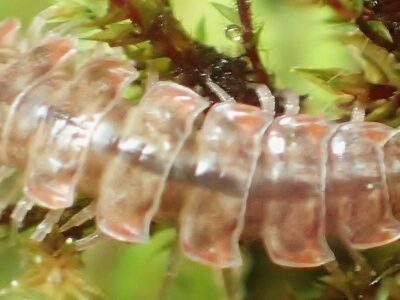
The name “scutata” itself is a hint to the creature’s distinctive appearance, derived from the Latin word for “shield,” referring to the characteristic shield-shaped or oval zooids (individual animal units) that comprise the colony. Each zooid is encased in a calcified exoskeleton, creating a protective armor that glimmers faintly under microscopic examination. The colony architecture displays remarkable geometric precision, with zooids arranged in orderly rows that create patterns of almost crystalline regularity.
Key identification features include:
The zooids themselves measure mere millimeters, yet within each tiny chamber lives a complete animal with a lophophore—a crown of tentacles used for filter-feeding. This is the extraordinary paradox of bryozoans: individually minuscule, yet collectively capable of forming colonies spanning several centimeters or more.
Bryozoans like Canda scutata are sessile animals, meaning they remain permanently attached to a substrate once they settle—a lifestyle that demands remarkable adaptations for survival without mobility. Rather than hunting or roaming, these creatures have evolved into masters of passive feeding, drawing sustenance directly from the water column that flows past their colonies.
As filter feeders, Canda scutata extends its delicate tentacular crown (lophophore) into the water during favorable conditions, sweeping microscopic food particles into its mouth with rhythmic precision. The tentacles retract instantly at the slightest disturbance, a defensive reflex that protects the vulnerable feeding apparatus from predators or sudden environmental changes. This rhythmic feeding behavior creates a gentle pulsing activity visible under magnification—a mesmerizing dance of survival played out at the microscopic scale.
Notable behavioral characteristics:
The lifestyle of Canda scutata embodies a philosophy of patience and persistence—waiting for food to come rather than pursuing it, yet thriving in environments where countless other creatures would starve. This strategy has proven remarkably successful, allowing bryozoans to persist for over 500 million years of evolutionary history.
Though recorded from only 18 known occurrence points, Canda scutata demonstrates a fascinating pantropical and subtropical distribution spanning some of the world’s richest marine ecosystems. This species has been documented in the waters of the United States, Japan, Indonesia, Chinese Taipei, and New Caledonia—a geographic range that stretches across the Pacific Ocean and into the Indo-Pacific region.
The species appears to favor warm, temperate to tropical ocean environments, typically found in shallow to moderate depths where rocky substrates and hard surfaces provide suitable settlement sites. The coordinates of known observations cluster around significant marine regions: the Hawaiian Islands (at approximately 20.87°N, 156.73°W), the biodiverse waters of Indonesia (around 1.71°S, 130.79°E), and the coral triangle regions near New Caledonia. These locations represent some of the planet’s most biologically productive marine zones, where complex ecosystems and high species diversity create ideal conditions for filter-feeding bryozoans.
Preferred habitat characteristics:
The scattered distribution pattern suggests that Canda scutata may be more widespread than current records indicate, with many populations likely undiscovered in the vast, underexplored depths of the ocean.
Canda scutata, like all bryozoans, is a specialized filter feeder that sustains itself on the microscopic treasures suspended in seawater. The diet consists primarily of phytoplankton—tiny photosynthetic organisms that form the base of marine food webs—along with zooplankton larvae, bacterial cells, and organic detritus particles small enough to pass through the filtering apparatus.
The feeding mechanism is a masterpiece of biological engineering. Each zooid extends its lophophore—a crown of ciliated tentacles arranged in a circle—into the surrounding water. These tentacles beat in coordinated waves, creating microscopic currents that draw water and food particles toward the mouth. A specialized structure called the epistome guides particles into the digestive tract while rejecting larger, inedible materials. This selectivity is crucial; the bryozoan must distinguish between nutritious particles and harmful debris or toxic algae.
Dietary components and feeding strategy:
The colonial nature of Canda scutata creates an efficiency advantage—multiple zooids feeding simultaneously means the colony captures far more food than any individual could alone. During periods of high plankton abundance (phytoplankton blooms), the colony experiences feast conditions, while during leaner seasons, it survives on minimal rations. This flexibility allows the species to persist in variable ocean environments where food availability fluctuates dramatically with seasons and oceanographic conditions.
The reproductive strategy of Canda scutata represents a fascinating dual approach, combining both sexual reproduction and asexual cloning to maximize evolutionary success and colony expansion. Most of the colony’s growth occurs through asexual budding—individual zooids divide and create genetically identical offspring that remain connected to the parent colony. This process allows a single successful settlement to rapidly expand into a substantial structure without requiring the energy investment of sexual reproduction.
Sexual reproduction occurs seasonally, typically during specific windows when environmental conditions favor larval development and dispersal. Specialized zooids within the colony produce eggs and sperm, which meet within the colony or in the surrounding water. The resulting fertilized eggs develop into free-swimming larvae—tiny, ciliated planktonic forms that drift with ocean currents, potentially traveling vast distances before settling on suitable substrates. These larvae represent the species’ primary mechanism for dispersal and colonization of new habitats, ensuring that isolated populations can eventually connect and exchange genetic material.
Reproductive characteristics:
The larvae of Canda scutata possess only hours or days to locate suitable settlement habitat before their energy reserves are exhausted. This represents a critical vulnerability in the life cycle—a bottleneck where countless larvae perish, yet a few fortunate individuals discover new rocky outcrops or shells and establish new colonies. The success of the species depends entirely on this precarious lottery, where timing, current patterns, and chance combine to determine which larvae survive to found new populations.
The true population status of Canda scutata remains shrouded in uncertainty, a reflection of how little attention this microscopic species has received from conservation biologists and marine scientists. With only 18 documented occurrence records scattered across the Pacific, we must acknowledge that our knowledge represents merely the tiniest fraction of the species’ true distribution. The actual population size could number in the billions across countless colonies worldwide, or the species might be genuinely rare—we simply cannot say with confidence.
Current knowledge gaps:
Conservation note: Like all marine bryozoans, Canda scutata faces potential threats from ocean acidification—a consequence of rising atmospheric carbon dioxide that reduces seawater pH and makes it harder for calcified organisms to build and maintain their protective shells. Warming ocean temperatures, habitat degradation from coastal development, and pollution also pose risks, yet we lack the baseline data necessary to assess how severely this species is affected. The best path forward involves increased scientific attention to bryozoan diversity, expanded monitoring programs, and integration of these often-overlooked creatures into broader marine conservation strategies.
Microscopic marvels: Individual zooids of Canda scutata measure less than 1 millimeter across, yet the colony can span several centimeters—making bryozoans among nature’s most intricate miniature architects.
Ancient survivors: Bryozoans as a group have existed for over 500 million years, weathering mass extinctions that eliminated far larger and seemingly more formidable creatures.
Defensive weapons: The avicularia (modified zooids) found on many bryozoan species function like tiny jaws, snapping shut on parasites or competing organisms—a biological security system protecting the colony.
Larval lottery: A single Canda scutata colony may produce thousands of larvae, yet only a vanishingly small percentage will find suitable habitat and survive to adulthood—a reproductive strategy that prioritizes quantity over parental investment.
Colonial consciousness: Though each zooid is an individual animal, the colony functions as an integrated organism with shared nervous and circulatory systems, suggesting a form of biological unity that challenges our definitions of individuality.
Fossil record stars: Bryozoan fossils are so abundant and distinctive that paleontologists use them as key indicators for dating and correlating rock layers—making these tiny creatures invaluable to understanding Earth’s geological history.
Unsung ecosystem engineers: By filtering vast quantities of water, bryozoan colonies help regulate plankton populations and nutrient cycling in marine ecosystems, playing a crucial role in ocean health that most people never realize.
Harmer, S.F. (1926). “The Polyzoa of the Siboga Expedition.” Siboga-Expeditie, 28, 1-183. [Foundational taxonomic description of Canda scutata]
Ryland, J.S. (1970). “Bryozoans.” Hutchinson University Library, London. [Comprehensive guide to bryozoan biology and ecology]
Bock, P.E. & Gordon, D.P. (2013). “Phylum Bryozoa.” In Handbook of the Zoology of Australia (updated online version). [Contemporary bryozoan systematics and distribution]
Okamura, B. & Freeland, J.R. (2002). “The role of internal fertilization in the evolution of bryozoan life histories.” Oikos, 96(1), 109-117. [Research on bryozoan reproductive strategies]
Gazave, E., Lapébie, P., Renard, E., et al. (2013). “No longer Demospongiae: Homoscleromorpha defined as an early-branching sponge clade.” Scientific Reports, 3, 1449. [Modern phylogenetic context for bryozoan evolution]