
Agaricomycetes · Phallales
Velo De Novia
Phallus indusiatus
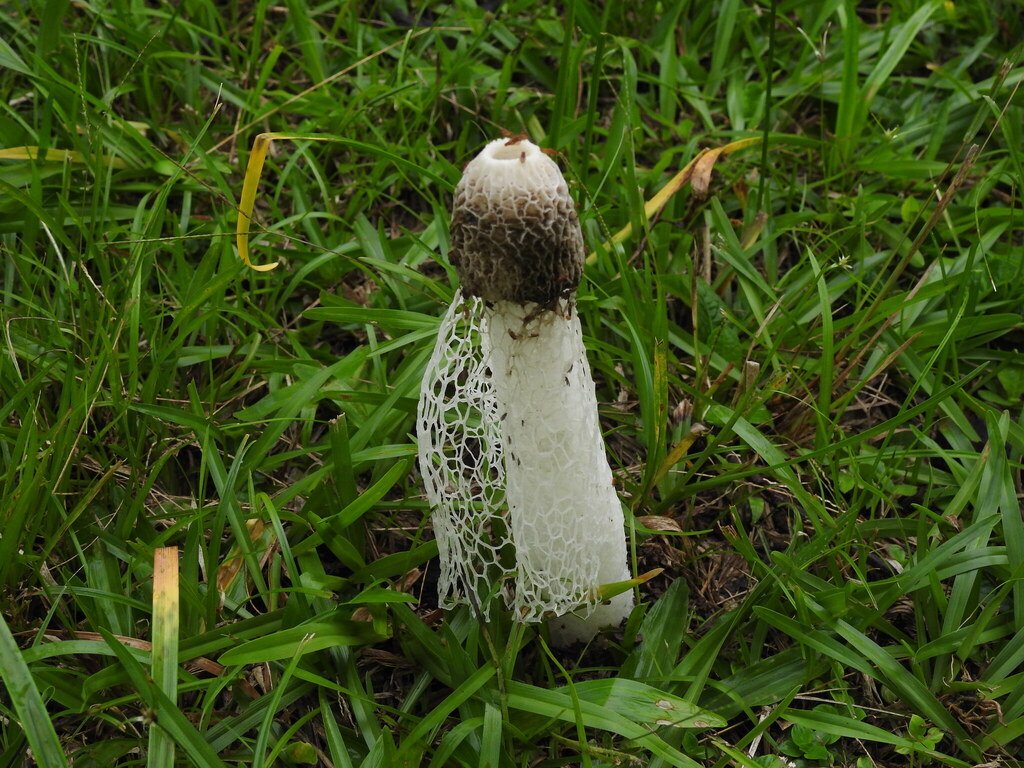
© Aline Fernanda Antunes · iNaturalist · CC BY-SA 4.0
Clasificación científica y datos rápidos
Clasificación
Known For
Detailed measurements for this species are still being verified.
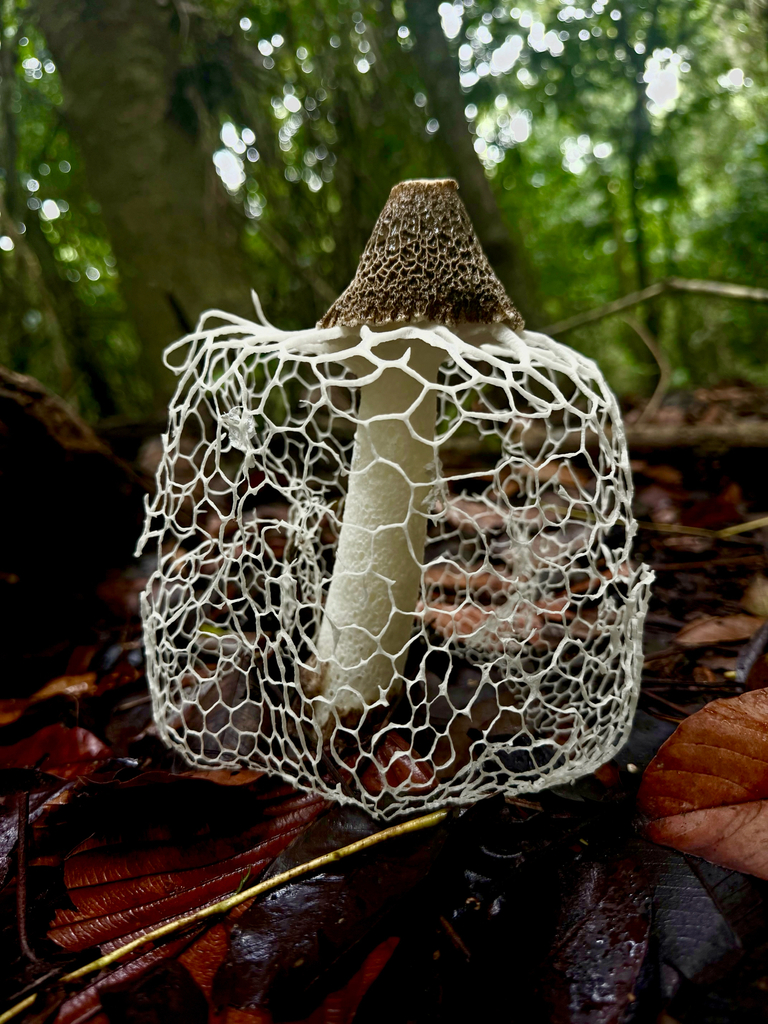
Phallus indusiatus, conocido comúnmente como el Hongo Velo de Novia, es uno de los hongos más visualmente extraordinarios del mundo. Su nombre común proviene de su estructura única: un delicado velo de encaje blanco que cuelga bajo la cabeza fructífera, asemejándose a un velo nupcial. Este hongo tropical aparece de manera repentina en bosques cálidos y húmedos, completando su ciclo de vida completo en apenas unos días antes de desaparecer sin dejar rastro aparente.
Presente en aproximadamente 37 países distribuidos principalmente en regiones tropicales y subtropicales de Asia, África y América, este hongo basidiomiceto pertenece a la familia Phallaceae. Su estado de conservación actual es desconocido, pero su presencia persistente en múltiples continentes sugiere una capacidad adaptativa considerable. Lo que distingue al Velo de Novia es su peculiar estrategia reproductiva: combina una apariencia hipnotizante con un mecanismo de dispersión basado en aromas desagradables, un contraste fascinante que lo convierte en un objeto de estudio botánico y cultural de gran interés.
Identificación y Apariencia
Estructura y desarrollo
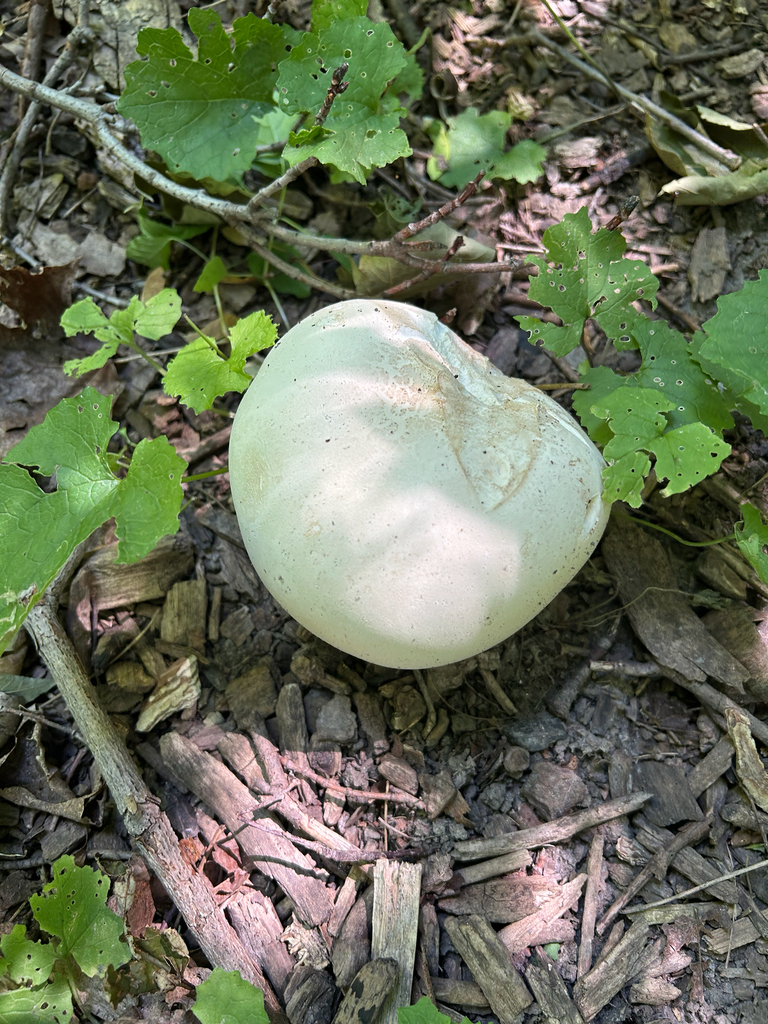
Phallus indusiatus presenta un ciclo de vida único que comienza bajo tierra. Los cuerpos fructíferos inmaduros se encuentran encerrados en una estructura subterránea de forma ovoide a esférica, denominada «huevo», que mide hasta 6 centímetros de diámetro. Este envoltorio, llamado peridio, presenta un color que varía entre blanco, ante y marrón rojizo. Una gruesa cuerda miceliana se adhiere habitualmente a la base del huevo. A medida que el hongo madura, la presión ejercida por el crecimiento de las estructuras internas causa que el peridio se rasgue, permitiendo que el cuerpo fructífero emerja rápidamente del huevo.
Características del hongo maduro
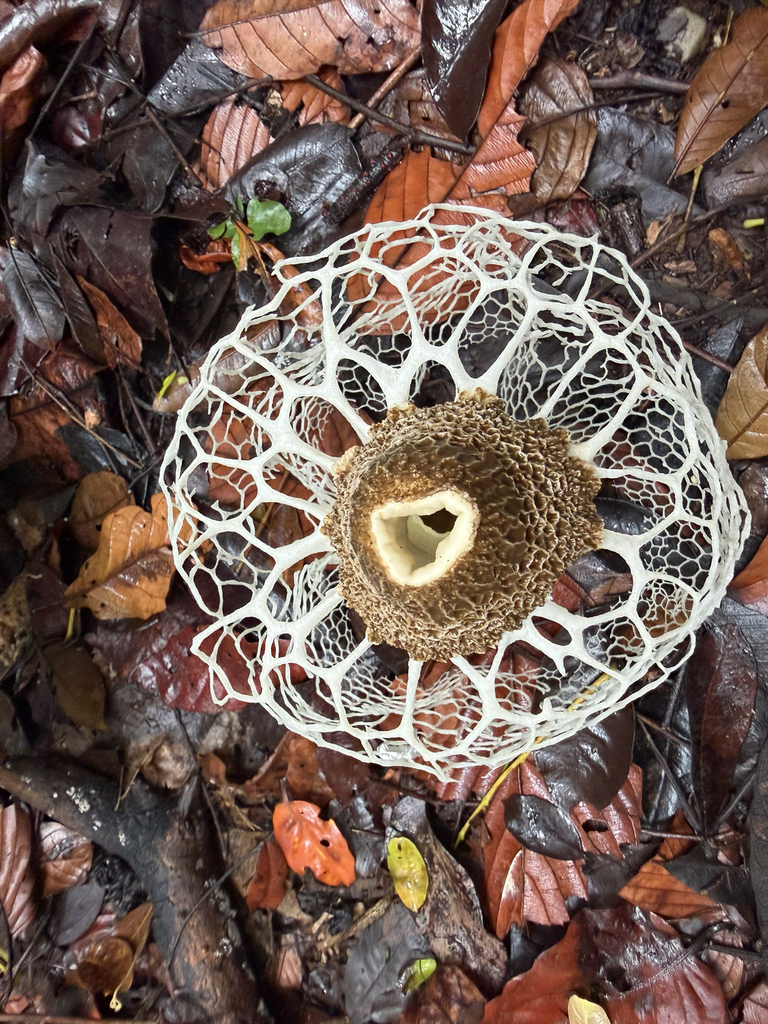
El hongo adulto alcanza una altura de hasta 25 centímetros y presenta una característica distintiva: una estructura de red fina que lo rodea, conocida como indusio. Esta malla delicada confiere al hongo su apariencia única y el origen de su nombre común, Seta del Velo Nupcial. El indusio desciende desde el ápice del sombrero, creando un efecto visual similar a un velo. La estructura completa combina el cuerpo principal emergente con esta característica envolvente en forma de red, que es fundamental para su identificación en campo.
Distribución y Hábitat
Phallus indusiatus, conocido como el hongo velo de novia, tiene una distribución global amplia que abarca 37 países. Los registros de iNaturalist muestran una concentración particular en Australia (65 observaciones), Brasil (44), Estados Unidos (31), Argentina (29) y Costa Rica (25). La especie también está documentada en Colombia, Indonesia, México, Canadá, Perú y numerosas otras localidades, lo que indica su naturaleza cosmopolita.
En el hemisferio occidental, el hongo aparece frecuentemente en el este de América del Norte, así como en diversas regiones de América Central y del Sur. En el hemisferio oriental, se han registrado avistamientos significativos en Australia e Indonesia, sugiriendo una preferencia por climas templados a tropicales. La ausencia de datos de elevación específicos impide delimitar un rango altitudinal preciso, aunque las observaciones geográficas indican que la especie coloniza múltiples zonas de elevación en sus regiones de distribución.
La actividad reproductiva de Phallus indusiatus varía considerablemente según la estación. Mayo emerge como el mes pico de observación con 40 registros documentados, seguido por abril (39) y marzo (36). La presencia desciende notablemente durante los meses de verano boreal (junio a agosto), con apenas 10 a 17 observaciones registradas. Este patrón sugiere que la fructificación de este hongo responde a condiciones específicas de humedad y temperatura, probablemente asociadas con el ciclo de lluvias estacionales en múltiples latitudes.
Biología
Ciclo de vida
Phallus indusiatus comienza su ciclo de vida como micelio, una red de filamentos que crece dentro del sustrato descompuesto, alimentándose de madera y materia orgánica vegetal en descomposición. Cuando las condiciones son favorables, particularmente después de lluvias abundantes, el micelio fructifica formando los cuerpos fructíferos característicos. Los primordia (primordios fúngicos) se desarrollan bajo tierra en estructuras bulbosas llamadas «huevos de bruja», que pueden permanecer en el suelo durante semanas antes de emergerar rápidamente hacia la superficie.
La emergencia del cuerpo fructífero es dramática: en cuestión de horas, el carpóforo se expande desde el huevo subterráneo, elevando la característica estructura reticulada conocida como indusio (el «velo nupcial»). El cuerpo fructífero adulto presenta un receptáculo hueco con forma de campana rematado por una copa perforada que contiene la gleba, una masa de esporas pegajosa con un olor penetrante y desagradable similar al de carroña en descomposición. Este olor persiste durante varios días y es detectable a considerable distancia.
Función ecológica
Phallus indusiatus es un organismo saprófito fundamental en los ecosistemas forestales, especialmente en bosques de bambú de Asia. Como descomponedor, el micelio descompone la madera muerta y la materia orgánica acumulada, reciclando nutrientes esenciales nuevamente al suelo. El hongo crece típicamente sobre suelo perturbado, astillas de madera y restos de plantas, prosperando en microhábitats donde otros hongos encuentran competencia.
La dispersión de esporas de P. indusiatus depende enteramente de insectos vectores. La gleba pegajosa atrae a abejas sin aguijón del género Trigona, moscas de la familia Drosophilidae y moscas domésticas de la familia Muscidae. Estos insectos consumen la masa de esporas y, al defecar en otras ubicaciones, transportan esporas viables que germinan en nuevos sustratos. Este mecanismo de dispersión por insectos es único entre los hongos agaricoides, que típicamente expulsan sus esporas mediante mecanismos balísticos. Se desconoce la función exacta del indusio reticulado, aunque probablemente actúe como atractivo visual para los insectos dispersores.
Usos humanos
Phallus indusiatus es un hongo comestible apreciado en la cocina tradicional china y asiática. Las estructuras jóvenes, especialmente el indusio antes de que emerja completamente, se recolectan y consumen frescas o secas. En China, el hongo se valora por su textura delicada y se emplea en sopas de lujo y platos gourmet. El sabor es suave y agradable, muy distinto del olor desagradable del cuerpo fructífero maduro.
Además de su uso culinario, P. indusiatus se cultiva comercialmente en Asia, particularmente en China, Vietnam y Tailandia, donde representa un producto forestal de considerable valor económico. El cultivo requiere condiciones controladas que repliquen las precipitaciones abundantes y la humedad que disparan la fructificación natural. No se ha documentado toxicidad en este hongo cuando se consume adecuadamente preparado en estados tempranos de desarrollo.
Conservación y Amenazas
Phallus indusiatus, conocido como el hongo velo de novia, no ha sido evaluado formalmente por la Lista Roja de la UICN. Esta ausencia de evaluación refleja un patrón común en los hongos, donde el conocimiento sobre el estado de conservación sigue siendo fragmentario a nivel global. Sin embargo, la falta de designación oficial no debe interpretarse como ausencia de riesgos ecológicos.
La distribución tropical y subtropical de este hongo lo vincula a ecosistemas de bosques húmedos y bosques lluviosos que enfrentan presiones crecientes. Como descomponedor que depende de madera muerta y suelos ricos en materia orgánica, cualquier alteración significativa del hábitat forestal afecta directamente su ciclo de vida y reproducción.
Amenazas
La pérdida y degradación del hábitat forestal constituye la amenaza más directa para las poblaciones de Phallus indusiatus. La conversión de bosques a tierras agrícolas, urbanización y fragmentación del paisaje reducen las áreas donde este hongo puede completar su ciclo reproductor. En regiones donde se cultiva comercialmente, la recolección excesiva sin regulación podría afectar a las poblaciones silvestres si no se implementan límites sostenibles.
El cambio en las prácticas de gestión forestal también influye en su disponibilidad. La eliminación completa de madera muerta —práctica común en algunas operaciones forestales— reduce el sustrato necesario para la descomposición fúngica. Aunque las amenazas documentadas específicamente para esta especie son limitadas, sus requisitos ecológicos la hacen vulnerable a cualquier alteración significativa de los bosques húmedos donde prospera.
Esfuerzos de conservación
Actualmente no existen programas de conservación específicos establecidos para Phallus indusiatus, ni protecciones legales globales dedicadas a esta especie. La conservación de sus poblaciones depende indirectamente de la protección general de los bosques tropicales y subtropicales a través de áreas protegidas y regulaciones forestales nacionales. En algunas regiones de Asia, donde se cultiva y consume, hay interés emergente en prácticas de cosecha sostenible que podrían beneficiar tanto a las poblaciones silvestres como a los productores locales.
Significado Cultural
Phallus indusiatus ocupa un lugar notable en las tradiciones culturales de varias regiones del mundo. En México, el etnomicólogo R. Gordon Wasson documentó que la especie era consumida en ceremonias adivinatorias debido a su forma sugestiva. Su presencia ritual refleja la importancia que algunas culturas otorgaban a los hongos como intermediarios entre el mundo físico y espiritual.
En Nueva Guinea, los pueblos nativos consideran a este hongo como sagrado, mientras que en Nigeria los yoruba lo conocen por el nombre Akufodewa, un término compuesto de palabras yoruba que significa literalmente «muerte para el cazador que busca». El nombre alude a cómo el olor característico del hongo puede atraer a cazadores que lo confunden con el de un animal muerto. Más allá de su significado nominal, los yoruba empleaban Phallus indusiatus como componente de amuletos rituales diseñados para hacer menos visible al cazador en momentos de peligro, integrando así la especie en prácticas mágicas y de protección.
La asociación del hongo con lo fálico ha resonado en múltiples contextos culturales, conectando su forma con símbolos de fertilidad presentes en diversas mitologías antiguas. Esta conexión simbólica subraya cómo una característica morfológica natural puede transformarse en significado cultural y ritual a través de diferentes tradiciones geográficas y temporales.
Curiosidades
- 1.La «falda» es una estructura reproductiva única: El velo blanco y delicado que cuelga bajo el cuerpo fructífero no es decorativo—es una estructura llamada indusio que ayuda a dispersar las esporas atrayendo insectos polinizadores.
- 2.Emerge completamente en cuestión de horas: Este hongo puede crecer desde una estructura subterránea llamada «huevo de bruja» hasta su forma adulta completa en solo 6 a 12 horas, lo que lo convierte en uno de los organismos de más rápido crecimiento en el reino fúngico.
- 3.Genera su propio olor podrido: A pesar de su apariencia elegante, el Phallus indusiatus produce un olor similar al de la carne en descomposición para atraer moscas y otros insectos carroñeros que ayudan a transportar sus esporas.
- 4.Es originario de bosques tropicales asiáticos: Este hongo se encuentra naturalmente en regiones húmedas y boscosas del sudeste asiático, donde prospera en materia orgánica en descomposición en el suelo del bosque.
- 5.El cuerpo principal desaparece rápidamente: Después de liberar sus esporas, toda la estructura se desintegra en solo 1 o 2 días, dejando poco rastro de su presencia temporal.
- 6.Es comestible en algunas culturas: En China y otras partes de Asia, los cuerpos fructíferos jóvenes se cosechan antes de que desarrollen completamente el indusio y se comen como manjar gastronómico, valorados por su textura delicada.
- 7.Cada estructura individual es efímera pero persistente en población: Aunque los hongos individuales solo duran días, bajo condiciones favorables la especie continúa produciendo nuevos cuerpos fructíferos durante toda la temporada de lluvia, manteniendo una presencia sostenida en el ecosistema.
Fuentes y Referencias
- Global Biodiversity Information Facility (GBIF)View source
- iNaturalistView source
- WikidataView source
- WikipediaView source
- Encyclopedia of Life (EOL)View source
Ecología
Comportamiento
Galería de fotos
Aline Fernanda Antunes · CC BY-SA 4.0
Especies relacionadas
¿Fue útil este perfil?