
Agaricomycetes · Phallales
Cogumelo-véu-de-noiva
Phallus indusiatus
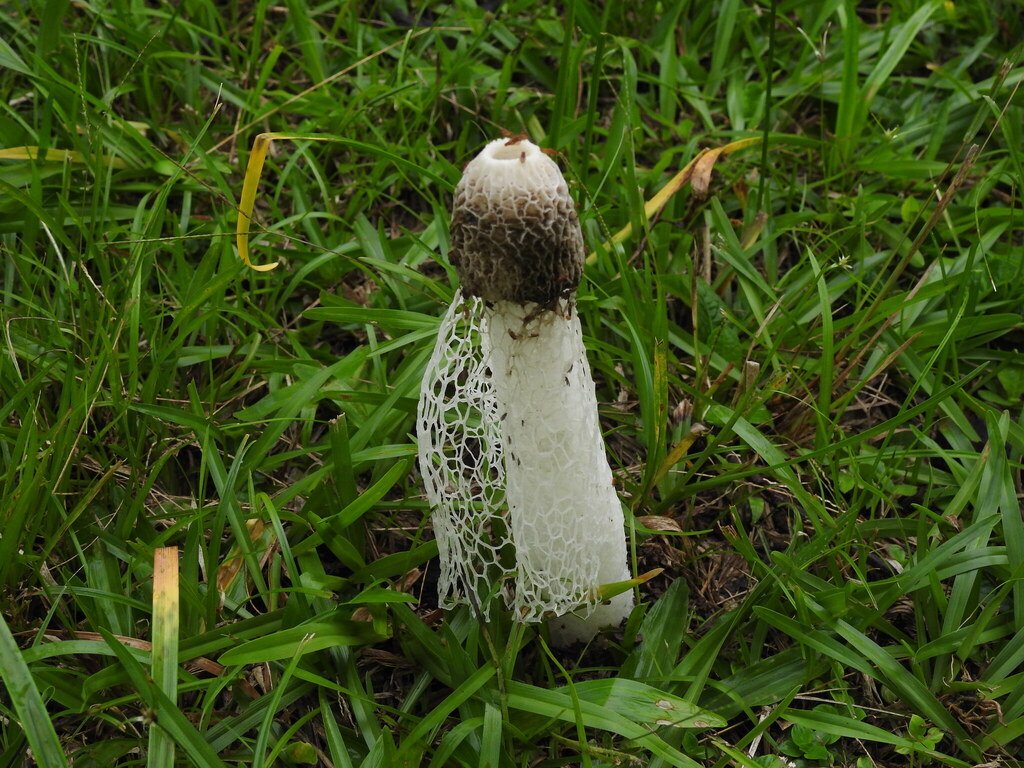
© Aline Fernanda Antunes · iNaturalist · CC BY-SA 4.0
Classificação científica e fatos rápidos
Classificação
Known For
Full profile in progress — check back soon.
O Phallus indusiatus, conhecido como Bridal Veil Stinkhorn (Cogumelo-do-Véu-da-Noiva), é um fungo extraordinariamente distintivo que desafia as expectativas visuais sobre a forma dos cogumelos. Ao invés de um simples chapéu redondo, este basidiomiceto produz uma estrutura delicada e rendada que se assemelha a um véu nupcial, um padrão reprodutivo único no reino fúngico. Distribuído por pelo menos 37 países em regiões tropicais e subtropicais, este fungo mantém um status de conservação desconhecido, o que reflete tanto a dificuldade em monitorar espécies fúngicas quanto a sua capacidade de prosperar em diversos habitats.
O que torna este fungo particularmente notável é a sua capacidade de crescer rapidamente e produzir uma estrutura reprodutiva tão visualmente impactante em um curto espaço de tempo. A combinação de sua morfologia excepcional, distribuição geográfica ampla e papel ecológico como decompositor em florestas tropicais o coloca entre os fungos mais intrigantes para naturalistas e pesquisadores de biodiversidade.
Identificação e Aparência
Estrutura do corpo frutífero
Phallus indusiatus passa por uma transformação dramática durante seu desenvolvimento. Os corpos frutíferos imaturos começam como estruturas subterrâneas em forma de ovo, envolvidas por um peridium de cor que varia do branco ao bege ou marrom-avermelhado. Esse “ovo” atinge até 6 centímetros de diâmetro e normalmente possui um cordão micelial espesso preso na base. À medida que o fungo amadurece, a pressão causada pela expansão das estruturas internas faz o peridium rachar, e o corpo frutífero emerge rapidamente do “ovo”.
Características do corpo frutífero maduro
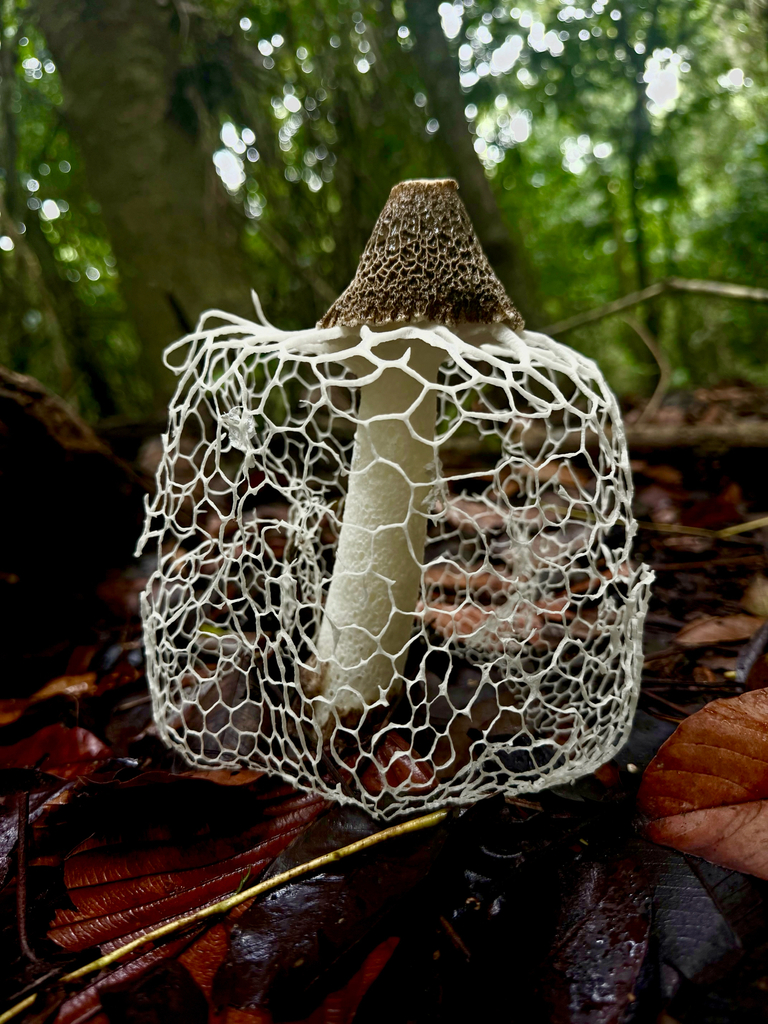
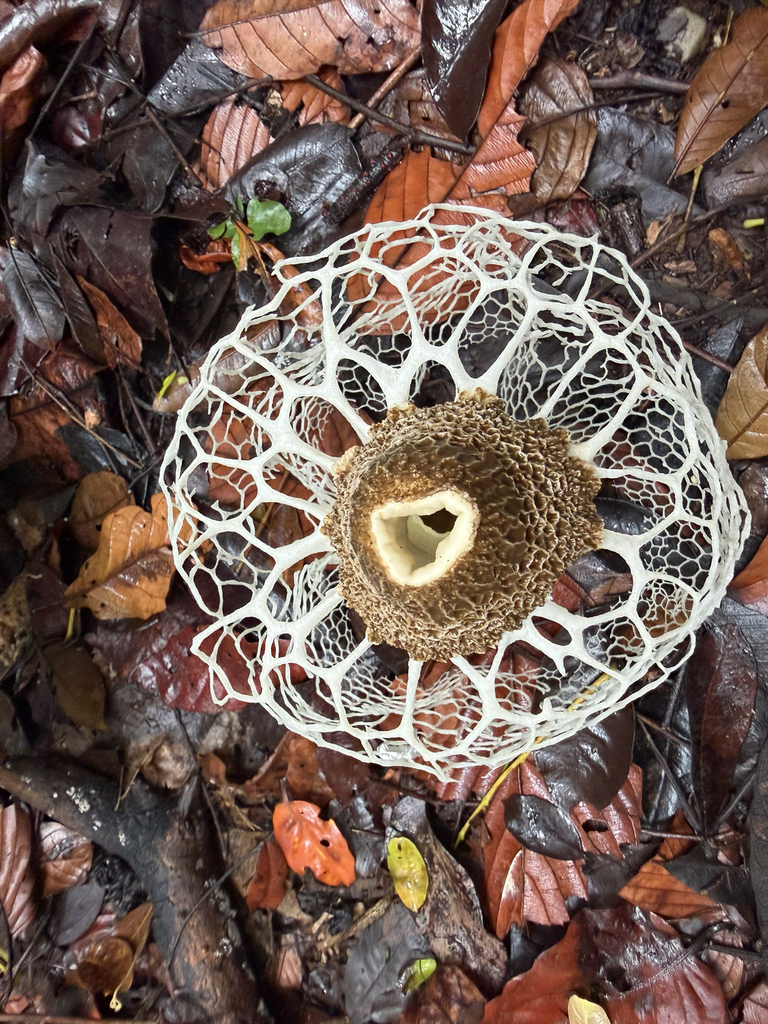
O cogumelo adulto é uma estrutura notável que alcança até 25 centímetros de altura. Sua característica mais distintiva é uma estrutura reticulada (em forma de rede) que encircunda o corpo central, semelhante a um delicado véu — daí o nome comum em inglês “Bridal Veil Stinkhorn” (Cogumelo Fétido do Véu da Noiva). Esta malha ornamentada desce do receptáculo formando uma saia rendada que confere ao fungo uma aparência elegante e inconfundível. O corpo central é tipicamente alongado e cilíndrico, com uma cor clara que contrasta com a estrutura reticulada que o rodeia.
A cor geral varia entre tons pálidos a esbranquiçados, com tonalidades que podem incluir amarelado ou levemente rosado. A estrutura de rede é uma adaptação particularmente eficaz para dispersão de esporos: sua grande área de superfície permite que o aroma fétido se espalhe amplamente, atraindo insetos que servem como vetores de dispersão dos esporos.
Distribuição e Habitat
Phallus indusiatus, o Cogumelo Véu de Noiva, distribui-se por 37 países em todo o mundo, com presença particularmente forte na Austrália, Brasil, Estados Unidos e Argentina. Os registros de ocorrência mostram concentração considerável também na América Central, especialmente na Costa Rica, além de presenças documentadas na Colômbia, Indonésia e México. Este padrão geográfico sugere uma distribuição em clima tropical e subtropical, com capacidade de ocorrer em ambientes temperados.
A Austrália lidera com 65 ocorrências registradas, seguida pelo Brasil com 44 registros e pelos Estados Unidos com 31. Argentina apresenta 29 ocorrências, enquanto a Costa Rica documenta 25 avistamentos. A presença do fungo em múltiplas regiões climáticas indica uma notável adaptabilidade, embora dados específicos de faixa altitudinal não estejam disponíveis para esta espécie.
Padrões sazonais mostram atividade máxima em maio, coincidindo com períodos de umidade e temperaturas moderadas em hemisférios distintos. A distribuição de ocorrências ao longo do ano revela picos secundários em março e abril, com declínio acentuado entre junho e agosto no Hemisfério Norte. Este ciclo sugere emergência ligada a estações chuvosas e condições de umidade relativa elevada, características típicas do habitat preferencial deste basidiomiceto sapróbio.
Biologia
Ciclo de vida
Phallus indusiatus segue o ciclo de vida típico dos fungos superiores, começando como micélio no solo e na matéria orgânica em decomposição. O micélio cresce através do substrato durante períodos de umidade adequada, acumulando nutrientes e energia para a formação do corpo frutífero. Quando as condições ambientais são favoráveis—particularmente após chuvas intensas—o fungo direciona recursos para a produção do carpóforo, a estrutura reprodutiva visível.
O corpo frutífero emerge rapidamente e passa por estágios distintos de desenvolvimento. Inicialmente, uma estrutura em forma de ovo contém o receptáculo e o véu indusial enrolados. À medida que a frutificação avança, o estipe (pé) alonga-se, empurrando o receptáculo para cima e expandindo o véu rendilhado característico em forma de véu de noiva. O gleba—a massa de esporos pegajosa e de odor pungente—cobre o receptáculo e permanece exposto durante a maturidade do fungo.
A dispersão de esporos em P. indusiatus difere fundamentalmente da maioria dos cogumelos agaricoides, que ejetam esporos por balística. Em vez disso, o fungo produz uma massa de esporos pegajosa com odor penetrante de carniça. Este aroma, detectável a uma distância considerável, atrai insetos que consomem o gleba e dispersam as esporas intactas através de seus excrementos em locais distantes, onde germinam para iniciar novos ciclos.
Papel ecológico
Phallus indusiatus funciona como saprófita, derivando nutrientes da decomposição de madeira e matéria orgânica vegetal. O micélio quebra estruturas celulares complexas e torna os nutrientes disponíveis para o solo, acelerando a reciclagem de matéria morta em ecossistemas florestais. Cresce preferencialmente em solo perturbado e entre lascas de madeira, estabelecendo-se também em florestas de bambu na Ásia, onde frutica tipicamente após períodos de chuva intensa.
A relação de P. indusiatus com seus visitantes insetos revela um sistema de dispersão altamente especializado. Espécies documentadas que visitam o fungo incluem abelhas sem ferrão do gênero Trigona e moscas das famílias Drosophilidae e Muscidae. Estes insetos alimentam-se do gleba pegajoso e, ao fazê-lo, carregam esporas viáveis em seus corpos, dispersando-as através de seus excrementos. A função exata do véu indusial permanece incerta, embora evidências sugiram que ele possa atrair insetos através de estímulos visuais, potencializando a eficiência da dispersão de esporos.
Usos humanos
O conhecimento sobre usos culinários e medicinais de P. indusiatus permanece limitado na literatura científica disponível. Embora o fungo seja encontrado em regiões onde práticas etnomicológicas são desenvolvidas, estudos específicos sobre segurança alimentar ou propriedades bioativas não foram fornecidos. A presença de compostos voláteis pungentes e o mecanismo de dispersão baseado em insetos sugerem que o fungo não é uma espécie de interesse culinárico convencional.
Conservação e Ameaças
Phallus indusiatus, o cogumelo véu de noiva, não possui uma avaliação formal da Lista Vermelha da IUCN. A ausência de classificação indica que a espécie não foi alvo de uma análise sistemática quanto ao seu risco de extinção, refletindo a escassez de dados populacionais estruturados e monitoramento contínuo em escala global.
Informações sobre a tendência populacional, tamanho da população e ameaças específicas quantificáveis não estão disponíveis na literatura científica consolidada. Essa lacuna de dados torna impossível identificar com precisão quais fatores impactam a sobrevivência da espécie ou se as populações estão em declínio, estáveis ou em expansão.
Ameaças e Fatores de Risco
Embora nenhuma ameaça tenha sido formalmente documentada, fungos saprotróficos como Phallus indusiatus dependem de ambientes florestais ricos em matéria orgânica em decomposição. A conversão de habitats naturais, a exploração florestal intensiva e a degradação de florestas tropicais e subtropicais representam riscos potenciais. A alteração do regime de umidade e temperatura também pode afetar a frutificação dessa espécie.
Esforços de Conservação
Nenhum programa de conservação específico ou proteção legal foi identificado para esta espécie. O estabelecimento de dados de base sobre distribuição, abundância e requisitos ecológicos seria o primeiro passo essencial para informar futuras estratégias de proteção. Muitas regiões onde o véu de noiva ocorre carecem de inventários sistemáticos de fungos, impedindo uma avaliação precisa do seu estado de conservação.
Significado Cultural
Phallus indusiatus possui significado cultural distinto em várias regiões do mundo, refletindo interpretações locais de sua forma e características sensoriais peculiares. Na América Mesoamericana, o etnomicólogo R. Gordon Wasson documentou o consumo deste cogumelo em cerimônias divinatórias mexicanas, onde sua forma sugestiva desempenhava papel importante nos rituais. Do outro lado do globo, populações indígenas da Nova Guiné consideram o fungo sagrado, atribuindo-lhe significado espiritual profundo.
Na Nigéria, entre o povo Iorubá, Phallus indusiatus é conhecido como Akufodewa, nome que combina palavras iorubás significando “morte para o caçador que busca”. Esta denominação refere-se ao modo como o odor fétido do cogumelo pode enganar caçadores que o confundem com o cheiro de um animal morto. Os iorubá desenvolveram práticas tradicionais utilizando este fungo como componente de amuletos para tornar caçadores menos visíveis em situações de perigo, integrando o cogumelo na magia e proteção cultural da comunidade.
Curiosidades
- 1.O corpo frutífero desta espécie desenvolve uma rede delicada e rendada que se desenrola a partir do ovo fúngico, assemelhando-se a um véu de noiva — daí seu nome comum. Esta estrutura pode atingir até 25 centímetros de comprimento e funciona como um atrativo visual para insetos polinizadores.
- 2.Como muitos fungos da família Phallaceae, o Phallus indusiatus libera um odor desagradável que imita o cheiro de carne em decomposição ou fezes. Este aroma putrefato atrai moscas e outros insetos necrófagos, que transportam seus esporos e auxiliam na reprodução.
- 3.A estrutura rendada (indúsio) é composta por tecido gelatinoso e poroso que se expande rapidamente durante o desenvolvimento. Dentro de apenas algumas horas, o fungo consegue alongar-se significativamente, uma estratégia que o ajuda a liberar esporos acima da serrapilheira e alcançar insetos voadores com mais eficiência.
- 4.Este fungo é considerado uma iguaria em várias culturas culinária asiáticas, particularmente na Ásia Oriental. Apesar do odor desagradável quando frutifica, o cogumelo jovem no estágio de ovo (antes da expansão) é saboroso e vendido em mercados especializados por preços elevados.
- 5.O Phallus indusiatus é um saprófago obrigatório, alimentando-se da matéria orgânica em decomposição no solo e na madeira morta. Desempenha um papel ecológico importante na reciclagem de nutrientes em ecossistemas florestais tropicais e subtropicais.
- 6.A cor do corpo frutífero varia de um branco puro a tons de creme ou amarelado, enquanto o topo (gleba, onde estão os esporos) é frequentemente mais escuro, do marrom-acinzentado ao preto. Esta combinação de cores aumenta seu apelo visual aos insetos.
- 7.O ciclo reprodutivo completo, desde a germinação do esporo até a formação do corpo frutífero visível, pode levar semanas. A estrutura do fruto persiste apenas alguns dias antes de entrar em colapso, liberando seus esporos neste breve período de exposição.
Fontes e Referências
- Global Biodiversity Information Facility (GBIF)View source
- iNaturalistView source
- WikidataView source
- WikipediaView source
- Encyclopedia of Life (EOL)View source
Galeria de fotos
Aline Fernanda Antunes · CC BY-SA 4.0
Espécies relacionadas
Este perfil foi útil?