Animals

| Kingdom | Animalia |
|---|---|
| Phylum | Arthropoda |
| Class | Diplopoda |
| Order | Polydesmida |
| Family | Pyrgodesmidae |
| Genus | Enantiurodesmus |
| Species | Enantiurodesmus clavatus |
What makes a creature truly extraordinary? Often, it’s not size or speed, but rather the intricate adaptations that allow life to thrive in the most unexpected places. Enter Enantiurodesmus clavatus, a remarkable millipede that represents one of nature’s most elegant solutions to survival in complex terrestrial ecosystems. This fascinating arthropod, first scientifically described by the renowned arachnologist Attilio Silvestri in 1898, embodies the mysterious diversity of the Diplopoda—a group that has crawled across our planet for over 300 million years. Though small and often overlooked, this creature tells a compelling story of adaptation, resilience, and the hidden wonders that inhabit the soil beneath our feet.
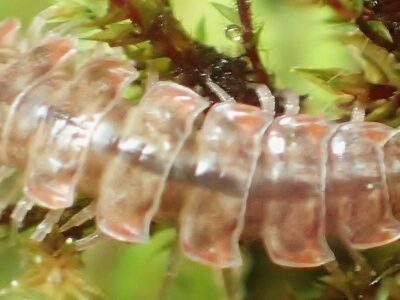
Enantiurodesmus clavatus belongs to the family Pyrgodesmidae, a group of polydesmid millipedes characterized by their distinctive body architecture and specialized defensive capabilities. Like all members of its order, this millipede possesses the iconic segmented body plan that defines the class Diplopoda—each segment bearing two pairs of legs, granting these creatures their characteristic undulating locomotion through leaf litter and soil.
The genus Enantiurodesmus is particularly notable for its unique morphological features that distinguish it from related millipedes. Members of this genus display specialized body segments and appendages that reflect millions of years of evolutionary refinement. The species name clavatus derives from the Latin word for “club-shaped,” suggesting distinctive club-like structures present on certain body segments—likely related to reproductive or defensive functions.
Key identification features include:
Enantiurodesmus clavatus exemplifies the secretive nature of most millipedes—creatures that prefer the quiet, protected world of soil and leaf litter to the exposed surfaces above. As a detritivore and soil engineer, this millipede spends its existence in a perpetual quest for decomposing organic matter, playing a crucial ecological role that often goes unappreciated by casual observers. Its daily routine involves navigating through the intricate architecture of the soil ecosystem, where it encounters countless microorganisms, fungi, and fellow invertebrates.
These millipedes are primarily nocturnal, emerging during humid conditions—particularly after rainfall—when soil moisture reaches optimal levels for their delicate respiratory systems. Notable behavior: Like other members of the Pyrgodesmidae family, Enantiurodesmus clavatus possesses specialized defensive glands that produce chemical compounds to deter predators, a sophisticated chemical defense system honed through evolutionary time.
The creature’s social structure remains largely solitary, though individuals may aggregate in particularly favorable microhabitats where food and moisture converge. Their movement through soil is methodical and purposeful, with sensory organs detecting chemical gradients that guide them toward decomposing vegetation and fungal growth.
While specific distribution data for Enantiurodesmus clavatus remains limited in modern biodiversity databases, the species represents an important component of millipede diversity in regions where it occurs. Like many soil-dwelling arthropods, this species likely occupies a restricted geographic range, with populations concentrated in particular ecological zones where conditions favor their survival.
The natural habitats of Enantiurodesmus clavatus include:
The species’ preference for undisturbed soil ecosystems suggests it may be particularly sensitive to habitat modification and land-use changes that fragment or destroy the forest floor microhabitats upon which it depends.
Enantiurodesmus clavatus is a detritivore—a living recycler of the forest ecosystem that transforms dead plant material into nutrients available to other organisms. This millipede consumes decomposing leaves, rotting wood, fungi, and other organic matter at various stages of decay, playing an essential role in nutrient cycling and soil formation. Its feeding strategy involves methodically processing leaf litter and humus, breaking down complex organic compounds and facilitating further decomposition by microorganisms.
The creature’s digestive system is specially adapted to extract nutrition from material that most animals would ignore. As this millipede processes vast quantities of soil and leaf litter, it simultaneously:
Feeding occurs continuously throughout the creature’s active periods, with intensity increasing during humid conditions when the millipede is most active and food decomposition rates are highest.
The reproductive biology of Enantiurodesmus clavatus remains largely undocumented in scientific literature, reflecting the general knowledge gaps surrounding many soil arthropod species. However, based on what we know of related polydesmid millipedes, we can infer certain aspects of this species’ breeding strategy. Like other millipedes, Enantiurodesmus clavatus likely exhibits sexual reproduction with distinct male and female individuals, with males possessing modified legs (gonopods) adapted for sperm transfer.
Breeding likely occurs during favorable seasons when soil moisture and temperature conditions are optimal for egg survival and juvenile development. Males probably engage in courtship behaviors involving pheromone detection and chemical signaling to locate receptive females within the soil environment. Females likely deposit eggs in protected microsites within the soil, where they remain until hatching occurs.
Conservation note: The reproductive isolation of soil-dwelling species like Enantiurodesmus clavatus makes them particularly vulnerable to habitat fragmentation, as populations become separated and gene flow diminishes across degraded landscapes.
The current conservation status of Enantiurodesmus clavatus remains undetermined, reflecting a broader pattern in arthropod conservation where thousands of species lack formal assessment. This knowledge gap itself represents a significant conservation challenge—we cannot effectively protect what we do not thoroughly understand. The species’ dependence on intact soil ecosystems and leaf litter habitats suggests it may be vulnerable to the widespread habitat modifications that characterize modern landscapes.
Potential threats to this millipede include:
Effective conservation of Enantiurodesmus clavatus requires protecting intact forest ecosystems with undisturbed soil and leaf litter layers. Maintaining connectivity between forest fragments allows populations to persist and maintain genetic diversity. Increasing scientific knowledge about this species through targeted research would enable more informed conservation decisions and help identify specific protection priorities.
Ancient lineage: Millipedes like Enantiurodesmus clavatus belong to a group that has existed for over 300 million years, making them older than dinosaurs and witnessing the entire evolution of vertebrate life on land.
Chemical warfare: Members of the Pyrgodesmidae family produce defensive secretions containing benzoquinones and other compounds that deter predators—a sophisticated chemical defense system refined through millions of years of evolution.
Soil engineers: A single millipede can process its body weight in soil and organic matter daily, fundamentally shaping soil structure and fertility while doing so.
Sensory sophistication: Despite lacking eyes, Enantiurodesmus clavatus navigates complex underground environments using specialized sensory organs that detect chemical gradients, vibrations, and moisture levels with remarkable precision.
Cryptic diversity: The genus Enantiurodesmus remains poorly studied, with many species likely undescribed by science, representing a hidden frontier of biodiversity waiting to be explored.
Ecological significance: The decomposition work performed by millipedes like this species is essential for forest health, directly contributing to nutrient cycling and the productivity of entire ecosystems.
Club-shaped mystery: The distinctive club-shaped structures that give this species its name (clavatus) likely function in reproduction or species recognition, though their precise role remains scientifically mysterious.
Hopkin, S. P., & Read, H. J. (1992). The Biology of Millipedes. Oxford University Press.
Sierwald, P., & Bond, J. E. (2007). Exploring Art Mediated by Science: Myriapod Systematics and Phylogeny. Arthropod Structure & Development, 36(2), 110-124.
Shelley, R. M. (1996). A Revised Formulation of Millipede Classification. Arthropoda Selecta, 5(3-4), 83-96.
Enghoff, H., Dohle, W., & Blower, J. G. (1993). Diplopoda. In F. W. Harrison & M. E. Rice (Eds.), Microscopic Anatomy of Invertebrates, Vol. 12: Onychophora, Chilopoda, and Diplopoda (pp. 351-446). Wiley-Liss.
Schmalfuss, H., & Ferrara, F. (2001). Millipede Systematics and Phylogeny. In D. E. Walter & H. C. Proctor (Eds.), Mites: Ecology, Evolution & Behaviour (pp. 57-89). CABI Publishing.