Plants
| Kingdom | Plantae |
|---|---|
| Phylum | Bryophyta |
| Class | Bryopsida |
| Order | Pottiales |
| Family | Pottiaceae |
| Genus | Pterygoneurum |
| Species | Pterygoneurum lamellatum |
Pterygoneurum lamellatum represents a hidden wonder of the bryophyte world, a moss that thrives in the most unexpected places across three continents. Though small enough to escape casual notice, this remarkable species demonstrates the resilience and adaptability that defines the moss kingdom. From the chalk grasslands of England to the arid deserts of the American Southwest, this diminutive plant writes an epic story of survival and distribution that challenges our understanding of plant geography.
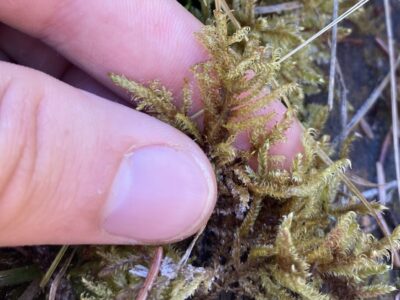
Pterygoneurum lamellatum belongs to the family Pottiaceae, a group of mosses renowned for their exceptional drought tolerance and ability to colonize harsh environments. Like all mosses in this family, it is a non-vascular plant, meaning it lacks the specialized conducting tissues that characterize larger plants. The species is characterized by its densely packed, cushion-forming growth pattern that creates tight mounds on substrate surfaces.
The leaves of this moss are lance-shaped and arranged in a spiral pattern around the stem, creating a distinctive architectural elegance at microscopic scales. A defining characteristic lies in the lamellae—thin, blade-like structures on the leaf surface that give the species its scientific name. These lamellae serve multiple functions: they increase surface area for photosynthesis, aid in water absorption, and provide structural support. The leaf margins are typically rolled inward, a feature that helps the moss conserve precious moisture during dry periods.
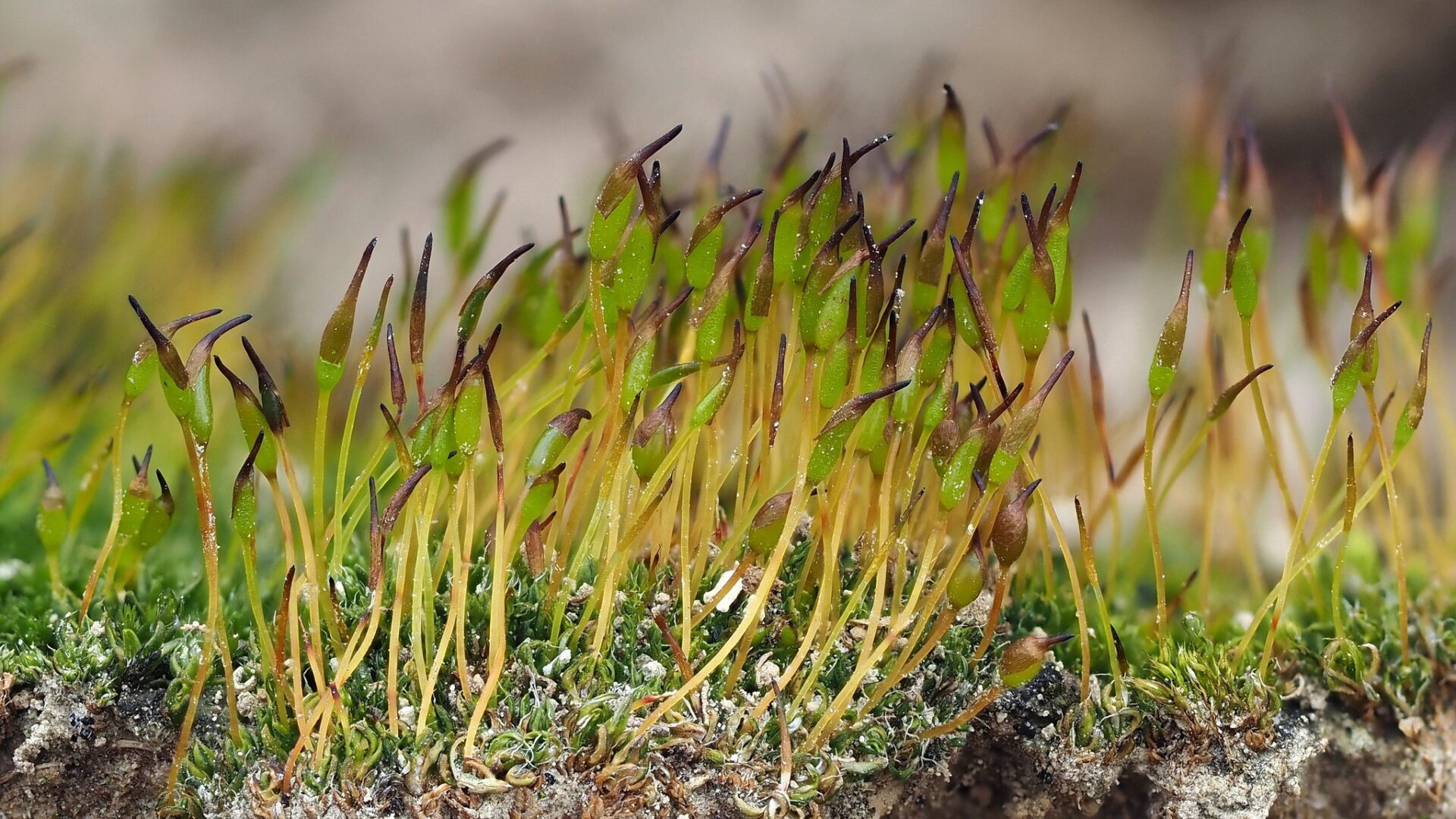
When viewed under magnification, Pterygoneurum lamellatum reveals intricate cellular patterns and specialized structures that reflect millions of years of evolutionary refinement. The costa (midvein) runs through the center of each leaf, providing structural support and facilitating nutrient transport. The sporophyte—the spore-producing structure—emerges from the gametophyte as a slender stalk topped with a capsule containing thousands of microscopic spores.
As a bryophyte, Pterygoneurum lamellatum follows a life cycle fundamentally different from flowering plants and ferns. The dominant phase is the gametophyte—the leafy moss plant we observe in nature. This generation produces male and female reproductive organs, and after fertilization, a sporophyte develops, eventually releasing spores that disperse to establish new colonies.
The moss grows slowly but persistently, gradually expanding its cushion-like colonies over months and years. Growth accelerates during periods of moisture availability, particularly in spring and autumn when rainfall is more frequent. In winter, the moss enters a state of dormancy, its metabolism slowing dramatically as temperatures drop. This remarkable ability to suspend active growth and resume it when conditions improve is central to the species’ success in temperate and boreal regions.
The species exhibits exceptional desiccation tolerance—it can lose up to 90% of its water content and enter a cryptobiotic state, only to revive completely when moisture returns. This adaptation allows Pterygoneurum lamellatum to survive in environments that would be lethal to most plants. The moss can remain dormant for extended periods, waiting for favorable conditions that may arrive months or even years apart.
INaturalist data indicates that Pterygoneurum lamellatum has been recorded across a remarkably wide geographic range spanning Europe, North America, and Asia. The species appears throughout central and western Europe, including Germany, France, Switzerland, Austria, and the United Kingdom. In North America, populations extend from the Pacific Northwest through the intermountain West to the Great Basin, and across Canada into the Arctic archipelago. Additional records from Russia and Siberia suggest an even broader Holarctic distribution.
This moss favors exposed, mineral-rich substrates in semi-arid and temperate regions. It colonizes:
The species demonstrates a strong preference for alkaline or neutral substrates, particularly those rich in calcium. It thrives in open, well-lit situations with minimal competition from vascular plants. Altitude ranges from sea level to high mountain elevations, though it is most abundant in lowland and submontane zones. The species tolerates considerable climatic variation, from maritime climates with regular rainfall to continental regions with pronounced seasonal extremes.
Mosses do not produce flowers in the conventional sense; instead, Pterygoneurum lamellatum reproduces through a combination of sexual and asexual mechanisms. Sexual reproduction occurs when sperm from male structures (antheridia) fertilizes eggs in female structures (archegonia), a process requiring at least a film of water. The resulting sporophyte develops within the female structure and eventually produces a capsule containing thousands of spores.
Spore dispersal occurs through wind and water movement, allowing the species to colonize distant locations. The spores are microscopic and incredibly light, capable of traveling vast distances on air currents. Asexual reproduction through fragmentation also occurs—pieces of the moss colony can break off and establish new growth, accelerating colonization of suitable habitat. Gemmae (asexual propagules) may also develop under certain conditions, providing an additional reproductive strategy. The species’ reproductive flexibility explains its success in colonizing diverse habitats across multiple continents and its ability to maintain populations even in isolated locations.
While Pterygoneurum lamellatum lacks the economic importance of some plant species, it holds significant ecological and scientific value. The moss serves as a pioneer species, colonizing bare ground and initiating the process of soil development and succession toward more complex plant communities. It stabilizes loose substrates and provides microhabitat for invertebrates and other microorganisms. From a scientific perspective, the species is valuable for studying bryophyte ecology, plant adaptation, and the mechanisms of desiccation tolerance—research with potential applications in agriculture and biotechnology.
Cultivation of Pterygoneurum lamellatum is possible but challenging for most gardeners. The moss requires well-draining, alkaline substrate, bright indirect light, and careful watering to maintain appropriate moisture levels without promoting fungal growth. Enthusiasts of bryophyte gardening may cultivate the species in specialized terrariums or moss gardens designed to mimic its natural habitat. The species contributes to the aesthetic appeal of rock gardens and alpine troughs, where its cushion-like growth habit provides textural interest and ecological authenticity.
Ancient survivors: Mosses like Pterygoneurum lamellatum have existed for over 450 million years, predating flowering plants by more than 200 million years, making them among Earth’s oldest land plants.
Extreme desiccation tolerance: The species can lose virtually all its water content and enter a state of suspended animation, remaining viable for years in this dormant condition—a feat unmatched by most plants.
Three-continent distribution: With over 590 recorded occurrences across Europe, North America, and Asia, Pterygoneurum lamellatum demonstrates one of the most impressive distributions of any moss species, rivaling many vascular plants.
Microscopic marvels: The lamellae that give this species its name are thin, blade-like structures visible only under magnification, yet they represent a sophisticated adaptation for maximizing photosynthetic surface area while minimizing water loss.
Pioneer ecologist: As a colonizer of bare, disturbed ground, this moss plays a crucial role in primary succession, breaking down rock surfaces and accumulating organic matter that allows other plants to establish.
Water-independent reproduction: Unlike flowering plants, mosses require only a thin film of water for sexual reproduction, allowing them to breed successfully in environments too dry for most plants.
Living fossils: The basic body plan and reproductive strategy of Pterygoneurum lamellatum has remained essentially unchanged for hundreds of millions of years, making it a living window into Earth’s ancient plant communities.