Plants
| Kingdom | Plantae |
|---|---|
| Phylum | Bryophyta |
| Class | Bryopsida |
| Order | Dicranales |
| Family | Leucobryaceae |
| Genus | Leucobryum |
| Species | Leucobryum albidum |
Leucobryum albidum, commonly known as pincushion moss, is a species of moss with a wide distribution in the northern and southern hemispheres. This diminutive bryophyte has quietly conquered some of the planet’s most challenging environments, from windswept forest floors to sun-baked rocky outcrops. What makes this moss so special is not its size—it measures a mere 3–10 centimeters in height—but its extraordinary resilience and its pivotal role in forest regeneration. Step into any woodland where conditions favor this species, and you’ll discover one of nature’s most elegant solutions to survival in dry, disturbed places.
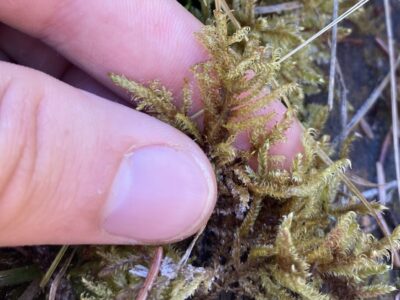
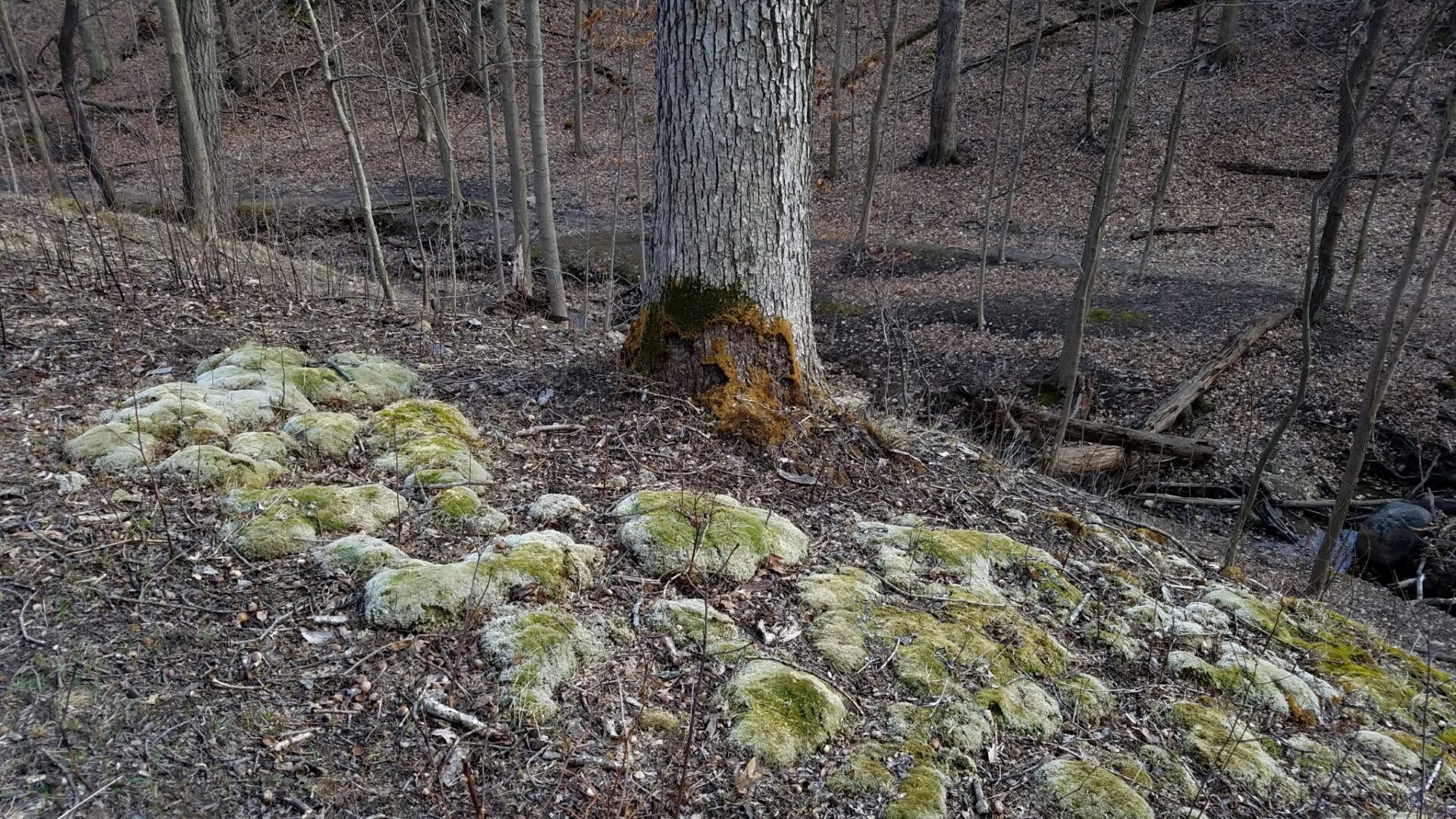
L. albidum has a tendency to form small, spiky-looking cushions of relatively narrow and densely packed leaves. The moss grows in compact, velvety mounds that can reach 10 centimeters in diameter, though most cushions remain smaller and more compact than its close relative Leucobryum glaucum.
The leaves themselves tell a fascinating story of adaptation. Species are characterized by having thick, whitish leaves with a large, expanded costa, and the characteristic pale color is caused by air bubbles in the leucocysts. These specialized air-filled cells create the distinctive whitish or pale green appearance that gives the genus its name—meaning “white moss” in Greek. L. albidum typically has 6–10 rows of shortly rectangular laminal cells with squared end walls and a sharply defined border of 2–3 rows of narrowly elongate cells, and the nerve generally lacks a central V-shaped groove on the dorsal side.
When dry, the cushions can appear almost ghostly white, like tiny patches of snow on the forest floor. When moistened, they transform into a vibrant green, revealing the chlorophyll-bearing cells hidden beneath the protective leucocyst layer. This color shift is one of the moss’s most beautiful features—a visual record of its water status.
Leucobryum albidum characteristically occurs in small, low cushions, usually no more than 10 cm in diameter. Stems are less than 1 cm tall, rarely reaching 4.5 cm. This compact growth habit is no accident—it’s a strategic adaptation that reduces water loss in the dry, open habitats where this moss thrives.
The moss grows year-round in suitable climates, with new shoots continuously extending upward while older growth below gradually browns and becomes incorporated into the dense cushion structure. This moss is acrocarpous, meaning its spore capsules are borne at the tips of the upright stems, adding to its visual appeal. Unlike many mosses that struggle in dry conditions, Leucobryum albidum has evolved a remarkable strategy: its thick, multi-layered leaves with specialized air cells allow it to maintain internal moisture reserves even when the surrounding environment is parched.
The moss exhibits tremendous plasticity in its growth form. It can form large spreading patches, so microscopic identification is always recommended. This flexibility enables the species to respond to local environmental conditions, creating different morphologies depending on moisture availability, substrate, and light exposure.
Genetically and morphologically identifiable specimens of L. albidum were sampled in Europe and North America, in contrast to the traditional interpretation of L. albidum as a North American endemic. Leucobryum albidum is now known to be a locally frequent member of the British flora that is also present in Ireland and western Europe. The species displays a notably southern-Atlantic distribution pattern compared to its larger cousin L. glaucum, though the two species occupy broadly overlapping ranges.
Habitats include moist humus, sandy soil, rotting logs and stumps, tree bases, hardwood trees, pine and palms, forests, bogs, and swamps at low to moderate elevations (0–1000 m). A Leucobryum on soil, rock or bark in a dry situation such as on rotting tree stumps in woodland is very likely to be this species. The moss shows a remarkable ability to colonize disturbed areas and pioneer substrates, making it one of the first bryophytes to establish on newly exposed soil or decaying wood. It is often found in soil that ranges from acidic to neutral pH and can grow well in woodland environments, thriving in the understory where shade is prevalent, with decaying wood and organic matter providing an ideal substrate.
Unlike flowering plants, Leucobryum albidum reproduces through an ancient mechanism that has remained largely unchanged for over 400 million years. Capsules mature August–January. Leucobryum albidum characteristically occurs in small, low cushions and frequently bears sporophytes, with 61 percent of 1,035 collections examined having sporophytes. This prolific spore production distinguishes it sharply from L. glaucum, which rarely produces fertile structures.
White moss reproduces primarily through spores, producing sporophytes on slender stalks that contain capsules releasing spores into the wind, leading to the potential spread of new moss plants. Beyond sexual reproduction, the species is a master of vegetative propagation. These mosses commonly reproduce vegetatively when a portion of the plant breaks away and continues growing as a separate plant, frequently becoming dislodged by crows, game birds, squirrels and other rodents, and they are apparently adapted to being uprooted and moved because they can put down new rootlike rhizoids from just about any part of the plant, then grow again and establish a new population. This dual reproductive strategy—combining spore dispersal with vegetative fragmentation—makes L. albidum exceptionally successful at colonizing new habitats.
Leucobryum mosses are some of the most popular mosses cultivated in gardens. The species’ compact size, striking appearance, and ability to thrive in partial shade make it an ideal choice for moss gardens and terrariums. Due to its moisture-retaining properties, it has been used in gardening as a natural mulch. Beyond aesthetics, L. albidum plays crucial ecological roles: Leucobryum albidum plays a vital role in its ecosystems, serving as a pioneer species that helps stabilize and enrich soils, and its dense mats create a microhabitat for other organisms, providing shelter and moisture retention.
The thick cushions of leucobryum mosses are perfect microhabitats for a variety of small invertebrates, including springtails and an order of little-studied mites called oribatid mites or moss mites. The species also provides shelter for salamanders and other small creatures seeking refuge in forest microhabitats. For naturalists and gardeners alike, cultivating L. albidum means creating living tapestries that support entire miniature ecosystems beneath one’s feet.
This plant first appeared in scientific literature as Dicranum albidum in 1805 published by the French naturalist Palisot de Beauvois.
The characteristic pale color is caused by air bubbles in the leucocysts, and these bubbles are theorized to be necessary for the function of the chlorocysts for the purpose of gas exchange. The moss essentially creates a built-in “air conditioning” system within its leaves.
The species name albidum means “white” in Latin, and the genus name Leucobryum means “white bryum,” or “white moss” (leuco- meaning “white” in Greek; bryum meaning “moss”).
In the Pacific Northwest region of North America, this moss plays a crucial role in the recovery of clear-cut forests, acting as a nursery for tree seedlings and facilitating the regeneration of the forest ecosystem.
Unlike most mosses that require constantly moist conditions, L. albidum thrives in surprisingly dry habitats, thanks to its unique leaf structure that allows it to survive desiccation and rapidly rehydrate when moisture returns.
Species are dioecious, with male plants stunted and found growing among the leaves of the female plants. The diminutive males are so small they often go unnoticed, hidden within the female cushions.
The moss can live for many years, with individual cushions potentially persisting for decades as they slowly accumulate new growth at their margins while older tissue decays below.