Animals
| Kingdom | Animalia |
|---|---|
| Phylum | Arthropoda |
| Class | Diplopoda |
| Order | Sphaerotheriida |
| Family | Zephroniidae |
| Genus | Castanotherium |
| Species | Castanotherium humile |
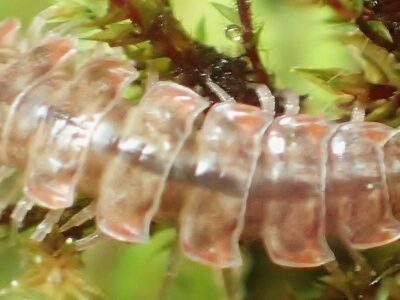
Castanotherium humile belongs to one of nature’s most intriguing groups—the giant pill millipedes—creatures that have perfected the art of defense through a remarkable rolling mechanism refined over millions of years. This small but fascinating member of the Zephroniidae family represents the incredible diversity hidden within the Indonesian archipelago and Philippine islands, where it navigates the humid forest floor with quiet determination.
Castanotherium humile is a member of the Zephroniidae family of giant pill millipedes in the taxonomic order Sphaerotheriida. Like all members of its genus, this species shares the characteristic features that define giant pill millipedes—a compact, rounded body capable of coiling into a protective sphere.
The body structure of Castanotherium humile follows the typical architecture of Zephroniidae species, with a hardened exoskeleton composed of overlapping plates. The thoracic shield and subsequent body segments are designed to interlock seamlessly when the animal rolls into a defensive position. Key identification features include:
Castanotherium humile is a detritivore, meaning it feeds on dead organic matter such as leaves and wood on the forest floor. This humble lifestyle belies the creature’s ecological importance—these millipedes are essential recyclers of nutrients in their forest ecosystems.
The species inhabits the leaf litter and soil layers of humid tropical forests, where it spends much of its time foraging among decomposing vegetation. Like most millipedes, Sphaerotheriida inhabit mainly the leaf litter of humid forests. When threatened, Castanotherium humile employs the characteristic defense mechanism of its order: when rolled-up, predators are unable to unravel giant pill millipedes since the margins of their second and last dorsal plates fit perfectly into one another, creating a sealed ball.
What makes this defensive strategy particularly effective is that many giant pill millipede species have special ledges (‘locking carinae’) on the underside of the tergite tips and the anal shield which can be moved above a brim on the thoracic shield. These millipedes remain passively locked-up since they do not need continuous muscle contractions to remain in the rolled-up position. This means the animal can remain safely coiled without expending energy.
Castanotherium humile is part of a diverse genus with 50 species found in Indonesian Islands and the Philippines. The genus Castanotherium represents one of the major components of the Zephroniidae family which occurs in southeast Asia from the Himalayas and China south and east to Sulawesi and also inhabits some Philippine islands.
The species’ specific distribution reflects the rich biodiversity of Southeast Asian tropical forests, where humid conditions and abundant leaf litter provide ideal habitat. These regions represent a global hotspot for millipede diversity, with numerous endemic species found nowhere else on Earth.
Castanotherium humile sustains itself entirely through the consumption of decomposing organic matter. Like earthworms, they play an important role in decomposition; by breaking down decaying organic matter they release locked up nutrients back into the soil. Such recycling is essential for plant nutrition and accordingly for the entire ecology.
The species likely relies on specialized digestive adaptations to extract nutrition from plant material that other organisms cannot easily process. It is possible that giant pill millipedes rely on special bacteria in their gut, much as termites do, to exploit the nutritional value of otherwise indigestible material such as lignin. This symbiotic relationship allows Castanotherium humile to thrive in an ecological niche where few other creatures can compete.
Little is documented about the specific reproductive behavior of Castanotherium humile, though it follows the general patterns of Sphaerotheriida. Like other members of this order, reproduction involves the production of eggs, with development occurring through a series of instars (growth stages) before reaching adulthood.
Juvenile Castanotherium humile individuals display an interesting developmental feature: juvenile sphaerotheriidans show the same gap as the Glomerida in their body structure, suggesting that the perfect interlocking mechanism develops gradually as the animal matures. This ontogenetic change represents an adaptation that provides better protection as the millipede grows larger and more vulnerable to predation.
The conservation status of Castanotherium humile remains undocumented in major international databases, reflecting a broader pattern of data deficiency for many Southeast Asian invertebrates. The species has been recorded only once in scientific collections, limiting our understanding of its true distribution and population dynamics.
Like many forest-dwelling arthropods, Castanotherium humile likely faces pressures from habitat loss and forest fragmentation as human activities expand throughout Southeast Asia. The conversion of primary forests to agricultural land and urban development threatens the humid forest ecosystems that these millipedes require. However, the species’ ability to persist in leaf litter and soil means it may be more resilient than some surface-dwelling arthropods, provided that suitable forest habitat remains.
The cryptic nature of giant pill millipedes—their small size and nocturnal habits—means that population trends are difficult to assess without dedicated survey work. Protecting intact forest ecosystems, particularly in the Indonesian archipelago and Philippines, remains the most effective conservation strategy for Castanotherium humile and countless other undocumented species.