Plants
| Kingdom | Plantae |
|---|---|
| Phylum | Bryophyta |
| Class | Bryopsida |
| Order | Hypnales |
| Family | Sematophyllaceae |
| Genus | Sematophyllum |
| Species | Sematophyllum demissum |
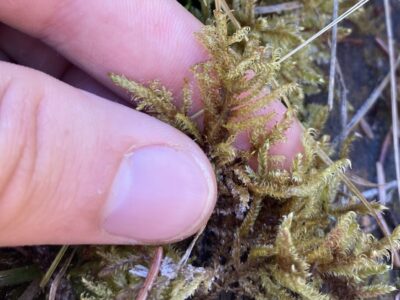
Sematophyllum demissum reveals itself as one of nature’s most delicate architectural marvels—a moss that transforms damp substrates into living tapestries of green. Despite its diminutive stature, this bryophyte commands attention from bryologists and naturalists who recognize the profound ecological significance of these ancient plants. Found across temperate regions spanning from western North America to continental Europe, S. demissum thrives in the shadowed world beneath forest canopies where moisture lingers and light filters softly through the layers above.
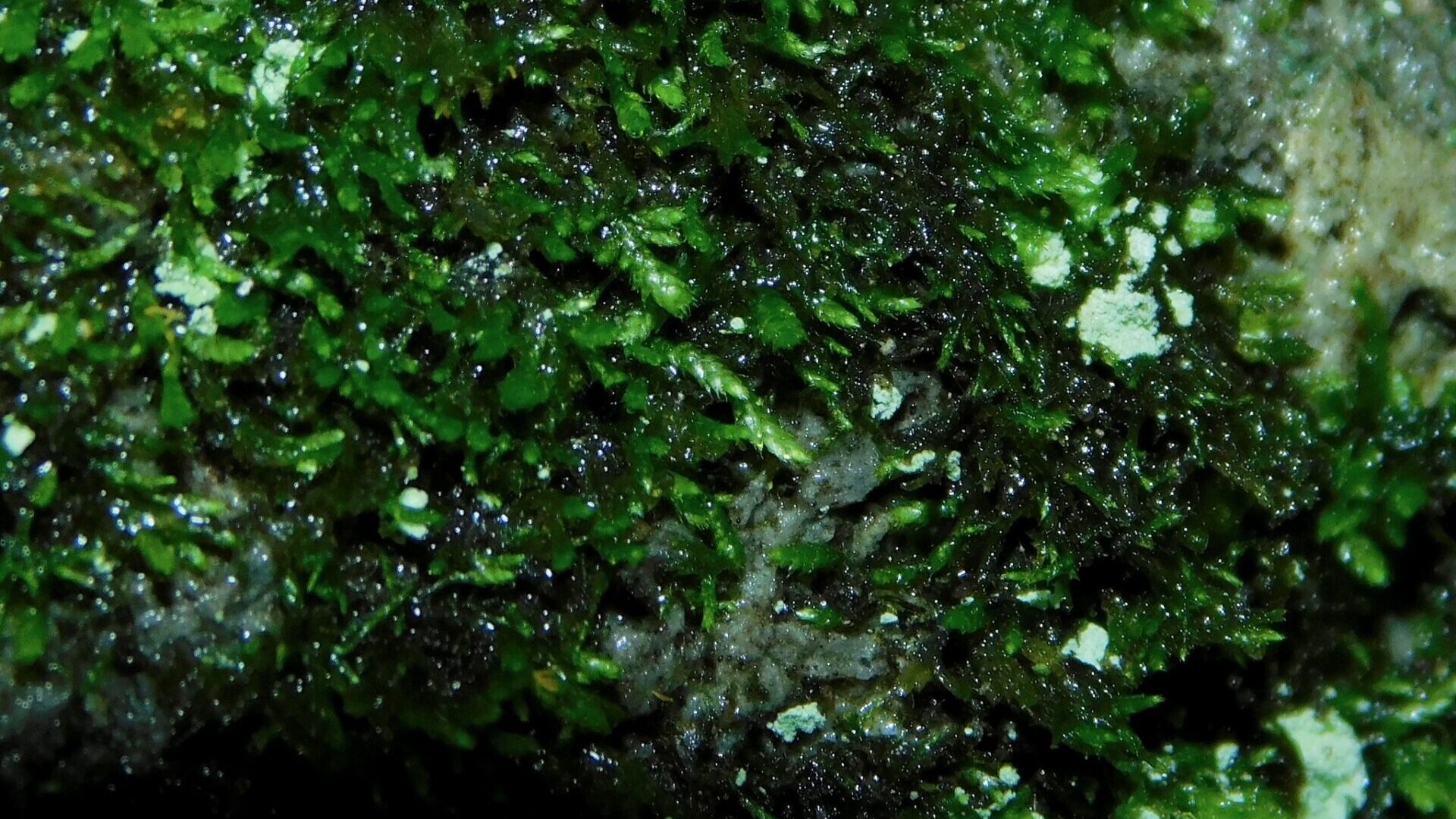
Sematophyllum demissum belongs to the family Sematophyllaceae, a group of pleurocarpous mosses characterized by their distinctive branching patterns and leaf arrangement. This moss forms dense, mat-like colonies that cling to rocks, fallen logs, and soil surfaces in humid environments. The stems are creeping and irregularly branched, creating an intricate network that can extend several centimeters across favorable substrates.
The leaves of S. demissum are small and delicate, arranged in two rows along the stem in a pattern known as distichous arrangement. Each leaf displays a characteristic shape with a pointed apex and a subtle costa (midrib) that extends partway up the leaf blade. Under magnification, the leaf cells reveal an intricate mosaic of rectangular cells with thin walls, perfectly adapted for rapid water absorption and nutrient exchange—a critical adaptation for bryophytes that lack true vascular tissue.
Notable adaptation: The entire plant body functions as an absorbent sponge, capable of taking up water through any exposed cell surface. This allows S. demissum to remain dormant during dry periods and rapidly rehydrate when moisture returns, a survival strategy refined over millions of years of evolution.
Mosses like S. demissum follow a life cycle fundamentally different from flowering plants, alternating between two distinct multicellular forms. The gametophyte—the leafy moss plant we observe—produces sperm and eggs in specialized structures. When moisture is abundant, sperm swim through water films to fertilize eggs, initiating the development of a sporophyte, a smaller structure that produces spores.
Growth in S. demissum occurs year-round in suitable conditions, with rates accelerating during spring and autumn when moisture levels peak. The moss thrives in cool, humid climates where fog and rainfall maintain consistent moisture. In temperate forests, populations can remain active through winter, photosynthesizing on mild days when temperatures permit. The creeping growth habit allows colonies to gradually expand across suitable substrates, sometimes taking years to establish substantial coverage.
Reproduction through spores enables S. demissum to colonize new habitats, with spores dispersing via wind currents to distant locations. This reproductive strategy has allowed the species to establish populations across multiple continents, making it a true cosmopolitan bryophyte.
INaturalist data indicates S. demissum maintains a broad distribution across the Northern Hemisphere, with documented occurrences spanning from the United Kingdom and Ireland through continental Europe (France, Switzerland, Germany) and into North America (United States and Canada). The species shows a preference for oceanic and humid continental climates where moisture availability remains relatively consistent throughout the year.
This moss favors shaded, humid microhabitats including:
The species exhibits a marked affinity for acidic substrates, thriving on siliceous rocks and nutrient-poor soils where competitive vascular plants struggle to establish. Altitude ranges from sea level in maritime regions to montane forests at moderate elevations, demonstrating remarkable ecological flexibility across its range.
Mosses do not produce flowers in the conventional sense, yet S. demissum engages in sexual reproduction through a process fundamentally alien to seed plants. During moist seasons, specialized reproductive structures called gametangia develop on the moss plant. Male structures (antheridia) produce swimming sperm, while female structures (archegonia) contain eggs waiting for fertilization in the aqueous environment created by damp conditions.
Following successful fertilization, a sporophyte develops—a stalk bearing a capsule filled with thousands of microscopic spores. These spores, released when the capsule dries and opens, disperse on air currents to potentially colonize new habitats. The entire reproductive cycle depends absolutely on water availability, linking S. demissum to moist environments and making it an indicator of healthy, undisturbed forest conditions where moisture persists.
While S. demissum lacks the direct economic importance of flowering plants, its ecological value proves immeasurable. Bryophytes like this species stabilize soil on steep slopes, regulate moisture in forest ecosystems, and provide critical habitat for invertebrates, fungi, and other microorganisms. In laboratories, mosses serve as model organisms for studying plant physiology, evolution, and environmental responses.
Cultivation of S. demissum presents challenges for typical gardeners, as it demands consistent moisture, shade, and acidic growing media. Bryophyte enthusiasts cultivate this species on moist rock substrates or specialized moss gardens, where it thrives in cool greenhouses or shaded outdoor settings. The moss contributes to living green walls and moss gardens gaining popularity among sustainable landscapers seeking low-maintenance, water-wise alternatives to conventional plantings.
Ancient lineage: Mosses are among the oldest land plants, with fossil evidence suggesting bryophytes colonized terrestrial environments over 450 million years ago—long before flowering plants evolved.
Water wizards: S. demissum can lose up to 95% of its water content and enter a dormant state called poikilohydry, then fully rehydrate and resume photosynthesis within hours of moisture returning.
Spore superpowers: A single moss capsule can release millions of spores, each capable of traveling hundreds of kilometers on atmospheric currents to colonize new territories.
Biomonitors: Scientists use mosses like S. demissum to assess air pollution levels, as these plants readily absorb airborne contaminants and reflect environmental quality.
Cosmopolitan colonizer: The wide distribution of S. demissum across multiple continents suggests remarkable dispersal capabilities and broad ecological tolerance.
Miniature ecosystems: Moss colonies host entire communities of microscopic organisms, including tardigrades, nematodes, and specialized insects that depend entirely on bryophyte microhabitats.
Climate change indicator: Bryophytes respond rapidly to shifts in moisture and temperature, making S. demissum a valuable indicator species for monitoring forest health in response to climate change.