Animals
| Kingdom | Animalia |
|---|---|
| Phylum | Bryozoa |
| Class | Gymnolaemata |
| Order | Ctenostomatida |
| Family | Paludicellidae |
| Genus | Paludicella |
| Species | Paludicella articulata |
Paludicella articulata is a freshwater bryozoan that invites us to reconsider what it means to be an animal. These microscopic colonial creatures demonstrate that life’s most remarkable innovations don’t always require size or mobility. Found across the Northern Hemisphere and beyond, Paludicella articulata represents a living link to ancient evolutionary strategies for survival in freshwater ecosystems.
Paludicella articulata is a species of freshwater moss animal in the family Paludicellidae. The colonies themselves are the true spectacle here—delicate, thread-like structures that sprawl across substrates in freshwater streams and ponds. Colonies can grow to a maximum diameter of 10 cm (4 in).
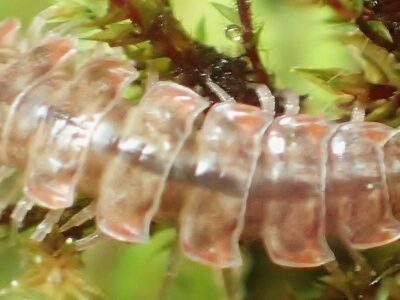
Paludicella articulata forms very simple thread-like or runner-like colonies on various substrates in quiet freshwater streams. Within the colony the individual zooids are arranged one after another and form branches. Colonies of P. articulata consist of sometimes creeping but more often elongated, mostly erect, slender zooids. What makes these colonies truly distinctive is their composition: The cuticle (ectocyst) is uncalcified and chitinous. This chitinous exterior gives the colonies a characteristic sheen reminiscent of beetle shells.
Each individual zooid—the building block of the colony—houses an elaborate feeding apparatus. The polypide mainly consists of the digestive tract and the lophophore which carries the tentacles. When undisturbed, these tentacles extend to filter food from the water; when threatened, the cystid essentially is the protective body-wall into which the entire polypide may retract if disturbed.
Paludicella articulata forms very simple thread-like or runner-like colonies on various substrates in quiet freshwater streams. These bryozoans are filter-feeders, constantly drawing water through their tentacled feeding structures. Bryozoans feed on small microorganisms, including diatoms and other unicellular algae. These are trapped by the protrusible ciliated feeding tentacles, or lophophore.
The lifestyle of Paludicella articulata is fundamentally colonial. Individual zooids cannot survive alone—they exist only as part of a living community. Within the colony the individual zooids are arranged one after another and form branches. This arrangement creates an efficient filter-feeding system where water flows continuously through the colony structure.
Colonial growth follows a predictable seasonal pattern. Colonies are (usually) smallest in springtime, growing over the summer. Monitoring water temperatures in the spring can track when growing conditions will become optimal for colony growth (15-28˚C). As autumn approaches and water temperatures drop, colonies begin to decline, setting the stage for their most remarkable adaptation.
It is found in Europe, Asia, and North and South America. The species shows remarkable cold tolerance. Paludicella articulata occurred at 239 localities, 20 of which were north of 70°, up to 71° 09′ N (global maximum). This northern distribution reflects the species’ ability to thrive in harsh environments that would eliminate less resilient organisms.
The geographic range of Paludicella articulata extends from temperate regions throughout the Northern Hemisphere, with isolated populations discovered in New Zealand. Paludicella, reported almost 100 years ago from the City of Dunedin waterworks, was still found only in a single reservoir of that city. The species prefers quiet waters—streams with gentle currents, ponds, and lakes where suspended organic matter provides abundant food.
Like all bryozoans, Paludicella articulata is a filter-feeder that sustains itself on microscopic particles suspended in freshwater. Bryozoans feed on small microorganisms, including diatoms and other unicellular algae. These are trapped by the protrusible ciliated feeding tentacles, or lophophore. The tentacles create water currents that draw food particles directly into the mouth.
Bryozoans are most common in still or slow-flowing waters with high densities of phytoplankton and suspended organic matter. This preference for nutrient-rich waters means Paludicella articulata thrives in environments where organic productivity is high. The species can tolerate waters with low oxygen levels and elevated concentrations of organic compounds, giving it an ecological niche unavailable to more sensitive organisms.
The reproductive strategy of Paludicella articulata is fundamentally different from most animals. The ninth species, Paludicella articulata, represented the Class Gymnolaemata. Unlike most freshwater bryozoans, which produce dormant structures called statoblasts, Paludicella articulata relies on a different strategy. All but Paludicella produce statoblasts. Paludicella develop overwintering structures that are small, irregular in shape and difficult to identify.
The species reproduces primarily through asexual budding—new zooids develop directly from existing colony members, creating genetically identical clones. This colonial reproduction allows rapid expansion when conditions are favorable. When environmental stress arrives, the species produces specialized overwintering structures that enable survival through harsh conditions. Statoblasts can remain dormant for considerable periods, and while dormant can survive harsh conditions such as freezing and desiccation. They can be transported across long distances by animals, floating vegetation, currents and winds.
The conservation status of Paludicella articulata remains undocumented by major conservation organizations, reflecting its status as a “common” but often overlooked organism. The species maintains stable populations across much of its range, though localized extinctions occur in heavily polluted or severely altered aquatic systems.
Conservation note: While not formally assessed, Paludicella articulata serves as an indicator of freshwater ecosystem health. The species can become a nuisance in human-managed water systems. While bryozoans are non-toxic and do not pose a health risk to humans or animals, they do grow quickly (in the right conditions they can double in size in a week) and thus can clog pipes and filters. This rapid growth, while problematic in water treatment facilities, demonstrates the species’ ecological vigor in suitable habitats.
Preliminary observations have shown a small lumen within the cerebral ganglion of the ctenostome Paludicella articulata. The presence of a lumen and a neuroepithelial organization of the nerve cells within the cerebral ganglion are confirmed. This represents a unique nervous system organization never before documented in ctenostome bryozoans.
They have chitin shine that is similar to the beetles shield. The chitinous coating of Paludicella articulata colonies creates a distinctive glossy appearance under microscopy.
Fouling bryozoans Plumatella repens and Paludicella articulata cover any surface that is underwater during a big infestation. In water treatment systems, colonies can completely coat pipes and filters, sometimes doubling in size within a single week.
Four tentacle nerves project from the cerebral ganglion into each tentacle. Each zooid possesses a sophisticated nervous system that coordinates tentacle movement and feeding behavior.
A study estimated that one group of colonies in a patch measuring 1 square meter (11 sq ft) produced 800,000 statoblasts. The reproductive potential of bryozoan colonies is staggering, enabling rapid recolonization of suitable habitats.
The species was first formally described by Ehrenberg in 1831 and has since become a model organism for studying bryozoan nervous system evolution and freshwater ecology.
Two colonies from the outlet of Snaigynas Lake (Lazdijai district) were found in May 2017. Hibernaculae were not found. Recent surveys continue to document the species’ presence across Europe, demonstrating its persistence in modern freshwater ecosystems.
Økland, K.A., & Økland, J. (2000). “Freshwater bryozoans (Bryozoa) of Norway: Distribution and ecology of Cristatella mucedo and Paludicella articulata.” Hydrobiologia, 421, 1-24.
Schwaha, T., et al. (2015). “The nervous system of Paludicella articulata – first evidence of a neuroepithelium in a ctenostome ectoproct.” Frontiers in Zoology, 12, 27.
Satkauskiene, I., et al. (2018). “Freshwater bryozoans of Lithuania (Bryozoa).” ZooKeys, 767, 1-24.
Wood, T.S. (2005). “The pipeline menace of freshwater bryozoans.” Denisia, 16, 203-208.