Plants
| Kingdom | Plantae |
|---|---|
| Phylum | Bryophyta |
| Class | Bryopsida |
| Order | Dicranales |
| Family | Leucobryaceae |
| Genus | Leucobryum |
| Species | Leucobryum candidum |
Leucobryum candidum is a moss that exemplifies the quiet beauty of the bryophyte world—a plant so unassuming that most people walk past it daily without notice, yet so perfectly adapted to its environment that it has persisted for millennia. This delicate moss belongs to the Leucobryaceae family, a group of mosses recognized by their distinctive pale or whitish appearance, which gives the genus its name derived from the Greek words for “white” and “moss.” Found across the temperate and subtropical regions of the Southern Hemisphere, from Australia to New Zealand to Southeast Asia, Leucobryum candidum thrives in the moist, shaded understory of forests where few other plants dare to venture.
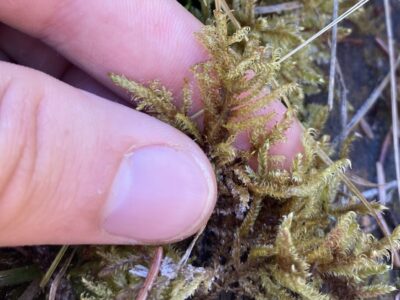
Leucobryum candidum is a small, pale moss that forms dense, cushion-like mats on the forest floor and on rotting logs. The individual plants are only a few centimeters tall, yet when clustered together in their characteristic colonies, they create a striking silvery-white or cream-colored carpet that can cover substantial areas. The leaves are arranged in a distinctive spiral pattern around the stem, each one small and lance-shaped, with a structure that allows the moss to retain moisture even in relatively dry conditions.
The key to identifying this species lies in its remarkable color and texture. Unlike many mosses that appear green due to active photosynthesis, Leucobryum candidum often displays a pale, almost translucent quality that makes it stand out in the forest landscape. This coloration results from the presence of hyaline (transparent) cells in the leaf structure—specialized cells that serve as water reservoirs, allowing the moss to survive periods of desiccation that would kill less resilient species.
Under magnification, the leaf structure reveals intricate details: elongated cells arranged in neat rows, with the characteristic hyaline cells interspersed among the chlorophyll-bearing cells. This cellular architecture is not merely decorative—it represents millions of years of evolutionary refinement, each feature honed to perfection for survival in the competitive world of the forest floor.
Like all mosses, Leucobryum candidum follows a life cycle dramatically different from flowering plants. The moss itself represents the gametophyte generation—the dominant, visible stage of the moss life cycle. This plant reproduces through spores rather than seeds, releasing millions of microscopic spores into the air during favorable conditions. When a spore lands in a suitable location—a moist, shaded microhabitat with adequate organic matter—it germinates and begins its transformation into a new moss plant.
The growth rate of Leucobryum candidum is measured in millimeters per year, a pace that reflects the plant’s strategy of longevity over rapid expansion. Individual plants can persist for decades, slowly accumulating biomass and contributing to the rich layer of bryophyte vegetation that characterizes healthy forest ecosystems. The moss exhibits remarkable resilience to environmental stress, capable of entering dormancy during dry periods and reviving when moisture returns—a survival strategy that has served bryophytes well since their emergence over 450 million years ago.
Growth patterns in Leucobryum candidum are intimately tied to seasonal moisture availability. In temperate regions, growth accelerates during wetter months, while in the tropical regions where this moss also occurs, growth may be continuous if moisture remains abundant. The cushion-like growth form serves multiple purposes: it maximizes surface area for water absorption, traps moisture in the humid microclimate created within the mat, and provides stability on sloping forest floors.
Leucobryum candidum has a distinctly Australasian and Southeast Asian distribution, with records from Australia, New Zealand, Fiji, Vanuatu, New Caledonia, Indonesia, Laos, Malaysia, and the Philippines. The species shows a clear preference for regions with consistent moisture and mild to cool temperatures—characteristics that define much of the temperate and subtropical regions of the Southern Hemisphere.
The moss thrives in forest habitats, particularly in:
The soil requirements for Leucobryum candidum are minimal—mosses lack true roots and obtain nutrients and water directly from their environment. However, the species does require acidic to neutral substrates rich in organic matter. The presence of Leucobryum candidum often indicates a healthy, undisturbed forest ecosystem with adequate moisture and low light penetration. Conservation note: The species depends entirely on maintaining forest structure and moisture regimes; disturbance that increases light or decreases humidity poses threats to established populations.
Mosses do not flower in the traditional sense, but Leucobryum candidum does produce reproductive structures that are equally fascinating from a botanical perspective. The species produces archegonia (female structures) and antheridia (male structures) on the same plant or on separate plants, depending on the population. When conditions are favorable—typically during wet seasons—these structures mature and release sperm cells that swim through a film of water to fertilize the archegonia.
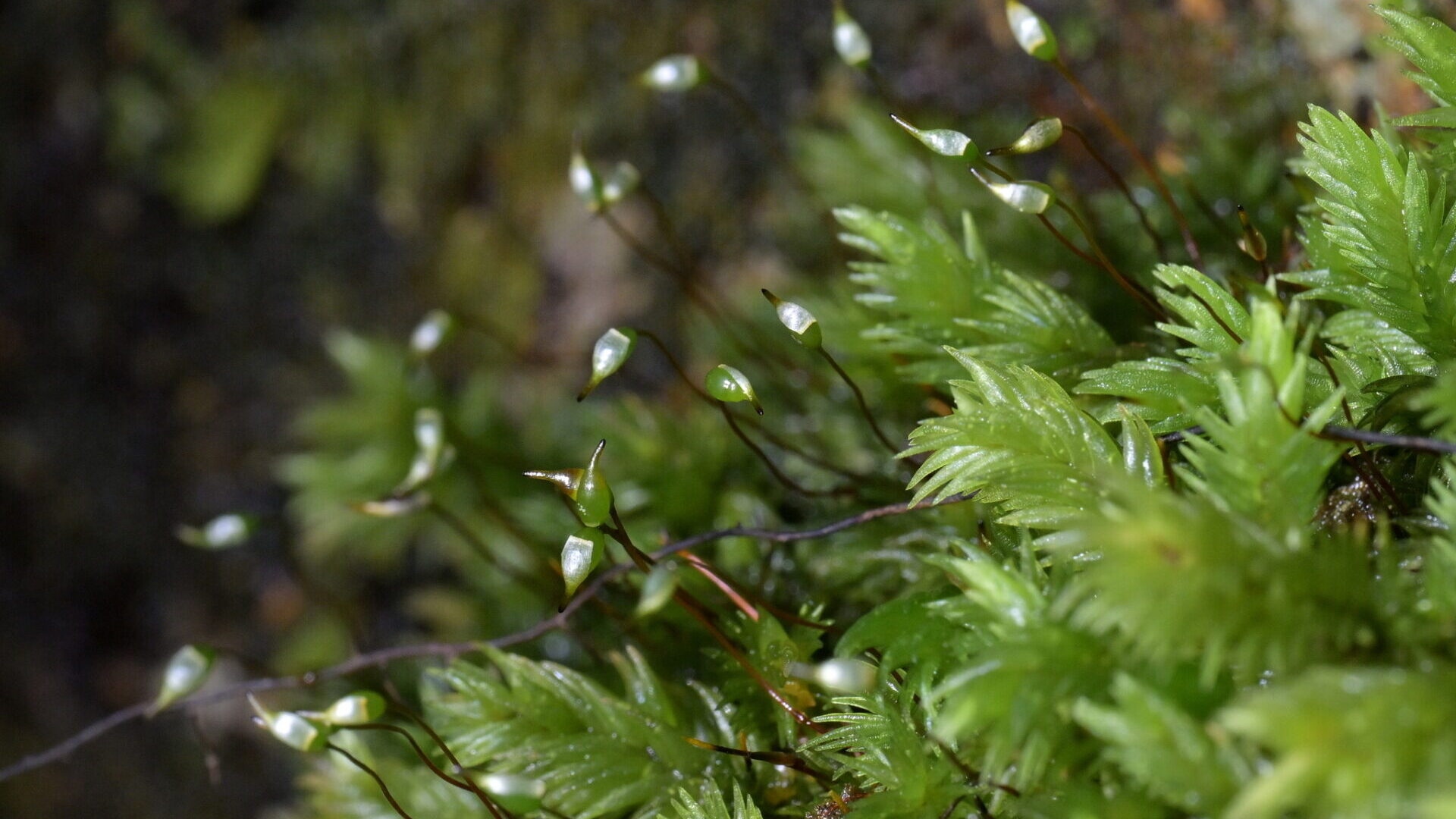
Following successful fertilization, a sporophyte develops—a structure that remains attached to the gametophyte and depends on it for nutrition. This sporophyte produces a capsule filled with spores that are eventually released into the air. A single moss plant can produce thousands of spores, each one a potential founder of a new colony. Notable adaptation: The spores of Leucobryum candidum are equipped with specialized structures called elaters that twist and unwind with changes in humidity, actively assisting in spore dispersal—a mechanism that ensures spores are released during dry conditions when they travel farthest on air currents.
While Leucobryum candidum lacks the direct economic importance of flowering plants, it plays crucial ecological roles that make it invaluable to forest health. The moss stabilizes soil on slopes, reduces erosion, and creates microhabitats for countless invertebrates, fungi, and other bryophytes. In traditional ecological knowledge, mosses have been used for various purposes—from insulation and bedding to water absorption—though specific traditional uses of Leucobryum candidum are not well documented in scientific literature.
Cultivation of Leucobryum candidum is possible but requires specific conditions. The species thrives in terrariums or moss gardens maintained at high humidity, with temperatures between 10-20°C, and indirect light. Success requires acidic growing media rich in organic matter, consistent moisture without waterlogging, and excellent air circulation to prevent fungal issues. For gardeners interested in bryophytes, Leucobryum candidum offers the reward of watching one of Earth’s most ancient plant groups flourish—a living connection to the Devonian period when mosses first colonized the land.
Ancient lineage: Mosses like Leucobryum candidum were among the first plants to colonize land over 450 million years ago, predating flowering plants by more than 200 million years—these are living fossils that have witnessed the entire history of terrestrial plant evolution.
Water storage superpowers: The hyaline cells in Leucobryum candidum can absorb and store water equivalent to 15-20 times the moss’s dry weight, allowing it to survive drought periods that would devastate most plants.
Spore dispersal champions: A single moss plant can release millions of spores, and these microscopic reproductive units can travel thousands of kilometers on air currents, enabling the species to colonize distant locations.
Forest engineers: Leucobryum candidum and other bryophytes are crucial ecosystem engineers that break down rock and wood, converting them into soil that supports the growth of larger plants—they are nature’s soil builders.
Indicator species: The presence of healthy Leucobryum candidum populations indicates a forest ecosystem with high humidity, low disturbance, and excellent air quality, making it valuable for environmental monitoring.
Resurrection plant: Like some flowering plants, Leucobryum candidum can enter a state of cryptobiosis, drying out completely and then reviving when moisture returns—it can survive this cycle hundreds of times throughout its life.
Pharmaceutical potential: While not traditionally used, bryophytes are increasingly studied for potential medicinal compounds, and the unique chemistry of mosses like Leucobryum candidum may yield bioactive compounds useful in medicine and biotechnology.
iNaturalist data indicates over 2,000 observations of Leucobryum candidum across its range, with detailed photographic documentation from contributors worldwide.
GBIF records show the species distributed across nine countries in the Southern Hemisphere and Southeast Asia, with occurrence data spanning multiple decades and providing insights into its ecological preferences.
Perenual data indicates optimal growing conditions for Leucobryum candidum in cultivation, emphasizing the importance of high humidity and acidic, organic-rich substrates.
EOL TraitBank data shows habitat associations with forest environments and tundra-like alpine regions where moisture is abundant and disturbance is minimal.
Scientific literature on Leucobryaceae family taxonomy and bryophyte ecology provides comprehensive information on the evolutionary relationships and ecological significance of this ancient plant group.