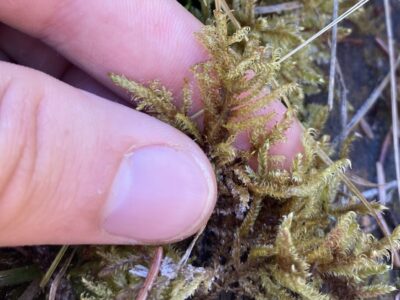
Plants
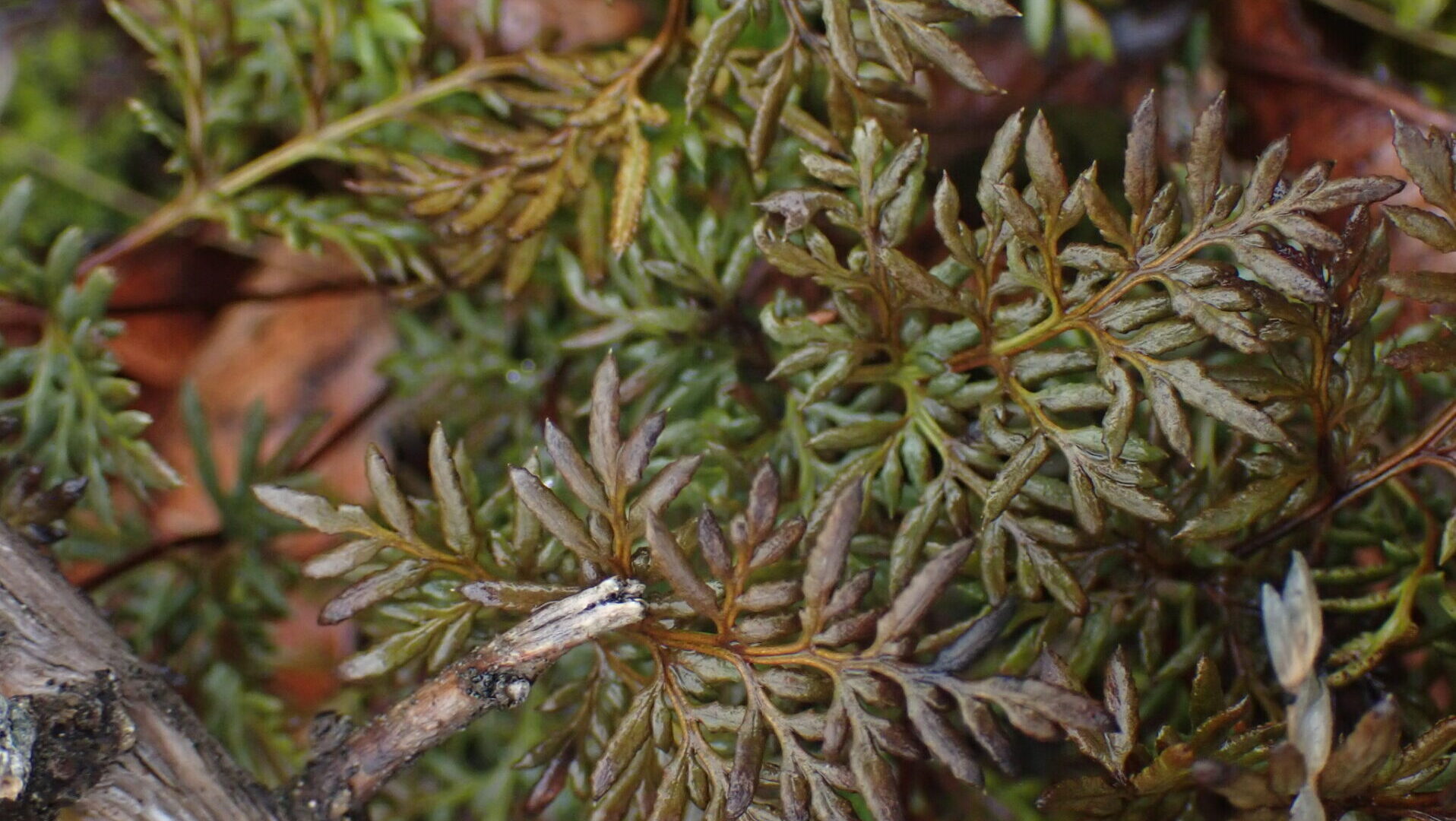
| Kingdom | Plantae |
|---|---|
| Phylum | Tracheophyta |
| Class | Polypodiopsida |
| Order | Polypodiales |
| Family | Pteridaceae |
| Genus | Aspidotis |
| Species | Aspidotis densa |
Aspidotis densa is a delicate fern that thrives in some of North America’s harshest environments—rocky cliffs, serpentine slopes, and windswept mountainsides where few other plants dare venture. Known by the common names Indian’s dream, serpentine fern, or dense lace fern, this tiny but resilient plant has adapted to life in mineral-rich, well-drained rocky crevices that would challenge most other vegetation.
What makes this fern truly special is its role as an ecological sentinel: it is a regional ecologic indicator on areas where ultramafic rocks (serpentine) are patchy, such as the Klamath and Siskayou Mountains of northern California and southwest Oregon and the Wenatchee Mountains of Washington. Its presence signals to botanists and ecologists that they’ve discovered something geologically significant.
Small perennials reaching 8-25 cm in height, these ferns have somewhat compact, creeping, branched stems with ascending tips and scales typically dark brown. The most distinctive feature of Aspidotis densa is its remarkable frond architecture. The fern has leaves on long wiry brown to black petioles (stem below the leaf), with the leaf blade occupying less than half of the total length of the leaf when including the petiole.
The fronds themselves tell a fascinating story of adaptation. The leaf blades are medium to dark green, sometimes with a glaucous or bluish cast, and are triangular, composed of many pinnae which are subdivided into narrow leaflets (pinnules). What’s particularly intriguing is the plant’s ability to adjust its form based on its reproductive needs.
Plants often have only fertile fronds, but they sometimes exhibit frond dimorphism, with sterile fronds shorter and with broader and flatter leaflets than the fertile fronds, which rise above on long petioles. The fertile frond leaflets are folded under at the edges and appear narrow and lace-like. This lace-like appearance when fertile is precisely where the plant gets its “dense lace fern” common name—a poetic descriptor that captures the intricate, delicate structure.
The leaves emerge from a short creeping rhizome covered with firm narrow scales, allowing the plant to slowly spread across rocky terrain while remaining anchored in crevices. Like all ferns, Aspidotis densa follows an ancient growth pattern: new fronds are produced in spring by circinate vernation—that enchanting spiral unfurling that has characterized ferns for hundreds of millions of years.
This species is a perennial that grows slowly and deliberately, making it a creature of patience. This thickly packed fern is hardy to -30 degrees C, USDA Zone 4, allowing it to survive harsh winter conditions in mountain environments. They are slow to re-establish when disturbed. Adult plants grow slowly and do not compete well with other species. This slow growth is not a weakness but rather a survival strategy—in nutrient-poor serpentine soils where fast growth would be impossible, patience and persistence are virtues.
It is native to the west coast of North America from British Columbia to California and east to the Rocky Mountains in Idaho, Montana, and Wyoming. There is a disjunct population on serpentine soils in Quebec, representing an isolated population separated from the main western range by thousands of kilometers.
It typically grows in mountains from low elevations to about 3,000 meters. It also grows near sea level near coasts in a few locations associated with serpentine, notably in Marin County California and in Washington Park and Cypress Island near Anacortes Washington. The native habitat consists of stony, serpentine cliff crevices and slopes. A. densa grows in rocky areas, usually on serpentine soils on rocky mountain slopes, well-drained but seasonally moist. The plant’s preference for serpentine soils—rocks rich in heavy metals and magnesium—demonstrates a remarkable evolutionary adaptation to soils that are toxic to most plant life.
Unlike flowering plants with their showy blooms, Aspidotis densa reproduces through spores, a reproductive strategy that connects it to the ancient origins of land plants. The undersides of leaflets on fertile fronds are covered with sori over which the edges of the leaflet are folded to form a false indusium. These tiny structures contain millions of microscopic spores that drift on mountain breezes, seeking suitable rocky crevices where they can germinate.
This species is best cultured from spores, though successful propagation requires recreating the precise conditions of its rocky mountain home. Under some growth conditions only sterile fronds form, meaning that environmental factors influence whether the plant invests energy in reproduction or simply in maintaining its presence on the rock face.
While Aspidotis densa lacks the medicinal or culinary applications of some ferns, its true value lies in ecological and horticultural interest. The water use is medium, light requirement is part shade, and soil moisture should be moist with cool, well-drained soils. On the wet side of the mountains, this fern needs the protection of a rock overhang. The crown must be protected from winter sogginess.
For gardeners and native plant enthusiasts, Aspidotis densa presents a rewarding challenge. Its slow growth and specific habitat requirements mean it demands respect and careful attention. The plant serves as a living indicator of serpentine geology and contributes to the delicate ecosystems of rocky mountain slopes. Growing this fern successfully is less about harvesting utility and more about participating in the conservation of a remarkable alpine species.
Areas of serpentine soil can typically be seen as areas with sparse plant coverage or open forest bounded by closed forest on the non-ultramafic soils, with Aspidotis densa concentrated in the serpentine areas—making this fern a botanical GPS marker for geological features.
The plant’s wiry black petioles are so striking that they’re visible from a distance, creating a distinctive silhouette against rocky cliffs that sets it apart from other alpine ferns.
Where the petiole joins the leaf, the stem color grades to green and acquires a groove on its adaxial (top) surface—a subtle architectural detail that reveals the plant’s precise evolutionary engineering.
This fern has survived in the same rocky habitats for millennia, making it a living link to the ancient fern forests that dominated Earth before flowering plants evolved.
Small perennials that can be terrestrial or lithophytes, meaning they grow both in soil and directly on rock faces, demonstrating remarkable ecological flexibility.
The fern’s presence in both western North America and Quebec represents a biogeographic mystery—these isolated populations suggest a once-continuous range that was fragmented by climate and geological changes over thousands of years.
Found at elevations from 5000 to 8900 feet in California, yet also at sea level in coastal locations, showing its ability to thrive across dramatically different elevations and climates.
Flora of North America Editorial Committee. (2019). Flora of North America North of Mexico. Missouri Botanical Garden, St. Louis, MO & Harvard University Herbaria, Cambridge, MA.
Burke Museum Herbarium. (2024). Aspidotis densa Plant Description and Distribution. University of Washington, Seattle.
Calscape. (2024). Dense Lace Fern (Aspidotis densa) – Plant Profile. California Native Plant Society.
Lady Bird Johnson Wildflower Center. (2024). Aspidotis densa (Indian’s dream) – Native Plants of North America. University of Texas at Austin.
University of Washington Native Plant Network. (2012). Plant Propagation Protocol for Aspidotis densa. Center for Urban Horticulture, University of Washington.