Plants

| Kingdom | Plantae |
|---|---|
| Phylum | Bryophyta |
| Class | Bryopsida |
| Order | Orthotrichales |
| Family | Orthotrichaceae |
| Genus | Ulota |
| Species | Ulota japonica |
A small yet resilient moss from the temperate forests of East Asia, Ulota japonica represents one of nature’s most elegant miniature ecosystems. This member of the Orthotrichaceae family thrives on tree bark and rocks across Japan, Korea, Russia, Canada, and parts of the United States, where it forms delicate cushions that capture moisture and support entire communities of microscopic life. Though often overlooked by casual observers, this bryophyte plays a vital ecological role that belies its diminutive stature.
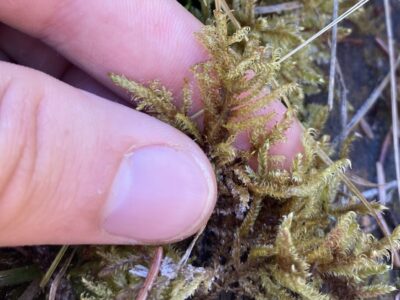
Ulota japonica belongs to the genus Ulota, commonly known as pincushion mosses, and shares the characteristic features of the Orthotrichaceae family. These mosses are usually small (a few centimeters tall) herbaceous (non-woody) plants that absorb water and nutrients mainly through their leaves and harvest carbon dioxide and sunlight to create food by photosynthesis. The species forms dense, cushion-like tufts that range from less than 1 centimeter to several centimeters in height, creating the distinctive pincushion appearance that gives the genus its common name.
The leaves of Ulota japonica are narrow and lanceolate, with a characteristic keeled structure that becomes prominently crisped and curled when the moss dries out. This remarkable adaptation allows the plant to reduce water loss during dry periods while remaining capable of rapid rehydration when moisture returns. The leaves range in color from vibrant mid-green to deep forest green, depending on light conditions and hydration status.
The reproductive structures, called sporophytes, appear as small, cylindrical capsules held aloft on delicate stalks. These spore-bearing structures emerge during the fruiting season and are often distinctly ribbed and furrowed, providing the species with its characteristic appearance when viewed under magnification.
Ulota japonica exhibits the growth pattern typical of acrocarpous mosses, with upright shoots arranged in tufts that form dense cushions. Wherever they occur, mosses require liquid water for at least part of the year to complete fertilisation. Many mosses can survive desiccation, sometimes for months, returning to life within a few hours of rehydration. This extraordinary resilience allows the species to persist through seasonal dry periods and makes it an ideal colonizer of exposed bark and rocky substrates.
The life cycle of Ulota japonica follows the typical bryophyte pattern, beginning with spore germination that produces a filamentous protonema stage. As the moss matures, it develops into the leafy gametophyte—the visible green plant we recognize—which continues to photosynthesize and build the colony. Growth accelerates during wet seasons when moisture is abundant, with the moss spreading across suitable substrates and forming increasingly dense mats.
Reproduction occurs through spore production in the sporophytes. Microarthropods, such as springtails and mites, can effect moss fertilization and that this process is mediated by moss-emitted scents. Springtails were found to choose female plants preferentially, and one study found that springtails enhance moss fertilization, suggesting a scent-mediated relationship analogous to the plant-pollinator relationship found in many seed plants. This fascinating mechanism demonstrates that even the smallest plants employ sophisticated chemical signaling strategies.
GBIF records indicate that Ulota japonica has a widespread distribution across the Northern Hemisphere temperate regions, with 204 documented occurrences. The species is particularly abundant throughout Japan, where it occurs from coastal areas to mountain elevations. Its range extends westward into Korea, Russia (including Sakhalin Island and the Far East), and eastward across the Pacific to coastal regions of Alaska, British Columbia, and the Pacific Northwest of the United States.
Members of the Orthotrichaceae family mostly live as epiphytes although some species are saxicolous. These mosses play a significant role in the epiphytic cryptogamic communities under temperate climates, both in dry and in oceanic or hyper-oceanic conditions. Ulota japonica exhibits a strong preference for tree bark as its primary substrate, though it also colonizes rock faces and occasionally stone structures. The species thrives in cool, humid temperate forests where moisture is consistently available, from lowland coastal zones to montane elevations exceeding 1,500 meters.
As a bryophyte, Ulota japonica does not produce flowers or seeds in the conventional sense. Instead, it reproduces through a sophisticated alternation of generations involving both sexual and asexual phases. The sexual reproductive organs produce sperm and eggs that, when united by water film during moist conditions, develop into the sporophyte—the spore-producing structure. Sporophytes develop primarily during late spring and summer, releasing millions of microscopic spores into the air currents.
These spores travel considerable distances, allowing Ulota japonica to colonize new habitats across vast geographic ranges. Upon landing on suitable substrates with adequate moisture, spores germinate to begin the cycle anew. The species also exhibits asexual reproduction through fragmentation, where small pieces of the moss can break away and establish new colonies when conditions are favorable. This dual reproductive strategy ensures both genetic diversity and rapid population expansion in suitable environments.
While Ulota japonica is not cultivated commercially, it holds significant ecological and scientific value. Moss offers habitats for other plants, insects and fungi. Some larvae of micro-moths and lace bugs feed only on moss. Other insects hunt among moss for prey. The insects from moss also feed bats and birds. The dense cushions created by Ulota japonica provide microhabitats for arthropods, fungi, and even other bryophytes, creating miniature ecosystems within each tuft.
The species serves as a bioindicator of environmental quality, as bryophytes are highly sensitive to atmospheric pollution and habitat degradation. Bristle mosses are very susceptible to atmospheric pollution. During the 20th century, sulphur dioxide pollution resulted in the loss of many bristle mosses in England, which became severely limited in their distribution. Cleaner air in the last few decades has reversed some of this loss, and at the same time a few continental European bristle mosses have started spreading into Britain. Monitoring populations of Ulota japonica can provide valuable insights into local air quality and ecosystem health.
Mosses absorb 6.4 billion tons of carbon annually and provide various other environmental benefits, including controlling pathogens dangerous for humans, stopping land erosion, improving microclimate, filtering air pollution, and cooling cities.
Ulota japonica can survive complete desiccation for months, entering a state of suspended animation before springing back to life within hours of rehydration—a testament to the resilience of bryophytes.
The genus name Ulota derives from the Greek word for “curly,” referring to the characteristic crisped leaves that curl dramatically when the moss dries, resembling tiny pincushions.
Recent observations in 2024 documented Ulota japonica in Japan’s Yamanashi Prefecture, confirming the species’ continued presence in its native range despite ongoing habitat pressures.
Each sporophyte capsule can release millions of spores, yet only a tiny fraction will land on suitable substrates and successfully establish new colonies—a strategy that maximizes dispersal potential across vast distances.
Some mosses have adaptations for collecting non-rainfall sources of moisture like dew and fog, capturing condensation from the air. Ulota japonica employs similar strategies to supplement moisture during dry periods.
The species plays a crucial role in primary succession, colonizing newly exposed bark surfaces and preparing substrates for other organisms to establish, making it a pioneer species in forest ecosystems.
Global Biodiversity Information Facility (GBIF). Ulota japonica occurrence records and distribution data. https://www.gbif.org
Orthotree Research Team. Orthotrichaceae: A diverse family of bryophytes. Universidad Autónoma de Madrid. https://www.orthotree.net/
Watson, E.V. (1981). British Mosses and Liverworts (3rd edition). Cambridge University Press.
Smith, A.J.E. (2004). The Moss Flora of Britain and Ireland (2nd edition). Cambridge University Press.
Woodland Trust. Bristle Mosses (Orthotrichum species). https://www.woodlandtrust.org.uk/