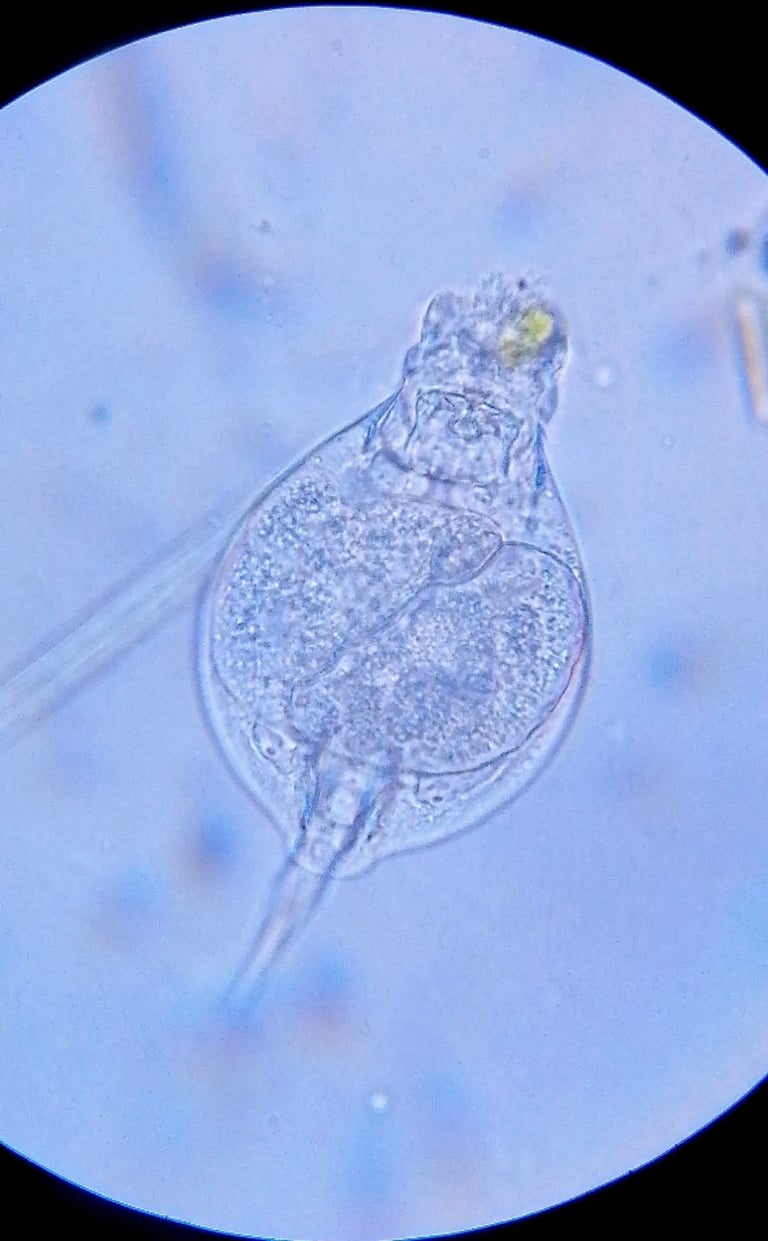
Lepadella cryphaea Harring, 1916 is a species of microscopic rotifer, an animal so small it can only be studied under a microscope. It belongs to the class Eurotatoria and the order Ploima, placing it within the family Lepadellidae, a group of rotifers recognized for a stiff, shell-like lorica that encases the body.
As a member of the phylum Rotifera, Lepadella cryphaea shares the basic rotifer body plan: a ciliated crown used for feeding and locomotion, a trunk protected by its lorica, and a foot used for attachment to surfaces in the water. Little else about its ecology has been documented in detail.
Species like this one make up a largely overlooked share of freshwater biodiversity, cataloged more than a century ago yet still poorly known outside specialist taxonomic literature.
Distribution and Habitat
Observation records for Lepadella cryphaea are extremely sparse, limited to a handful of scattered sightings spread unevenly across the year. Presence has been noted in only a few months, each with a single recorded observation, with no data at all for most of the year.
These occurrence counts reflect presence observations only, not abundance or a complete picture of the species' range. The pattern shows no clear seasonal peak; instead, the few available records appear scattered rather than concentrated in any particular period.
No specific habitat types, countries, or regions are documented in the available data, so the species' true distribution and habitat preferences remain effectively unrecorded at this level of detail.

Cultural Significance
No documented mythology, folklore, or human traditions are associated with Lepadella cryphaea. As a microscopic rotifer known mainly from taxonomic and occurrence records, it has no recorded cultural, symbolic, or economic significance to people.
Ecology and classification
Classification
- Phylum
- Rotifera
- Class
- Eurotatoria
- Order
- Ploima
- Family
- Lepadellidae
- Genus
- Lepadella
- Species
- Lepadella cryphaea