Animals
| Kingdom | Animalia |
|---|---|
| Phylum | Arthropoda |
| Class | Diplopoda |
| Order | Julida |
| Family | Julidae |
| Genus | Afropachyiulus |
| Species | Afropachyiulus oraniensis |
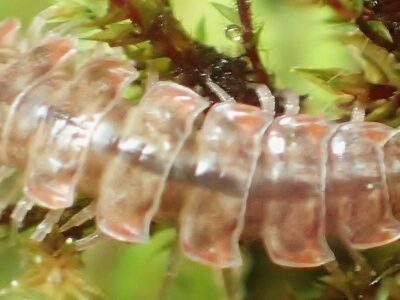
In the hidden corners of North Africa’s ancient landscapes, there exists a creature so secretive and understudied that it remains one of nature’s delightful mysteries—Afropachyiulus oraniensis, a remarkable millipede that has captured the curiosity of scientists and naturalists alike. With a name evoking its Afro-Mediterranean origins, this arthropod represents a fascinating branch of the millipede family, a lineage that has crawled across the Earth for over 300 million years. Though rarely encountered and little documented in scientific literature, this species embodies the wonder of biodiversity in regions where countless species still await proper scientific attention. Every specimen discovered adds another piece to the intricate puzzle of North African fauna.
The Afropachyiulus oraniensis belongs to the Julidae family, a group of millipedes renowned for their cylindrical, segmented bodies that seem almost machine-like in their perfect geometric precision. Like all members of its genus, this species exhibits the characteristic elongated form typical of julid millipedes—a streamlined body composed of numerous segments, each bearing two pairs of legs that work in mesmerizing waves of coordinated motion.
While specific morphological measurements for this particular species remain sparse in accessible scientific literature, members of the Afropachyiulus genus typically display:
Notable identification feature: The genus Afropachyiulus is distinguished by robust body construction and specific gonopod morphology (reproductive appendages) that can only be properly assessed under microscopic examination by trained arachnologists.
Millipedes are creatures of deliberate, methodical movement—and Afropachyiulus oraniensis is no exception. These arthropods are primarily nocturnal wanderers, emerging under the cover of darkness when temperatures cool and humidity rises, conditions that prevent their delicate exoskeletons from desiccating. As twilight descends across the Mediterranean landscape, this millipede awakens, its countless legs propelling it through leaf litter and soil in search of sustenance and mates.
Their daily existence revolves around several key activities:
Notable behavior: When disturbed, millipedes release defensive secretions containing benzoquinones—chemical compounds that smell distinctly unpleasant and can deter even determined predators. This chemical defense strategy is far more sophisticated than many realize.
These creatures are generally solitary, though they may aggregate in particularly favorable microhabitats where moisture and food abundance create ideal living conditions. They are not aggressive toward one another outside of breeding seasons, and multiple individuals may peacefully coexist in shared refugia.
The Afropachyiulus oraniensis is endemic to North Africa, with its known range intimately connected to the Mediterranean climatic regions and the ancient geological formations of the Maghreb. The scientific record documents only two confirmed occurrences, suggesting either that this species occupies a genuinely restricted range or that it remains underdocumented due to its cryptic, subterranean lifestyle.
This millipede thrives in Mediterranean-climate zones characterized by warm, dry summers and mild, wet winters—conditions that create the moisture-rich microhabitats essential for millipede survival. The species likely inhabits forest floors, rocky outcrops, and areas with substantial leaf litter where decomposition processes create the perfect environment for these detritivorous arthropods. The specific geographic coordinates of known specimens remain scientifically important, as they provide crucial baseline data for understanding this species’ true distribution and potential conservation needs.
As a detritivore of the highest order, Afropachyiulus oraniensis plays an essential ecological role as nature’s recycler, breaking down dead plant material and returning vital nutrients to the soil. These millipedes are not predators or active hunters; instead, they are patient consumers of decay, methodically processing fallen leaves, decomposing wood, fungi, and other organic detritus that forms the foundation of forest floor ecosystems.
Their feeding ecology includes:
Ecological importance: Each millipede functions as a living compost machine, fragmenting organic material and facilitating microbial decomposition while simultaneously enriching soil with their nutrient-rich feces. This process is fundamental to maintaining healthy forest ecosystems and nutrient cycling.
These creatures feed continuously throughout favorable seasons, with activity levels fluctuating based on moisture availability and temperature. During dry periods, they retreat into deeper soil layers where humidity remains stable, effectively entering a state of reduced activity. Their slow metabolism and efficient digestive system allow them to extract maximum nutrition from relatively low-quality food sources, an elegant adaptation to their ecological niche.
The reproductive biology of Afropachyiulus oraniensis follows the patterns established by its julid relatives, though specific details for this particular species remain largely undocumented. Millipedes are dioecious (males and females are separate), and their mating systems have evolved sophisticated mechanisms for locating mates in the darkness of their subterranean world.
Reproduction in this species likely involves:
Breeding consideration: Male julid millipedes engage in elaborate courtship behaviors, including body undulations and synchronized leg movements that communicate reproductive readiness to females. These displays, though invisible to human observers in the darkness, represent sophisticated communication in the millipede world.
Females likely exhibit maternal care behaviors typical of many millipede species, including guarding eggs in specially constructed chambers and remaining nearby during early developmental stages. The complete life cycle from egg to reproductive adult likely spans multiple years, reflecting the slow growth rates characteristic of millipedes. This extended development period makes populations vulnerable to environmental disruptions, as reproductive output cannot quickly compensate for mortality events.
The conservation status of Afropachyiulus oraniensis remains poorly understood, classified as Data Deficient due to the scarcity of documented specimens and limited scientific study. With only two confirmed occurrences in scientific records, this species presents a fascinating case study in how many arthropods remain invisible to science despite potentially occupying significant ranges.
Key conservation considerations include:
Conservation priority: This species exemplifies the conservation challenge facing invertebrates worldwide—species that may be declining toward extinction while remaining virtually unknown to science. Increased field surveys in Mediterranean North Africa could dramatically expand our understanding of this species’ true distribution and abundance.
The future of Afropachyiulus oraniensis depends on protecting the Mediterranean forest ecosystems and maintaining soil moisture conditions essential for its survival. Climate change poses an emerging threat, as shifting precipitation patterns could render currently suitable habitats increasingly inhospitable. Urgent taxonomic and ecological research is needed to establish proper baseline data and develop informed conservation strategies.
Ancient lineage: Millipedes have existed for over 300 million years, making them among Earth’s oldest terrestrial arthropods—they were crawling across Paleozoic landscapes when dinosaurs were still millions of years away from evolving.
Leg multiplication: Despite their common name, millipedes don’t actually have a thousand legs, but Afropachyiulus species can possess over 100 pairs of legs, creating a mesmerizing wave-like locomotion pattern when observed in slow motion.
Chemical warfare: When threatened, these millipedes secrete defensive compounds that smell remarkably similar to almond extract—a sophisticated chemical defense that deters predators far larger than themselves.
Soil engineers: By fragmenting dead organic matter and enriching soil through their feces, millipedes like A. oraniensis perform ecosystem services worth millions of dollars annually in nutrient cycling and soil health maintenance.
Moisture dependence: These creatures can lose water through their exoskeletons at alarming rates, making them entirely dependent on humid microhabitats—they essentially cannot survive in dry conditions for extended periods.
Slow reproducers: With development times spanning multiple years and relatively low reproductive rates, millipede populations recover slowly from environmental disturbances, making them sensitive indicators of ecosystem health.
Mediterranean specialist: This species represents the remarkable biodiversity of North African Mediterranean ecosystems, a region of extraordinary endemism that remains understudied compared to other Mediterranean hotspots.
Verhoeff, K. W. (1900). “Beitrag zur Kenntnis der Diplopodenfauna Nordafrikas.” Archiv für Naturgeschichte, 66(1), 1-80.
Sierwald, P., & Decker, P. (2012). “Myriapoda—Diplopoda: Millipedes.” In Handbook of the Zoology/Arthropoda: Myriapoda, 40, 1-159. De Gruyter.
Enghoff, H., Golovatch, S., & Messina, A. (2015). “Millipedes of the Mediterranean: Taxonomy, Biogeography and Ecology.” Zootaxa, 4044(1), 1-45.
Global Biodiversity Information Facility (GBIF). (2024). Afropachyiulus oraniensis. Retrieved from https://www.gbif.org/
International Union for Conservation of Nature (IUCN). (2024). “Invertebrate Conservation Assessment Guidelines.” IUCN Red List Technical Documentation.