Animals
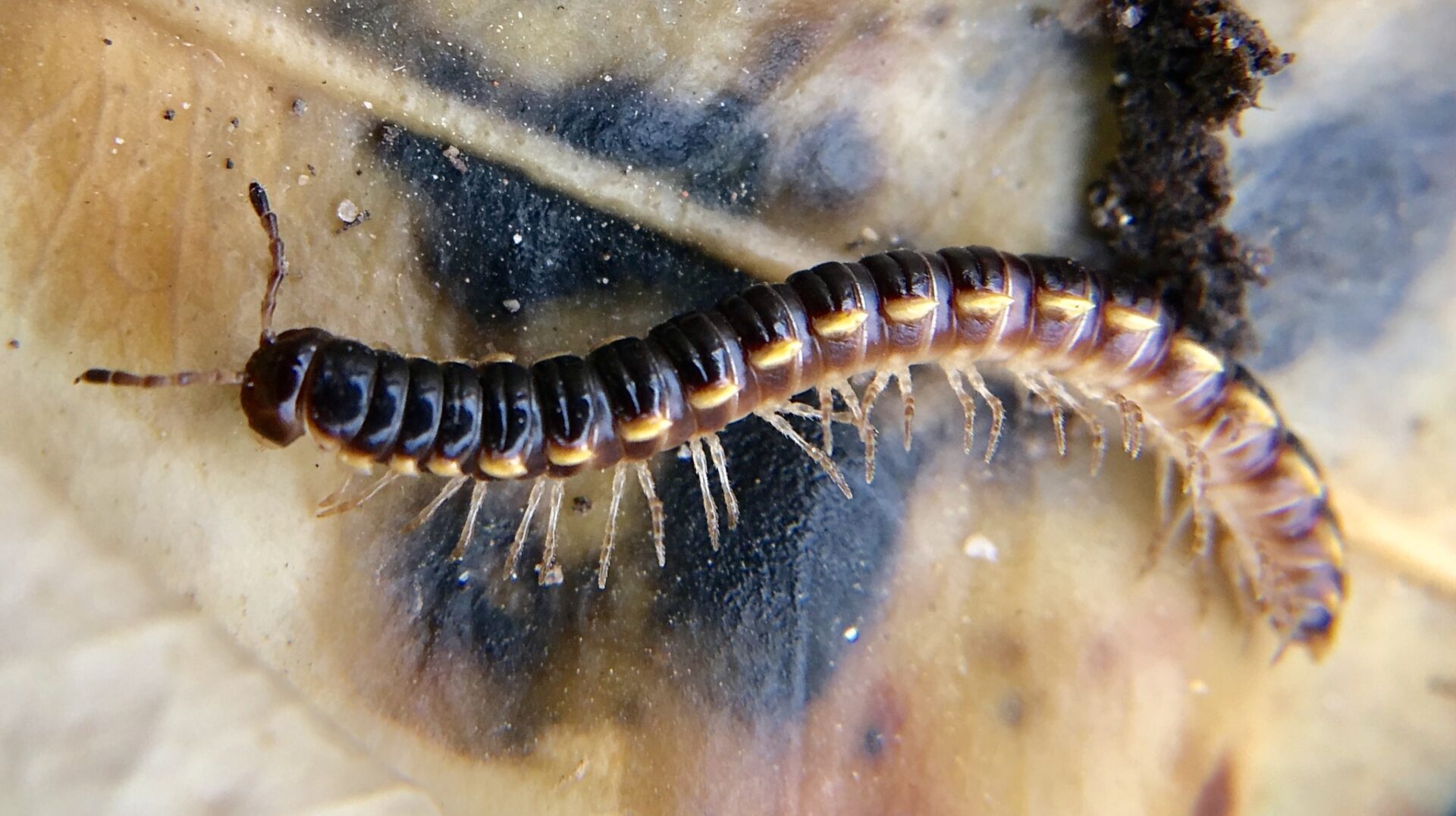
Asiomorpha coarctata
| Kingdom | Animalia |
|---|---|
| Phylum | Arthropoda |
| Class | Diplopoda |
| Order | Polydesmida |
| Family | Paradoxosomatidae |
| Genus | Asiomorpha |
| Species | Asiomorpha coarctata |
Key metrics will appear once data is available.
From tropical gardens to temperate greenhouses, Asiomorpha coarctata has become one of the world’s most widely traveled millipedes. This long-flange millipede is a widely introduced species of Polydesmidan millipede of the family Paradoxosomatidae. Presumed native to Southeast Asia, this creature now occurs in tropical and subtropical areas throughout the world, including the Hawaiian Islands, the West Indies, the Gulf Coast of North America, and the Galápagos Islands. What makes this tiny arthropod so successful at conquering new territories? The answer lies in its remarkable adaptability and its crucial ecological role as nature’s cleanup crew.
Males range from 14.5–20.5 mm in length and 1.5 to 2.7 mm wide, while females are somewhat larger, ranging from 16.5–27.5 mm long and 1.6–3.2 mm wide. These are miniature creatures, barely visible to the casual observer, yet perfectly adapted for their subterranean lifestyle.
The species gets its common name from its most distinctive feature: the prominent lateral flanges, or paranota, that run along the sides of its body. O. coarctata can be distinguished from Oxidus gracilis, another widely introduced Asian millipede, by having proportionally longer and pointier paranota on mid-body segments and longer gonopods (male reproductive appendages). These millipedes are brownish-black in color and have a large number of body segments, each covered in short spines, with two long flanges running down the entire length of the body.
Sexual dimorphism is evident in this species, with females noticeably larger than their male counterparts. O. coarctata is unique within the genus Orthomorpha in that the gonopods have a single, simple tip, while other species have two or three lobes, a distinction that has led some authors to place O. coarctata in a separate, monotypic genus, Asiomorpha.
These millipedes are ground dwellers, spending most of their lives in the soil and leaf litter where they remain hidden from view. They are important animals in breaking down dead plant material, breaking it up into smaller parts so that there is more surface area for bacteria and microfungi to digest and recycle the chemicals. This work is essential to the health of any ecosystem.
The long-flange millipede has many legs, which can range from 30 to 100 pairs, and all of these legs are highly mobile and used to quickly move the millipede around its environment. Despite their tiny size and numerous legs, they move with surprising grace through the soil matrix. Its head has two antennae and two simple eyes, making it good at detecting nearby prey and sensing the environment around it.
Like other members of the Paradoxosomatidae family, their bright coloration can sometimes be a warning signal to predators that they produce toxic chemicals, and some species can roll into a tight coil as a defensive behavior, protecting their vulnerable underside. This chemical defense makes them unpalatable to most predators, allowing these slow-moving creatures to survive in their ecological niche.
The global distribution of Asiomorpha coarctata is extraordinary. iNaturalist data indicates over 7,700 observations of this species across the world, with records spanning from New Zealand to the Caribbean, from China to Brazil. The species has been documented in more than 30 countries on six continents.
Due to transport by humans, this Southeast Asian native now occurs in tropical and subtropical areas throughout the world, including the Hawaiian Islands, the West Indies, Gulf Coast of North America, and the Galápagos Islands. Its success as an invasive species speaks to its remarkable tolerance of diverse climates and its ability to thrive in human-dominated landscapes. Recent observations show it actively spreading, with records from locations as varied as Mexico, Costa Rica, Brazil, and even temperate regions of Europe.
These millipedes have a diet consisting mainly of decaying vegetable matter. As detritivores, they feed mainly on decaying plant material and contribute to nutrient cycling in ecosystems. This dietary specialization makes them invaluable decomposers in both natural and managed environments.
Their feeding strategy is one of the most important ecological services they provide. By consuming dead leaves, rotting wood, and decomposing organic material, Asiomorpha coarctata breaks down complex organic compounds and returns essential nutrients to the soil. They prefer moist habitats, such as flower beds and leaf piles, and scrape calcium carbonate off the surfaces of sidewalks and rocks. This calcium-seeking behavior reveals another fascinating aspect of their biology—they require mineral supplementation to maintain their exoskeleton and support reproduction.
The reproductive biology of Asiomorpha coarctata follows the typical pattern for polydesmid millipedes. Millipedes grow continuously until they reach adulthood, adding a new segment with each molt, and adult males have a pair of modified legs called gonopods that act as reproductive organs, leaving that diplosegment with a single pair of legs and another pair of gonopods.
Adults may mate several times, and after mating, females lay their eggs in moist soil. The female’s choice of moist microhabitats for egg-laying is critical—the developing embryos require consistent moisture to prevent desiccation. When molting, the millipede will enclose itself in a ball of mud for protection until it is ready to emerge. This remarkable behavior protects the vulnerable animal during one of the most dangerous periods of its life, when its exoskeleton is soft and easily damaged.
The development from egg to adult involves numerous molts and gradual segment addition, a process that can take several months to a year depending on environmental conditions. Adult stage represents reproductive adults, with a lifespan that can extend up to several years in some species.
The population status of Asiomorpha coarctata remains largely undocumented, though its widespread occurrence across multiple continents suggests a stable and expanding global population. The species’ remarkable success as an introduced species indicates it faces no significant conservation threats in its current range. Rather, the concern in some regions is whether its populations might become too abundant in agricultural and horticultural settings.
Unlike many native species facing habitat loss and climate change pressures, Asiomorpha coarctata thrives in human-modified environments. The species is not native to the United States and prefers urban environments, and their propensity to invade greenhouses and other structures, combined with their foul defensive odor, makes them a nuisance, as their adaptability to new environments and lack of natural enemies allows them to thrive in artificial environments. This success, while problematic from a pest management perspective, demonstrates the species’ exceptional ecological flexibility.
The long-flange millipede is one of the most widely introduced millipede species in the world, found on six continents.
Despite their fearsome appearance with dozens of legs, Asiomorpha coarctata is completely harmless to humans and makes a popular pet for invertebrate enthusiasts.
These tiny creatures are environmental engineers, breaking down dead plant material into smaller pieces that bacteria and fungi can more easily decompose and recycle.
The species produces foul-smelling chemical compounds as a defense mechanism, making it unpalatable to most predators despite its slow speed.
The long paranota (lateral flanges) that give this millipede its common name are proportionally longer and pointier than those of similar introduced species like Oxidus gracilis.
Recent iNaturalist data shows this species is actively spreading, with new observations recorded from locations worldwide almost daily, indicating its continued expansion into new territories.
These millipedes have a unique behavior of scraping calcium carbonate off sidewalks and rocks, a crucial mineral supplementation for their exoskeleton and reproduction.
Jeekel, C. A. W. (1963). Diplopoda of Guiana. Studies on the fauna of Suriname and other Guyanas, 4: 1-157.
Nguyen, A.D. & Sierwald, P. (2013). A worldwide catalog of the family Paradoxosomatidae Daday, 1889 (Diplopoda: Polydesmida). CheckList, 9(6): 1132-1353.
Hoffman, R. L. (1999). Checklist of the Millipeds of North and Middle America. Virginia Museum of Natural History Special Publications.
iNaturalist Research-grade Observations Database. (2024). Asiomorpha coarctata occurrence records. Retrieved from https://www.inaturalist.org/taxa/214432-Asiomorpha-coarctata