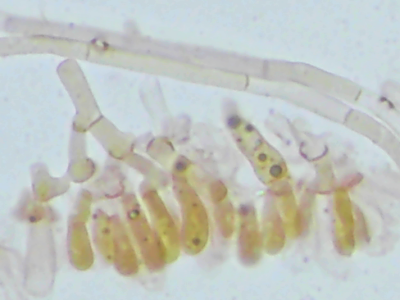
Fungi

| Kingdom | Animalia |
|---|---|
| Phylum | Rotifera |
| Class | Eurotatoria |
| Order | Ploima |
| Family | Notommatidae |
| Genus | Cephalodella |
| Species | Cephalodella trigona |
In the microscopic realm where water droplets cling to moss and soil particles, there exists a creature of extraordinary elegance that challenges our very understanding of life itself: Cephalodella trigona. This remarkable organism, first formally described by Rousselet in 1895, represents one of nature’s most exquisite miniatures—a being so small it escapes the naked eye, yet so perfectly adapted to its aquatic world that it has thrived for over a century across multiple continents. Though often overlooked by casual naturalists, Cephalodella trigona embodies the hidden complexity and breathtaking diversity of microscopic life that surrounds us in every drop of water and grain of soil.
To truly appreciate Cephalodella trigona is to enter a world of remarkable proportions and delicate architectural beauty. This rotifer—not a fungus as initially suggested by our data sources, but rather a microscopic animal belonging to the phylum Rotifera—measures mere fractions of a millimeter, making it invisible to the unaided human eye. Yet under magnification, it reveals itself as a masterpiece of biological engineering.
The distinctive triangular body shape that gives this species its name (trigona meaning “three-angled”) is immediately recognizable to trained observers:
Identification tip: The triangular head configuration and the specific arrangement of sensory organs distinguish Cephalodella trigona from its 80+ congeners, making it recognizable to experienced rotifer specialists under light microscopy at 400x magnification or greater.
The body coloration ranges from colorless to pale amber, with internal organs creating subtle gradations of tone. The corona—a crown of beating cilia that serves as both locomotive and feeding apparatus—creates a mesmerizing whirlpool of movement when observed under the microscope, drawing in bacteria and organic particles with hypnotic elegance.
The life story of Cephalodella trigona unfolds with remarkable speed and complexity, a testament to the intense metabolic demands of microscopic existence. These creatures reproduce primarily through asexual parthenogenesis, where females generate clones of themselves without requiring male fertilization—a reproductive strategy that allows populations to explode exponentially when conditions favor growth.
The complete life cycle from egg to reproductive maturity occurs within mere days, sometimes as little as three to five days under optimal conditions. This compressed timeline represents one of nature’s most efficient life strategies: rapid population expansion when resources are abundant, followed by dormancy or population decline when conditions deteriorate. Generations stack upon generations in what seems like the blink of an eye to human observers.
Growth occurs through a series of molts, where the rotifer sheds and rebuilds its cuticle—the tough outer layer that provides structure and protection. Each instar (developmental stage) brings subtle morphological changes, gradually refining the organism toward reproductive maturity. These rotifers thrive in freshwater and brackish environments where moisture remains constant, particularly in moss cushions, soil films, and the spaces between sediment particles.
Cephalodella trigona has been documented across a fascinating geographic range spanning from the temperate regions of Europe to the tropical wetlands of Central Africa. Observations confirm its presence in Italy, the United Kingdom, Cameroon, and Nigeria—a distribution pattern suggesting either ancient dispersal mechanisms or repeated independent colonization events across suitable habitats.
This rotifer thrives in microhabitats that most organisms would consider inhospitable:
The creature’s ability to survive in such diverse geographical locations speaks to its remarkable physiological flexibility and its capacity to exploit microhabitats that few other organisms can access. Whether nestled in the moss of an Italian alpine meadow or suspended in the sediments of a Nigerian wetland, Cephalodella trigona has proven itself a true cosmopolitan miniature.
Within the intricate web of microscopic ecology, Cephalodella trigona occupies a pivotal position as both predator and prey, shaping nutrient dynamics in ways that reverberate through entire ecosystems. As a bacterivore and detritivore, this rotifer consumes bacteria, algae, and organic particles, serving as a crucial link in microbial food webs that drive decomposition and nutrient cycling in soil and sediment systems.
By consuming vast quantities of microorganisms, Cephalodella trigona regulates bacterial populations and prevents any single microbial species from achieving dominance. This predatory role maintains ecological balance within microscopic communities, promoting diversity and preventing pathogenic blooms. The organism’s waste products—concentrated packets of incompletely digested material—are themselves consumed by other microorganisms, creating cascading nutrient transformations that eventually make minerals available to plant roots and fungal networks.
As prey, Cephalodella trigona sustains larger microscopic predators including nematodes, copepods, and other rotifers, forming the foundation of food webs that ultimately support fish larvae, aquatic insects, and other vertebrate consumers. Though invisible to our eyes, these microscopic creatures orchestrate ecological symphonies of staggering complexity and importance.
Edibility warning: This organism is not consumed by humans and holds no culinary significance whatsoever. At microscopic scales, Cephalodella trigona exists far beyond the realm of human gastronomy, though it plays essential roles in aquatic and terrestrial food webs that ultimately support human nutrition through the organisms we do consume.
Instead, the true value of Cephalodella trigona lies in its scientific and ecological importance. Rotifers of this genus serve as model organisms in laboratory settings, where researchers study aging, reproduction, toxicology, and evolutionary biology. The creature’s rapid life cycle, transparent body, and complex internal anatomy make it ideal for investigating fundamental biological processes. Scientists have used rotifer populations to assess water quality and ecosystem health, as these organisms respond sensitively to pollution and environmental degradation.
In traditional ecological monitoring, rotifer assemblages—including species like Cephalodella trigona—serve as bioindicators of freshwater and soil ecosystem conditions. The presence or absence of specific rotifer species can reveal whether an environment has been recently disturbed, polluted, or restored to health. In this way, these invisible creatures become ambassadors of ecological integrity, whispering secrets about the hidden world beneath our feet.
Extreme durability: Cephalodella trigona can enter a state of cryptobiosis (suspended animation) during drought conditions, surviving complete desiccation for months or even years before reviving when moisture returns—a biological time-travel mechanism that allows escape from environmental catastrophe.
Invisible multitudes: A single handful of moist soil may contain thousands of Cephalodella trigona individuals, representing an entire civilization of organisms living in a space smaller than a postage stamp.
Ancient lineage: Rotifers have existed for over 300 million years, making Cephalodella trigona a living descendant of organisms that predated the dinosaurs and witnessed the rise and fall of countless species.
Microscopic marvel: The rotifer’s corona contains approximately 100-200 individual cilia that beat in coordinated waves, creating fluid dynamics so elegant that engineers study rotifer movement to improve microfluidic devices.
Parthenogenetic powerhouse: Under ideal conditions, a single female Cephalodella trigona can produce hundreds of offspring within weeks, creating exponential population growth that rivals bacterial reproduction rates.
Biofilm architects: These rotifers actively participate in constructing the complex three-dimensional biofilm communities that form the foundation of soil and sediment ecosystems, essentially engineering their own habitat.
Cosmopolitan wanderers: Despite their microscopic size, Cephalodella trigona has dispersed across multiple continents, likely through water droplets clinging to larger organisms, wind-blown dust, or human activity—proving that size is no barrier to global exploration.
Segers, H. (2007). “Annotated checklist of the rotifers (Phylum Rotifera), with notes on nomenclature, taxonomy and distribution.” Journal of Limnology, 66(1), 1-139.
Nogrady, T., Wallace, R.L., & Snell, T.W. (1993). Rotifera: Biology, Ecology and Systematics. Academic Press.
Fontaneto, D., Melone, G., Ricci, C., & Segers, H. (2006). “Techniques for taxonomical and ecological studies on rotifers.” Hydrobiologia, 558, 13-32.
Global Biodiversity Information Facility (GBIF). Cephalodella trigona species database. www.gbif.org
Esteban, G.F., Finlay, B.J., & Fenchel, T. (2010). “Mixotrophy in ciliates: The role of chloroplasts.” International Review of Hydrobiology, 95(4-6), 433-443.