
Animals
The cheetah is built for one purpose above all others: speed. With its impossibly slender frame, elongated legs, and aerodynamic head, Acinonyx jubatus is nature’s ultimate sprinter, capable of accelerating from 0 to 100 kilometers per hour in just three seconds. This African carnivore stands apart from all other big cats, representing an evolutionary masterpiece shaped entirely by the demands of high-speed pursuit across open grasslands.
At first glance, the cheetah’s silhouette reveals its specialization for speed. Weighing between 35 and 65 kilograms on average, with some individuals reaching up to 75 kilograms, these cats are remarkably lean compared to other felids. Their body length ranges from 1.1 to 1.4 meters, with an additional 0.6 to 0.8 meters of tail that acts as a rudder during high-speed turns.
The coat is uniformly tawny or buff-colored, dotted with solid black spots roughly the size of a human fingertip—each spot perfectly round and evenly distributed across the body. Unlike the rosettes of leopards, these simple spots provide no pattern variation, making identification straightforward. The distinctive black “tear marks” running from the inner corner of each eye down to the mouth are the cheetah’s most recognizable feature, giving the face an expression of permanent focus.
Sexual dimorphism is subtle in cheetahs. Males are slightly larger and more robust than females, but both sexes share the same lean build and spotted pattern. Young cubs display a silvery-grey mane along their backs, which fades as they mature—a feature that may help camouflage vulnerable young in tall grass.
Cheetahs are creatures of the daylight world, hunting almost exclusively during daylight hours when visibility is optimal and larger predators are less active. Their entire physiology is optimized for the chase: non-retractable claws provide traction like running shoes, a flexible spine allows for explosive acceleration, and enlarged nasal passages deliver oxygen to working muscles at maximum capacity.
Notable behavior: Unlike other big cats, cheetahs cannot roar—instead, they chirp, purr, and make distinctive high-pitched calls to communicate. A hunting cheetah will stalk prey to within 30 meters before launching into its legendary sprint, reaching speeds that would leave most animals helpless. The chase typically lasts only 20 to 30 seconds; if the cheetah hasn’t caught its prey by then, exhaustion forces it to abandon the hunt.
These solitary hunters are highly territorial, with males establishing ranges they patrol and defend, while females maintain larger home ranges that may overlap with other females. Unlike lions or other social cats, cheetahs are generally solitary except during mating season, though mothers remain with cubs for 18 months, teaching them the intricate skills of the hunt.
Cheetahs are found across much of sub-Saharan Africa, with their range stretching from the savannas of South Africa through East Africa and into the Sahel region. They show a strong preference for open habitats—grasslands, savannas, and semi-arid plains where their speed advantage is most effective. In these environments, they can spot prey from great distances and utilize their acceleration without obstruction.
A small and critically important population persists in Iran, representing the last Asian cheetahs outside of zoos. The species avoids dense forests and mountains, preferring elevations below 2,000 meters where prey is abundant and terrain suits their hunting style. Recent observations have documented cheetahs in India, suggesting possible range expansion or reintroduction efforts in certain regions.
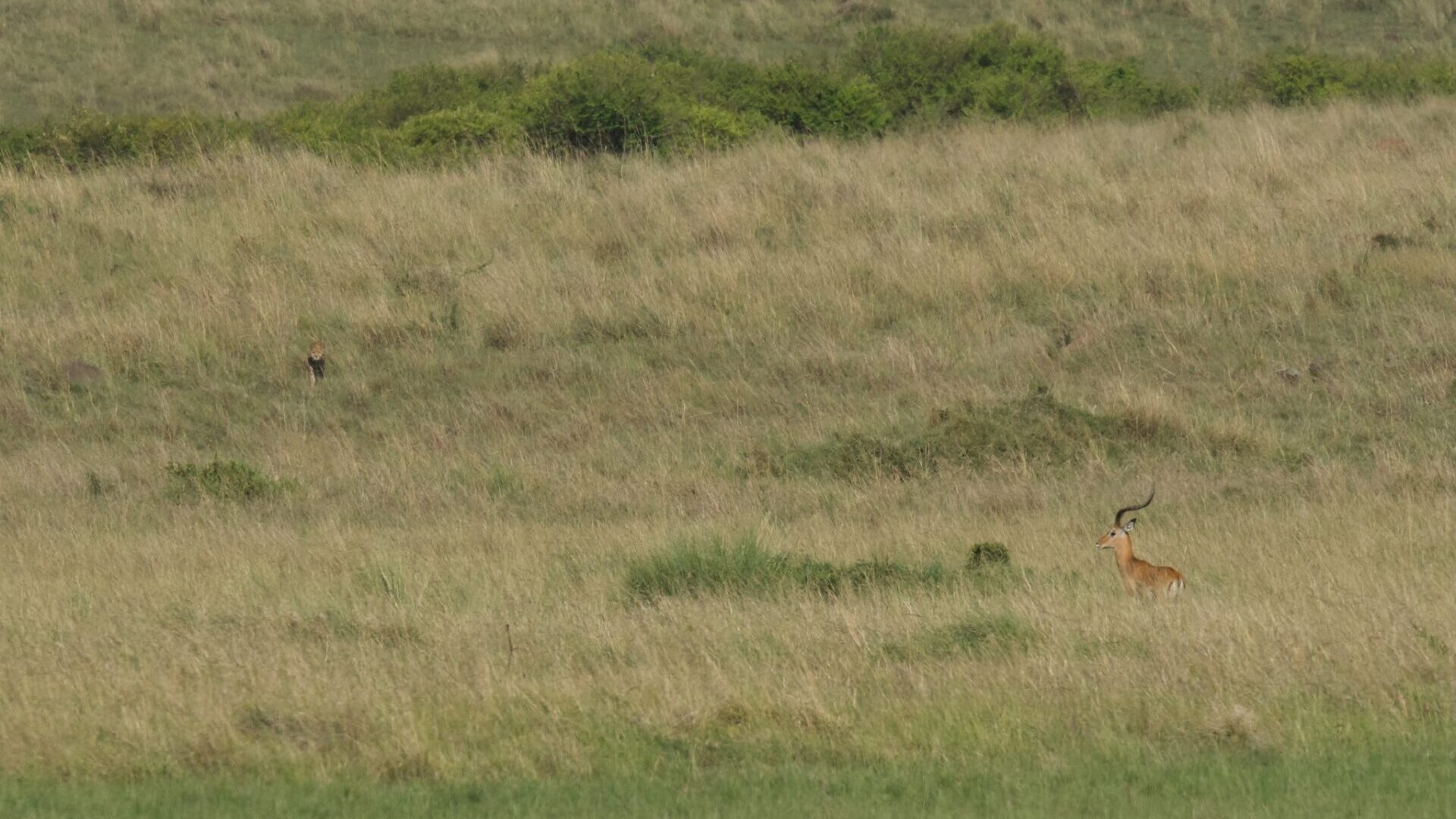
Cheetahs are obligate carnivores, feeding almost exclusively on small to medium-sized ungulates and other mammals. Their preferred prey includes gazelles (particularly springbok and Thomson’s gazelles), impalas, and young warthogs, typically weighing between 20 and 60 kilograms. They will also hunt hyraxes, hares, and other small mammals when larger prey is unavailable.
A successful hunt provides roughly 2 to 3 kilograms of meat, which the cheetah must consume quickly before larger predators like lions or hyenas discover the kill. Cheetahs lack the powerful bite force of other big cats and cannot defend their kill, so speed in feeding is essential for survival. They typically hunt every two to five days, depending on success rates and prey availability, and may go several days without food during unsuccessful hunting periods.
Unlike many carnivores, cheetahs have no strict breeding season, though births peak during the rainy season when prey is most abundant. Females signal their receptivity through scent marking and vocalizations, attracting males from considerable distances. Mating is brief and occurs multiple times over a two-day period to ensure conception.
After a gestation period of approximately 92 days, females give birth to litters of three to five cubs in hidden dens or dense vegetation. Cubs are born helpless and remain hidden for their first weeks while the mother hunts nearby. At around three months, cubs begin following their mother on hunts, learning through observation and play.
The mother provides intensive training for 18 months, teaching cubs hunting techniques through live prey practice and demonstrating kill methods. Male cubs typically disperse and establish their own territories or form coalitions with siblings, while females eventually establish solitary ranges. This extended parental investment is crucial—cheetah cubs have a high mortality rate, with only about 50 percent surviving to independence.
The cheetah is classified as Near Threatened by the IUCN, a status that reflects serious conservation concerns despite the species’ wide distribution. Current population estimates suggest approximately 7,000 cheetahs remain in the wild, a dramatic decline from historical numbers. Habitat fragmentation represents the primary threat, as expanding human settlements and agricultural development carve up the open grasslands cheetahs depend upon.
Conservation note: Climate change poses an emerging threat, altering rainfall patterns and reducing prey availability across African savannas. Human-wildlife conflict also takes a toll, as cheetahs occasionally prey on livestock, leading to retaliatory killings by farmers. Additionally, the species’ genetic diversity is surprisingly low, making populations vulnerable to disease and environmental stress.
Conservation efforts are underway across Africa, with protected areas like the Serengeti and Kruger National Park providing critical refugia. International cooperation and community-based conservation programs are helping to balance human needs with cheetah survival. The establishment of wildlife corridors connecting fragmented populations is essential for maintaining genetic diversity and ensuring long-term viability of this remarkable species.
Cheetahs cannot climb trees like other big cats—their non-retractable claws and lightweight build are optimized for running, not climbing, making them vulnerable to larger predators in woodland areas.
A cheetah’s tail functions as a high-speed rudder, allowing it to make sharp turns at speeds exceeding 100 kilometers per hour without losing balance or tumbling.
Unlike all other big cats, cheetahs cannot roar; instead, they produce a variety of chirps, purrs, and distinctive “meows” that sound remarkably similar to a domestic cat’s vocalizations.
Cheetahs have semi-retractable claws that work like running cleats, providing exceptional traction during acceleration and high-speed turns—a unique adaptation among felids.
A cheetah’s entire hunt from start to finish typically lasts less than one minute, with the actual chase phase lasting only 20 to 30 seconds before the cheetah must rest.
Cheetahs have evolved incredible eyesight, with vision roughly three times better than humans, allowing them to spot prey from distances exceeding 5 kilometers.
In the 1970s, cheetahs nearly went extinct due to habitat loss and illegal trade; their genetic diversity today is so low that all living cheetahs are more closely related than identical twins would be.
IUCN Red List of Threatened Species. (2023). Acinonyx jubatus. Retrieved from https://www.iucnredlist.org/
Caro, T. M. (1994). Cheetahs of the Serengeti plains: Group living in an asocial species. University of Chicago Press.
Marker, L., Muntifering, J., & Dickman, A. J. (2003). Cheetahs, wild dogs, and cats. In R. A. Woodroffe, S. Thirgood, & A. Rabinowitz (Eds.), People and wildlife: Conflict or coexistence? (pp. 225-240). Cambridge University Press.
Nowell, K., & Jackson, P. (1996). Wild cats: Status survey and conservation action plan. IUCN/SSC Cat Specialist Group.
Sunquist, M., & Sunquist, F. (2002). Wild cats of the world. University of Chicago Press.