Animals

| Kingdom | Animalia |
|---|---|
| Phylum | Arthropoda |
| Class | Diplopoda |
| Order | Polydesmida |
| Family | Chelodesmidae |
| Genus | Chondrodesmus |
| Species | Chondrodesmus erratus |
In the shadowy leaf litter and hidden crevices of tropical and subtropical forests, there exists a creature so elusive and understudied that it remains one of nature’s most enigmatic arthropods: Chondrodesmus erratus. This remarkable millipede, first scientifically described by Chamberlin in 1941, represents a fascinating chapter in the story of diplopod diversity—a lineage that has remained virtually unchanged for over 300 million years. With its segmented body and ancient evolutionary heritage, this species embodies the quiet resilience of creatures that thrive in the shadows, asking little from the world except the right to exist in the damp, dark places where few humans ever venture.
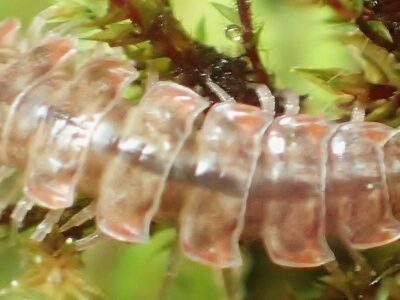
The body of Chondrodesmus erratus follows the classic millipede architecture: a cylindrical form composed of numerous body segments, each bearing two pairs of legs—a design so effective that nature has perfected it across hundreds of millions of years. Like other members of the Chelodesmidae family, this species exhibits the characteristic features that distinguish it from its relatives, though the specific morphological details remain incompletely documented in scientific literature, a testament to how much we still have to learn about Earth’s smaller inhabitants.
Key identification features of this species include:
While detailed measurements and coloration descriptions await comprehensive documentation, Chondrodesmus erratus likely shares the subdued earth tones—browns, blacks, and russets—common to forest-dwelling millipedes, providing perfect camouflage against the detritus of the forest floor. The species name “erratus” itself hints at a creature that wanders through its environment, navigating the complex three-dimensional maze of decomposing leaves and soil particles with methodical precision.
As a denizen of the cryptozoic realm, Chondrodesmus erratus leads a life largely hidden from human observation, dwelling in the spaces between soil particles and within decaying wood where moisture levels remain consistently high. This millipede is a creature of darkness and dampness, emerging primarily during periods of high humidity when the forest floor becomes saturated with moisture—conditions that allow it to move freely without the risk of fatal desiccation.
This species demonstrates typical millipede behaviors including:
The daily rhythm of Chondrodesmus erratus revolves around the moisture cycle of its forest home. During daylight hours, this millipede retreats deeper into the soil or beneath logs, where humidity remains high and predators are scarce. As evening approaches and moisture levels rise, it becomes active, moving through the forest floor with unhurried determination, its numerous legs working in synchronized waves that propel it forward with surprising efficiency.
The geographic range of Chondrodesmus erratus remains poorly documented, with scientific records indicating extremely limited known occurrences. This scarcity of documented sightings reflects not necessarily the rarity of the species, but rather the difficulty in surveying millipede populations and the simple fact that most of Earth’s arthropod diversity remains inadequately studied. The species likely inhabits tropical or subtropical forest regions, though the precise boundaries of its range await clarification through expanded field surveys and taxonomic research.
The cryptic nature of millipede ecology means that Chondrodesmus erratus could potentially occur in broader geographic areas than current records suggest, hiding in plain sight within forest ecosystems where few researchers have bothered to look. Understanding its true distribution will require dedicated sampling efforts using standardized millipede collection techniques—a challenge that underscores how much remains unknown about tropical arthropod biogeography.
Like virtually all members of the Polydesmida order, Chondrodesmus erratus is a detritivore—a nature’s recycler that feeds primarily on decomposing plant material, fungi, and the complex organic compounds found within soil. This millipede plays a crucial ecological role as a processor of leaf litter, breaking down dead plant material and facilitating nutrient cycling within forest ecosystems. Its feeding activities help transform fallen leaves and woody debris into forms that other organisms can more readily utilize.
The dietary preferences of this species likely include:
The millipede’s feeding strategy is one of patient, persistent consumption—it doesn’t hunt or forage with urgency, but rather grazes continuously through its environment, extracting nutrition from materials that would otherwise accumulate unused. This slow, steady approach to feeding perfectly complements its low-energy lifestyle and the relatively nutrient-poor diet of decomposing plant matter. By processing vast quantities of leaf litter, Chondrodesmus erratus contributes to the essential ecosystem service of nutrient mineralization, releasing locked-away nutrients back into forms that plants and other organisms can access.
The reproductive biology of Chondrodesmus erratus remains largely undocumented, representing one of many gaps in our understanding of this species. Like other millipedes, reproduction likely involves the transfer of sperm packets (spermatophores) from males to females, a process that may involve elaborate courtship behaviors adapted to the darkness of the forest floor. The timing of reproduction probably correlates with seasonal moisture patterns and temperature fluctuations that characterize tropical and subtropical forests.
Reproductive characteristics typical of related Chelodesmidae species include:
Female Chondrodesmus erratus likely invest considerable energy in finding suitable microhabitats for egg-laying—locations that offer protection from predators and parasites while maintaining the high humidity levels essential for embryonic development. The eggs develop slowly, reflecting the millipede’s overall slow pace of life, with juveniles eventually emerging as miniature versions of adults, ready to begin their own lives as detritivores in the forest ecosystem.
The current population status of Chondrodesmus erratus remains unknown, obscured by the simple fact that this species has received minimal scientific attention since its original description in 1941. With only a single documented occurrence recorded in global biodiversity databases, we cannot determine whether this represents a genuinely rare species with restricted distribution or simply reflects the inadequacy of millipede survey efforts. Conservation note: The true conservation status of this species cannot be assessed without more comprehensive field data and population monitoring.
The primary threats facing Chondrodesmus erratus, like most forest-dwelling arthropods, likely include habitat loss through deforestation, conversion of natural forests to agricultural lands, and degradation of forest floor microhabitats through human disturbance. Climate change poses an additional concern, as millipedes are particularly sensitive to changes in humidity and temperature—factors that directly influence their survival and reproduction. Without baseline population data and a clear understanding of its ecological requirements, developing effective conservation strategies remains challenging.
The path forward for protecting Chondrodesmus erratus begins with increasing scientific attention to this and other obscure arthropod species. Expanded field surveys in tropical and subtropical regions, combined with molecular genetic research to clarify the species’ relationships and distribution, would provide the foundation for informed conservation decisions. Protecting intact forest ecosystems with healthy leaf litter layers and appropriate moisture regimes represents the most effective conservation approach for this and countless other cryptozoic arthropods that depend on these fragile microhabitats.
Ancient lineage: Millipedes as a group have remained virtually unchanged for over 300 million years, making Chondrodesmus erratus part of an evolutionary success story that predates dinosaurs by tens of millions of years.
Leg count mastery: Despite their name suggesting a thousand legs, millipedes typically have between 40 and 400 legs depending on species and size—but Chondrodesmus erratus coordinates all of them in perfectly synchronized waves of movement.
Chemical defense: Many millipedes in the Chelodesmidae family produce defensive chemicals when threatened, and Chondrodesmus erratus likely employs similar chemical weaponry to deter predators.
Ecosystem engineers: This humble millipede plays a vital role in forest health by processing dead plant material and facilitating nutrient cycling—work that supports entire forest communities.
Living fossil: Chondrodesmus erratus represents a lineage that has survived multiple mass extinction events, climate shifts, and the rise and fall of countless other species.
Cryptic expert: The species’ rarity in scientific collections likely reflects its exceptional skill at remaining hidden rather than actual scarcity—a testament to millions of years of evolutionary refinement.
Slow and steady: With a lifestyle optimized for patience rather than speed, Chondrodesmus erratus exemplifies nature’s alternative to the “survival of the fastest” paradigm.