Plants
| Kingdom | Plantae |
|---|---|
| Phylum | Bryophyta |
| Class | Bryopsida |
| Order | Dicranales |
| Family | Dicranaceae |
| Genus | Dicranum |
| Species | Dicranum majus |
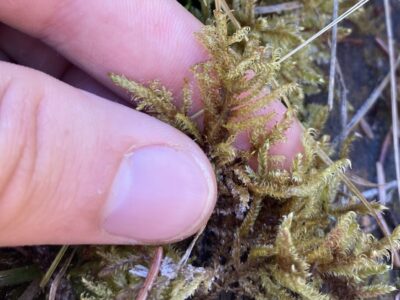
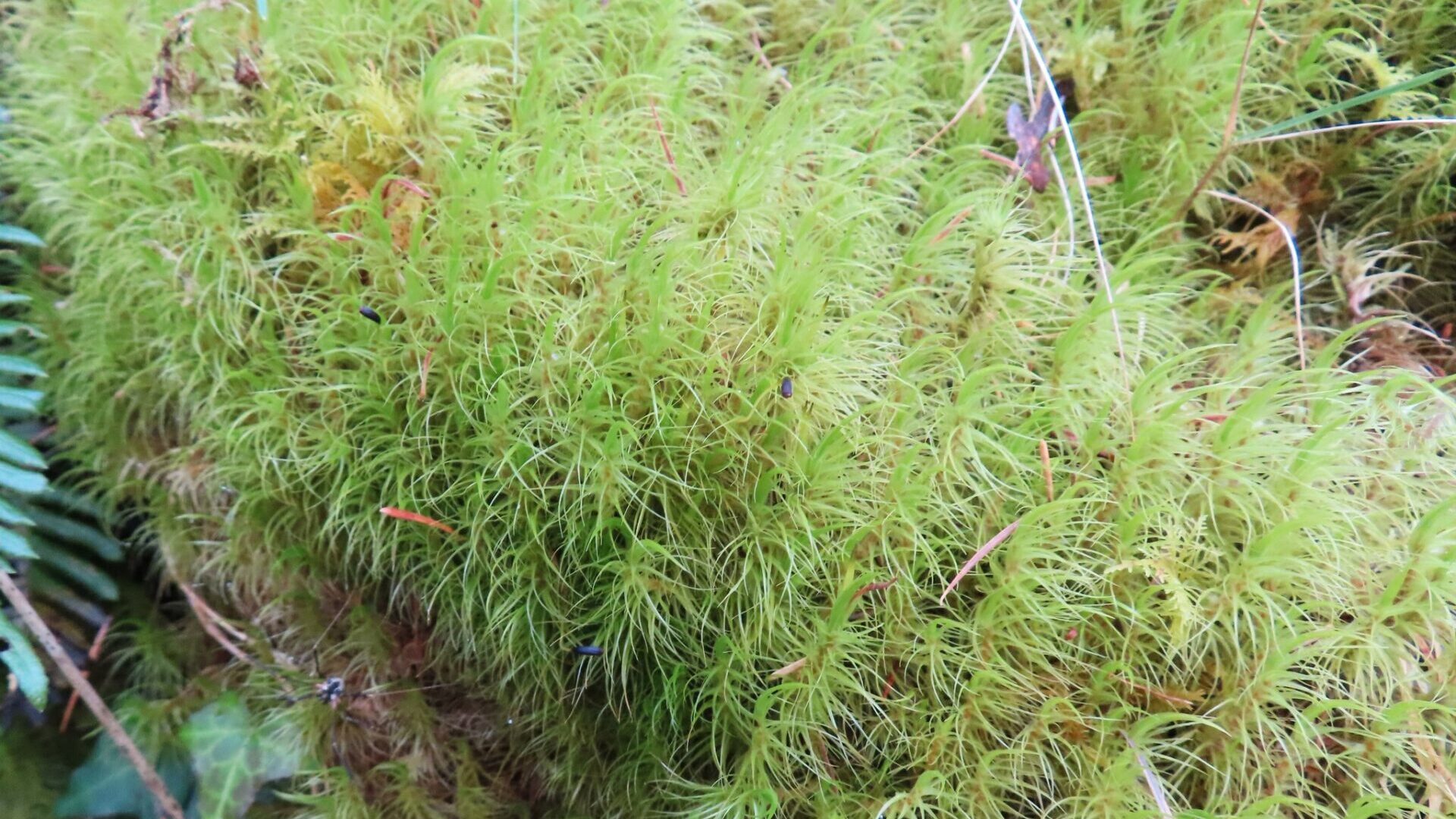
Dicranum majus stands as one of the most distinctive and visually arresting mosses of the Northern Hemisphere, commanding attention wherever damp woodlands thrive. This large moss features very long narrow leaves up to 1.5cm, which are curved to one side. Far from being a humble forest floor dweller, this remarkable bryophyte transforms shadowed woodland ecosystems into miniature landscapes of extraordinary beauty, thriving across temperate regions from Scandinavia to North America.
The leaves have a long toothed tip, and the nerve is also toothed on the back, but there are no raised lines of cells as with D scoparium. This combination of features makes Dicranum majus instantly recognizable to trained bryologists, distinguishing it from its smaller cousin, Dicranum scoparium.
The moss grows in loose, dense tufts that form cushion-like mounds across acidic substrates. Individual stems reach 3 to 16 centimeters in height, creating a three-dimensional texture that catches light beautifully. The leaves themselves display a characteristic falcate-secund pattern—they curve gracefully in one direction, creating a windswept appearance that gives the entire Dicranum genus its common name of “fork mosses” or “wind-blown mosses.”
Plants appear in loose tufts, green to light green, glossy to somewhat dull. When dry, the moss retains much of its structure, a trait that makes it valuable for botanical study and collection. The cellular architecture reveals sophisticated adaptations: specialized guide cells in the leaf midribs channel water efficiently through the plant body, while the leaf margins transition from serrate (toothed) in the upper portions to entire (smooth-edged) below.
Dicranum majus is a perennial moss that persists indefinitely in suitable habitats, forming long-lived colonies that can remain stable for decades. The species exhibits acrocarpous growth—a technical term meaning that reproductive structures develop at the stem apex rather than along the sides. This growth pattern produces the characteristic upright, tufted form that makes these mosses so visually striking.
The moss anchors itself through fine, hair-like rhizoids—root-like structures that lack the vascular tissues of true roots but serve the critical functions of water absorption and substrate attachment. These rhizoids often appear in distinctive rows along the stems, creating a fuzzy, almost tactile appearance when viewed under magnification.
Growth rates vary considerably depending on environmental conditions. In humid, oceanic woodlands where conditions remain consistently moist, Dicranum majus flourishes, gradually expanding its colonies through both sexual and asexual reproduction. The moss demonstrates remarkable tolerance for seasonal variation, maintaining its form through winter dormancy and spring growth spurts.
Dicranum majus is a large and showy moss and is most common in humid (oceanic) woodlands in the rainy north and west of the country. It becomes much scarcer in dry districts. The species enjoys a wide Holarctic distribution, occurring throughout Europe, North America, and parts of Asia.
This moss demonstrates strong habitat preferences that reflect its ecological requirements. It grows on acid soils, in woodland or more open ground. The species thrives in:
Dicranum Moss is an important part of ecosystems worldwide because it serves as a moisture regulator and as a habitat for microfauna. The dense mat protects the forest floor from erosion and contains the water for the roots of the trees. This ecological role extends far beyond simple decoration—the moss actively shapes its microhabitat, creating favorable conditions for other organisms and stabilizing soil conditions.
Dicranum majus employs a sophisticated dual reproductive strategy, combining sexual and asexual methods to ensure genetic diversity and population resilience. Bryophytes reproduce sexually by spores and asexually by fragmentation or the production of gemmae.
The sexual reproductive system reveals fascinating complexity. The dioicous moss Dicranum majus in some populations do not or only rarely produce sporophytes, while most populations in central Norway produce sporophytes frequently. This dioecious condition means male and female reproductive organs develop on separate plants. When conditions align favorably, D. majus presents 2-5 sporophytes in a perichaetium rather than the 1, or seldom 2, of D. scoparium.
Following successful fertilization, the moss develops spore-bearing structures called sporophytes—tiny stalks (setae) topped with capsules. Inside the sporangium, haploid spores are produced by meiosis. These are dispersed, most commonly by wind, and if they land in a suitable environment can develop into a new gametophyte. The spores themselves are microscopic, ensuring efficient wind dispersal across considerable distances. Asexually, the moss can propagate through fragmentation where pieces of the moss break off and grow into new individuals.
Dicranum majus possesses considerable ornamental and ecological value. Moss enthusiasts and terrarium gardeners prize this species for its dramatic, sculptural form and striking color. The moss grows successfully in closed terrariums where consistent humidity can be maintained, though it develops most luxuriantly in natural woodland settings.
Ecologically, the species functions as a bioindicator of forest health. Its presence in woodlands signals favorable moisture conditions and relatively undisturbed habitat. The moss contributes significantly to nutrient cycling, gradually decomposing and enriching the forest floor with organic matter that sustains tree seedlings and woodland herbs. Conservation-minded land managers recognize Dicranum majus as a valuable component of woodland ecosystems, particularly in maintaining the complex microhabitats that support countless small invertebrates, fungi, and other bryophytes.
Windswept architecture: The curved, one-directional leaf arrangement that gives Dicranum majus its “windswept” appearance actually functions to maximize light capture in shaded forest understories—nature’s elegant solution to low-light conditions.
Ancient lineage: Mosses like Dicranum majus represent some of the earliest land plants, with fossil evidence suggesting bryophytes colonized terrestrial environments over 450 million years ago, long before flowering plants evolved.
Water-holding capacity: A single moss colony can absorb and retain water equivalent to many times its own dry weight, acting as a living sponge that regulates moisture availability for surrounding plants and organisms.
Reproductive variability: Dicranum majus populations demonstrate remarkable geographic variation in reproductive success, with some populations producing abundant spores while others rarely reproduce sexually, relying instead on vegetative fragmentation.
Microfauna metropolis: The dense mats of Dicranum majus shelter entire communities of microscopic animals, including tardigrades (water bears), nematodes, and microarthropods that depend on the moss’s moisture-retaining structure.
No true roots: Despite its robust appearance, Dicranum majus lacks the vascular tissues and true roots of flowering plants, instead absorbing water and nutrients directly through its leaf surfaces and rhizoid structures.
Living fossil indicator: The presence of Dicranum majus in a woodland often indicates that the forest has maintained relatively stable, undisturbed conditions for many decades, making it a valuable marker of old-growth forest characteristics.