Plants
| Kingdom | Plantae |
|---|---|
| Phylum | Tracheophyta |
| Class | Magnoliopsida |
| Order | Lamiales |
| Family | Scrophulariaceae |
| Genus | Buddleja |
| Species | Buddleja asiatica |
In the misty highlands of Asia, where ancient trade routes once carried precious spices and silks, a remarkable shrub has been weaving its own story of resilience and beauty for millennia. Buddleja asiatica, known affectionately as the “Dog tail” for its distinctive elongated flower spikes, stands as a testament to nature’s ability to create both subtle elegance and robust survival strategies. This enchanting member of the Scrophulariaceae family has quietly conquered territories from the Himalayan foothills to tropical islands, painting landscapes with its creamy white blooms and filling the air with an intoxicating fragrance that has captivated both butterflies and botanists alike.
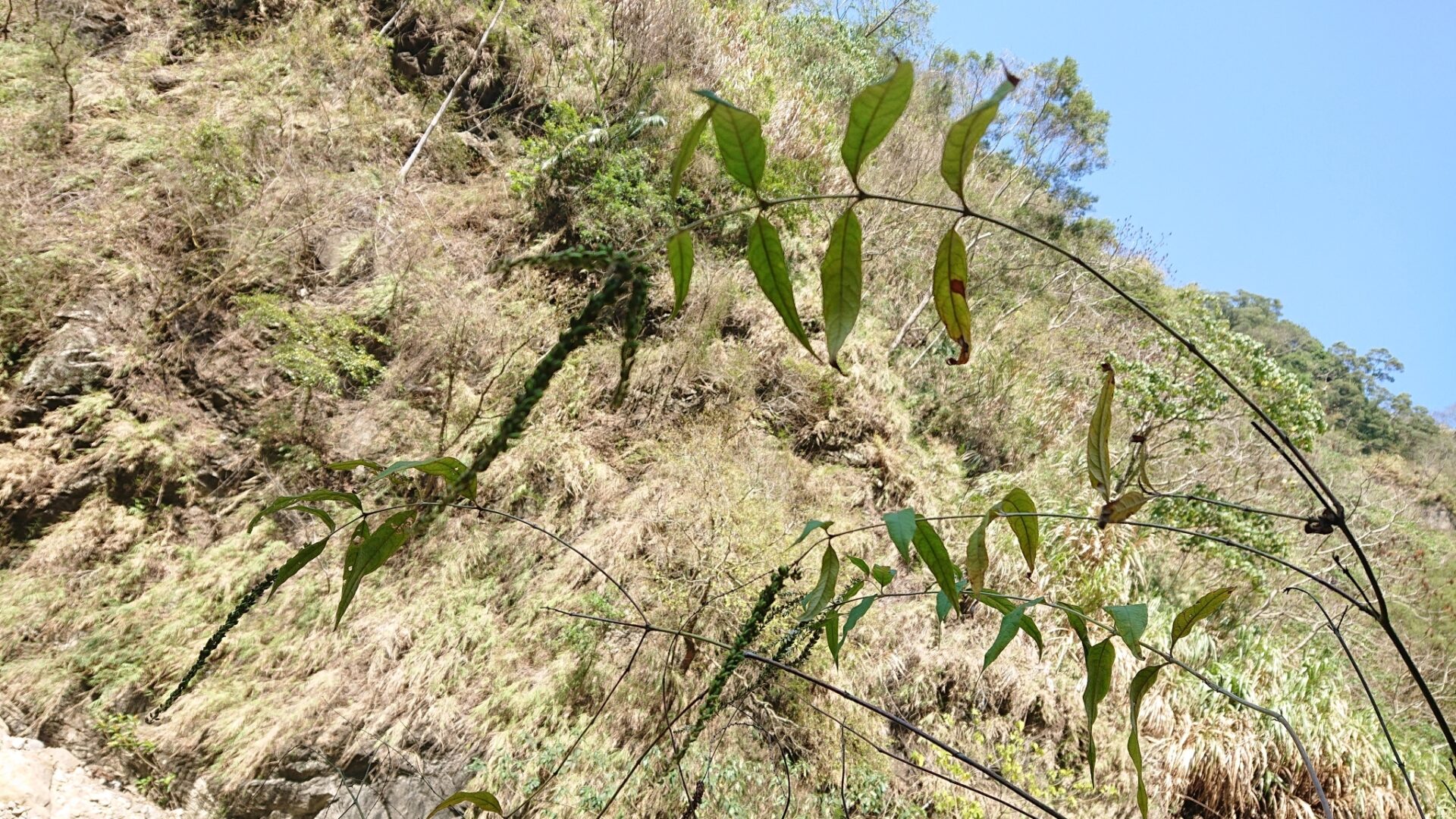
Buddleja asiatica presents itself as a graceful shrub that can reach impressive heights of 2-4 meters, creating a commanding presence in any landscape where it takes root. The plant’s architecture speaks of both strength and delicacy, with woody stems that branch, forming a somewhat open, spreading canopy that dances gracefully in mountain breezes.
The leaves tell their own fascinating story of adaptation and beauty. These lanceolate to elliptic treasures stretch 8-15 centimeters in length, displaying a rich green upper surface that contrasts dramatically with their silvery-white undersides. This remarkable two-toned coloration isn’t merely aesthetic—it’s a brilliant evolutionary adaptation that helps reflect excess sunlight while maintaining photosynthetic efficiency.
Notable feature: The leaves are covered in a dense layer of stellate (star-shaped) hairs that give them their characteristic woolly texture and silvery appearance.
The true glory of Buddleja asiatica lies in its extraordinary inflorescences. These cylindrical spikes, measuring 10-25 centimeters in length, emerge like elegant candles from the branch tips. Each spike contains hundreds of tiny, tubular flowers that range from pure white to pale cream, creating a spectacular display that can be seen from considerable distances. The individual flowers, though small at just 4-5 millimeters across, are perfectly formed with four petals and prominent stamens that extend beyond the corolla, creating a delicate, almost ethereal appearance.
The life journey of Buddleja asiatica unfolds like a masterfully choreographed dance between plant and environment. As a perennial woody shrub, this species demonstrates remarkable longevity, with individual plants capable of thriving for decades when conditions align with their preferences. The growth pattern follows a fascinating seasonal rhythm that reflects the plant’s deep connection to its native monsoon-influenced climate.
During the growing season, new shoots emerge with vigorous determination, often extending 30-50 centimeters in a single season. The plant’s root system develops into an extensive network that can penetrate deeply into rocky soils, seeking out moisture and nutrients with remarkable efficiency. This robust underground architecture not only anchors the shrub against strong winds but also enables it to survive extended dry periods that would challenge less adaptable species.
Growth characteristics:
The plant’s development reveals sophisticated environmental awareness. In response to seasonal changes, Buddleja asiatica adjusts its growth patterns, producing the most vigorous shoots during warm, moist periods while conserving energy during cooler, drier seasons. This adaptive flexibility has been crucial to its success across diverse geographic regions and varying climatic conditions.
Buddleja asiatica has painted its presence across a vast canvas stretching from the towering peaks of the Himalayas to the tropical shores of Southeast Asian islands. This remarkable distribution story begins in the plant’s native range, which encompasses the mountainous regions of China, India, Nepal, Myanmar, Thailand, and Laos. From these ancient strongholds, the species has embarked on an extraordinary journey of colonization, establishing thriving populations in locations as diverse as Hawaii, Guam, and even parts of the continental United States.
The species demonstrates a particular affinity for disturbed habitats and forest edges, where it acts as a pioneer species in ecological succession. In its native range, Buddleja asiatica thrives at elevations ranging from sea level to approximately 2,500 meters, showing remarkable adaptability to varying atmospheric pressures and temperature regimes. The plant shows a distinct preference for well-drained soils but displays surprising tolerance for a wide range of soil types, from rocky mountain slopes to rich alluvial deposits.
Habitat preferences:
The species’ ecological success stems from its ability to colonize areas where other plants struggle to establish. Whether growing in the thin soils of mountain terraces or the volcanic substrates of Pacific islands, Buddleja asiatica demonstrates an remarkable capacity to extract nutrients from challenging environments while tolerating both seasonal drought and periodic flooding.
The reproductive spectacle of Buddleja asiatica unfolds with theatrical grandeur, typically beginning in late autumn and extending through early spring, creating a stunning display when many other plants have retreated into dormancy. This strategic timing ensures that the plant captures the attention of pollinators when competition for their services is minimal, while also taking advantage of cooler temperatures that help preserve the delicate floral structures.
The flowering process begins with the emergence of terminal buds that gradually elongate into the characteristic cylindrical spikes. Each inflorescence represents a marvel of botanical engineering, containing hundreds of individual flowers arranged in a dense, spiral pattern that maximizes both visual impact and pollinator accessibility. The flowers open progressively from the base of the spike toward the tip, ensuring an extended blooming period that can last several weeks for each individual inflorescence.
Pollination and reproduction features:
The reproductive strategy of Buddleja asiatica reflects millions of years of evolutionary refinement. The plant produces thousands of seeds per season, each equipped with silky hairs that enable efficient wind dispersal across considerable distances. This prolific seed production, combined with the plant’s ability to regenerate from root fragments, has contributed significantly to its success as a colonizing species in new environments.
Throughout its native range, Buddleja asiatica has woven itself into the fabric of human culture and traditional medicine systems. Local communities have long recognized the plant’s therapeutic properties, utilizing various parts for treating ailments ranging from respiratory conditions to skin disorders. The leaves, in particular, have been employed in traditional preparations for their anti-inflammatory and antimicrobial properties, while the fragrant flowers have found use in ceremonial and decorative applications.
In modern horticulture, Buddleja asiatica has gained recognition as an exceptional ornamental plant, particularly valued for its ability to attract butterflies and other beneficial insects. Gardeners appreciate its relatively low maintenance requirements and its capacity to provide structure and fragrance in landscape designs. The plant responds well to regular pruning, which encourages bushier growth and more abundant flowering.
Cultivation considerations:
Conservation note: While not currently threatened, the species’ invasive potential in some regions requires careful management and monitoring.
The plant’s adaptability and ornamental value have made it a popular choice for restoration projects and erosion control initiatives, where its extensive root system and rapid establishment provide both ecological and aesthetic benefits.