Fungi
| Kingdom | Fungi |
|---|---|
| Phylum | Basidiomycota |
| Class | Agaricomycetes |
| Order | Polyporales |
| Family | Polyporaceae |
| Genus | Ganoderma |
| Species | Ganoderma adspersum |
Ganoderma adspersum emerges as one of Europe’s most intriguing wood-decay fungi, a master architect of decomposition that transforms ancient timber into nutrient-rich soil. This remarkable polypore has captivated mycologists across the continent, from the windswept forests of Scandinavia to the Mediterranean woodlands of Spain and Portugal. With over 18,000 documented occurrences spanning seventeen countries, this fungus quietly orchestrates one of nature’s most essential ecological processes—the recycling of dead wood back into the living world.
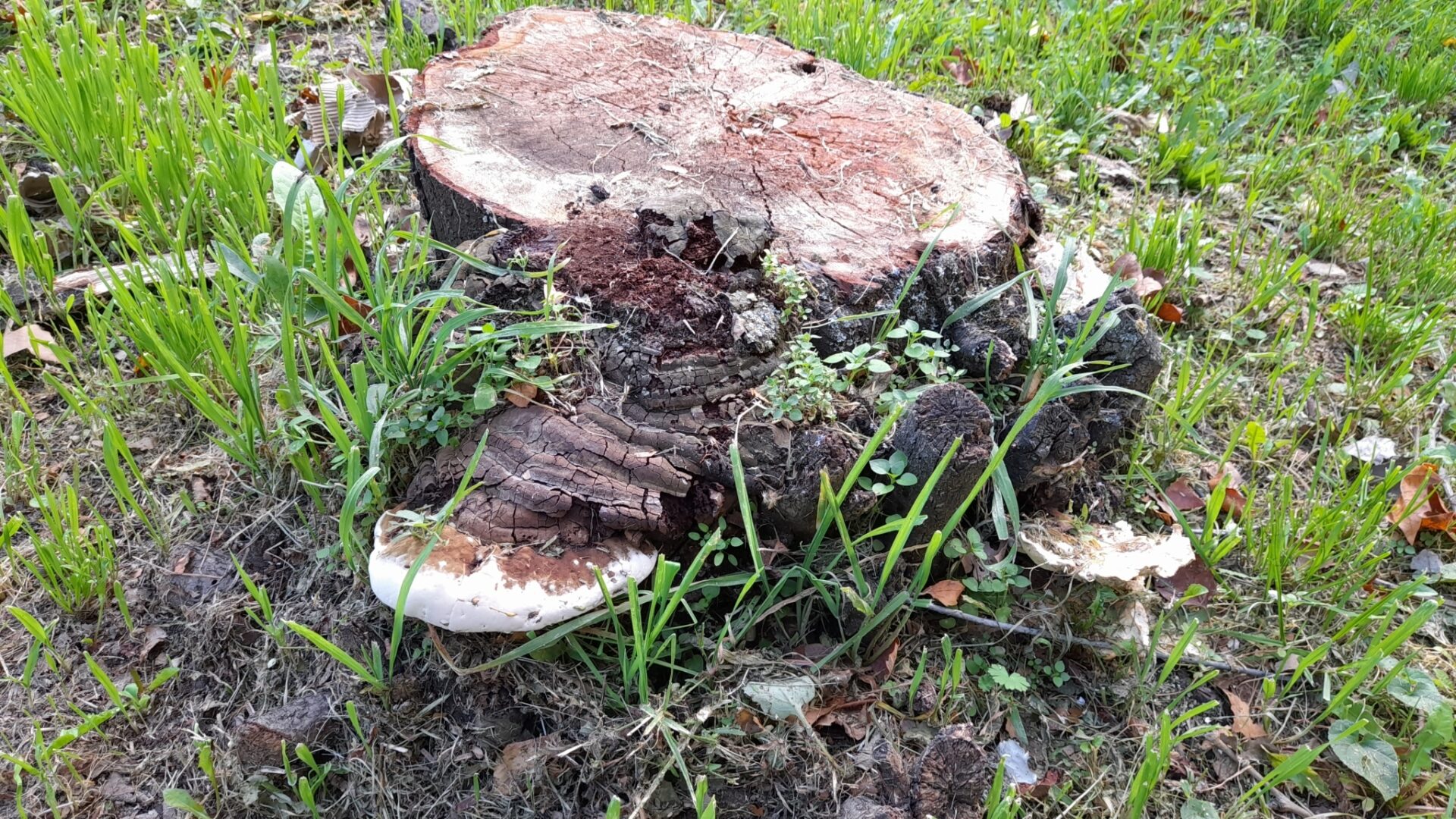
Ganoderma adspersum presents itself as a striking woody shelf fungus, unmistakable once you know what to seek. The fruiting bodies emerge as hard, bracket-like structures that cling to dead or dying trees with remarkable persistence. The upper surface displays a distinctive reddish-brown to dark brown coloration, often with a characteristic varnished appearance that catches the light like polished mahogany.
The underside reveals the fungus’s true nature—a dense pore surface rather than gills, with countless microscopic openings that release spores into the forest air. These pores start pale yellow or cream-colored and gradually darken with age and spore deposition. The flesh itself is woody and cork-like, resistant to decay and capable of persisting on dead logs for many years.
Identification tips:
The life story of Ganoderma adspersum begins long before the fruiting body appears—in the hidden network of mycelium threading through dead wood. These fungal filaments work tirelessly, secreting powerful enzymes that break down the complex polymers of lignin and cellulose. This is patient, invisible labor that may continue for years before the fungus finally invests energy in producing spore-bearing fruiting bodies.
When conditions align—typically during autumn and winter months when moisture levels peak—the fungus channels resources into creating those distinctive woody shelves. These structures are remarkably efficient spore factories, releasing countless microscopic spores into the air on currents of wind and water. Once a fruiting body establishes itself on a suitable log, it may persist for several years, adding new layers of pores each season as it continues its relentless decomposition work.
The fungus demonstrates remarkable longevity and resilience. Its woody fruiting bodies can withstand harsh weather, desiccation, and temperature extremes that would destroy more delicate fungi. This durability allows Ganoderma adspersum to remain active across multiple seasons, continuously producing spores and expanding its mycelial network through the wood.
Across Europe, Ganoderma adspersum has established itself as a widespread and common wood-decay fungus. iNaturalist data indicates a robust presence throughout the continent, with observations clustering densely in the Netherlands, Germany, and the United Kingdom, while also appearing consistently across Scandinavia, Central Europe, and the Mediterranean region. GBIF records show the species occupies a vast geographic range, reflecting its ecological success in temperate European forests.
This fungus exhibits a strong preference for hardwood substrates, particularly dead or declining trees in woodland settings. It colonizes logs, fallen branches, and the exposed heartwood of stressed living trees, making it especially common in managed forests, parks, and gardens where dead wood accumulates. The species thrives in areas with moderate moisture and good air circulation—conditions typical of European deciduous and mixed forests. Its presence signals the presence of suitable woody debris, making it an indicator of healthy forest ecosystems where natural deadwood cycles remain intact.
Preferred habitat characteristics:
Ganoderma adspersum functions as a primary decomposer, one of nature’s essential cleanup crews. The fungus breaks down the complex chemical bonds in dead wood, converting recalcitrant organic matter into forms that other organisms can utilize. This process releases stored nutrients—nitrogen, phosphorus, and countless minerals—back into the soil where plants can access them. Without fungi like this, dead wood would accumulate indefinitely, and forests would eventually suffocate under their own debris.
Beyond simple decomposition, Ganoderma adspersum creates ecological opportunities for countless other organisms. The mycelial networks provide food sources for invertebrates, while the fruiting bodies themselves become food for insects and other fungi. The partially decomposed wood creates habitat for beetles, mites, and springtails, which in turn feed birds and small mammals. By breaking down dead wood, this fungus transforms potential waste into a thriving microecosystem, demonstrating how fungi weave the fabric of forest life at every scale.
Edibility warning: Ganoderma adspersum is inedible and should never be consumed. While not acutely toxic, the fruiting bodies are extremely hard and woody, offering no nutritional value and potentially causing serious digestive distress if ingested.
Instead, this fungus holds value in traditional medicine systems across Europe. In folk remedies, preparations derived from Ganoderma species have been used to support immune function and overall wellness, though scientific evidence remains limited. Contemporary research continues to explore the bioactive compounds present in Ganoderma species, investigating potential applications in supporting human health.
The true value of Ganoderma adspersum lies not in consumption but in observation and appreciation. Mycologists and naturalists treasure encounters with this fungus as evidence of healthy forest ecosystems where natural decomposition processes thrive undisturbed.
Ancient decomposers: Ganoderma species have been decomposing wood for over 100 million years, predating the evolution of most modern tree species
Enzymatic powerhouses: The fungus produces an arsenal of specialized enzymes capable of breaking down lignin, one of nature’s most durable polymers
Multi-year fruiting bodies: A single fruiting body can persist and produce spores for multiple years, creating visible growth rings like a tree
Spore clouds: During peak spore release, a mature fruiting body can release millions of spores daily, visible as a fine dust in the right light
European woodland indicator: The presence of Ganoderma adspersum signals a forest ecosystem with adequate dead wood and natural decomposition cycles
Medicinal heritage: Related Ganoderma species have been valued in traditional Asian medicine for thousands of years, earning the name “mushroom of immortality”
Climate resilience: The woody fruiting bodies can survive freezing temperatures, drought, and harsh conditions that eliminate more delicate fungi