Animals
Helicorthomorpha holstii
| Kingdom | Animalia |
|---|---|
| Phylum | Arthropoda |
| Class | Diplopoda |
| Order | Polydesmida |
| Family | Paradoxosomatidae |
| Genus | Helicorthomorpha |
| Species | Helicorthomorpha holstii |
Key metrics will appear once data is available.
Imagine a creature no larger than your pinky finger, yet displaying the most striking orange and black coloration that makes it instantly recognizable. Helicorthomorpha holstii, commonly known as the orange rosary millipede, is a small but remarkable arthropod that has captured the attention of scientists and nature enthusiasts worldwide. This tiny invertebrate represents a fascinating example of how even the smallest creatures can adapt to diverse environments and spread across the globe.
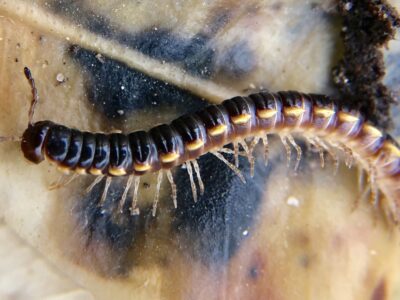
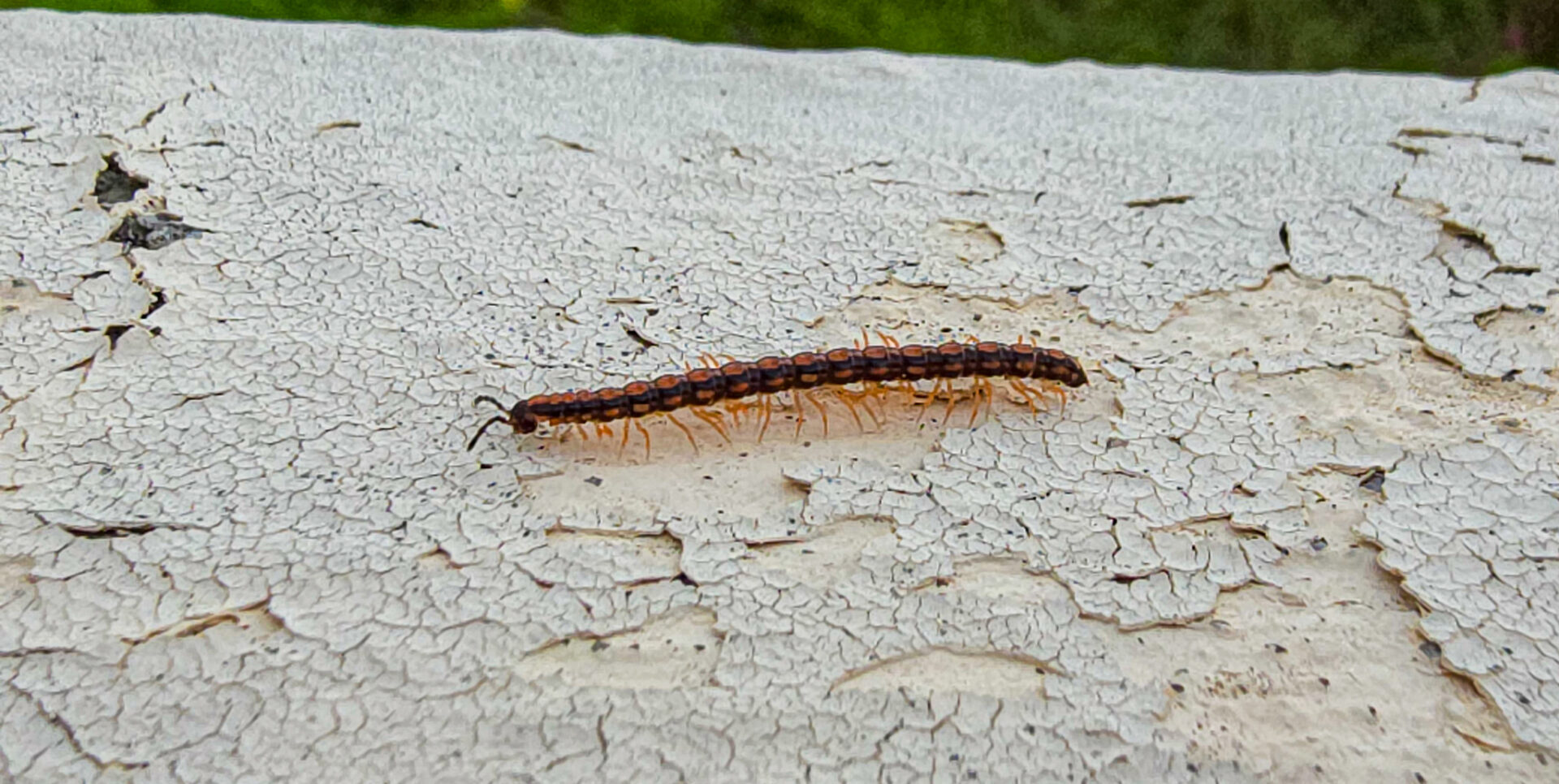
Unlike other paradoxosomatids, this genus has rounded paranota, with bright orange half-moons or orange slice-shaped patterning on the top of each segment connected by thinner lines of orange, with black bordering this. Near where the legs, which are orange, connect with each segment the body turns again to an orange coloration. The elongate antenna are a brownish color.
It reaches to roughly 0.8″/2 cm. This diminutive size is deceptive—what the orange rosary millipede lacks in stature, it compensates for through its unmistakable visual appeal. The contrast between its jet-black base coloration and brilliant orange segments creates a striking pattern that resembles a string of rosary beads, hence its common name.
As a member of the family Paradoxosomatidae, Helicorthomorpha holstii shares characteristics common to flat-backed millipedes. Most species possess a groove or furrow (“sulcus”) on the dorsal surface between the keels (paranota) on each segment, and the keels of the second body segment are situated lower on the body than those of the first segment (collum) and third segment.
Specimens go from egg to adult in under three months. This rapid development makes the orange rosary millipede an efficient colonizer of new environments. The species demonstrates remarkable adaptability, thriving in various conditions that would challenge other millipedes.
H. holstii, the only species in culture, has been shown to breed on everything from standard millipede substrate to Better Nature brand garden soil, though it greatly appreciates squash and rotting leaves in captivity. This flexibility reveals the species’ ability to exploit diverse food sources and environmental conditions. In nature, these millipedes are primarily active during periods of high humidity, seeking shelter in leaf litter and decaying wood where moisture levels remain stable.
The orange rosary millipede exhibits the typical nocturnal behavior of most millipedes, remaining hidden during the day and emerging at night to forage. Millipedes are ancient organisms that exhibit protective behavior by coiling together and employing chemical defenses, such as the release of toxic compounds from glands along their bodies, to deter attackers. They are characterized by the production of deterrent substances, including highly poisonous hydrogen cyanide and various alkaloids, to protect themselves from predation.
This small three-species genus hails from Asia, stretching from China and Japan through Myanmar and Vietnam down to Indonesia, though H. holstii has been introduced to Florida and Hawaii in the USA, and may have been spread further afield in a fashion similar to other pest species. The species’ presence across multiple continents demonstrates its remarkable ability to hitchhike in soil, plant material, and agricultural products.
Observations from iNaturalist data indicate the species has established populations in:
This cosmopolitan distribution reflects human-mediated transport rather than natural range expansion, making Helicorthomorpha holstii a classic example of an anthropogenic species.
Detritivores, feeding mainly on decaying plant material and contributing to nutrient cycling in ecosystems. The orange rosary millipede plays an essential role in breaking down organic matter, consuming leaf litter, rotting wood, and decomposing vegetation. Millipedes are detritivores, feeding on leaf litter and other debris. They prefer moist habitats, such as flower beds and leaf piles, and scrape calcium carbonate off the surfaces of sidewalks and rocks.
In captive settings, the species demonstrates dietary flexibility:
This detritivorous diet makes the orange rosary millipede invaluable for soil health and nutrient cycling in both natural and agricultural ecosystems.
Adult males have a pair of modified legs called gonopods that act as reproductive organs, leaving that diplosegment with a single pair of legs and another pair of gonopods. Adults may mate several times. After mating, females lay their eggs in moist soil.
The rapid reproductive cycle of Helicorthomorpha holstii contributes significantly to its invasive success. Specimens go from egg to adult in under three months. This compressed life cycle means multiple generations can occur within a single growing season, allowing populations to expand rapidly when conditions are favorable.
When molting, the millipede will enclose itself in a ball of mud for protection until it is ready to emerge. This protective behavior during vulnerable molting periods demonstrates the species’ sophisticated survival strategies.
Notable behavior: This study describes the genome sequences of two millipedes, Helicorthomorpha holstii and Trigoniulus corallinus, revealing unique adaptations not found in other arthropods. The orange rosary millipede has become a subject of genomic research, contributing to our understanding of millipede evolution and adaptation.
The species exhibits no formal conservation status, as it is not evaluated by the IUCN. However, its invasive potential in certain regions warrants ecological monitoring. H. holstii has been introduced to Florida and Hawaii in the USA, and may have been spread further afield in a fashion similar to other pest species.
While Helicorthomorpha holstii remains beneficial in its native Asian range, where it contributes to nutrient cycling and soil health, its introduction to new regions raises questions about ecosystem impacts. The species’ rapid reproduction and dietary flexibility could potentially outcompete native detritivores in vulnerable ecosystems. Preservation of natural habitats and reduction in pesticide use help protect these important detritivores. Play a crucial role in the decomposition process and nutrient cycling, thus supporting soil health and fertility.
Scientific Sequencing: Helicorthomorpha holstii was one of the first millipedes to have its genome fully sequenced, revealing unique genomic features and defense systems not found in other arthropods.
Chemical Arsenal: Millipedes possess a unique ozadene defensive gland unlike the venomous forcipules found in centipedes; the authors identify sets of genes associated with the ozadene that play roles in chemical defence as well as antimicrobial activity.
Rapid Development: From egg to reproductive adult in fewer than 90 days—one of the fastest millipede life cycles known, enabling explosive population growth in suitable environments.
Global Hitchhiker: The species has been documented on multiple continents, spreading through human agricultural trade and soil transport, making it one of the world’s most widely distributed millipede species.
Rosary Namesake: The distinctive orange and black segmented pattern resembles a string of rosary beads, giving the species its evocative common name.
Calcium Scraper: Like other paradoxosomatids, this species scrapes calcium carbonate from rock and concrete surfaces, an unusual behavior that helps meet its mineral requirements.
Ancient Lineage: Millipedes like Helicorthomorpha holstii belong to a group that colonized land over 400 million years ago, making them among Earth’s oldest terrestrial arthropods.
Qu, Z., et al. (2020). “Millipede genomes reveal unique adaptations during myriapod evolution.” PLOS Biology, 18(9), e3000636.
Sierwald, P., & Spelda, J. (2021). MilliBase: The Millipede Database. Retrieved from https://www.millibase.org
Golovatch, S. I. (2016). “On several new or poorly-known Oriental Paradoxosomatidae (Diplopoda, Polydesmida), XIX.” Arthropoda Selecta, 25(2), 131-152.
Nguyen, A. D., & Sierwald, P. (2013). “A worldwide catalog of the family Paradoxosomatidae Daday, 1889 (Diplopoda: Polydesmida).” CheckList, 9(6), 1132-1353.