Animals
| Kingdom | Animalia |
|---|---|
| Phylum | Arthropoda |
| Class | Diplopoda |
| Order | Polydesmida |
| Family | Dalodesmidae |
| Genus | Notonesiotes |
| Species | Notonesiotes aucklandensis |
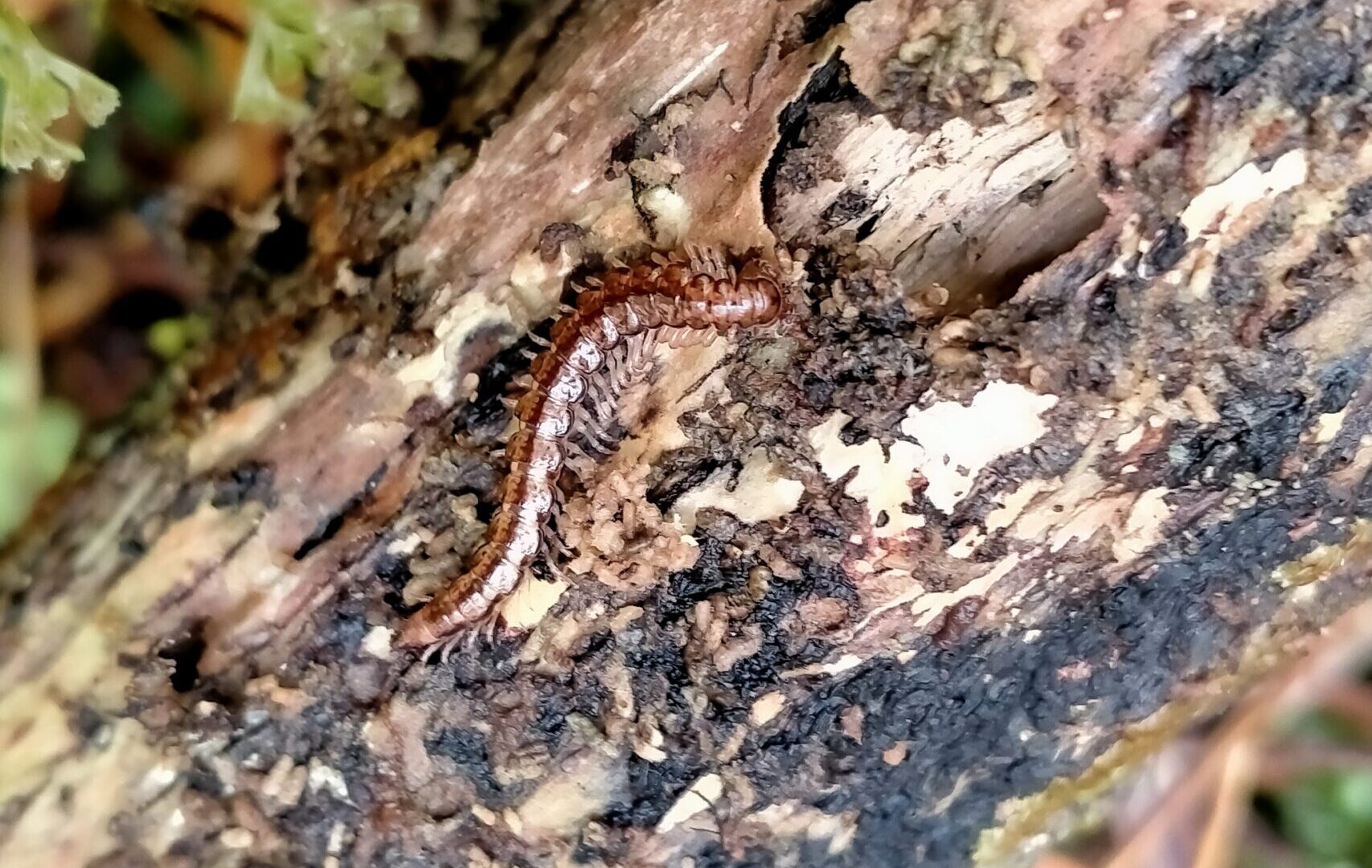
From the windswept subantarctic Auckland Islands comes a creature so specialized, so finely adapted to its isolated realm, that few humans have ever glimpsed it in its natural habitat. Notonesiotes aucklandensis is known only from the subantarctic Auckland Islands (ca 50°S 166°E), where it is said to be widespread. This small millipede represents a remarkable example of island endemism—a species found nowhere else on Earth, shaped by millions of years of isolation into a uniquely Southern Hemisphere creature.
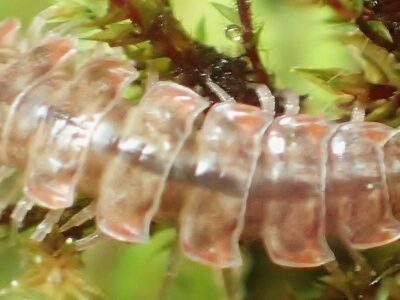
Like other members of its order, N. aucklandensis belongs to the flat-backed millipedes, with each body segment featuring wide lateral keels known as paranota produced by the posterior half of each body ring. The species displays the characteristic body plan of Dalodesmidae, a family of millipedes in the order Polydesmida found in the Southern Hemisphere.
Members of Polydesmida typically have no eyes and vary in length from 1.4 to 134 mm, with adults usually having 20 segments. Detailed specimens examined from museum collections reveal the distinctive gonopod structure characteristic of the genus—modified appendages used in reproduction that feature specialized claw-like terminations.
Polydesmids are very common in leaf litter, where they burrow by levering with the anterior end of the body, and these millipedes feed on decaying vegetation. N. aucklandensis, living in the cold, damp environment of the Auckland Islands, likely follows similar patterns, spending much of its time working through the rich organic matter of forest floors and tussock grasslands.
These creatures are slow-moving but powerful burrowers. The wave-like ripples of so many legs and their body pushing forward means they can simply force themselves underground head first. This burrowing ability proves essential for survival in the subantarctic, where the millipede can retreat into soil and leaf litter for protection from harsh weather and to maintain moisture levels.
N. aucklandensis is known only from the subantarctic Auckland Islands (ca 50°S 166°E), where it is said to be widespread. The Auckland Islands form an archipelago of New Zealand, lying 465 km south of the South Island, with the main Auckland Island occupying 460 km², surrounded by smaller islands including Adams Island, Enderby Island, and Disappointment Island.
The Auckland Islands – as with all of New Zealand’s subantarctic islands – is a National Nature Reserve, afforded the highest possible level of protection under New Zealand law, with a marine reserve encompassing all of the Auckland Islands territorial sea and internal waterways. This protected status ensures that this endemic millipede’s habitat remains largely undisturbed, allowing the species to persist in its ancient island home.
Like other polydesmids, N. aucklandensis is an herbivore that sustains itself on decaying plant material. These millipedes feed on decaying vegetation, playing a vital ecological role in nutrient cycling. In the Auckland Islands’ cool climate, decomposition occurs slowly, providing a steady food source throughout the year as leaves, twigs, and other organic matter gradually break down in the moist forest and grassland environments.
Millipedes play an important role in nutrient cycling, and N. aucklandensis contributes to this essential process by consuming dead plant material and returning nutrients to the soil. This activity supports the health of the island’s unique vegetation, which has evolved in isolation for millions of years.
Male N. aucklandensis possess specialized reproductive structures called gonopods, which are modified leg pairs used during mating. Polydesmids grow and develop through a series of molts, adding segments until they reach a fixed number in the adult stage through teloanamorphosis, typically developing through eight stages, hatching with only 7 segments and 3 pairs of legs, then molting seven times to reach 20 segments before the adults reproduce and die without another molt.
The reproductive system of dalodesmid millipedes demonstrates remarkable specialization. In N. aucklandensis the prostatic groove terminates on the posterior process of the claw, a feature that distinguishes it from related species. This anatomical detail reveals the complexity of even small arthropod reproduction.
N. aucklandensis was redescribed from Auckland Island specimens collected during the Pacific Expedition (1914–1916) of Theodor Mortensen, and more recently documented through specimens held in museum collections. The species appears to maintain stable populations across its limited range, though comprehensive population surveys remain limited due to the remote and protected nature of the Auckland Islands.
Conservation note: The establishment of the Auckland Islands as a National Nature Reserve provides robust protection for this endemic species. All of New Zealand’s subantarctic islands are managed by the Southland Conservancy of the Department of Conservation, with expedition party size, length of stay and landing on the islands kept to a minimum, and entry by permit only with thorough pre-expedition quarantine checks. These stringent protections help ensure that invasive species do not threaten N. aucklandensis or other island endemics.
Ancient lineage: Millipedes first appeared in the Silurian period, making them some of the oldest known land animals, with N. aucklandensis representing a living link to this ancient past.
Specialized anatomy: The gonopod structures of male N. aucklandensis are so distinctive that they form the basis for identifying and classifying the species—a reminder that even tiny creatures possess remarkable anatomical complexity.
Island endemic: Found nowhere else on Earth, N. aucklandensis exists only on the Auckland Islands, making it a species of profound biogeographic significance and a living example of how isolation shapes evolution.
Slow but steady: Most millipedes are slow-moving compared to centipedes, yet this deliberate pace allows them to navigate their environment with precision and efficiency.
No eyes needed: Polydesmids have no eyes, relying instead on chemical and tactile senses to navigate the dark leaf litter where they spend their lives.
Powerful burrowers: Despite their slow movement, N. aucklandensis can force itself underground head-first, using the coordinated motion of dozens of legs to penetrate soil and leaf litter.
Nutrient recyclers: By consuming decaying vegetation, N. aucklandensis transforms dead plant matter into forms that nourish the soil, supporting the unique flora of the Auckland Islands ecosystem.