Fungi
| Kingdom | Animalia |
|---|---|
| Phylum | Bryozoa |
| Class | Gymnolaemata |
| Order | Cheilostomatida |
| Family | Candidae |
| Genus | Notoplites |
| Species | Notoplites longa |
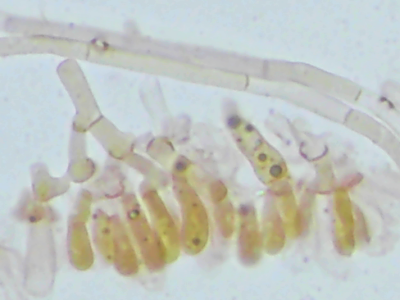
In the frozen depths of Antarctica, where few organisms dare to venture, exists a creature so extraordinary that it challenges everything we thought we knew about life’s boundaries. Notoplites longa is not a fungus at all—a stunning revelation that reminds us how much mystery still dwells in Earth’s most remote corners. This remarkable bryozoan, a colonial marine animal of ethereal delicacy, inhabits the icy Antarctic waters where sunlight barely penetrates and temperatures plunge to lethal extremes. Yet here it thrives, a testament to nature’s boundless creativity and the hidden wonders that await discovery in our planet’s final frontiers.
Notoplites longa belongs to the bryozoan family Candidae, a group of colonial organisms that construct intricate, lace-like structures through the coordinated efforts of thousands of tiny individuals called zooids. The genus Notoplites is characterized by elongated, delicate colonies that form branching patterns reminiscent of frozen ferns or crystalline ice formations—a poetic parallel to their Antarctic home.
Identification features of this species include:
Identification tip: The elongated form and Antarctic origin are key diagnostic features, though microscopic examination of zooid arrangement is necessary for definitive species confirmation. The calcified structures preserve beautifully in museum collections, making fossil records invaluable for understanding bryozoan evolution.
These colonial architects construct their homes through biomineralization, secreting calcium carbonate to build protective chambers—a process that mirrors the geological forces shaping Antarctica itself. Each individual zooid contributes to the colony’s survival, creating a superorganism of breathtaking intricacy and purpose.
The life history of Notoplites longa unfolds through a fascinating sequence of larval recruitment, colonial establishment, and continuous asexual reproduction. Like all bryozoans, this species begins life as a free-swimming larva, drifting through Antarctic currents until finding suitable substrate—perhaps a rock face, shell fragment, or another organism’s surface. Once settled, the larva metamorphoses into the founding zooid, the ancestral member that initiates the entire colony through budding.
From this single pioneer, thousands of genetically identical zooids emerge through asexual reproduction, each one specializing in particular colony functions. Some become feeding zooids, their lophophores (tentacle-like structures) extended to capture microscopic food particles from the frigid water. Others differentiate into reproductive zooids, generating sperm and eggs that will eventually produce new larvae to establish colonies elsewhere. This reproductive strategy—combining both asexual expansion and sexual reproduction—provides remarkable evolutionary flexibility in the unpredictable Antarctic environment.
Growth in Antarctic bryozoans proceeds slowly, constrained by the extreme cold and limited food availability. Yet this patience pays dividends: colonies that establish themselves become increasingly resilient, their calcified skeletons accumulating over years or decades into substantial structures. The seasonal rhythm of Antarctic productivity—intense summer feeding followed by winter dormancy—shapes the colony’s growth patterns, creating visible growth rings much like those in trees. This slow, methodical expansion represents nature’s answer to environmental adversity: not speed, but persistence and careful resource allocation.
Notoplites longa exists in one of Earth’s most extreme and isolated ecosystems: the Antarctic marine environment. Known from a single recorded location near 70°S, 80.8°W, this species represents the frontier of biological exploration in Earth’s final wilderness. The Antarctic waters where it dwells are among the coldest, most nutrient-rich, and most pristine marine environments on the planet.
The habitat preferences and environmental conditions include:
The Antarctic bryozoan fauna represents a unique assemblage shaped by millions of years of isolation and extreme environmental selection. Notoplites longa shares its habitat with other remarkable bryozoans, sponges, and cold-water corals—a community of filter-feeders that transforms the water column into a living cathedral of delicate, interconnected organisms. The single known occurrence hints at either genuine rarity or our incomplete knowledge of Antarctic biodiversity, reminding us that exploration of the deep polar seas remains in its infancy.
Within the Antarctic marine ecosystem, Notoplites longa occupies a crucial niche as a suspension feeder and energy transformer. The colony’s thousands of zooids, each extending delicate lophophores into the water column, collectively filter enormous quantities of seawater, capturing phytoplankton, zooplankton larvae, and organic detritus. This feeding activity represents a critical link in Antarctic food webs, converting microscopic primary producers into biomass accessible to larger predators—fish, starfish, and other benthic organisms that depend on bryozoan colonies for nutrition and shelter.
Beyond feeding, Notoplites longa provides essential ecosystem services that extend far beyond its individual colony:
The ecological significance of bryozoans in Antarctic ecosystems cannot be overstated—they are among the most abundant and productive filter-feeders in polar waters, shaping community structure and ecosystem function through their feeding activities and structural contributions.
Edibility status: Unknown—not applicable to bryozoans. As a marine bryozoan, Notoplites longa is not harvested for human consumption and possesses no known culinary or medicinal applications. The species exists outside the realm of human food systems, thriving in waters too remote and inhospitable for commercial exploitation.
However, the scientific value of Notoplites longa extends far beyond direct human use. Bryozoans serve as invaluable indicators of marine environmental conditions, their presence and diversity reflecting water quality, productivity, and ecological health. Paleontologists treasure bryozoan fossils as windows into ancient oceans, using their preserved skeletons to reconstruct past climates and biodiversity patterns. In the modern era, bryozoan research contributes to our understanding of marine biodiversity, evolutionary adaptation to extreme environments, and the intricate mechanisms by which organisms construct mineral skeletons.
The true “use” of Notoplites longa lies in its role as a keeper of Antarctic secrets—a living archive of evolutionary success in Earth’s harshest realm. By studying this species and its bryozoan relatives, scientists unlock fundamental principles of biology, chemistry, and ecology that illuminate how life persists at the boundaries of habitability. In this sense, every colony of Notoplites longa represents an investment in human knowledge and wonder.
Antarctic extreme survivor: Notoplites longa thrives in waters that would kill most organisms within minutes, using specialized antifreeze-like compounds and metabolic adaptations to maintain function at temperatures near the freezing point of seawater.
Colonial superorganism: A single colony contains thousands of zooids working in perfect coordination—imagine a city where every resident is genetically identical and perfectly specialized for their role. This is bryozoan sophistication.
Calcification mystery: Bryozoans construct their calcium carbonate skeletons in waters that should make this process thermodynamically unfavorable, yet they accomplish it through elegant biochemical mechanisms that scientists are still working to fully understand.
Fossil record champions: Bryozoans have left an exceptional fossil record spanning over 470 million years, making them among the best-documented animal groups in Earth history and providing unparalleled insight into evolutionary change.
Filter-feeding efficiency: A single bryozoan colony can filter hundreds of liters of seawater daily, making these organisms among the most efficient particle-capture systems in nature—a principle engineers are studying for biomimetic applications.
Rarity and mystery: With only one known occurrence recorded, Notoplites longa represents either a genuinely rare species or a testament to how little we truly know about Antarctic biodiversity—perhaps both.
Ancient lineage: The bryozoan group to which Notoplites longa belongs has remained relatively unchanged for millions of years, representing a living connection to Earth’s deep past and a successful evolutionary strategy that requires no improvement.