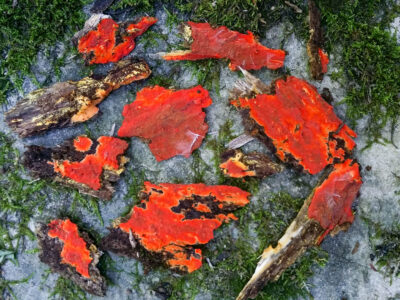
Fungi
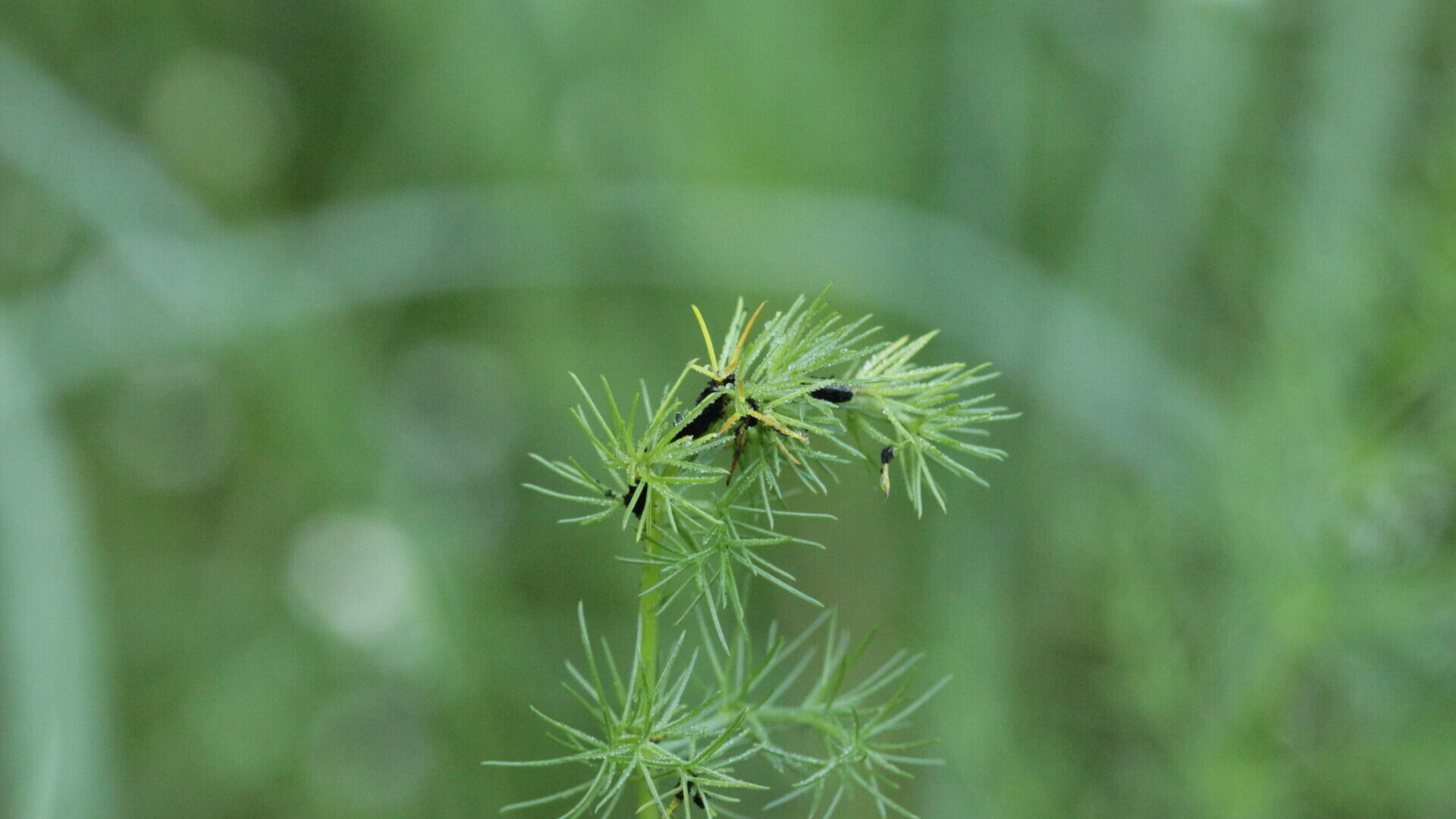
Nyssopsora echinata
| Kingdom | Fungi |
|---|---|
| Phylum | Basidiomycota |
| Class | Pucciniomycetes |
| Order | Pucciniales |
| Family | Raveneliaceae |
| Genus | Nyssopsora |
| Species | Nyssopsora echinata |
Key metrics will appear once data is available.
Spignel Rust, scientifically known as Nyssopsora echinata, is a rare rust fungus in the family Raveneliaceae. This microscopic master of parasitism has captivated mycologists for centuries, not through flashy fruiting bodies, but through an elegance of form and an intimate relationship with its host plants that speaks to the hidden complexity of fungal ecology. From European alpine meadows to the rugged coastlines of North America, this fungus weaves an invisible thread through the plant kingdom, leaving behind telltale signs of its presence for those who know where to look.
The morphology of Nyssopsora echinata is unmistakable, making it a rewarding find for the trained eye. Like all rust fungi, this species produces distinctive spore structures that manifest as pustules—tiny, powdery eruptions on the undersides of leaves. The teliospores, which are the overwintering spores characteristic of rust fungi, display a remarkable architecture that mycologists find utterly compelling.
The rust appears as dark brown to blackish pustules, typically forming on the lower leaf surfaces of its host plants. Under magnification, the spores reveal intricate cellular walls and ornate projections that seem almost sculptural in their precision. This fungus’s distinctive morphology allows experienced mycologists to identify it with confidence in the field, even without microscopic examination.
The life story of Nyssopsora echinata unfolds across seasons like a carefully choreographed dance with its host plant. This fungus is parasitic on Apiaceae generally in North America, mainly on Meum athamanticum in Europe. The fungus penetrates the leaf tissues of these delicate umbelliferous plants, establishing an internal mycelium that remains hidden from casual observation until the moment of spore production.
As the growing season progresses, the fungus concentrates its energies on generating teliospores—the resting stage that allows it to survive harsh winters. These sturdy spores, with their ornate projections and thick walls, can endure freezing temperatures and desiccation, waiting patiently beneath the snow for spring’s warmth to trigger germination. The fungus exhibits a degree of host specificity that speaks to millions of years of coevolution with its plant partners.
This fungus is relatively widespread in Europe and USA, with two sub-populations: a North American one on various Apiaceae, and a European one, predominantly on Meum. The iNaturalist data reveals a fascinating geographic pattern, with concentrated populations in the Alps and scattered occurrences across temperate North America, particularly in California’s coastal ranges and the Rocky Mountain region.
The host plants are not uncommon in temperate forest and temperate shrubland habitats, yet Nyssopsora echinata remains elusive—a testament to the cryptic nature of rust fungi. The fungus thrives in cool, moist environments where its host plants flourish, from subalpine meadows to coastal bluffs and mountain woodlands. It appears to favor areas with adequate humidity and moderate temperatures, conditions that support both the delicate Apiaceae hosts and the fungal partner that depends upon them.
Within the intricate web of forest ecology, Nyssopsora echinata plays a subtle yet significant role as a specialist pathogen. While rust fungi are often dismissed as mere plant pests, the reality is far more nuanced. This fungus, in parasitizing its specific host plants, participates in natural population regulation—a form of biological feedback that prevents any single plant species from dominating its environment unchecked.
The relationship between Nyssopsora echinata and its hosts represents a fascinating example of coevolution. The fungus has evolved to exploit specific host plants with surgical precision, while the plants, in turn, have developed various defensive strategies. This ongoing evolutionary arms race has shaped both organisms, creating a dynamic equilibrium that has persisted for millennia. The fungus’s presence in an ecosystem indicates a healthy, diverse plant community capable of supporting specialized pathogens.
As a rust fungus, Nyssopsora echinata is neither edible nor toxic to humans in the traditional sense—it is far too small and ephemeral to harvest or consume. However, its significance lies entirely in the scientific and ecological realm. For mycologists and plant pathologists, this fungus represents a window into understanding fungal biodiversity, host specificity, and the complex relationships that bind fungi to their plant partners.
The study of Nyssopsora echinata contributes to our broader understanding of rust fungi, which collectively represent one of the most important groups of plant pathogens on Earth. By documenting its distribution, ecology, and biology, scientists build a more complete picture of fungal diversity and the intricate dependencies that structure natural ecosystems. In this sense, every observation and specimen collected adds to humanity’s knowledge of the living world.
This is a rare rust of wide distribution, making each sighting a small treasure for dedicated mycologists and naturalists
There are few records and no recent specimens in major herbaria, meaning that careful documentation of contemporary observations is crucial for understanding this fungus’s current status
The provisional conservation assessment is Data Deficient (DD), highlighting how little we still know about many fungal species despite centuries of mycological study
The common name in German is Bärwurz-Rost, while in Welsh it is called Rhwd Ffenigl Elen Luyddog, reflecting the cultural and linguistic diversity of regions where this fungus occurs
Rust fungi possess one of the most complex life cycles in the fungal kingdom, with multiple spore stages adapted to different ecological functions—a testament to the evolutionary sophistication of these microscopic organisms
Recent observations document this fungus in locations ranging from the Swiss Alps to Point Reyes National Seashore in California, demonstrating its remarkable capacity to persist across vastly different geographic and climatic contexts