Fungi
| Kingdom | Fungi |
|---|---|
| Phylum | Basidiomycota |
| Class | Agaricomycetes |
| Order | Russulales |
| Family | Peniophoraceae |
| Genus | Peniophora |
| Species | Peniophora pithya |
Peniophora pithya stands as one of Europe’s most subtle yet ecologically vital wood-decay fungi, a master of decomposition that works quietly across the continent’s forests. This thin, crusty fungus transforms dead wood into nutrients, completing nature’s endless cycle of renewal with remarkable efficiency. Few fungi embody the quiet power of ecological restoration quite like this species.
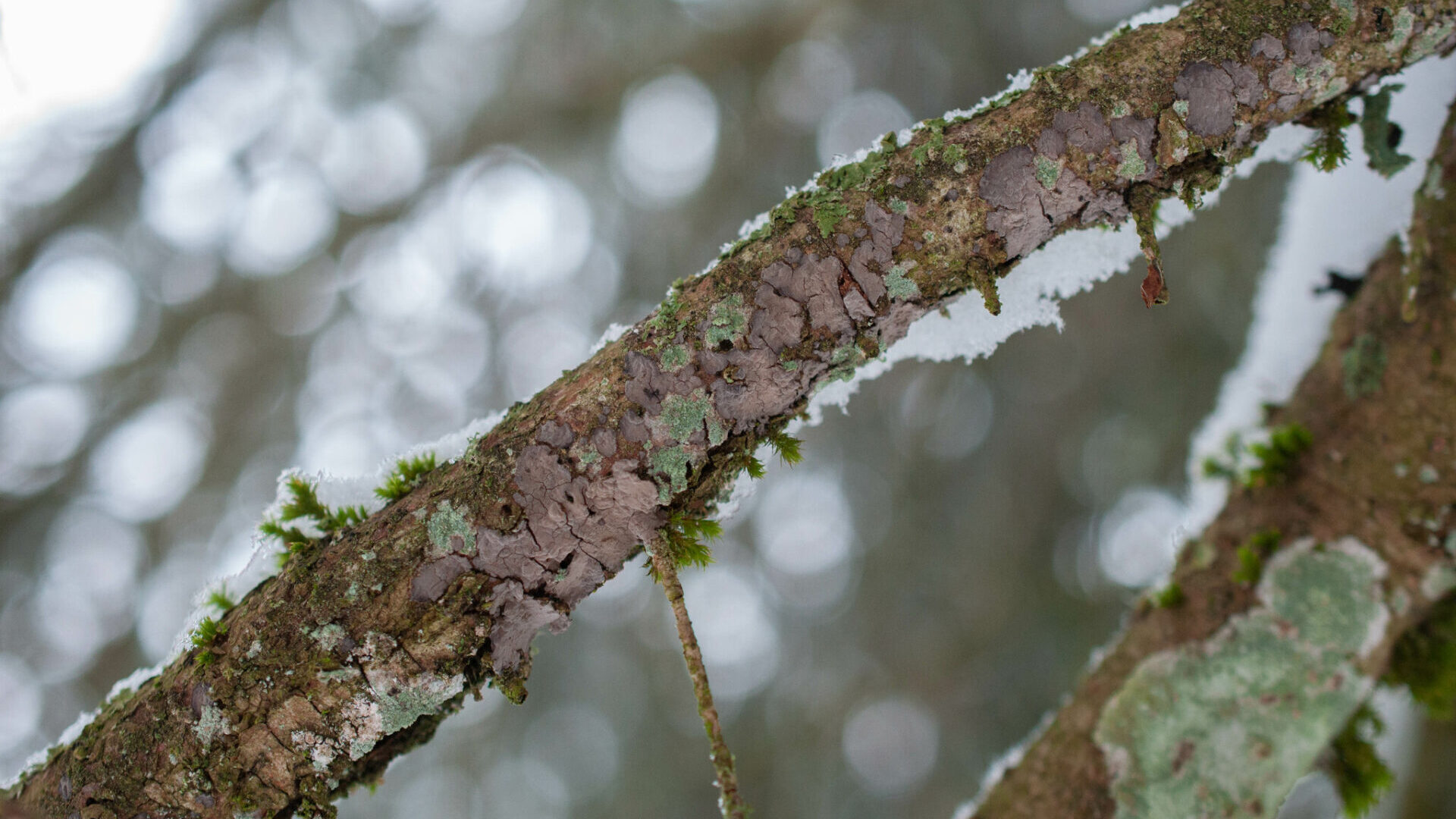
The species is resupinate, or crust-like, and belongs to the corticioid group of fungi. Rather than forming the familiar mushroom shapes that capture our imagination, Peniophora pithya spreads itself flat against wood surfaces, clinging tightly to its substrate.
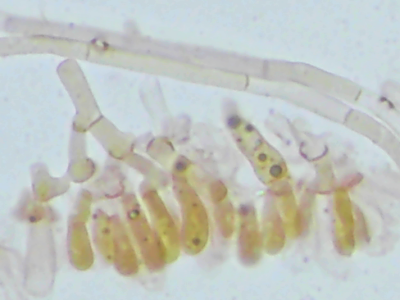
The fruiting body forms entirely resupinate coverings that are tightly fixed to the substrate, creating irregular patches measuring 0.1-0.2 millimeters thick, initially rounded before becoming confluent and spreading across several centimeters. The surface appears smooth and pale, often with subtle coloration that blends seamlessly with the weathered wood it inhabits. Under magnification, the hymenium (spore-producing layer) reveals delicate structures including distinctive cystidia—sterile hair-like cells that help define the genus.
Identification cues include:
Like all wood-decay fungi, Peniophora pithya begins its life as microscopic mycelium—thread-like filaments that penetrate deep into dead wood. These hyphae work tirelessly, secreting powerful enzymes that break down the complex polymers of lignin and cellulose. The mycelium spreads gradually through the substrate, consuming the wood’s nutritional content and transforming solid timber into crumbly debris.
When conditions align—adequate moisture, appropriate temperature, and sufficient substrate—the fungus produces its fruiting bodies. These thin crusts emerge directly from the mycelium, spreading outward in irregular patches that can eventually cover several centimeters of wood surface. Peniophora species are often found on the bark of trees and are known for their ability to produce a range of vibrant colors, including pink, red, and orange hues, especially after rain, playing an essential role in ecosystems by decomposing dead wood and helping recycle nutrients back into the environment.
The genus Peniophora is widespread and contains 62 species. Peniophora pithya occurs across Europe, with documented records from Sweden, Norway, Austria, Switzerland, Finland, Greece, the Netherlands, France, Germany, and the United Kingdom. Its distribution reflects a preference for temperate and boreal forests where dead wood accumulates steadily.
This fungus favors decaying hardwood and softwood substrates, particularly branches and small logs in various stages of decomposition. It thrives in humid forest environments where moisture and shade create ideal conditions for mycelial growth and fruiting. The species appears indifferent to wood type, colonizing whatever fallen timber becomes available, making it a generalist decomposer in European woodland ecosystems.
Preferred habitats include:
Peniophora pithya functions as a white-rot fungus, possessing the remarkable ability to degrade lignin—one of nature’s toughest polymers. This decomposition process is essential. Dead wood would accumulate endlessly without such fungi, eventually choking forest floors and preventing new growth. Instead, Peniophora pithya and its relatives quietly reduce fallen timber to soil, releasing locked-away nutrients for plants to reclaim.
The ecological significance of this work cannot be overstated. Wood decay fungi are considered key species in forest ecosystems because decomposing dead wood creates new habitats for other species, helps in nutrient recycling, participates in energy transportation and transformation, provides food to other species, and serves as indicator species for conservation projects. Beyond its role as a decomposer, Peniophora pithya provides habitat and food for countless invertebrates, mites, and smaller fungi that depend on decaying wood. The fungus itself may be colonized by parasitic fungi, demonstrating the intricate web of interactions within decomposing wood.
The genus name Peniophora means tough, and crust fungi in this genus are difficult to tear when sampling. These fungi are tough and leathery, tasteless, and inedible with no culinary value. Peniophora pithya offers no gastronomic interest—it is neither palatable nor nutritious for human consumption.
Edibility status: Inedible
However, the genus holds scientific interest. As a powerful white-rot fungus, related species have been the target of bioprospecting for laccases—enzymes that degrade lignin—to decolorize textile waste water. Such research suggests that Peniophora pithya and its relatives may eventually contribute to biotechnological solutions for environmental remediation and industrial applications.
A number of Peniophora members are parasitized by other fungi. For example, Tremella mesenterica is a parasite to several species of Peniophora.
Peniophora pithya has a complex taxonomic history, having been described under multiple scientific names including Thelephora pithya and Corticium plumbeum before settling on its current designation in 1950.
The genus contains cystidia—specialized sterile cells that mycologists use to distinguish Peniophora species from other corticioid fungi, making microscopic examination essential for accurate identification.
This fungus is so inconspicuous that many forest visitors walk past it daily without noticing, despite its importance in woodland ecology.
Recent research on wood-decay fungi has revealed that Peniophora species employ sophisticated chemical strategies, including the production of powerful peroxidases, to break down lignin and compete with other decomposers.
Acremonium psammosporum and other species of the genus are commonly found on Peniophora species, demonstrating that even decomposer fungi host their own microbial communities.
The thin, delicate fruiting bodies of Peniophora pithya are particularly vulnerable to desiccation, making moist conditions essential for their appearance and survival.