Fungi
| Kingdom | Fungi |
|---|---|
| Phylum | Basidiomycota |
| Class | Agaricomycetes |
| Order | Russulales |
| Family | Russulaceae |
| Genus | Russula |
| Species | Russula rimulosa |
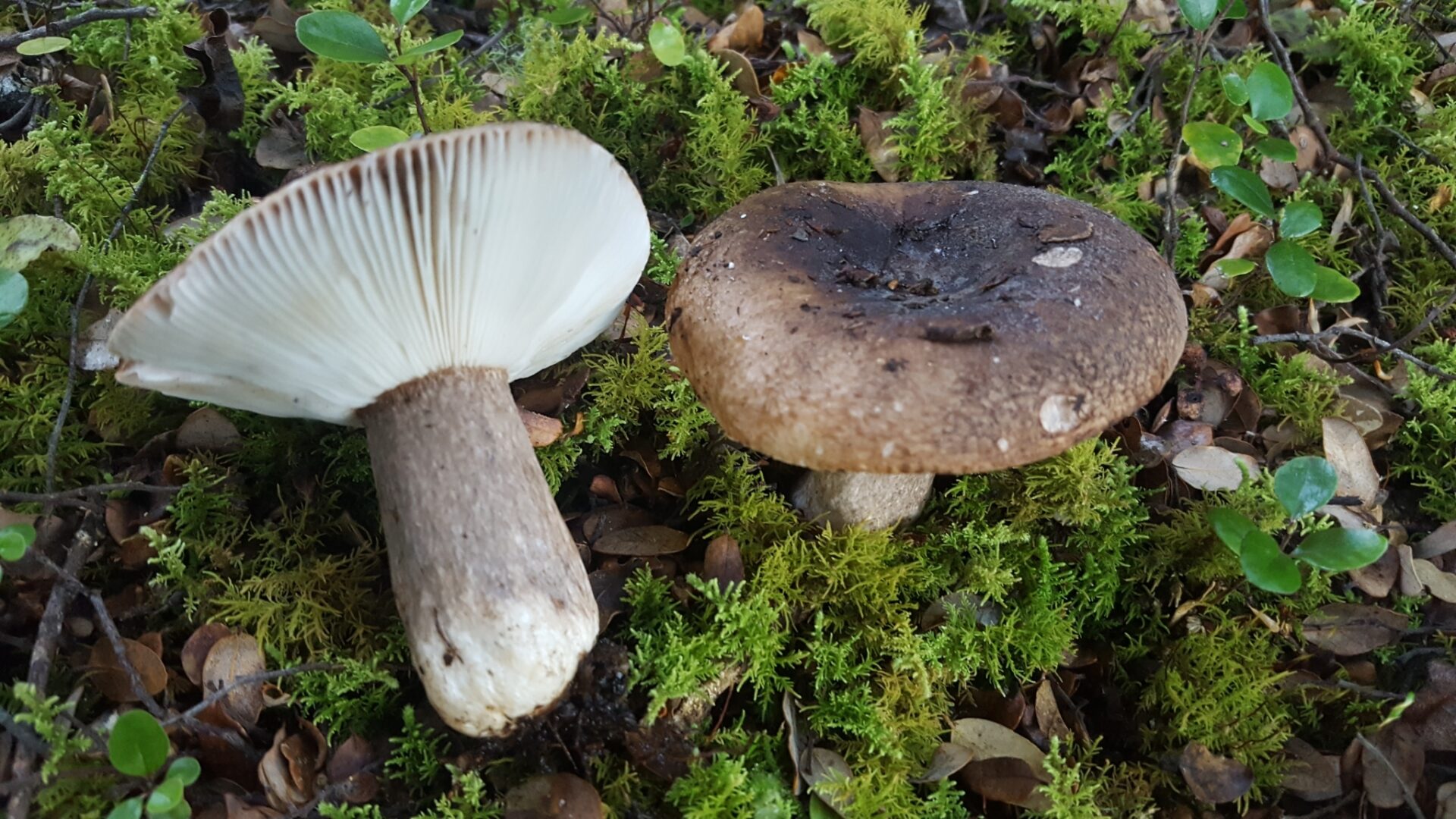
Meet Russula rimulosa, a fungus that embodies the quiet mystery of the southern forest floor. Named by Pennycook and recorded across New Zealand, Australia, and North America, this species represents the fascinating complexity hidden within one of mycology’s most captivating genera. Though diminutive and easily overlooked beneath leaf litter, it tells a story of adaptation, ecological partnership, and the intricate beauty of fungal life in temperate woodlands.
Members of the genus Russula are distinguished by usually brightly coloured caps, a white to dark yellow spore print, brittle, attached gills, an absence of latex, and absence of partial veil or volva tissue on the stem. Russula rimulosa follows these classic characteristics, making it immediately recognizable as a member of this iconic genus once you understand what to look for.
The species shares the characteristic brittleness that defines the genus. In Russula, the stipe breaks like the flesh of an apple, while in most other families it only breaks into fibres. This distinctive texture—crisp and crumbly rather than fibrous—is one of the most reliable field marks. The cap typically displays the rounded, convex form common to many Russulas, often becoming flattened or slightly depressed with age.
Identification cues for the genus Russula:
While it is relatively easy to identify a sample mushroom as belonging to this genus, it is a significant challenge to distinguish member species of Russula, often requiring microscopic characteristics and subtle subjective distinctions, such as the difference between a mild to bitter and a mild to acrid flavor.
All Russula species are ectomycorrhizal symbionts with higher plants and trees, and the genus has a collectively diverse host range. This means that Russula rimulosa, like its relatives, exists in a profound partnership with the roots of forest trees. The fungus receives carbohydrates from the tree’s photosynthesis, while the tree gains enhanced water and nutrient absorption through the fungal network—a mutually beneficial arrangement refined over millions of years.
The mycelium spreads through the soil and around tree roots, remaining invisible until conditions align for fruiting. When autumn moisture and temperature shifts trigger the fruiting cycle, the fungus channels energy into producing mushrooms. These fruiting bodies emerge from the forest floor as if by magic, pushing through leaf litter and organic matter to release spores into the air. The process is relatively brief—these delicate structures persist for only a week or two before collapsing back into the soil.
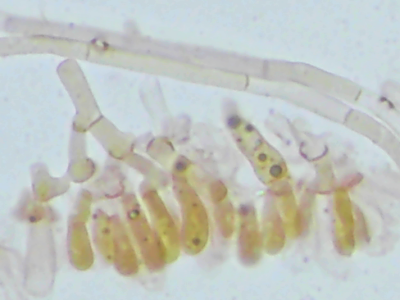
The fruiting body itself is a marvel of fungal engineering. Presence of large spherical cells, ‘sphaerocysts’, in the stipe is an important characteristic feature to distinguish the members of Russulaceae from other mushrooms. These spherical cells give Russulas their distinctive brittle texture, allowing them to shatter explosively when stressed—an adaptation that aids spore dispersal.
INaturalist data indicates that Russula rimulosa has been recorded across a wide geographic range, with observations concentrated in New Zealand, particularly in the southern regions and around Auckland, as well as in eastern Australia and the southeastern United States. The species appears in records from Fiordland National Park, various scenic reserves, and native forest habitats—places where ancient trees and undisturbed soil create ideal conditions for mycorrhizal fungi.
The species thrives in temperate to subtropical forests where moisture is consistent and trees provide the necessary host relationships. Some species are cosmopolitan and capable of forming associations with one or more hosts in a range of habitats, while others are more constrained in either host or habitat or both. Russula rimulosa appears to favor woodland environments with established tree communities, where the fungal networks have had time to develop mature associations.
Habitat characteristics where Russula rimulosa is found:
Within the forest ecosystem, Russula rimulosa performs roles both subtle and essential. As an ectomycorrhizal partner, it extends the functional reach of tree root systems, helping trees access water and nutrients—particularly nitrogen and phosphorus—that would otherwise remain locked in the soil. This partnership is so fundamental that many forest trees cannot thrive without these fungal associates. The relationship is ancient; fossil evidence suggests mycorrhizal associations date back hundreds of millions of years.
Russula fruit bodies provide a seasonal food source for slugs, squirrels and deer. When Russula rimulosa fruiting bodies emerge, they become part of the forest’s food web. Small invertebrates consume the flesh, while larger animals may feed on these creatures. The mushrooms themselves are ultimately recycled back into the soil, returning nutrients to the network of life. Additionally, the mycoheterotrophic plant Monotropa uniflora associates with a small range of fungal hosts, all of them members of Russulaceae, including 18 species of Russula. This demonstrates how deeply Russula species are woven into forest plant communities.
Russula is mostly free of deadly poisonous species, and mild-tasting ones are all edible. This general principle applies to the genus as a whole, though specific identification to species level is essential before considering any Russula for consumption. Russula rimulosa‘s edibility status remains undocumented in available literature, reflecting the challenge of studying less commonly encountered species.
Edibility warning: Never consume any wild mushroom without 100% certain identification to species. The main pattern of toxicity seen among Russula species to date has been gastrointestinal symptoms in those with a spicy (acrid) taste when eaten raw or undercooked; many of these are red-capped species such as R. emetica, R. sardonia and R. nobilis. For those interested in foraging Russulas in general, the traditional “nibble test” is used: a tiny piece of raw flesh is placed on the tongue and held for 15-20 seconds. If a burning, peppery sensation develops, the mushroom is acrid and inedible. If the taste is mild and pleasant, the species may be edible—though this test should only be performed by those absolutely certain they have a true Russula, as the test is dangerous with other fungal families.
In European tradition, certain edible Russula species have been foraged for centuries. Russula cyanoxantha is a popular edible throughout Asia, Europe, and the Pacific, while in Finland, commonly eaten species include Russula vinosa, Russula vesca, Russula paludosa, Russula decolorans, Russula xerampelina and Russula claroflava. However, North American foragers have historically been more cautious with the genus, reflecting both the abundance of other choice edibles and the genuine difficulty in species identification.
The “brittle gill” mystery: The genus Russula is sometimes known colloquially as “brittle gills” because their gills shatter like glass when touched—a unique adaptation among mushrooms that aids in spore dispersal when the fruiting body is disturbed by animals or weather.
Metal accumulation specialists: Some russulas can bioaccumulate high levels of toxic metals from their environment. For example, Russula atropurpurea is capable of concentrating zinc, a property attributed to the presence of metallothionein-like peptides in the mushroom. This remarkable ability makes some Russula species useful indicators of soil contamination.
The genus name origin: The name Russula is derived from the Latin word russus, meaning “red”—though ironically, many Russula species are not red at all, displaying yellows, greens, purples, and whites instead.
A massive genus: Russula is a very large genus composed of around 750 worldwide species of ectomycorrhizal mushrooms. Despite this diversity, only about 5% can be reliably identified by sight alone, making Russula one of mycology’s greatest challenges.
The “drop-kick” test: Frustrated mycologists have developed an unconventional identification method: a Russula can be kicked and will shatter into dozens of pieces due to its brittle structure. This is both a genuine identification tool and a humorous acknowledgment of the genus’s difficulty.
Ancient partnerships: All Russula and Lactarius species are mycorrhizal, which means they have a mutualistic association with the roots of trees, especially members of the oak family (Fagaceae) and pine family (Pinaceae). In this mutualism, the fungus receives sugars from the tree’s photosynthesis, while the trees benefit by the fungal ability to absorb water and minerals, particularly phosphorous and nitrogen.
Spore print variation: Despite being called “white-spored,” Russulas are considered “white spored” mushrooms, but the truth is the spore print colour is usually some shade of yellow, from almost pure white to a deep orange-yellow. This variation within species makes identification even more challenging.