Animals
| Kingdom | Animalia |
|---|---|
| Phylum | Arthropoda |
| Class | Diplopoda |
| Order | Julida |
| Family | Julidae |
| Genus | Tachypodoiulus |
| Species | Tachypodoiulus niger |
Tachypodoiulus niger is a millipede that thrives in the temperate woodlands and gardens of Western Europe, where it plays a vital role in breaking down organic matter and enriching soil ecosystems. This remarkable arthropod, named for its distinctive dark coloration, has adapted to life in the leaf litter and decaying wood that carpets the forest floor. Despite its small size and humble appearance, this creature deserves recognition as an essential engineer of the soil world, quietly transforming dead plant material into nutrients that sustain entire ecosystems.
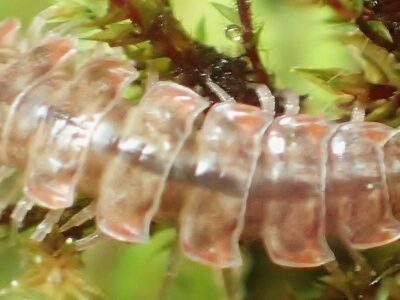
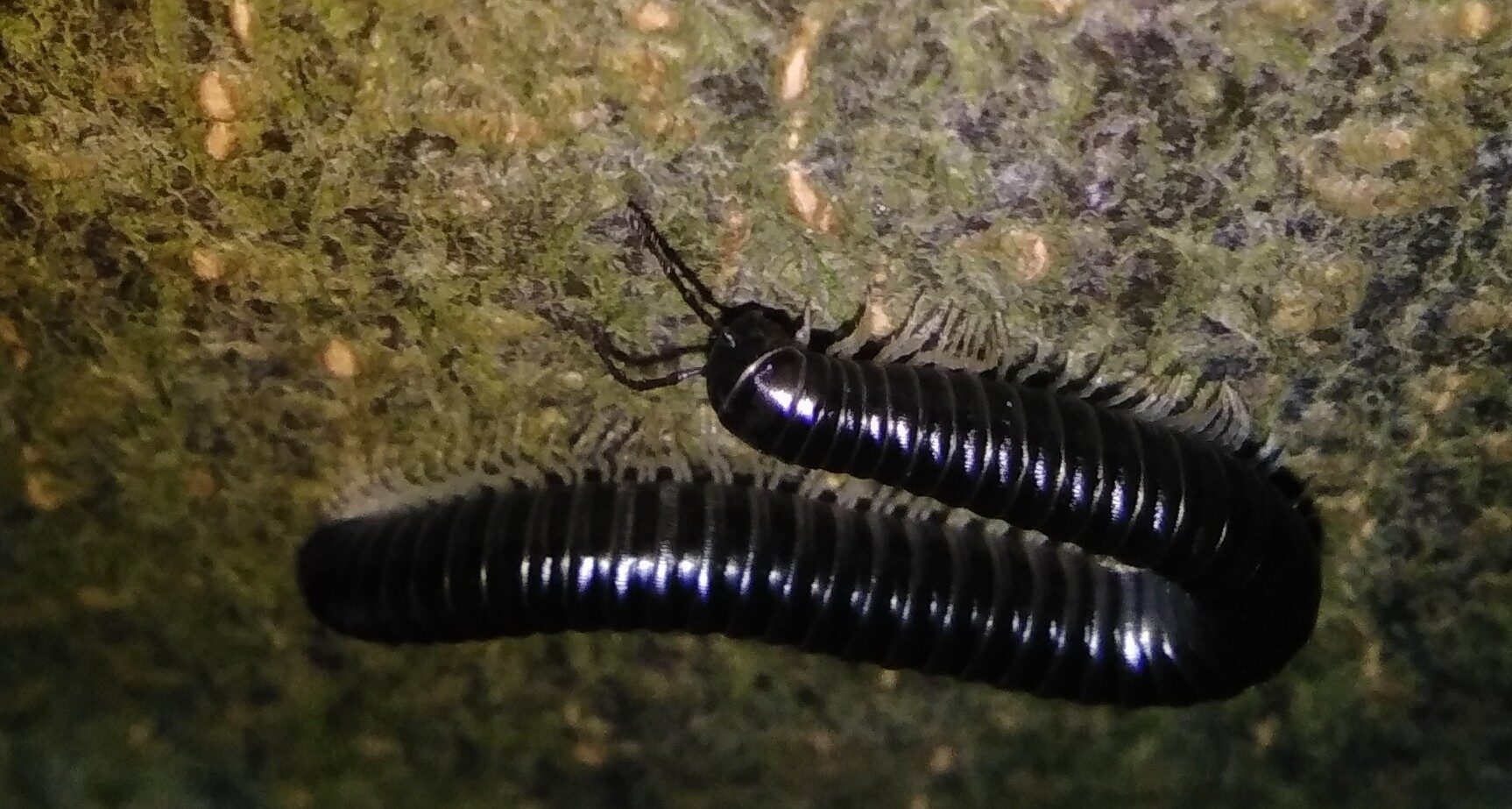
Tachypodoiulus niger is immediately recognizable by its sleek, cylindrical body and deep black or dark brown coloration that gives the species its scientific name. The body consists of numerous segments, each bearing pairs of legs that move in a mesmerizing wave-like pattern as the millipede glides across the forest floor. The exoskeleton has a subtle sheen, and the creature typically measures between 15-25 millimeters in length, making it a relatively small but distinctly visible member of the millipede community.
Key identification features include:
The species shows minimal sexual dimorphism, though males may be slightly smaller than females. These millipedes are often confused with other dark-colored millipede species found in Europe, but their particular combination of size, coloration, and habitat preference helps distinguish them from relatives.
Tachypodoiulus niger is primarily nocturnal, emerging from its daytime refuges in leaf litter, rotting logs, and soil crevices as darkness falls. The millipede moves slowly and deliberately through the detritus layer, its numerous legs creating a rhythmic, undulating motion that allows it to navigate the complex terrain of the forest floor with remarkable efficiency. Unlike many arthropods, this millipede does not flee from light but rather avoids it by remaining in darker microhabitats during daylight hours.
Notable behavior: When threatened, Tachypodoiulus niger can secrete defensive compounds from glands along its body, deterring predators with chemical warfare rather than physical defense. The millipede is generally solitary, though multiple individuals may aggregate in particularly favorable microhabitats where moisture and food resources are abundant. They are not aggressive toward one another and may coexist peacefully in shared refuges during periods of environmental stress.
Tachypodoiulus niger ranges across Western and Central Europe, with documented records from France, the United Kingdom, Germany, Luxembourg, Switzerland, Ireland, Denmark, Spain, Portugal, and the Russian Federation. The species shows a clear preference for temperate regions with moderate to high humidity and established woodland ecosystems. iNaturalist data indicates over 3,100 observations across its range, with particularly dense populations recorded in the British Isles and northern France.
This millipede thrives in areas with well-developed leaf litter, abundant decaying wood, and stable soil moisture conditions. It is found from lowland forests to moderate elevations, adapting readily to both ancient woodlands and younger secondary growth forests. The species has also colonized gardens, parks, and other human-modified landscapes where suitable microhabitats persist, demonstrating a degree of ecological flexibility that has allowed it to maintain populations even as natural habitats have declined.
Tachypodoiulus niger is a detritivore, feeding primarily on decaying plant material, fungi, and decomposing leaf litter that accumulates on the forest floor. The millipede’s role as a primary consumer of dead organic matter is essential to nutrient cycling, as it breaks down complex plant compounds into smaller particles that can be processed by bacteria and other microorganisms. This process accelerates decomposition and releases nutrients back into the soil, making them available to living plants.
Feeding highlights:
The millipede shows no preference for living plant material and will not damage healthy vegetation, making it entirely harmless to gardens and crops. Its feeding behavior is closely tied to environmental moisture, with activity levels rising dramatically during wet weather when the soil fauna becomes most active.
The reproductive biology of Tachypodoiulus niger follows the general patterns observed in temperate millipedes, with breeding activity concentrated in spring and early summer. Males employ courtship displays that involve pheromone signaling and tactile contact, using their antennae to communicate with receptive females. The mating process itself is relatively brief, with males depositing sperm packets (spermatophores) that females retrieve and use to fertilize their eggs.
Females lay eggs in protected microhabitats within the soil or beneath logs, where moisture levels remain stable and predation pressure is minimized. The eggs hatch after several weeks, and juveniles emerge as miniature versions of adults with fewer body segments and legs. As the young millipedes grow, they undergo a series of molts, adding new segments and legs with each developmental stage until they reach sexual maturity. This process may take one to two years, during which juvenile mortality can be substantial due to predation and desiccation.
Reproductive strategy: Tachypodoiulus niger employs a strategy of producing moderate numbers of offspring with significant parental investment in egg placement, rather than broadcasting vast quantities of eggs. This approach increases the survival rate of offspring and reflects the millipede’s adaptation to stable, predictable microhabitats where careful placement of eggs yields better outcomes than random dispersal.
Population data for Tachypodoiulus niger suggests the species remains locally abundant throughout much of its range, particularly in well-preserved woodland habitats and gardens with adequate leaf litter cover. The species has demonstrated resilience in the face of habitat fragmentation and shows no signs of population-wide decline. Recent observations from across Europe indicate continued presence in both traditional woodlands and novel urban habitats, suggesting successful adaptation to changing environmental conditions.
Conservation note: While specific IUCN assessment data is not currently available for this species, the widespread distribution, stable populations, and apparent adaptability to various habitat types suggest that Tachypodoiulus niger faces no immediate conservation concerns. The primary threat to populations would be the complete removal of leaf litter and deadwood from managed landscapes, as this eliminates the essential microhabitats and food resources upon which the species depends. Encouraging the retention of fallen leaves and dead wood in gardens and parks provides simple yet effective conservation measures that benefit this species and countless other soil organisms.
The millipede’s continued presence in European ecosystems serves as an indicator of healthy soil function and active decomposition processes. Protecting this species ultimately means protecting the entire detritivore community that sustains soil productivity and ecosystem health across temperate regions.
Underground architect: Tachypodoiulus niger can process its own body weight in leaf litter every few days, making it one of the most productive decomposers in European soil ecosystems
Ancient lineage: Millipedes as a group have existed for over 300 million years, and Tachypodoiulus niger represents a lineage that has remained virtually unchanged for millions of years—a true living fossil
Chemical defense: When threatened, this millipede secretes benzoquinone compounds that deter predators and can cause irritation to human skin—nature’s own pesticide factory
Leg coordination: Despite having dozens of legs, Tachypodoiulus niger moves them in perfect synchronized waves, a feat of neural coordination that remains poorly understood by scientists
Moisture detector: The millipede can sense humidity changes through sensory organs on its antennae and will migrate toward damper microhabitats during dry periods, often traveling considerable distances underground
Fungal gardener: Recent research suggests that Tachypodoiulus niger may inadvertently cultivate beneficial fungi in its gut and through its feces, potentially promoting fungal growth in the soil ecosystem
Winter survivor: In temperate regions, this millipede survives harsh winters by burrowing deep into the soil where temperatures remain stable, entering a state of reduced metabolic activity until spring warmth returns
GBIF (Global Biodiversity Information Facility). Tachypodoiulus niger species records and distribution data. Available at: www.gbif.org
iNaturalist. Tachypodoiulus niger observation database and community science records. Available at: www.inaturalist.org
Kime, R.D. & Enghoff, H. (2011). “Atlas of European millipedes (Class Diplopoda): a study of diversity and distribution, with a revised higher classification.” Pensoft Publishers, Sofia-Moscow.
Hopkin, S.P. & Read, H.J. (1992). “The Biology of Millipedes.” Oxford University Press, Oxford.
Blower, J.G. (1985). “Millipedes: Keys and notes for the identification of the species.” Synopses of the British Fauna, Field Studies Council.