Animals

| Kingdom | Animalia |
|---|---|
| Phylum | Arthropoda |
| Class | Diplopoda |
| Order | Polydesmida |
| Family | Paradoxosomatidae |
| Genus | Tectoporus |
| Species | Tectoporus lombokensis |
In the lush tropical forests of Indonesia’s Lesser Sunda Islands, there exists a creature so specialized and enigmatic that it represents one of nature’s most intriguing examples of arthropod diversity. Tectoporus lombokensis, a remarkable millipede first scientifically described by the renowned diplopodologist Sergei Golovatch in 1995, embodies the hidden wonders that thrive in Earth’s most biodiverse regions. This extraordinary invertebrate, endemic to the island of Lombok, represents a fascinating chapter in the story of millipede evolution and adaptation. Though small and often overlooked by casual observers, this species stands as a testament to the incredible variety of life forms that have evolved to exploit every conceivable ecological niche on our planet.
Tectoporus lombokensis belongs to the family Paradoxosomatidae, a group of millipedes renowned for their remarkable structural diversity and ecological importance. As a member of the order Polydesmida, this species shares the characteristic flattened body form that distinguishes these “flat-backed” millipedes from their cylindrical cousins.
While specific measurements for T. lombokensis remain unpublished in widely accessible literature, members of the Tectoporus genus typically display the following identification features:
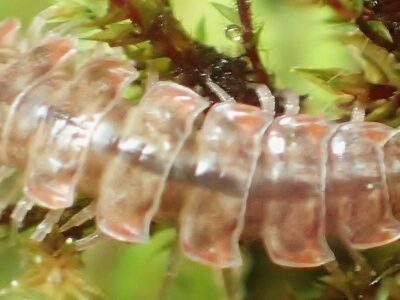
Notable characteristic: The paranota are particularly well-developed in Tectoporus species, creating a visually striking appearance that aids in identification and may serve protective functions in their forest microhabitats. These lateral extensions give the creature an almost alien appearance when viewed under magnification, revealing the intricate engineering of nature’s design.
As a denizen of the tropical forest floor, Tectoporus lombokensis has evolved a lifestyle perfectly suited to the moist, decomposition-rich environment of Lombok’s woodlands. Like most millipedes, this species is primarily nocturnal, emerging under the cover of darkness to navigate the complex three-dimensional landscape of leaf litter and decaying wood.
The daily rhythm of this creature follows an ancient pattern:
Notable behavior: Millipedes like T. lombokensis are detritivores, meaning they play a crucial ecological role as nature’s recyclers, breaking down dead plant material and returning vital nutrients to the soil. Their slow, methodical movement through the leaf litter may seem passive, but it represents an essential ecological service that sustains entire forest ecosystems.
Tectoporus lombokensis is endemic to Lombok, a stunning island in Indonesia’s Lesser Sunda Islands, positioned east of Bali in the Wallace Line region—a biogeographic boundary famous for its exceptional biodiversity and unique species assemblages. This island, with its varied elevations and distinct ecological zones, provides the perfect refuge for specialized arthropods like this remarkable millipede.
The species inhabits the tropical forest ecosystems that characterize much of Lombok’s interior:
The island’s unique position in the Wallacean biogeographic region has fostered exceptional endemism, making Lombok a critical conservation priority for maintaining global arthropod diversity.
Tectoporus lombokensis, like virtually all members of the Paradoxosomatidae family, is a detritivore—a specialist in consuming decaying organic matter. This ecological role cannot be overstated: these millipedes are among nature’s most important recyclers, processing massive quantities of dead plant material and converting it into nutrient-rich forms accessible to other organisms.
The feeding ecology of this species encompasses:
Ecological importance: By consuming and fragmenting dead plant material, T. lombokensis accelerates nutrient cycling and creates pathways for bacterial and fungal colonization. This seemingly humble creature processes tons of organic matter annually, fundamentally shaping soil chemistry and forest productivity. Their presence in healthy forest ecosystems indicates robust decomposition networks and thriving microbial communities.
The reproductive biology of Tectoporus lombokensis follows patterns characteristic of polydesmid millipedes, though specific details for this species remain largely undocumented in scientific literature. Millipedes possess one of the most sophisticated reproductive systems among arthropods, involving complex courtship behaviors and specialized reproductive structures.
Breeding in millipedes typically occurs during the wet season when moisture levels are optimal for egg survival and juvenile development. Males possess modified legs called gonopods—specialized appendages used to transfer sperm packets (spermatophores) to females. The courtship process, though subtle to human observers, involves intricate chemical communication through pheromones and tactile interactions.
Reproductive strategy: Female millipedes carefully select protected microsites for egg deposition, often creating small burrows or chambers within humus-rich soil where humidity remains constant and predation risk is minimized.
The conservation status of Tectoporus lombokensis remains poorly understood, reflecting a broader knowledge gap regarding the majority of the world’s arthropod diversity. With no formal IUCN assessment currently available, this species falls into the “Data Deficient” category—a designation that, while scientifically honest, masks the potential conservation challenges facing endemic forest species.
Lombok faces mounting anthropogenic pressures that threaten its unique biodiversity:
Conservation concern: The fact that this species was only scientifically described in 1995 suggests that many endemic Lombok arthropods remain unknown to science. Without baseline population data, we cannot accurately assess whether T. lombokensis populations are stable, declining, or fluctuating. The urgent need for biodiversity surveys and long-term monitoring programs in Lombok cannot be overstated—we must understand what we have before we lose it.
Conservation efforts should prioritize protecting intact forest ecosystems on Lombok through expansion of protected areas, sustainable forest management practices, and integration of local communities in conservation initiatives. Research into the ecology and natural history of endemic species like T. lombokensis is essential for developing effective conservation strategies.
Ancient lineage: Millipedes as a group have existed for over 300 million years, making them among Earth’s most ancient arthropods—Tectoporus species represent this remarkable evolutionary heritage.
Toxic defense: Many paradoxosomatid millipedes, including relatives of T. lombokensis, produce defensive compounds that deter predators; some species can synthesize cyanogenic compounds as chemical weapons.
Segment specialists: Unlike insects with fixed body segments, millipedes add new segments throughout their lives, potentially adding hundreds of legs as they mature—a process called anamorphic development.
Soil engineers: A single millipede can process its own body weight in leaf litter within weeks, and a healthy forest floor population can recycle tons of organic matter annually.
Sensory specialists: Millipedes possess remarkable chemoreceptive abilities, detecting food sources and potential mates through chemical signals imperceptible to humans.
Wallacean endemism: Lombok sits within the famous Wallace Line, a biogeographic boundary where Asian and Australian fauna meet, making endemic species like T. lombokensis exceptionally rare and scientifically significant.
Scientific mystery: Despite being described nearly 30 years ago, T. lombokensis remains virtually unstudied in terms of behavior, ecology, and population dynamics—representing an exciting frontier for future researchers.
Golovatch, S. I. (1995). “Millipedes of the family Paradoxosomatidae from the Lesser Sunda Islands, Indonesia.” Arthropoda Selecta, 4(3-4), 3-32.
Enghoff, H., Dohle, W., & Blower, J. G. (1993). “Phylogeny and classification of the Millipedes (Diplopoda).” Zoological Journal of the Linnean Society, 109(2), 111-141.
Sierwald, P., & Bond, J. E. (2007). “Preparing the next generation of diplopodologists.” Zootaxa, 1668, 565-590.
IUCN Red List (2023). “Guidelines for assessing invertebrate conservation status.” International Union for Conservation of Nature.
Whitmore, T. C. (1984). “Tropical rain forests of the Far East.” Oxford University Press, Oxford.