Plants
| Kingdom | Plantae |
|---|---|
| Phylum | Bryophyta |
| Class | Bryopsida |
| Order | Hypnales |
| Family | Amblystegiaceae |
| Genus | Tomentypnum |
| Species | Tomentypnum falcifolium |
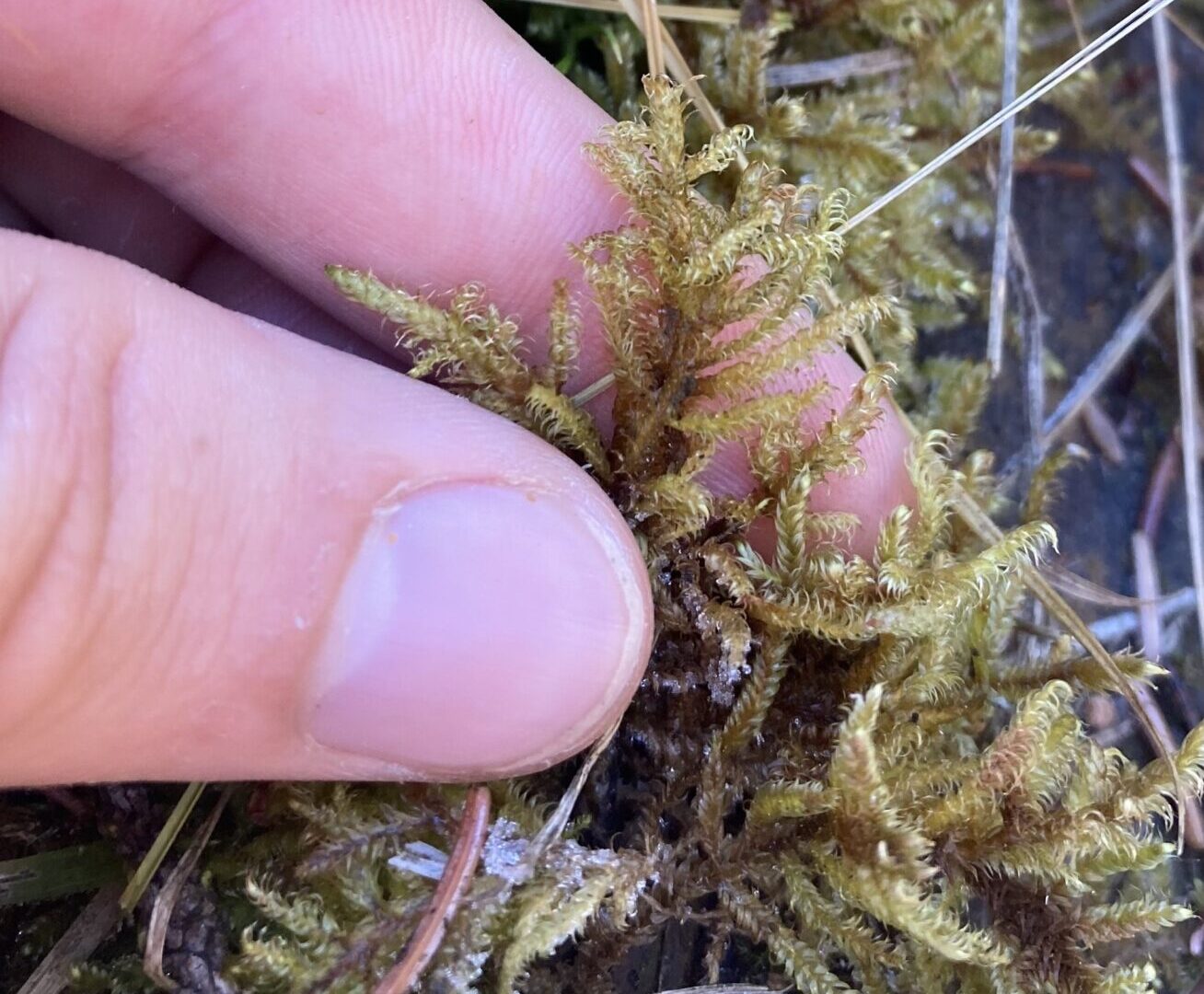
Tomentypnum falcifolium is a moss that reveals the hidden elegance of the bryophyte world—a plant so small it demands a magnifying glass yet possesses ecological significance that spans entire continents. Found across the northern reaches of Canada, Russia, China, and the United States, this species exemplifies how the tiniest organisms can thrive in the harshest environments. Its presence in boreal forests, wetlands, and subarctic regions tells a story of resilience and adaptation written in miniature script across the landscape.
Tomentypnum falcifolium belongs to the family Amblystegiaceae, a group of mosses characterized by their delicate architecture and intricate leaf arrangements. Like all mosses, this species lacks true roots, instead anchoring itself through rhizoids—hair-like structures that draw moisture from its surroundings. The plant’s distinctive falcate (sickle-shaped) leaves give it both its species name and its most recognizable feature.
The leaves of T. falcifolium are arranged in a pattern that maximizes water absorption while minimizing water loss—a crucial adaptation in the variable climates where it grows. Each leaf is narrow and curved, creating a delicate lacework when viewed under magnification. The stems are typically red or brown, a coloration that may help the moss regulate light absorption in the intense sunshine of high-latitude regions.
When viewed with a hand lens, the cellular structure of T. falcifolium reveals a geometric precision that seems almost architectural. The leaf cells contain chloroplasts arranged to capture every photon of available light, essential for a plant that often grows in shaded forest floors and along stream banks.
Mosses like Tomentypnum falcifolium follow a life cycle fundamentally different from seed-bearing plants. Rather than producing flowers and seeds, they reproduce through spores—microscopic structures released from capsules that develop on specialized stalks. This ancient reproductive strategy has remained virtually unchanged for over 450 million years, making mosses living fossils of the plant kingdom.
The growth habit of T. falcifolium is perennial, meaning individual plants can persist for years, slowly accumulating biomass in dense mats. Growth rates vary dramatically depending on moisture availability and temperature. In optimal conditions—cool, moist environments with consistent humidity—the moss can form lush carpets. During dry periods, the plant enters a dormant state, its cells losing water but remaining viable until conditions improve.
Seasonal changes profoundly affect T. falcifolium‘s activity. In spring and early summer, when snowmelt provides abundant moisture and lengthening days fuel photosynthesis, the moss grows vigorously. By autumn, growth slows as temperatures drop and daylight diminishes. Winter presents a paradox: while freezing halts active growth, the moss’s tolerance for ice crystals forming within its cells allows it to survive conditions that would kill most plants.
Tomentypnum falcifolium thrives across a vast circumpolar distribution, with documented occurrences throughout Canada’s boreal forests, from British Columbia to Quebec and extending into the Arctic. The species also appears in Russia’s far north and in northeastern China, reflecting its preference for cool, northern climates. Its 373 recorded occurrences span from sea level to high elevations, with concentrations particularly dense in regions characterized by long winters and brief, intense growing seasons.
The moss favors specific microhabitats within these regions:
The species shows a marked preference for acidic substrates, thriving on decaying wood, mineral-poor soils, and rock surfaces with low pH. It rarely colonizes limestone or alkaline habitats, making its presence a useful indicator of soil chemistry for ecologists studying forest health.
Unlike flowering plants, Tomentypnum falcifolium does not produce flowers or seeds. Instead, it reproduces through two distinct pathways: sexual reproduction via spores and asexual reproduction through fragmentation. The sexual process begins when male and female gametangia (reproductive structures) develop on separate plants or in different regions of the same plant. Sperm from male structures must swim through a film of water to reach female structures—a requirement that explains why mosses are so dependent on moisture.
Once fertilization occurs, a sporophyte (spore-bearing structure) develops, consisting of a slender stalk topped with a capsule. Within this capsule, thousands of spores develop, each one a potential new moss plant if it lands in suitable conditions. Spore dispersal occurs through wind, water, and occasionally through animal fur, allowing T. falcifolium to colonize new habitats across vast distances. The timing of spore release typically coincides with drier conditions, when wind currents are most likely to carry spores far from the parent plant.
While Tomentypnum falcifolium lacks direct human commercial uses, its ecological importance is substantial. The moss serves as a pioneer species, stabilizing bare substrates and creating conditions favorable for other plants. In wetland ecosystems, it contributes to peat accumulation and carbon sequestration—a role increasingly recognized as significant in the context of climate change. The dense mats formed by this and related moss species provide crucial microhabitats for invertebrates, fungi, and other microorganisms.
Cultivation of T. falcifolium is challenging in traditional horticultural settings, as the species requires consistent moisture, cool temperatures, and acidic substrates. Bryologists interested in studying the species typically maintain it in controlled environments with high humidity, regular misting, and temperatures between 10-15°C. The moss is occasionally used in terrarium displays and botanical research, where its delicate beauty and ecological significance make it a subject of fascination for plant enthusiasts and scientists alike.
Ancient ancestry: Tomentypnum falcifolium belongs to a plant group that colonized land over 450 million years ago, predating dinosaurs by tens of millions of years
Resurrection moss: The species can lose up to 95% of its water content and enter dormancy, then fully recover and resume growth within hours of rehydration—a superpower no seed plant possesses
Circumpolar wanderer: This moss occurs across the entire northern hemisphere at high latitudes, with identical or nearly identical populations separated by thousands of kilometers, likely dispersed by wind currents during the last ice age
Invisible forests: A single square centimeter of T. falcifolium mat may contain millions of individual cells and support entire ecosystems of microscopic animals and fungi
Carbon keeper: Moss-dominated ecosystems store vast quantities of carbon in peat deposits; T. falcifolium contributes to this critical climate-regulating function
No plumbing required: Lacking true roots and vascular tissue, mosses absorb water and nutrients directly through their leaf surfaces, making them entirely dependent on atmospheric moisture
Spore superpower: A single moss capsule can release over 10 million spores, each no larger than a grain of pollen, allowing the species to recolonize vast areas after disturbance
GBIF (Global Biodiversity Information Facility). Tomentypnum falcifolium species occurrence records and distribution data. Available at https://www.gbif.org/
Tuominen, A. & Jaakola, T. (1992). Revision of Tomentypnum with notes on related genera. Lindbergia, 17(3), 89-102.
Hedenäs, L. (2003). Amblystegiaceae. In Flora of North America North of Mexico, Volume 28. Oxford University Press.
iNaturalist. Tomentypnum falcifolium observations and photographic records. Available at https://www.inaturalist.org/
Crum, H. & Anderson, L.E. (1981). Mosses of Eastern North America. Columbia University Press.