Plants
| Kingdom | Plantae |
|---|---|
| Phylum | Tracheophyta |
| Class | Magnoliopsida |
| Order | Fagales |
| Family | Juglandaceae |
| Genus | Juglans |
| Species | Juglans cinerea |
In the dappled sunlight of North America’s deciduous forests, a magnificent tree stands as both testament to nature’s artistry and a sobering reminder of environmental fragility. Juglans cinerea, known affectionately as the white walnut or butternut, emerges from the earth with a grace that belies its endangered status. This remarkable member of the Juglandaceae family—the noble walnut clan—carries within its bark and branches centuries of ecological wisdom, yet today finds itself locked in a desperate battle for survival.
The butternut’s story unfolds like an ancient manuscript written in bark and leaf, each ring marking not just another year of growth, but another season of quiet resilience. Unlike its more famous cousin, the black walnut, this gentle giant earned its common name from the butter-yellow hue of its heartwood, a golden treasure that once made it the darling of furniture makers and woodworkers across the continent. Standing proudly at heights reaching 15-20 meters, with some exceptional specimens stretching toward 30 meters, the white walnut commands attention not through aggressive dominance, but through an understated elegance that speaks to those who pause to truly observe.
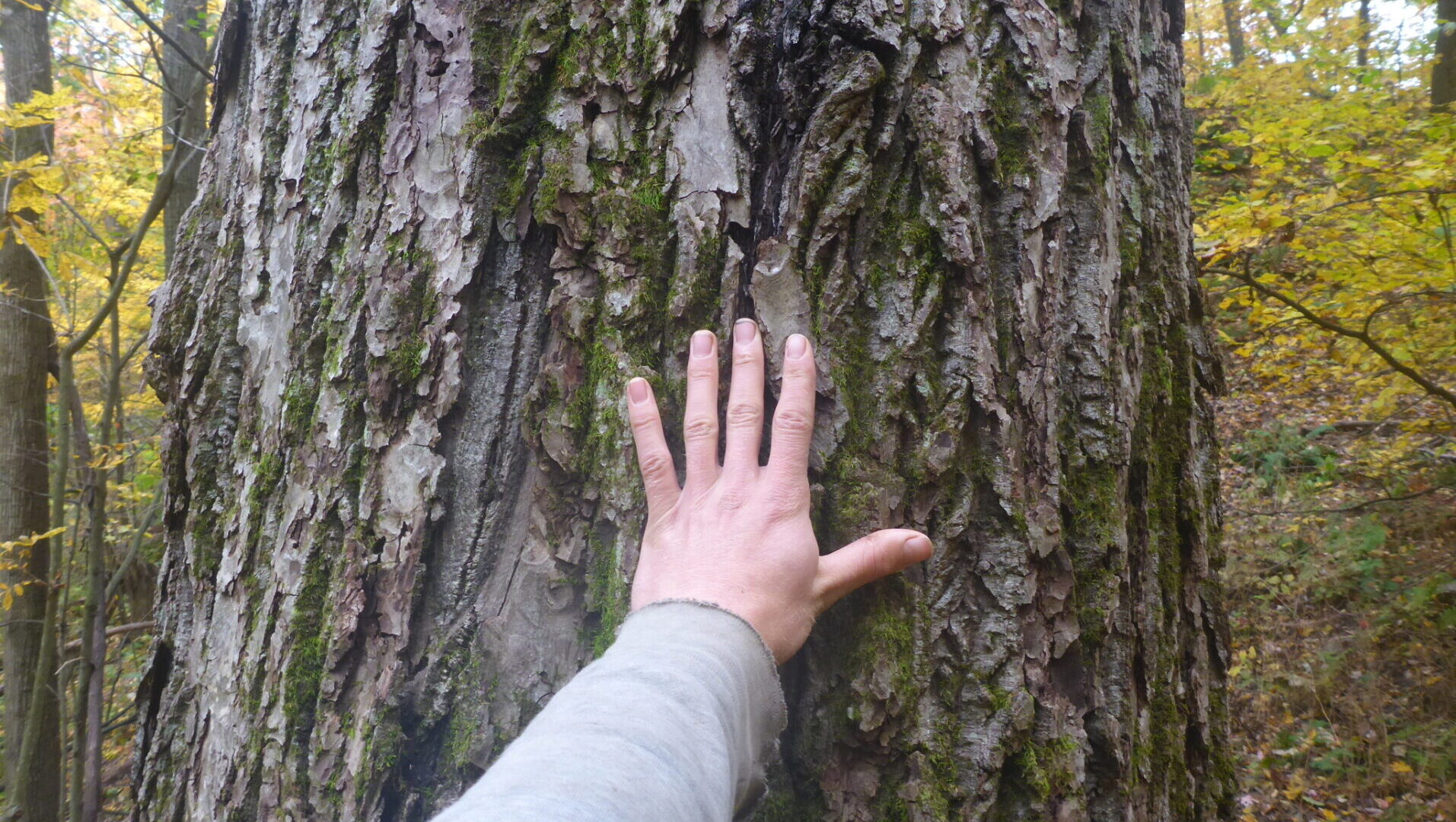
The white walnut reveals its identity through a symphony of distinctive features that botanists and nature lovers have learned to recognize with the devotion of art connoisseurs studying a master’s brushstrokes. Its bark tells the first chapter of its story—a canvas of gray-brown ridges separated by deep, diamond-shaped furrows that create an intricate pattern of natural geometry. This textured armor doesn’t merely protect; it breathes with the tree, expanding and contracting with the seasons while hosting an entire ecosystem of lichens, mosses, and tiny arthropods.
Perhaps most captivating are the butternut’s compound leaves, each one a masterpiece of botanical engineering comprising 11-17 leaflets arranged along a central rachis like notes on a musical staff. These leaflets, each measuring 5-10 centimeters in length, possess a subtle asymmetry that gives the entire leaf structure a dynamic, almost dancing quality. The leaves emerge in spring with a tender yellow-green that deepens to rich emerald through summer, before transforming into brilliant gold that seems to capture and hold the autumn sunlight. The tree’s branches spread in an open, rounded crown that creates cathedral-like spaces beneath, where filtered light plays across the forest floor in ever-changing patterns of shadow and illumination.
The white walnut’s natural range paints a sweeping arc across the eastern heart of North America, from the maritime provinces of Canada southward through the Great Lakes region and into the Appalachian Mountains, extending as far west as Minnesota and as far south as northern Georgia and Alabama. This distribution tells the story of a tree intimately connected to the continent’s geological and climatic history, having evolved alongside the great deciduous forests that once blanketed much of eastern North America in an unbroken canopy of green.
In its preferred habitats, the butternut seeks out the rich, well-drained soils of stream valleys, gentle slopes, and forest edges where it can access both adequate moisture and good drainage. These trees thrive in the company of sugar maples, American basswood, and white ash, forming part of the complex tapestry of mixed hardwood forests. The species shows a particular affinity for limestone-derived soils, where the slightly alkaline conditions seem to enhance its growth and vigor. Tragically, this once-widespread distribution has been dramatically fragmented by the devastating effects of butternut canker disease, caused by the fungal pathogen Ophiognomonia clavigignenti-juglandacearum, which has eliminated entire populations and continues to threaten the species’ very existence across much of its range.
The butternut’s reproductive cycle unfolds with the measured patience of a species that has learned to synchronize its most vital processes with the grand rhythms of the North American seasons. In late spring, typically May to early June, the trees burst into their subtle but essential flowering display. The male flowers, arranged in drooping catkins that can reach 10-15 centimeters in length, release clouds of pollen into the warming air, creating golden veils that drift on the slightest breeze. These catkins, emerging before the leaves have fully expanded, ensure maximum pollen dispersal efficiency while the branches remain relatively unobstructed.
Female flowers appear simultaneously but with entirely different architecture—small, inconspicuous clusters positioned at the tips of new shoots, each flower featuring a distinctive reddish stigma that serves as a landing platform for wind-borne pollen. This monoecious arrangement, with both male and female flowers on the same tree, represents an elegant evolutionary solution that maximizes reproductive opportunities while maintaining genetic diversity through cross-pollination between different individuals. The resulting nuts, encased in sticky, elongated husks covered in fine hairs, mature through the summer months and fall to the forest floor in autumn. nuts, with their deeply ridged shells and rich, oily kernels, serve as crucial food sources for wildlife ranging from squirrels and chipmunks to black bears, who inadvertently serve as the tree’s primary seed dispersal agents by caching nuts in locations where some are forgotten and left to germinate in spring.
For centuries, the white walnut held a place of honor in both Indigenous and European-American cultures, valued not only for its beautiful wood but also for its medicinal properties and nutritional contributions. Native American peoples traditionally used butternut bark as a natural dye, creating rich yellow and orange colors for textiles and crafts, while also employing various parts of the tree in traditional medicine. The inner bark, in particular, was prized for its laxative properties, earning the tree another common name: “white walnut physic.” European settlers quickly recognized the species’ value, with butternut wood becoming highly sought after for furniture making, interior finishing, and sculpture due to its workability, attractive grain, and natural resistance to decay.
Today, however, the butternut faces an uncertain future that has earned it endangered status in Canada and species of concern designation in many U.S. states. The relentless advance of butternut canker disease continues to decimate populations, while habitat loss and fragmentation compound the challenges facing this remarkable species. Conservation efforts now focus on identifying and protecting disease-resistant individuals, establishing seed banks, and developing breeding programs aimed at preserving the genetic diversity necessary for the species’ long-term survival. Each remaining healthy butternut represents not just a individual tree, but a repository of genetic information that may hold the keys to the species’ recovery—a living library whose pages we are still learning to read.
1. Rink, G. (1990). Juglans cinerea L. Butternut. In R.M. Burns & B.H. Honkala (Eds.), Silvics of North America: Volume 2. Hardwoods (pp. 386-390). USDA Forest Service Agriculture Handbook 654.
2. Broders, K.D., & Bod, G.J. (2011). Reclassification of the butternut canker fungus, Sirococcus clavigignenti-juglandacearum, into the genus Ophiognomonia. Fungal Biology, 115(1), 70-79.
3. Environment and Climate Change Canada. (2010). Recovery Strategy for the Butternut (Juglans cinerea) in Canada. Species at Risk Act Recovery Strategy Series.
4. Schultz, J. (2003). Butternut (Juglans cinerea L.) health, hybridization, and recruitment in the northeastern United States. Doctoral dissertation, Virginia Polytechnic Institute and State University.
5. COSEWIC. (2017). COSEWIC assessment and status report on the Butternut Juglans cinerea in Canada. Committee on the Status of Endangered Wildlife in Canada.