
Agaricomycetes · Boletales
Penny Bun
Boletus edulis
Least ConcernAlso known as: Cep, Cep, Penny Bun, King Bolete
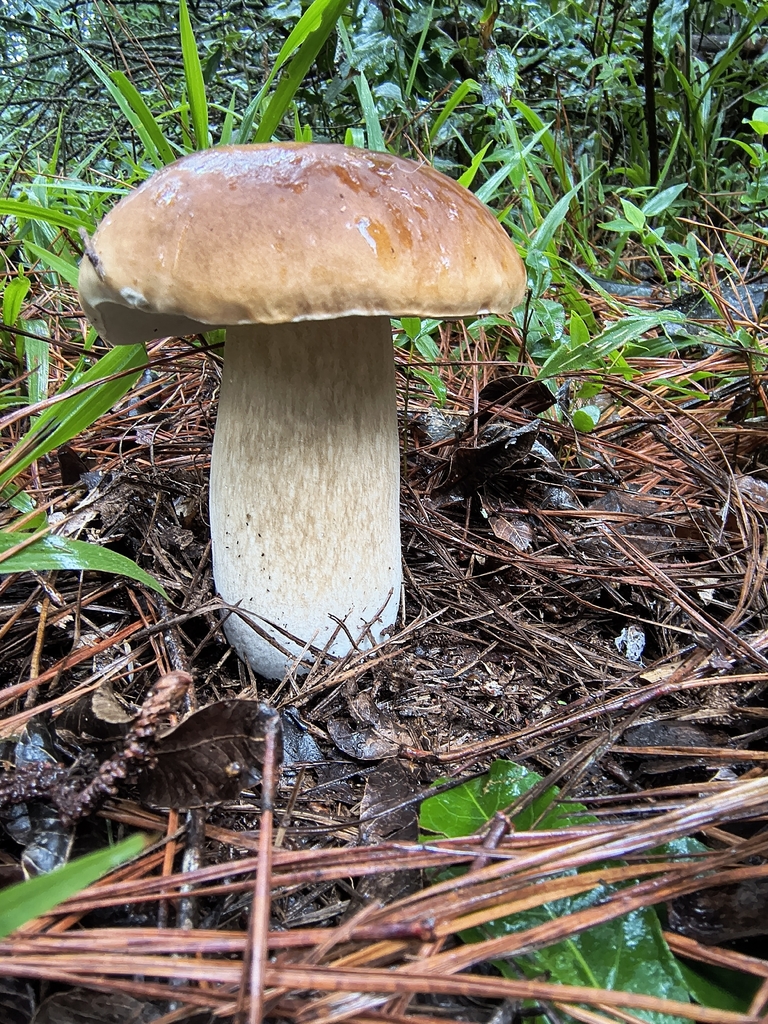
© Lorella Paola Cappelli · iNaturalist · CC BY-SA 4.0
Scientific Classification & Quick Facts
Classification
Known For
Detailed measurements for this species are still being verified.
Boletus edulis, commonly known as the Penny Bun, is one of the most prized edible fungi in the Northern Hemisphere. With its distinctive pale cream cap, thick white stem, and spongy yellow pores beneath, this bolete is instantly recognizable to foragers and chefs alike. Found across at least nine countries spanning Europe, Asia, and North America, the species thrives in diverse forest ecosystems where it forms symbiotic relationships with trees. Its current conservation status is Least Concern, reflecting stable populations across its range.
What makes Boletus edulis especially notable is its combination of culinary excellence and ecological importance. Unlike many mushrooms, it is difficult to cultivate commercially, making wild specimens highly valued in European and Asian cuisine. Yet beyond the kitchen, the species plays a critical role in forest health, supporting nutrient cycling and tree growth across temperate woodlands. Understanding its biology and ecology reveals a species that matters equally to ecosystems and to human culture.
Identification and Appearance
Boletus edulis, the Penny Bun, is a large, robust fungus easily recognized by its substantial stalk and distinctive tubular underside. The mushroom’s generous proportions and rich coloration make it one of the most prized edible fungi across temperate regions.
Cap and Colour
The cap grows 8–30 centimetres wide, sometimes exceeding these dimensions. When young, the cap is convex, flattening with age. It is viscid (sticky) when moist, with a characteristic reddish-brown colour that sometimes features a paler margin. The surface texture and moisture retention depend heavily on weather conditions, making the mushroom’s appearance variable in the field.
Stalk and Stem Structure
The stalk is notably thick and robust, reaching 8–25 centimetres tall and 2–7 centimetres in diameter—proportionally large compared to the cap. Young specimens typically display an enlarged base that tapers or becomes more cylindrical as the mushroom matures. The upper portion (and sometimes the entire stem) bears fine reticulation, a delicate net-like texture characteristic of the species. The flesh near the base is sometimes dark yellow.
Spore-Bearing Surface
Beneath the cap lies a dense array of thin tubes rather than gills, which produce and release the spores. These tubes are the defining feature that places this species in the boletus family and distinguishes it from gill-bearing fungi. The tubes are pale when young, gradually darkening and bruising yellow or blue-green when handled or damaged—a helpful identification mark in the field.
Distribution and Habitat
Boletus edulis, the Penny Bun, has a scattered global distribution across nine countries, with the overwhelming majority of recorded observations concentrated in New Zealand. iNaturalist observations indicate 255 records from New Zealand alone, far exceeding sightings elsewhere. The species also appears in the United States (33 records), Australia (6 records), and single records each from the United Kingdom, Belize, Spain, South Africa, Switzerland, and Slovenia. This pattern suggests either a native presence in the Southern Hemisphere with introduced or naturalized populations in the Northern Hemisphere, or alternatively, an under-recorded temperate species with genuine but sparse global range.
Elevation records for this species cluster narrowly at 1,730 metres, indicating a preference for high-altitude habitats. The temporal distribution strongly favors early autumn, with April marking the peak fruiting month in the Southern Hemisphere (96 records), consistent with the antipodean growing season. Activity extends from January through May, with measurable observations in February (56 records) and March (66 records), but drops to zero from June through December. This concentrated seasonal window—spanning autumn in the Southern Hemisphere—aligns with cool, moist conditions that favour fungal fruiting.
Ecology and Lifecycle
Lifecycle
Boletus edulis begins its life as microscopic spores dispersed through the air or soil. These spores germinate and develop into thread-like mycelium that colonizes the soil, where it remains vegetative for extended periods. The mycelium forms the true organism; the fruiting body—the visible mushroom we recognize—is merely a temporary reproductive structure.
Fruiting bodies emerge in response to specific environmental triggers: adequate moisture, appropriate temperature, and sufficient nutrient availability. Italian folklore traditionally associates their appearance with the new moon, though scientific investigation suggests environmental conditions rather than lunar cycles drive production. Fruit bodies typically appear between June and November, depending on local climate and weather patterns. Once mature, the mushroom releases spores from its pores (the underside of the cap), which disperse to initiate new mycelial colonies elsewhere.
Ecological Role
Boletus edulis is an ectomycorrhizal fungus, forming mutually beneficial partnerships with tree roots. The mycelium wraps around rootlets of pines and other conifers, extending the tree’s absorptive surface area in exchange for carbohydrates produced by photosynthesis. This relationship improves nutrient uptake for the host tree while providing the fungus with essential sugars. The species commonly co-occurs with Pinus radiata and other pine species across its range.
Beyond its mycorrhizal function, Boletus edulis contributes to nutrient cycling in forest ecosystems. Its mycelial network helps break down organic matter in soil, releasing nutrients that become available to plants and other soil organisms. The fruiting bodies also provide food for forest fauna, including insects, small mammals, and larger herbivores that consume the mushrooms and disperse spores.
Uses
Boletus edulis is one of the most prized edible mushrooms worldwide. Its firm flesh, nutty flavor, and rich umami notes make it a culinary delicacy in European, Asian, and Mediterranean cuisines. Known variously as porcini, cep, or penny bun depending on region, it commands premium prices in fresh and dried markets. The mushroom is typically sautéed, incorporated into risottos, soups, and pasta dishes, or dried for later use as a concentrated flavoring agent.
Beyond culinary value, Boletus edulis has minimal documented medicinal use in traditional medicine, though it contains bioactive compounds including polysaccharides and phenolic compounds. Commercial harvesting and cultivation have become significant economic activities in many regions, with wild collection generating income for foragers and local communities. Cultivated production remains challenging compared to wild harvesting, as the fungus’s dependence on ectomycorrhizal partners complicates artificial propagation.
Conservation and Threats
Boletus edulis, the Penny Bun, holds a favourable conservation status on the IUCN Red List, classified as Least Concern (LC). This designation reflects the species’ widespread distribution across the Northern Hemisphere and its stable ecological role within mixed and coniferous forests. The current population trend is increasing, suggesting that this fungus remains well-established across its range and faces no immediate risk of extinction.
Threats and Conservation Outlook
Unlike many fungi species, B. edulis encounters few documented major threats at the global level. The species is resilient to habitat disturbance and continues to fruit prolifically in managed forests, plantations, and wild woodlands alike. However, local populations can be affected by shifts in forest management practices—particularly the move away from traditional coppicing and the intensive use of herbicides and fungicides in agricultural zones bordering wild habitats. Climate variation, including prolonged droughts or unseasonably warm autumns, may affect fruiting timing and productivity in specific regions, though the species demonstrates considerable adaptability across different climatic conditions.
The main human pressure on B. edulis is not threat but rather commercial harvesting. Wild collection for food and trade is intense in Europe and parts of Asia, with millions of tonnes gathered annually. This harvesting is generally sustainable because the fungus fruits from an extensive mycelial network that regenerates year after year. Nonetheless, unsustainable collection practices—such as digging up entire fruiting bodies or stripping forest floors—can locally degrade fruiting sites. Several European countries, including parts of Spain and Portugal, have introduced licensing systems and harvest quotas to ensure long-term productivity of wild populations.
Cultural Significance
Boletus edulis, widely known as the penny bun or cep, holds deep cultural significance across multiple regions. In 2023, Utah formally designated it as the state mushroom through the signing of H.B. 92, cementing its place in American heritage. The species carries particular weight in European tradition, where it appears frequently in folklore and culinary practice.
Rich folklore surrounds the timing of cep fruiting and the best seasons to forage for them. Italian tradition holds that porcini sprout during the new moon, a belief that has prompted scientific investigation into the actual environmental factors influencing fruit body production. British folklore, by contrast, commonly cites the full moon as an auspicious time for cep hunting—though naturalists have expressed skepticism about the validity of lunar timing as a genuine predictor. These competing traditions highlight how deeply embedded the species is in regional hunting culture, even where the underlying claims remain unproven.
Beyond Europe, Boletus edulis has been introduced to southern Africa, Australia, and New Zealand, where it has become naturalized in suitable forest habitats. Its global spread reflects both its culinary value and its ecological adaptability, allowing it to establish itself in new regions wherever suitable conifer and birch hosts are present.
Fun Facts
- Boletus edulis is a basidiomycete fungus, which means it reproduces by releasing spores from structures called basidia rather than from the undersides of gills like many other mushrooms. Instead, the spores develop inside millions of tiny pores on the underside of its cap, making it instantly recognisable to experienced foragers.
- This species is the type specimen for the entire genus Boletus, serving as the scientific reference point that defines what makes a mushroom a true Boletus. Every other member of the genus is compared to this single species when scientists classify new discoveries.
- Penny buns command premium prices in European and North American markets, sometimes reaching €20 per kilogram for fresh specimens. Their rarity, distinctive flavour, and culinary reputation have made them targets of organised foraging operations across temperate forests.
- The mushroom forms symbiotic relationships with tree roots, particularly conifers and hardwoods, exchanging nutrients from the soil for carbohydrates produced by the tree’s photosynthesis. This partnership means Boletus edulis cannot be cultivated in standard commercial mushroom farms and must be foraged from wild forests.
- A single Boletus edulis fruiting body can contain up to 40 million spores, all held within the pores beneath the cap rather than released into the air like gill fungi. This design helps direct spores downward toward the forest floor where they have the best chance of encountering suitable tree roots.
- The name “penny bun” refers to its rounded, bulbous cap shape and tan colouration, which resembles a British penny loaf. In other languages it is known as cepe (French), porcino (Italian), and Steinpilz (German), each reflecting its cultural importance across different regions.
- Young specimens have white pores that slowly yellow or stain blue-green when bruised or with age, making mushroom maturity easy to judge in the field. Mature penny buns are preferred by foragers because they have firmer flesh and a deeper, more concentrated flavour than younger specimens.
Ecology
Edibility
Conservation Status
LC (Least Concern) · NT · VU · EN · CR · EW · EX
Photo Gallery
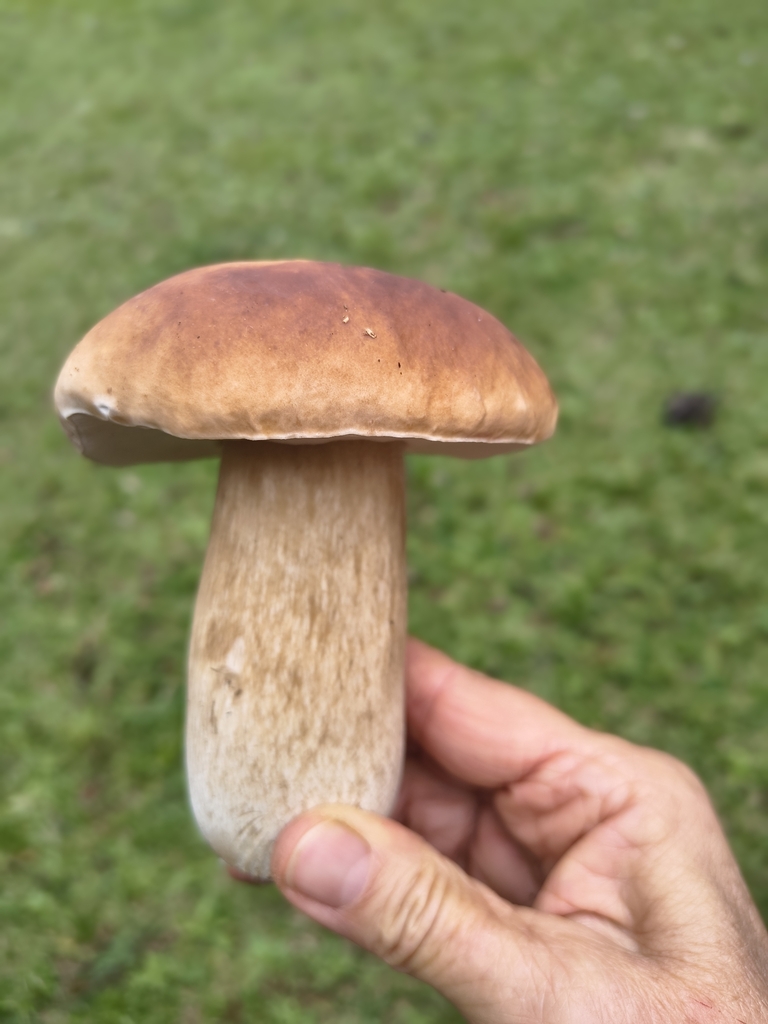
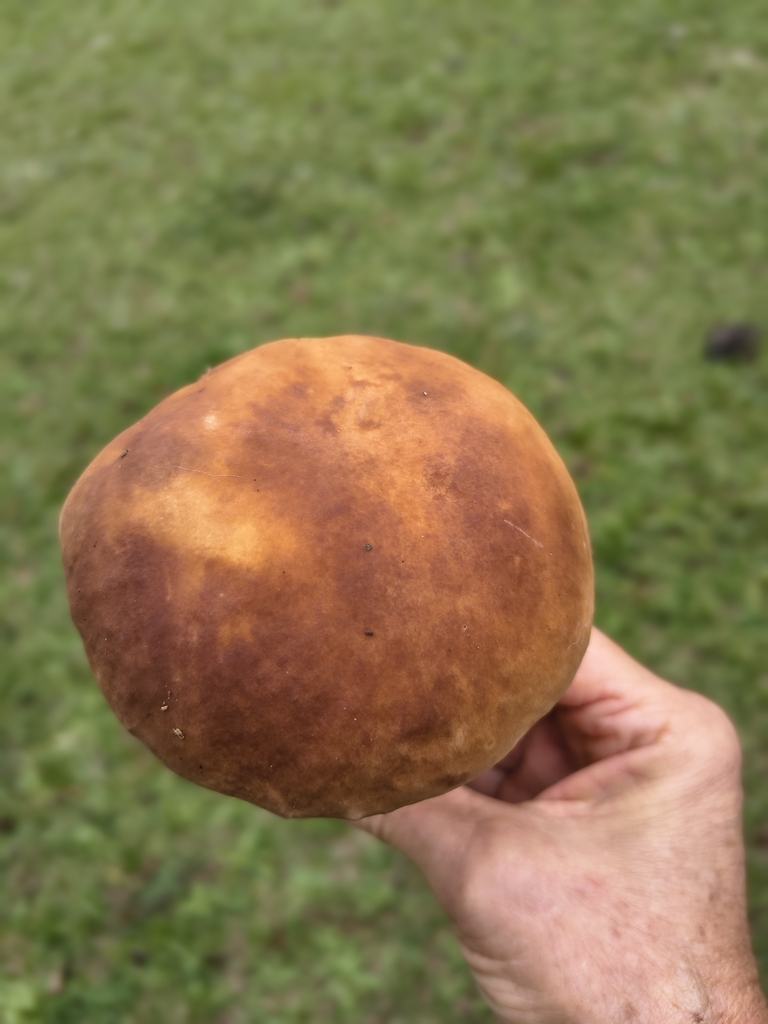
Lorella Paola Cappelli · CC BY-SA 4.0
Related Species
Was this profile helpful?