
Agaricomycetes · Hymenochaetales
Blackish Polypore
Fomitiporia punctata
Also known as: Elbowpatch Crust
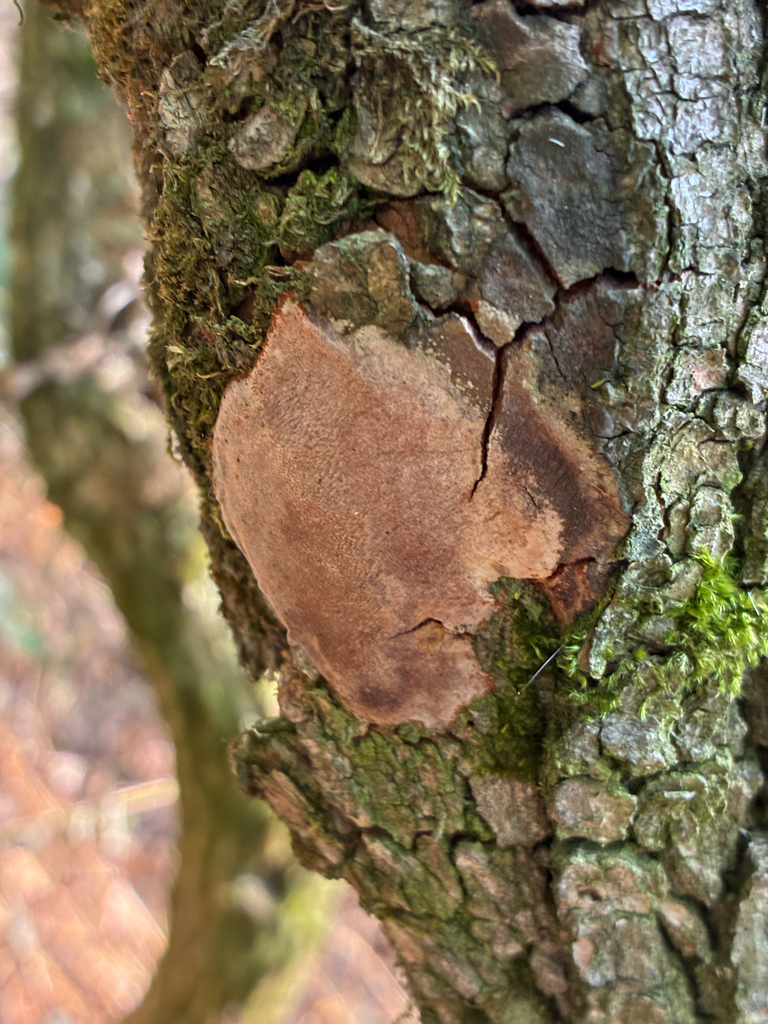
© Benjamin Schedl · iNaturalist · CC BY-NC 4.0
Scientific Classification & Quick Facts
Classification
Known For
Detailed measurements for this species are still being verified.
Fomitiporia punctata, commonly known as the Blackish Polypore, is a wood-decay fungus that appears as a dark, crusty growth on dead or dying trees across multiple continents. Like other members of the Hymenochaetaceae family, this polypore is a wood-decomposer—a fungal architect quietly reshaping forest floors and returning nutrients to soil. Distributed across at least 19 countries worldwide, it represents a globally significant but understudied component of forest ecosystems.
Despite its broad geographic range and ecological importance, Fomitiporia punctata remains poorly assessed by conservation authorities—its IUCN status is currently unknown. This knowledge gap reflects a wider pattern in mycology, where the vast majority of fungal species lack formal conservation evaluations. Understanding the ecology and distribution of wood-decay fungi like this species is essential for protecting forest health and the intricate web of life that depends on natural decomposition processes.
Identification and Appearance
Fomitiporia punctata, known as the Blackish Polypore, is a wood-decay fungus that forms bracket-like fruiting bodies on dead or dying trees. The species is distinguished by its dark coloration and characteristic pore surface, which are the primary features used to identify it in the field.
Fruiting Body Appearance
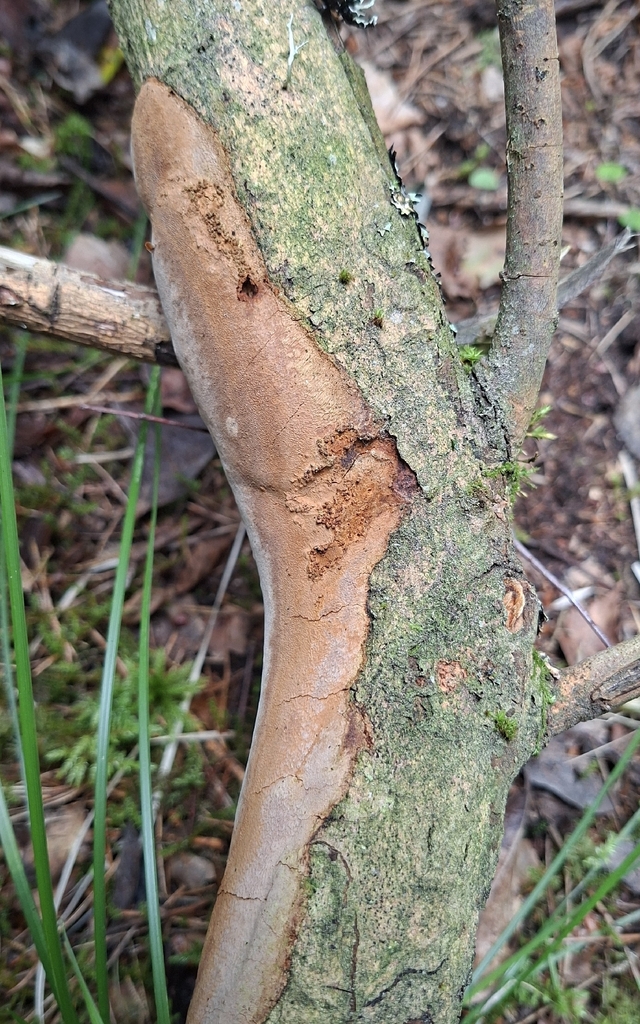
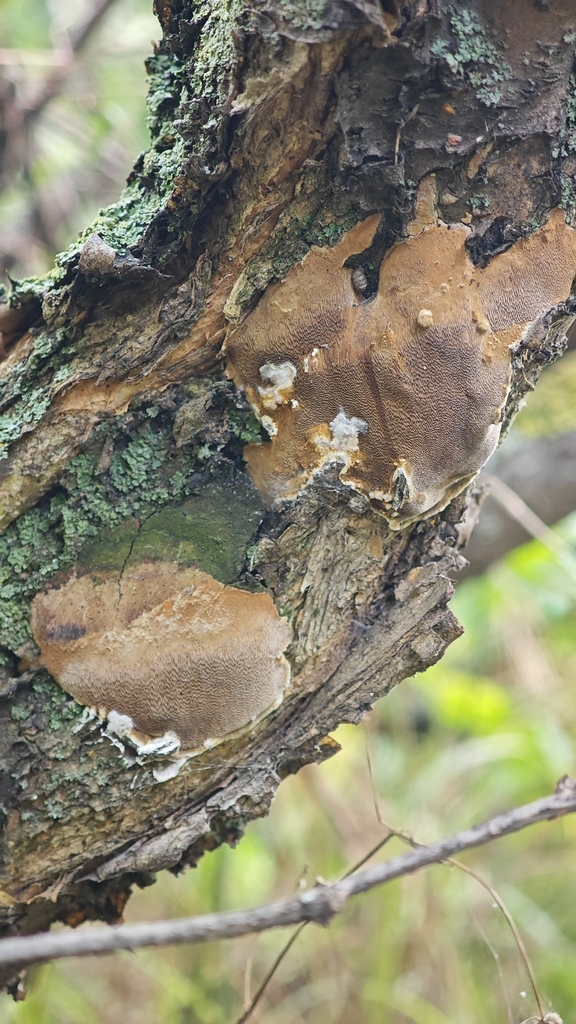
The brackets are typically dark brown to blackish in colour, giving the species its common name. The upper surface is often rough and may develop a weathered, somewhat cracked appearance with age. The pore surface on the underside is pale to cream-coloured when fresh, gradually darkening with age and oxidation. The pores themselves are very small and angular, creating a fine texture that distinguishes this species from larger-pored polypores. Specimens are perennial, meaning individual fruiting bodies persist and add new growth layers year after year, eventually reaching substantial sizes as successive layers accumulate.
The flesh is tough and woody, characteristic of the genus Fomitiporia. There is no distinct stem or stalk; the brackets are directly attached to the substrate. The margin, or edge of the fruiting body, is typically rounded and blunt rather than sharp. Both surfaces darken noticeably over time as the fungus matures and weathering occurs, with older specimens appearing considerably darker than young, fresh fruiting bodies.
Distribution and Habitat
Fomitiporia punctata, the Blackish Polypore, has a predominantly northern distribution across Europe and North America, with records spanning 19 countries. Sweden dominates the observation dataset with 130 records, followed by Finland with 44 and Norway with 26, reflecting the species’ strong presence in Scandinavia. The fungus also occurs across a broader European range, including Denmark, Germany, Poland, Slovakia, and Russia, with additional records from North America in the United States and Canada.
This species exhibits a narrow altitudinal range, occurring at approximately 385 metres elevation. Its presence is concentrated in the winter months, with peak activity in February. Records show significant observation density from January through March, with no documented occurrences from April onwards, suggesting a distinctive winter fruiting pattern or detection bias linked to the dormancy of competing flora and reduced forest canopy cover during colder months.
The geographic distribution and temporal pattern together indicate that F. punctata is a cold-adapted polypore of temperate to boreal regions. While specific habitat associations are not formally documented in available data, its prevalence in northern forests and winter fruiting phenology suggest an ecological preference for cooler climates and wood substrates in coniferous or mixed-wood ecosystems typical of Scandinavian and northern continental forests.
Ecology and Lifecycle
Lifecycle
Fomitoria punctata begins its lifecycle as microscopic spores dispersed through the air or via water splash from mature fruiting bodies. Once a spore lands on suitable dead or weakened wood, it germinates and develops into vegetative mycelium—a network of threadlike hyphae that penetrates the substrate and secretes enzymes to break down woody tissue. This mycelial phase can persist for years or even decades, gradually decomposing the host material from within.
Fruiting body formation occurs when environmental conditions favour reproduction, typically following sustained moisture and favorable temperature regimes. The fungus produces a perennial, bracket-like fruiting body that grows outward year after year, forming visible growth rings. Spores are generated in the pores underneath the cap and are released en masse during humid periods, spreading passively on air currents or adhering to passing animals to colonize new wood sources.
Ecological Role
Fomitoria punctata functions as a wood decomposer, playing a critical role in nutrient cycling within forest ecosystems. As a white-rot fungus, it breaks down both cellulose and lignin—the complex polymers that give wood its structural strength—converting dead or moribund trees into humus and freeing nutrients for uptake by living plants. This decomposition process is essential for maintaining soil fertility and enabling the regeneration of forest floor vegetation.
The fungus often colonizes stressed or recently dead hardwood trees, particularly those already weakened by age, disease, or mechanical damage. By hastening the decay of standing dead wood and fallen logs, Fomitoria punctata prevents excessive accumulation of woody debris and creates microhabitats—cavities, crevices, and soft decaying zones—that shelter insects, fungi, and small vertebrates dependent on dead wood ecology.
Uses
No culinary or traditional medicinal uses are well established for Fomitoria punctata in the scientific literature. The species is not documented as edible, and it plays no significant role in human food or pharmaceutical industries. Its primary value lies in its ecological function rather than direct human application.
Conservation and Threats
Fomitiporia punctata, the Blackish Polypore, has not been formally assessed by the International Union for Conservation of Nature (IUCN) and therefore lacks an official Red List designation. This absence of formal evaluation means that the species’ conservation status remains largely undocumented in mainstream conservation databases, making it difficult to establish baseline population data or trend information on a global scale.
Threats
The primary threats to Fomitiporia punctata are closely tied to habitat loss and forest management practices. As a wood-decay fungus, this polypore depends on dead or dying woody substrate—particularly in mature and old-growth forests. Intensive logging, clearance of deadwood for fuel or tidiness, and conversion of forested areas to agricultural or urban land directly reduce the availability of suitable habitat. These disturbances fragment fungal populations and limit their ability to establish and persist across their range.
Climate change represents an emerging threat to wood-decay fungi through alterations in moisture regimes, temperature fluctuations, and shifts in the phenology of host trees. Changes in forest composition and the health of wood-decomposition communities may indirectly affect Fomitiporia punctata recruitment and colonization rates, though the specific impacts remain poorly studied.
Conservation Efforts
Currently, no dedicated conservation programmes or international legal protections are known to focus specifically on Fomitiporia punctata. However, the species benefits indirectly from general forest protection initiatives and deadwood retention policies in regions where it occurs. Many temperate forest reserves and protected areas maintain old-growth conditions and coarse woody debris, which provide refuge for wood-decay fungi including this polypore.
Fun Facts
- The genus Fomitiporia has expanded dramatically in recent decades—from an estimated 11 species in 2008 to at least 16 by 2013—largely through molecular phylogenetic analysis that revealed previously unrecognized diversity. Sub-Saharan Africa alone yielded 3 new species discoveries in 2010 and 2 more in 2013, suggesting many more may await formal description.
- A close relative of F. punctata, the species F. ellipsoidea, once held the record for the largest fruit body of any known fungus, though this remarkable specimen was reclassified and moved to the genus Phellinus in 2011.
- Fomitiporia species belong to the family Hymenochaetaceae, a group that requires sophisticated multigene molecular phylogenetic analysis to distinguish between closely related species—DNA sequencing is often essential where morphology alone proves ambiguous.
- F. punctata shares the widespread geographic distribution typical of its genus, with members found across multiple continents and new species still being discovered in understudied tropical and subtropical regions.
- Like other wood-decay polypores, F. punctata plays a crucial ecological role as a saprotroph, breaking down dead wood and recycling nutrients back into forest ecosystems—a function that has made polypores both ecologically indispensable and economically important in timber management.
- The blackish coloration that gives this species its common name is a characteristic shared with several related Fomitiporia species, helping field naturalists distinguish this genus from lighter-colored polypores in the field.
Photo Gallery
Benjamin Schedl · CC BY-NC 4.0
Related Species
Was this profile helpful?