
Agaricomycetes · Geastrales
Earthstar
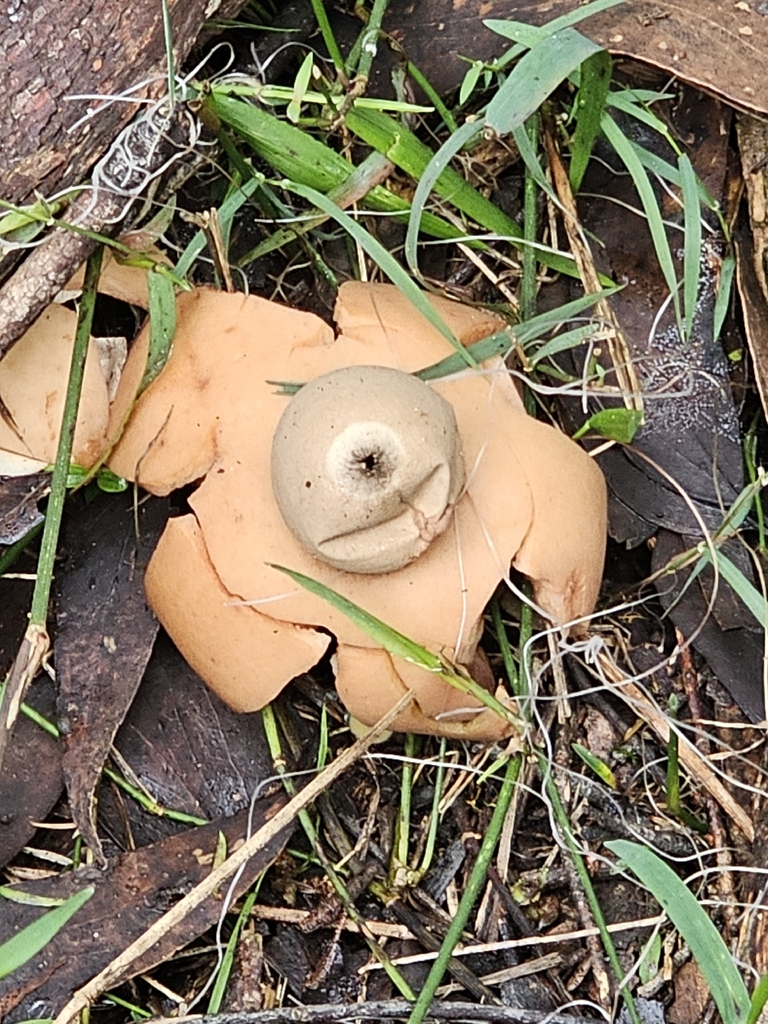
Geastrum saccatum
Also known as: Sessile Earthstar, bowl earthstar, rounded earthstar, Rounded Earthstar
© Michael McBain · iNaturalist · CC BY 4.0
Scientific Classification & Quick Facts
Classification
Known For
Detailed measurements for this species are still being verified.
Geastrum saccatum, commonly known as the Earthstar, is a fungus that transforms dramatically as it matures, splitting open its outer wall to reveal a star-shaped structure that releases spores into the air. Found across at least 30 countries worldwide, this species belongs to the family Geastraceae within the basidiomycete fungi—a lineage that includes many of the familiar mushrooms and toadstools we recognize. Its conservation status remains unknown, reflecting the limited research attention that many fungal species receive despite their ecological importance.
What makes Geastrum saccatum particularly compelling is how its architecture reflects an adaptation to dispersal in harsh conditions. While many fungi rely on proximity to water or high humidity to spread their spores effectively, the earthstar’s protective design and exposed spore-sac allow it to function in drier environments, making it a resilient and widespread decomposer across temperate and subtropical forests worldwide.
Identification and Appearance
Geastrum saccatum, the Earthstar, is a distinctive fungus whose fruiting body undergoes a dramatic transformation from a simple egg-shaped structure into a star-like form. In its immature stage, the fruiting body measures 0.6 to 2.5 centimetres in diameter and 0.8 to 1.5 centimetres in height. At this point, it resembles a small puffball, anchored to the soil or substrate by fine strands of mycelia called rhizomorphs.
Structure and Colour
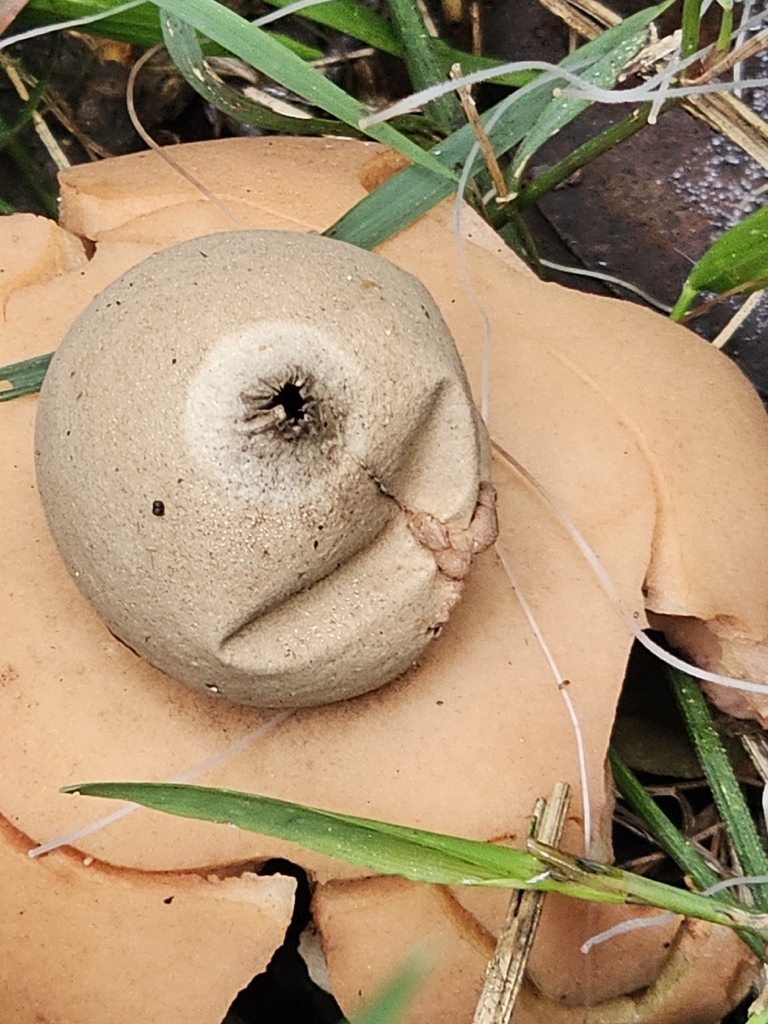
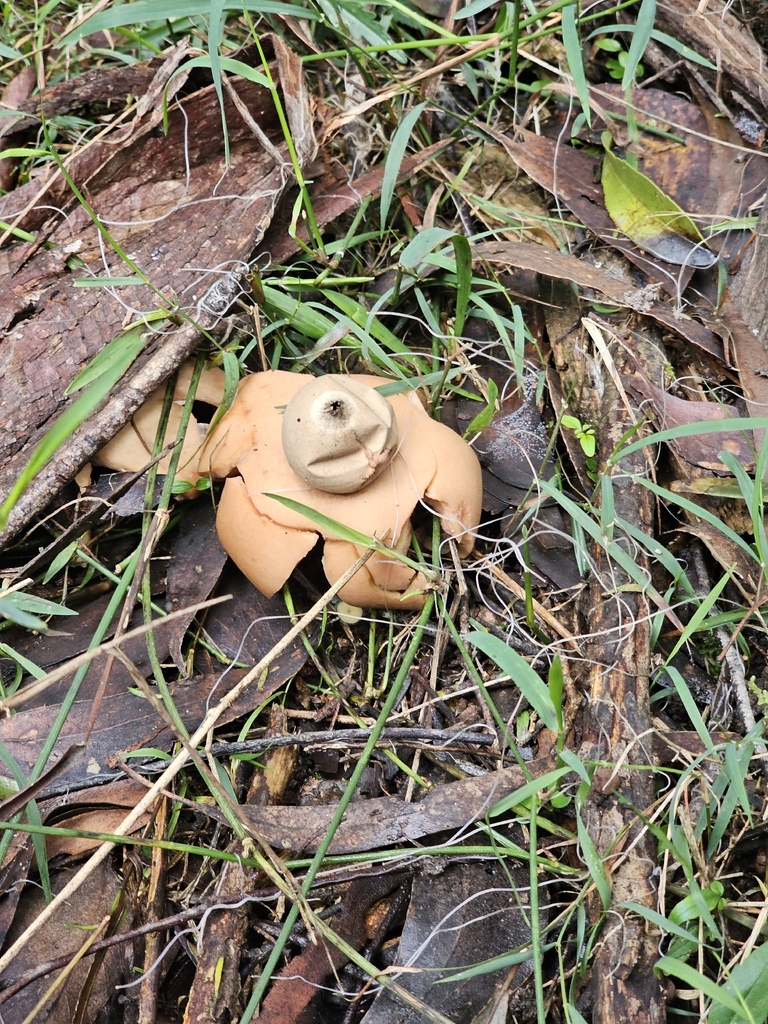
The fruiting body consists of two distinct layers. The outer layer, called the exoperidium, is golden tan to yellowish-brown in colour and forms the protective skin. As the fungus matures, this outer layer splits away from the inner basidiocarp along predetermined lines, peeling back to create five to eight pointed rays that radiate outward. This dramatic splitting exposes the spore-bearing chamber within and creates the characteristic star-like appearance that gives the earthstar its common name. The geometric precision of these rays is a key identifying feature of the species.
Distribution and Habitat
Geastrum saccatum, commonly known as the Earthstar, has a broad global distribution spanning at least 30 countries across multiple continents. The Netherlands and United States represent the primary strongholds for observations, with 105 and 96 records respectively. This fungus also maintains established populations in Australia, Hungary, Canada, Sweden, Mexico, Chile, India, and South Africa, indicating considerable adaptability to diverse climates and ecosystems.
European records dominate the dataset, with the Netherlands, Hungary, and Sweden all reporting significant populations. North American presence is substantial, particularly in the United States, while Southern Hemisphere occurrences in Australia, Chile, and South Africa suggest the species thrives in temperate regions worldwide. The presence of populations in India and Mexico further underscores its capacity to colonize varied geographical zones.
Seasonal patterns show pronounced peaks in autumn and early winter, with November recording the highest frequency at 97 observations. A secondary surge occurs in July and August, indicating bimodal fruiting patterns. October marks the beginning of the main fruiting season with 77 records, while December shows minimal activity. This pattern suggests the species favors cooler months or responds to seasonal moisture availability, though specific elevation preferences remain undocumented for this widely distributed fungus.
Ecology and Lifecycle
Lifecycle
Geastrum saccatum begins its life as vegetative mycelium, a network of fungal threads spreading through soil and organic matter. This mycelial stage can persist for months or years, breaking down dead plant material and accumulating the energy reserves needed for fruiting. When moisture and temperature conditions align—typically during humid autumn or spring months—the fungus produces fruiting bodies that push through the soil surface.
The mature earthstar develops a distinctive two-chambered structure: an outer peridium (outer wall) that splits and peels back into several radiating arms, and an inner saccate (bag-like) spore sac that sits at the center. This opening mechanism exposes the gleba, a spore-bearing tissue housed within the inner chamber. Spore dispersal occurs through water splash and wind currents; rain droplets strike the opening of the inner sac, causing clouds of spores to puff into the air. A single fruiting body can release millions of microscopic spores over several weeks, each capable of germinating under suitable conditions to establish new mycelial colonies.
Ecological Role
Geastrum saccatum functions as a saprotroph, deriving nutrition from decomposing wood, leaf litter, and other dead organic material in soil. By breaking down complex polymers like cellulose and lignin, this earthstar contributes to nutrient cycling and soil formation. Its presence indicates healthy, humus-rich soils with sufficient organic matter—making it an indicator species for undisturbed woodland and forest-floor habitats.
The fungus plays an indirect role in supporting other organisms. Its mycelial network stabilizes soil structure, improving water infiltration and aeration. When fruiting bodies mature and release spores, they become food sources for small invertebrates and insects. Over time, the decomposition activity of G. saccatum and its fungal relatives gradually converts dead organic matter into soluble nutrients that plants and other microorganisms can utilize, maintaining the productivity of forest ecosystems.
Uses
Earthstars have no culinary or nutritional value and are not harvested for food. Their principal human interest is scientific and educational: the dramatic star-shaped fruiting bodies are widely documented in mycological field guides and citizen-science platforms, where they serve as excellent teaching examples of fungal morphology and spore dispersal mechanics.
No medicinal or pharmacological applications are established for Geastrum saccatum. The species remains largely understudied for bioactive compounds, though some earthstar relatives have been investigated for antimicrobial properties in experimental settings. For most people, the earthstar’s value lies in its role as a visible marker of healthy soil ecology and a source of visual interest on the forest floor.
Conservation and Threats
Geastrum saccatum, the earthstar fungus, has not been formally assessed by the International Union for Conservation of Nature (IUCN) and therefore lacks an official Red List classification. This absence of formal status reflects the challenges in evaluating fungal conservation needs, as many fungi remain poorly studied relative to plants and animals. However, the available evidence suggests the species is not under immediate threat.
The population trend for earthstar is currently increasing, indicating the species is expanding its range or becoming more abundant in areas where it occurs. This positive trajectory suggests the fungus has adapted successfully to existing environmental conditions and continues to establish itself across suitable habitats.
Threats and Conservation Efforts
No specific threats have been documented for Geastrum saccatum. The fungus appears to be generalist in its habitat requirements and has shown resilience across multiple regions. Like many wood-decay fungi, it may be vulnerable to large-scale habitat destruction or the removal of dead wood from forests, but systematic data on these impacts remain limited.
Formal conservation programmes or legal protections specifically targeting earthstar are not currently in place. The species’ increasing population trend and broad distribution suggest that existing protected areas and general woodland conservation efforts are sufficient to maintain viable populations. No targeted intervention appears necessary at present.
Cultural Significance
In Brazil, Geastrum saccatum holds symbolic resonance through its vernacular name, which translates to “star of the land.” This poetic naming reflects the fungus’s distinctive star-shaped appearance when mature, linking its morphology directly to cultural perception and local identity.
Beyond folklore, the earthstar has attracted scientific interest for its bioactive properties. A β-glucan–protein complex extracted from G. saccatum has been isolated and shown to possess antiinflammatory, antioxidant, and cytotoxic activities. These findings suggest potential applications in traditional medicine systems and modern pharmaceutical development, though such uses remain primarily in the research phase rather than established cultural or medical practice.
Fun Facts
- The earthstar’s dramatic star shape forms through a chemical process rather than simple tearing. A buildup of calcium oxalate crystals inside the fruiting body creates mechanical pressure that forces the outer layer to split open in a perfect star pattern.
- Unlike many of its earthstar relatives, Geastrum saccatum is sessile, meaning it has no stem connecting the spore-releasing capsule to the base. This gives it its alternative name: the sessile earthstar.
- The rounded earthstar is distinguished from other earthstars by a unique circular ridge or depression that rings the central pore. This anatomical feature acts as a reliable identification marker in the field.
- Once the star-shaped outer layer opens, it doesn’t just stay in place. The points of the star may curl backward or fold in different ways depending on moisture levels, making the same specimen look quite different over time.
- The spores exit from a single central opening at the top of the inner capsule, a strategy that concentrates spore release in dry conditions when wind dispersal is most effective. Heavy rain causes the opening to close, protecting spores from washing away.
- Geastrum saccatum is a member of the genus Geastrum, a lineage of fungi that has used the same star-opening strategy for millions of years. Fossils and molecular evidence suggest earthstars have remained largely unchanged in form since the Cretaceous period.
Photo Gallery
Michael McBain · CC BY 4.0
Related Species
Was this profile helpful?