
Testudines
Leatherback Sea Turtle
Dermochelys coriacea
VULNERABILEAlso known as: Blue Sea Turtle, Coffin-back, Coffin-back Turtle, Coffinback Turtle, Leather-back Turtle
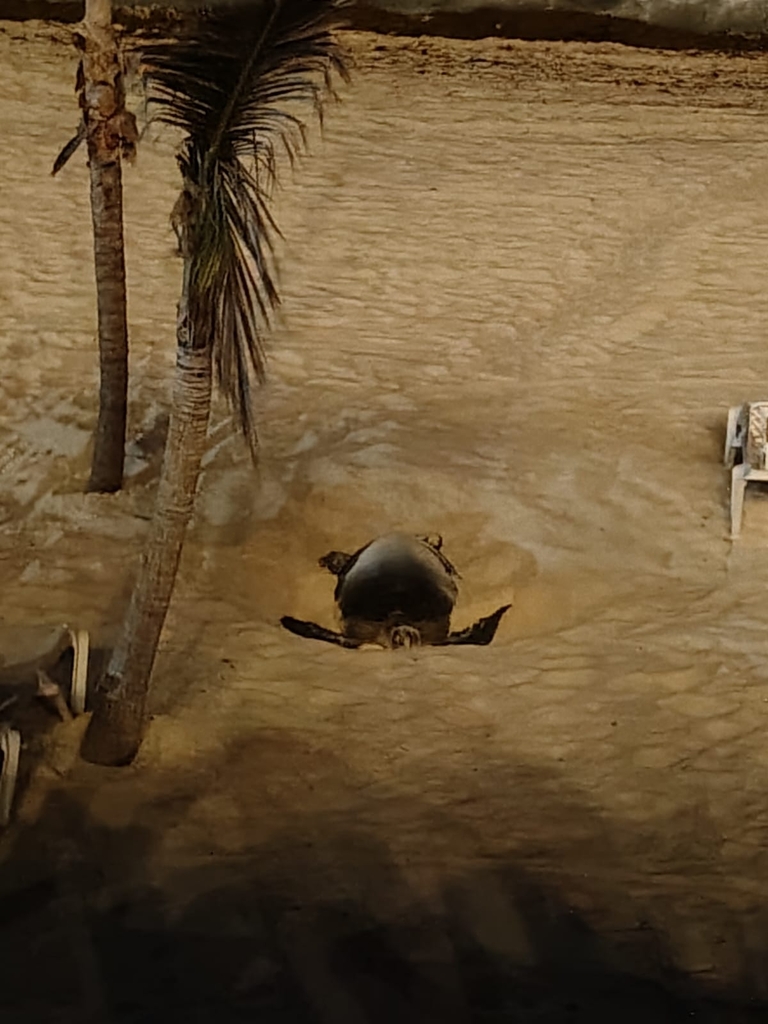
© Lauren Storey · iNaturalist · CC BY 4.0
Scientific Classification & Quick Facts
Classification
At a Glance
The leatherback sea turtle is the largest living turtle on Earth, a creature so distinct from its shelled relatives that it occupies an entire family of its own. Unlike other sea turtles, Dermochelys coriacea lacks a hard carapace—instead, its back is covered in thick, rubbery skin supported by a layer of bone and fat that gives the animal its common name. This fundamental difference makes the leatherback a living relic, the last surviving member of a lineage that diverged from other turtles millions of years ago.
Found across 38 countries in tropical, subtropical, and temperate oceans worldwide, the leatherback is listed as Vulnerable by the International Union for Conservation of Nature. Its global distribution and remarkable physiological adaptations make it an ecological linchpin: these turtles migrate thousands of kilometres between distant feeding and nesting grounds, travelling farther than almost any other reptile. What truly distinguishes the leatherback is its specialization—it hunts almost exclusively for jellyfish and other gelatinous prey in the open ocean, filling an ecological role that few other large animals occupy.
Identification and Appearance
The leatherback sea turtle is the largest living turtle species, instantly recognizable by its distinctive leathery shell rather than the hard, bony carapace found in other sea turtles. Adults typically measure 2.13 metres in length and weigh between 250 and 900 kilograms, making them significantly heavier and longer than any other turtle. Their massive size combined with a smooth, black or dark brown shell grants them dominance in the open ocean.
The carapace is uniquely covered in a leathery, rubbery skin rather than horny plates, giving the species its common name. This shell lacks the raised scutes present in other sea turtles, instead displaying a continuous, streamlined surface. The flippers are exceptionally long and powerful relative to body size, lacking claws entirely. Colouration is predominantly dark grey or black, sometimes with lighter markings along the shell margins and underside. The skin often appears oily or shiny, an adaptation that aids thermoregulation in cold deep-water environments.
Leatherbacks possess several anatomical features suited to their unique lifestyle as deep-diving open-ocean hunters. Their flexible shell and collapsible body allow them to withstand crushing pressures at considerable depths. The front flippers are longer and more blade-like than in other sea turtles, providing efficient propulsion through water. Unlike most reptiles, leatherbacks maintain elevated body temperatures through metabolic heat production, partially enabled by their large size and dark coloration that absorbs solar radiation.
Distribution and Habitat
Dermochelys coriacea, the leatherback sea turtle, occurs in tropical and subtropical oceans worldwide, with recorded presence in 38 countries across multiple continents. The species shows a strong affinity for warm waters and is most abundant in the Caribbean and Atlantic regions, where Trinidad and Tobago (63 records) and French Guiana (55 records) represent the primary nesting hotspots. Mexico and Australia also host significant populations (26 records each), while the United States, Costa Rica, Canada, and Panama contribute meaningful counts to the global distribution.
Leatherbacks are oceanic reptiles with a cosmopolitan range that extends from tropical nesting beaches to temperate feeding grounds in both hemispheres. Unlike other sea turtle species, they lack elevation constraints, as their life cycle is entirely aquatic or beach-associated. Adults forage in open ocean and coastal waters across the Atlantic, Pacific, and Indian Oceans, while females return to specific beaches—often thousands of kilometres from feeding areas—to deposit eggs.
Seasonal Presence
Nesting activity peaks sharply in May, with 79 records during that month across all surveyed locations. Activity remains elevated from March through May (41–79 records), then declines dramatically from June onward, with fewer than 20 records per month through the remainder of the year. This concentrated season reflects the reproductive cycle of females, which emerge onto beaches during a narrow window to lay clutches. Offshore movements and feeding migrations occur year-round, though monitoring records concentrate on nesting beaches during the primary breeding season.
Biology and Behavior
Behavior
Leatherback sea turtles are highly migratory animals, undertaking some of the longest journeys of any reptile. They spend most of their lives in the open ocean, diving to extraordinary depths—often exceeding 1,000 metres—to hunt in the water column. These solitary creatures navigate by geomagnetic cues and return to their natal beaches to breed, sometimes traveling thousands of kilometres across ocean basins.
Nesting occurs during specific seasonal windows that vary by region. Females haul themselves onto sandy beaches at night, excavate flask-shaped chambers, and deposit their eggs before returning to sea. A single nesting female may produce multiple clutches in a season, with intervals of 8–14 days between nesting events. Males never return to land after hatching; females return every 2–3 years to breed.
Diet
Leatherback sea turtles are specialized feeders, consuming almost exclusively jellyfish and related gelatinous organisms including salps, siphonophores, and ctenophores. Their narrow, pointed snout and elongated throat are perfectly adapted for capturing soft-bodied prey. They forage continuously throughout tropical and temperate oceans, using their large flippers to propel themselves through water with remarkable agility for such massive animals.
These turtles consume vast quantities of jellyfish—sometimes equivalent to their own body weight—to meet their high metabolic demands. This diet exposes them to a significant conservation challenge: they frequently mistake floating plastic bags for jellyfish, leading to fatal intestinal blockages.
Reproduction
Female leatherbacks reach sexual maturity between 20 and 50 years of age. Breeding occurs synchronously across a population, with multiple females arriving at beaches during the same narrow window. Clutch sizes typically range from 60 to 120 eggs per nest, though some nests contain over 150. The incubation period lasts approximately 60–65 days, depending on sand temperature.
Hatchlings emerge from the sand at night and instinctively move toward the ocean. Unlike many reptile species, leatherback parents provide no post-hatching care. Young turtles immediately face predation from birds, crabs, and marine predators. Those that reach the ocean enter pelagic zones where survival rates remain poorly understood, though estimated lifespans in the wild extend beyond 30 years.
Conservation and Threats
The leatherback sea turtle is classified as Vulnerable on the IUCN Red List, reflecting serious population decline across its global range. This status indicates the species faces a high risk of extinction in the wild. The population trend is decreasing, driven by multiple human-related pressures that have mounted over recent decades.
Threats
Vessel strikes pose the most immediate danger to adult leatherbacks. Nearly one-quarter (23.5%) of leatherback strandings result from collisions with ships, making this the leading cause of recorded deaths. The species’ preference for deep oceanic waters and coastal feeding grounds puts them directly in shipping lanes, where large vessels cannot maneuver quickly enough to avoid them.
Plastic pollution ranks among the most insidious threats. Leatherbacks feed exclusively on gelatinous zooplankton—jellyfish and comb jellies—and readily mistake plastic bags, plastic sheeting, and other marine debris for their natural prey. Once ingested, plastic can block the digestive tract or cause fatal internal injuries. The species’ diet of soft-bodied animals also means it consumes high amounts of salt, potentially concentrating toxic chemical pollutants accumulated in ocean water.
Light pollution poses a critical threat to hatchlings. Newly emerged turtles have a strong innate attraction to light, which in natural settings guides them toward the ocean horizon. Artificial lighting from coastal development disorients hatchlings, causing them to crawl toward buildings, roads, and vehicles instead of the sea, dramatically reducing survival rates.
Conservation Efforts
International legal protections exist across much of the leatherback’s range. The species is listed under the U.S. Endangered Species Act and protected by the Convention on International Trade in Endangered Species (CITES). Many countries have established nesting beach reserves and implemented turtle excluder devices (TEDs) in fishing nets to reduce bycatch. However, enforcement remains inconsistent in developing nations where nesting beaches are concentrated.
Cultural Significance
Dermochelys coriacea, the leatherback sea turtle, occupies a unique position in human awareness as a symbol of marine conservation rather than as a species woven into traditional cultural practices. Unlike some reptiles that feature prominently in mythology or folklore, the leatherback’s cultural significance is primarily rooted in modern environmental discourse and scientific importance. The species has become central to international conservation efforts, particularly through regulatory frameworks such as the Endangered Species Act of 1973, under which the National Marine Fisheries Service (NMFS) conducts regular assessments of population status and recovery prospects.
The leatherback has no history of domestication or human use for food, medicine, or other traditional purposes. As a fully wild, highly migratory pelagic species, it exists largely outside the sphere of human exploitation that characterizes many other sea turtle species. Instead, its cultural role has emerged through scientific research and ocean conservation movements, where it represents both the fragility of marine ecosystems and the possibility of species recovery through coordinated international protection. Research on leatherback biology, behavior, and ecology forms an essential component of marine conservation programs, positioning the species as a flagship organism for understanding and protecting open-ocean environments.
Fun Facts
The leatherback sea turtle is one of the ocean’s most extreme athletes, with adaptations that set it apart from every other living turtle on Earth. Below are seven remarkable facts about this unique reptile.
- Leatherbacks are ocean giants. They are the largest of all living turtles, reaching lengths up to 2.7 metres and weights up to 500 kilograms—making them the heaviest non-crocodilian reptile alive today.
- Their shell is uniquely flexible. Unlike other sea turtles, leatherbacks lack a bony carapace; instead, their shell is covered by oily flesh and flexible, leather-like skin that moves with their body as they swim.
- They are the only member of their family. Leatherbacks are the sole living species in both their genus Dermochelys and their family Dermochelyidae, making them a unique evolutionary lineage with no close living relatives.
- They dive deeper than any other sea turtle. Leatherbacks can descend beyond 1,000 metres in search of jellyfish, their primary food, using special adaptations including larger flippers and counter-current heat exchangers in their flippers to maintain body temperature in freezing deep water.
- They undertake some of the longest migrations of any animal. Individual leatherbacks migrate thousands of kilometres across ocean basins between tropical nesting beaches and distant feeding grounds in cooler waters.
- Their temperature regulation is exceptional. Leatherbacks maintain body temperatures 5–13°C warmer than the surrounding water through metabolic heat production, allowing them to thrive in waters where other sea turtles cannot survive.
- Their future remains uncertain. Although they have a global range, leatherbacks are classified as vulnerable by conservation assessments, with some regional populations critically endangered due to entanglement in fishing gear, ocean plastic, and coastal development.
Conservation Status
LC · NT · VU · EN · CR · EW · EX
Photo Gallery
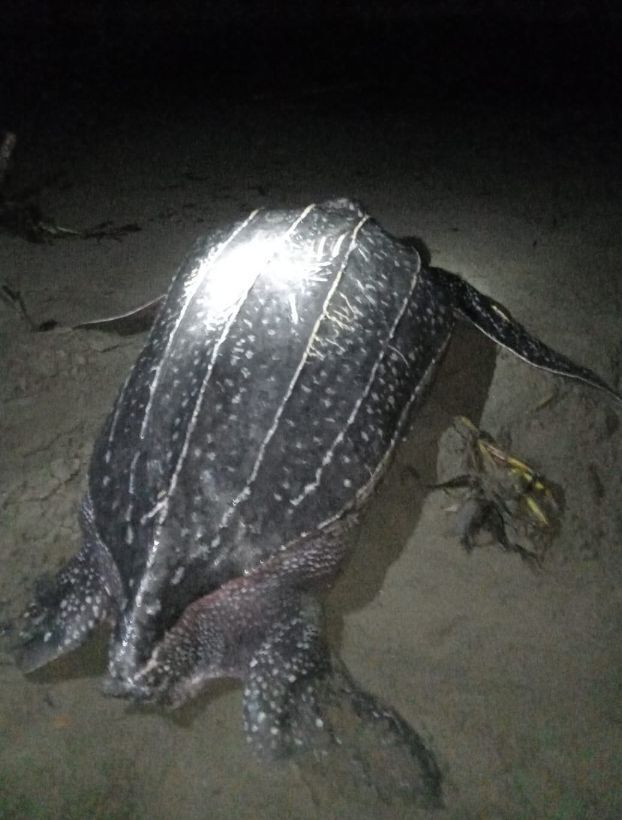
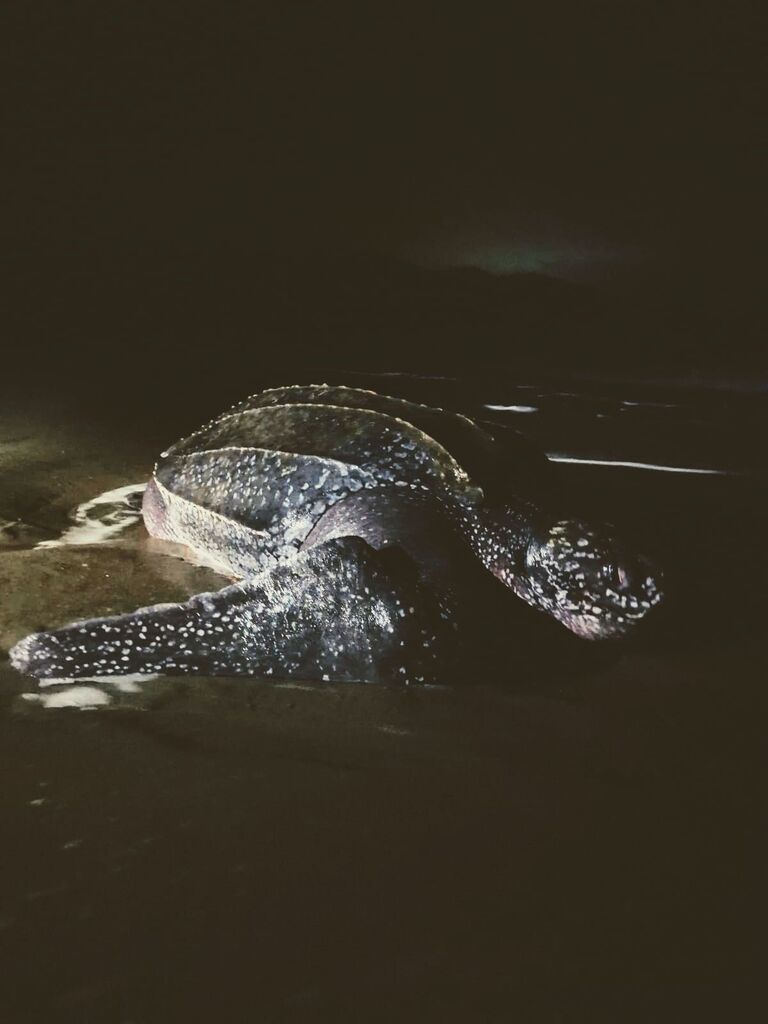
Lauren Storey · CC BY 4.0
Related Species
Was this profile helpful?