
Testudines
Hawksbill Sea Turtle
Eretmochelys imbricata
Critically EndangeredAlso known as: Atlantic Hawksbill Sea Turtle, Hawk's-Bill Turtle, Hawksbill, Pacific Hawksbill Sea Turtle
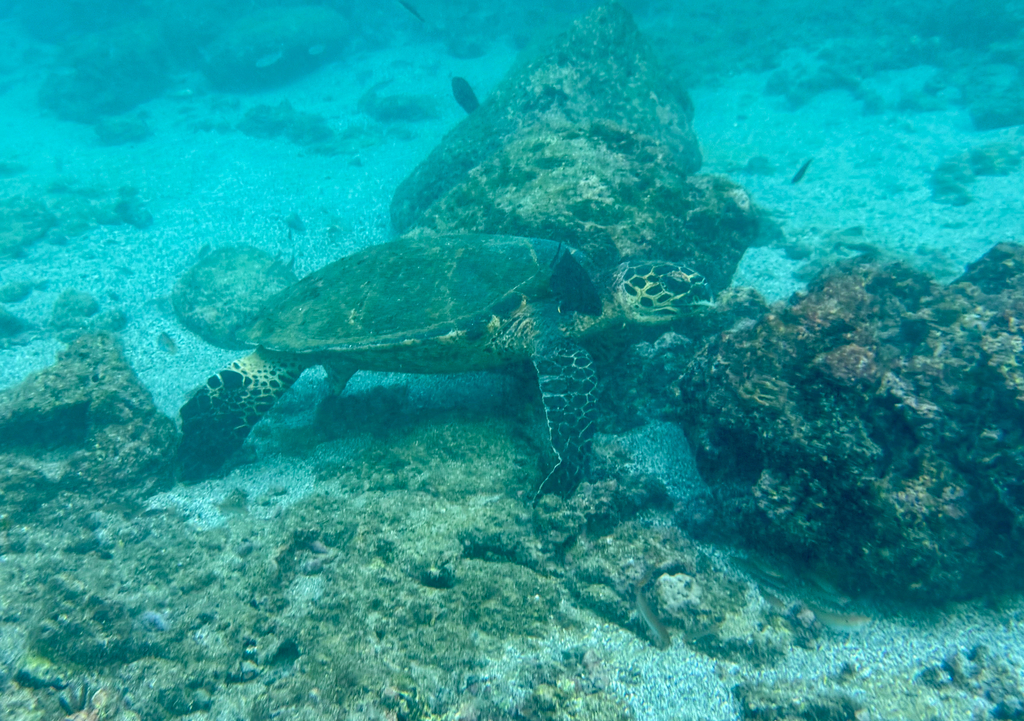
© Christopher James · iNaturalist · CC BY-NC 4.0
Scientific Classification & Quick Facts
Classification
At a Glance
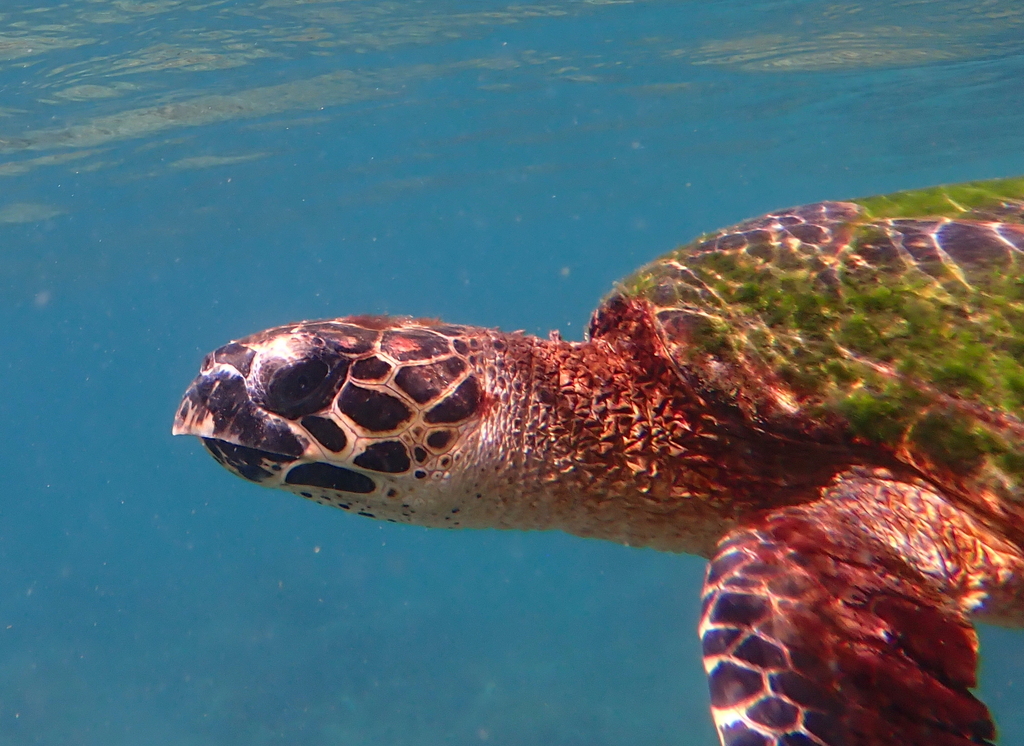
The hawksbill sea turtle is instantly recognizable by its narrow, pointed beak—a feature that gives the species both its common name and its Latin epithet imbricata, meaning overlapping. This beak is far more than a distinctive feature; it is a precision tool, perfectly adapted for extracting prey from crevices and reef structures where few other animals can feed. Found across tropical and subtropical oceans in at least 46 countries, the hawksbill remains one of the ocean’s most elegant and specialized hunters despite being listed as Critically Endangered.
Hawksbills occupy a singular ecological niche among sea turtles, relying primarily on sponges and other invertebrates found on coral reefs rather than the seagrass or jellyfish that sustain their cousins. This dietary specialization makes them irreplaceable players in reef health, yet it also renders them vulnerable to the degradation of the very habitats they depend on. Their recovery hinges not only on reducing direct human threats but on the restoration and protection of the complex reef ecosystems that define their world.
Identification and Appearance
The hawksbill sea turtle is a relatively small marine chelonian, typically measuring around 1 metre (3.3 feet) in length as an adult. Individuals average approximately 80 kilograms (176 pounds), though the largest specimen on record weighed 127 kilograms (280 pounds). Hatchlings emerge at just 0.87 centimetres, an extraordinarily small size that makes them vulnerable during their critical early months at sea.
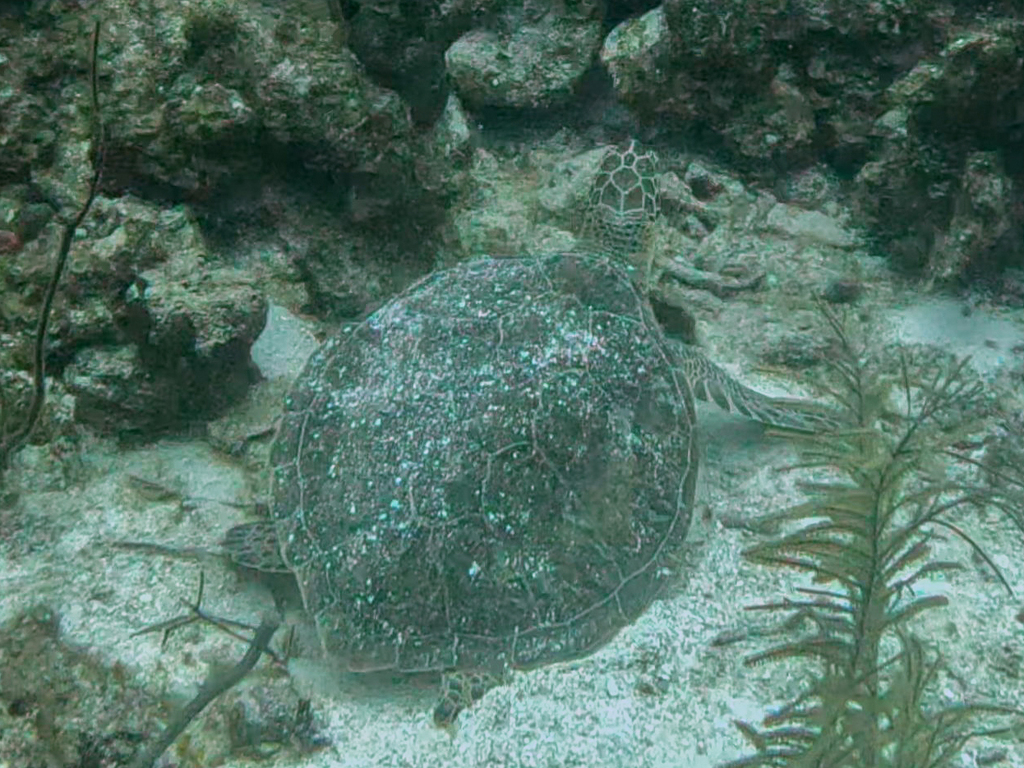
The carapace displays a distinctive amber background with an irregular mosaic of light and dark streaks, predominantly in black and brown tones. This patterned shell is a key identifying feature, giving the species its common name—the overlapping scutes resemble tortoiseshell used historically in jewellery and decorative items. The head tapers to a pointed, beak-like snout, which is longer and more pronounced than in other sea turtle species. The plastron (ventral shell surface) is typically yellowish or cream-coloured. All four flippers bear claws, and the front flippers are notably elongated relative to body size, aiding manoeuvrability in coral reef environments where the species often hunts.
Sexual dimorphism in hawksbills is subtle but consistent with other sea turtles. Adult males develop a longer tail that extends beyond the carapace edge, whereas females have a shorter, more compact tail. Males also tend to be slightly smaller than females overall. The shell colour and pattern remain consistent between sexes, though older individuals may show more wear and fading. Young hatchlings and juveniles display darker colouration than adults, gradually lightening as they mature.
Distribution and Habitat
Eretmochelys imbricata, the hawksbill sea turtle, inhabits tropical and subtropical ocean waters across 46 countries worldwide. Its range spans the Atlantic, Pacific, and Indian oceans, with the highest recorded presence in Indonesia (47 records), the Maldives (22), the Philippines (22), the Cayman Islands (21), and Costa Rica (19). Significant populations also occur in Australia, New Caledonia, Mexico, Panama, and Brazil, reflecting a genuinely pantropical distribution centred on coral reef ecosystems.
As a fully marine species, hawksbills occur exclusively at sea level, with no terrestrial or freshwater phase in their adult life. They favour warm coastal waters associated with coral reefs, rocky outcrops, and seagrass beds where their primary food source—sponges—is abundant. Nesting occurs on sandy beaches across their range, but the species spends the vast majority of its life in shallow to moderate-depth marine environments.
Sightings show marked seasonality, with a pronounced peak in January (103 records) followed by sustained presence through February (92) and March (101). Occurrence drops dramatically from April onward, suggesting either seasonal migration patterns, reduced observer effort in warmer months, or a genuine contraction of detectable populations during the boreal summer and autumn. This winter peak likely reflects heightened nesting activity and coastal aggregation in many populations during the Northern Hemisphere winter breeding season.
Biology and Behavior
Behavior
Hawksbill sea turtles are predominantly solitary creatures that spend most of their lives in the ocean, though they exhibit strong site fidelity to specific feeding and nesting grounds. They are active foragers throughout the day, diving to depths of up to 20 metres or more to access food sources on the seafloor and reef structures. Unlike many sea turtle species that undertake long transoceanic migrations, hawksbills tend to remain within regional waters, though some populations do migrate between distant feeding areas and nesting beaches.
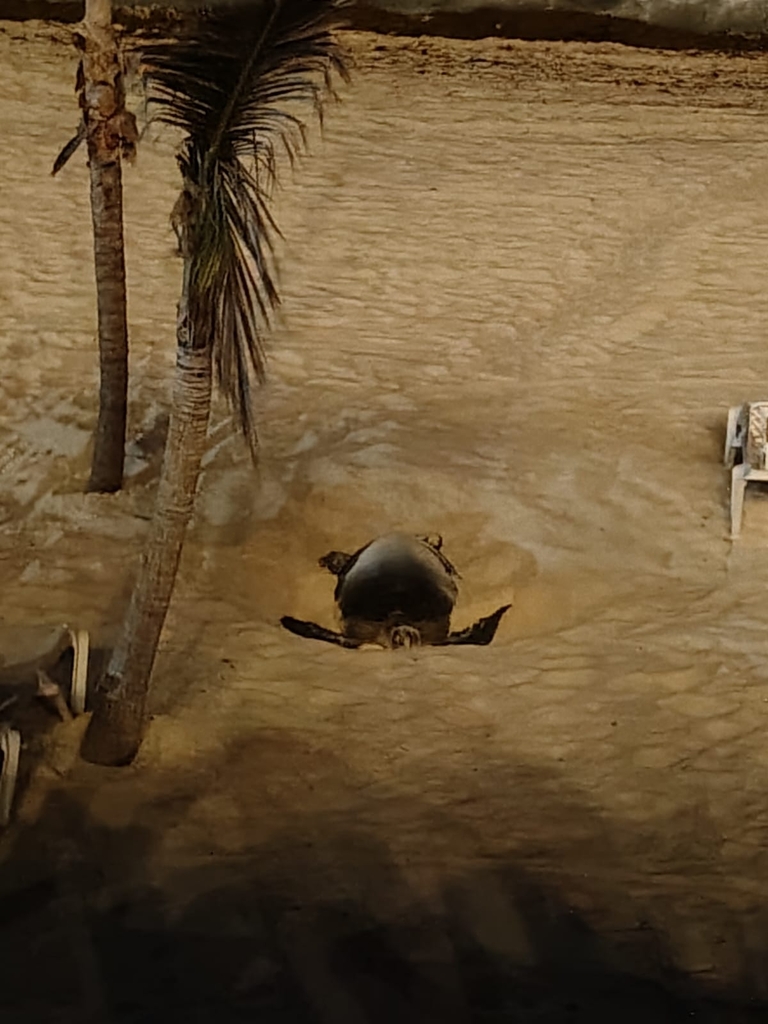
Nesting behavior is a defining characteristic: females return to land under cover of darkness, typically during monsoon or dry seasons depending on regional climate patterns. They emerge from the water to crawl onto sandy beaches where they excavate flask-shaped chambers and deposit their eggs before returning to the sea. Males never leave the water after hatching, instead remaining at sea throughout their lives. The species shows remarkable philopatry—females often return to the same beach where they themselves hatched, sometimes travelling hundreds of kilometres to do so.
Diet
Hawksbill sea turtles are omnivorous and highly opportunistic feeders with a diet shaped largely by availability in their local habitat. They consume sponges, algae, seagrasses, jellyfish, and other soft-bodied invertebrates. Their narrow, pointed beak—which gives the species its common name—allows them to probe crevices in coral and rocky reefs to extract food from tight spaces. This feeding specialization makes them particularly dependent on healthy coral reef ecosystems.
Their role as sponge specialists is ecologically significant: by consuming large quantities of sponges, which can otherwise compete with corals for space and light, hawksbills help maintain reef balance. They are also occasional scavengers of dead organisms and organic debris, supplementing their diet with whatever nutritious material they encounter while foraging.
Reproduction
Female hawksbills reach sexual maturity between 20 and 50 years of age, depending on population and environmental conditions. Breeding occurs at intervals of 2 to 4 years, with females visiting nesting beaches during specific seasonal windows that vary geographically. A single breeding season may involve multiple nesting events, with females depositing 3 to 5 clutches on separate occasions, each containing 100 to 160 eggs buried in the sand.
Incubation lasts approximately 60 days, after which hatchlings—measuring just 6 to 7 centimetres in length—emerge and instinctively rush toward the ocean under cover of darkness. Hatchling survival rates are extremely low, with predation and disorientation claiming the vast majority before they reach deeper water. The species has an estimated lifespan of around 20 years in the wild, though exact longevity data remains limited due to the difficulty of long-term tracking studies on migratory marine animals.
Conservation and Threats
The hawksbill sea turtle is classified as Critically Endangered on the IUCN Red List, placing it among the world’s most threatened marine reptiles. This designation reflects the species’ dramatically reduced population and the severity of threats it faces across its global range. Despite the dire status, the population trend is currently stable, suggesting that existing conservation efforts may be slowing further declines, though recovery remains uncertain.
Threats
Coastal development poses an immediate threat to hawksbill nesting habitats. These turtles return to beaches to lay eggs, and the construction of resorts, ports, and infrastructure destroys critical nesting grounds. Loss of suitable beaches eliminates breeding opportunities and fragments remaining populations across distant locations.
Marine pollution compounds these pressures. Hawksbills ingest plastic debris, fishing nets, and other anthropogenic waste in ocean waters, causing internal injuries and starvation. Chemical pollutants and oil spills degrade water quality in feeding and breeding areas. Additionally, illegal trade in turtle shell and eggs continues despite international protections, driving poaching in regions with weak enforcement.
Conservation Efforts
International law provides the hawksbill with strong formal protection. The species is listed on Appendix I of CITES (the Convention on International Trade in Endangered Species), which prohibits commercial trade. Most coastal nations have enacted laws protecting nesting beaches and criminalizing capture or trade. Several marine protected areas now safeguard critical habitat.
Community-based conservation programmes work directly with coastal communities to monitor nesting beaches, protect eggs from poaching, and reduce human-induced mortality. Hatchery and headstart programmes in some regions raise young turtles to a larger size before release, improving survival odds. Research initiatives track migration routes and population genetics to guide future protection strategies.
Cultural Significance
The hawksbill sea turtle has become inextricably linked with human exploitation rather than reverence. The species’ distinctive shell—characterized by overlapping scutes of amber and dark brown—has been prized for centuries for the production of tortoiseshell, a luxury material used in jewelry, decorative inlays, and ornamental goods. This demand for shell material drove industrial-scale harvesting that decimated wild populations across tropical and subtropical seas. The legal international trade in hawksbill shell persisted until 1993, when Japan agreed to cease imports, marking a watershed moment in sea turtle conservation. However, this legal prohibition has not eliminated demand; a significant illegal trade continues to threaten remaining populations.
Beyond its economic value, the hawksbill occupies a precarious position in coastal human communities. The species depends on coastal habitats throughout portions of its life cycle, bringing it into direct contact with concentrated human activities. Fishing operations, pollution, habitat modification, and the deliberate harvesting of both eggs and adult individuals remain persistent threats. Additionally, offshore activities including mining, commercial shipping, and recreation subject sea turtles to injury, entanglement, and displacement. The hawksbill’s cultural significance thus reflects a tension between historical human desire for its shell and contemporary recognition of the need for its protection and recovery.
Fun Facts
The hawksbill sea turtle is one of the ocean’s most specialised reptiles, shaped by millions of years of evolution to fill a unique ecological role. Here are some of the most fascinating facts about this critically endangered species.
- Last of its kind: Eretmochelys imbricata is the only living species in its genus, making it a unique evolutionary lineage with no close living relatives among sea turtles today.
- Sponge specialist: Hawksbills feed extensively on sponges, a food source that most other sea turtles avoid—their narrow, pointed beak is perfectly adapted to probe into reef crevices and extract sponges that other animals cannot reach.
- Architect of reefs: By controlling sponge populations on coral reefs, hawksbills indirectly help maintain reef health and structure, preventing sponges from overwhelming and smothering corals.
- Estuary dwellers: Unlike some sea turtles that are purely oceanic, hawksbills regularly use tropical and subtropical estuaries as nurseries and feeding grounds, making them dependent on both coastal and open water habitats.
- Global wanderers: Despite their critically endangered status, hawksbills maintain a pantropical distribution, occurring in warm waters across the Atlantic, Pacific, and Indian Oceans, though populations have crashed by over 80 per cent in recent decades.
- Ornamental shell curse: The hawksbill’s beautiful, amber-patterned shell was historically harvested for jewellery and decorative items, driving the species to the brink of extinction and making it one of the most targeted sea turtles in the illegal wildlife trade.
- Temperature-dependent development: Hawksbill hatchlings’ sex is determined by sand temperature during incubation—warmer nests produce females, whilst cooler nests produce males, making them vulnerable to climate change impacts on nesting beaches.
Ecology
Habitats
Diet
Behavior
Conservation Status
LC · NT · VU · EN · CR (Critically Endangered) · EW · EX
Photo Gallery
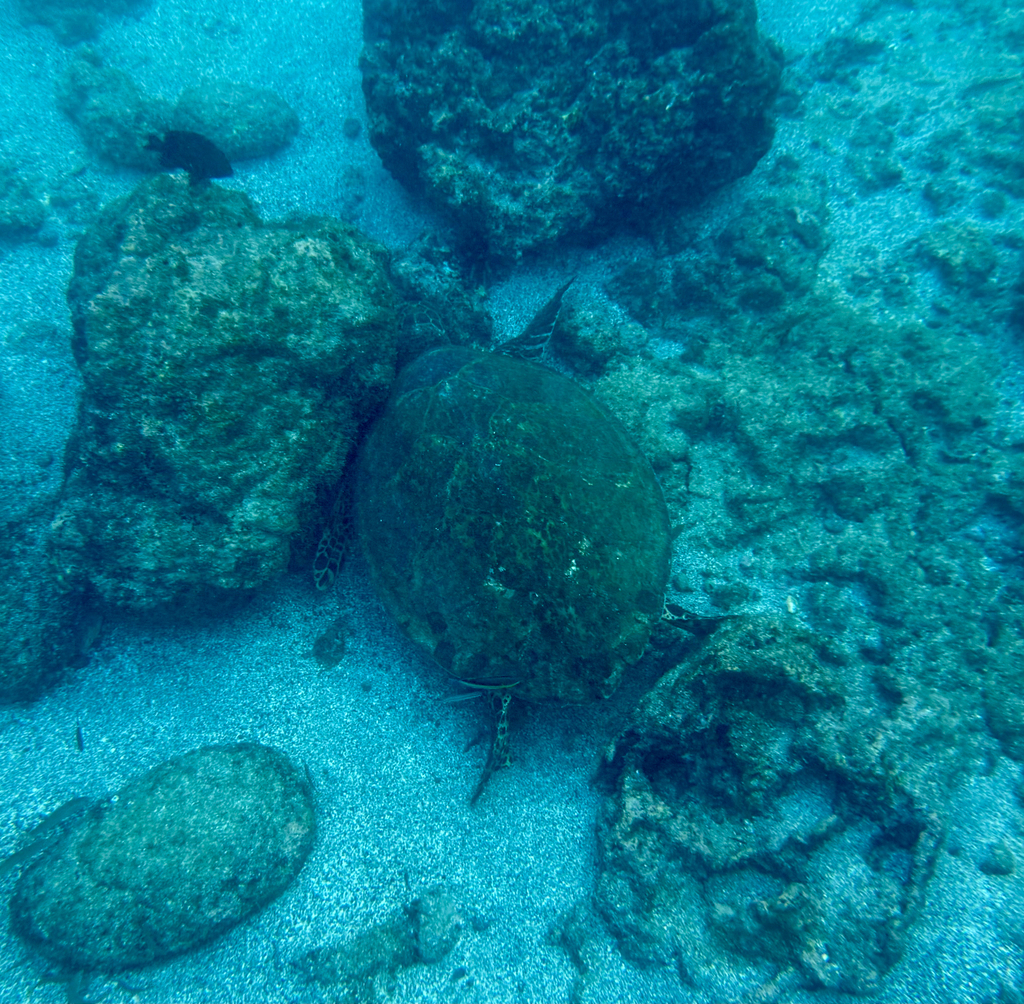
Christopher James · CC BY-NC 4.0
Related Species
Was this profile helpful?