
Eurotatoria · Flosculariaceae
Filinia Brachiata
Filinia brachiata

Scientific Classification & Quick Facts
Classification
Known For
Detailed measurements for this species are still being verified.
Filinia brachiata is a microscopic rotifer belonging to the phylum Rotifera, a group of aquatic invertebrates so small that most species are invisible to the naked eye. Despite their diminutive size, rotifers are among the most abundant and ecologically significant animals in freshwater ecosystems worldwide. This species has been recorded across at least 10 countries, revealing a surprisingly wide geographical distribution for an organism measured in fractions of a millimetre.
The conservation status of Filinia brachiata remains unknown, a reflection of the general challenge in assessing threats to microscopic organisms. What makes this species particularly intriguing is its membership in the family Trochosphaeridae, a lineage characterized by distinctive morphological features and specialised feeding strategies. Understanding rotifers like Filinia brachiata is essential for tracking ecosystem health, as these organisms respond rapidly to changes in water quality and nutrient cycling.
Identification and Appearance
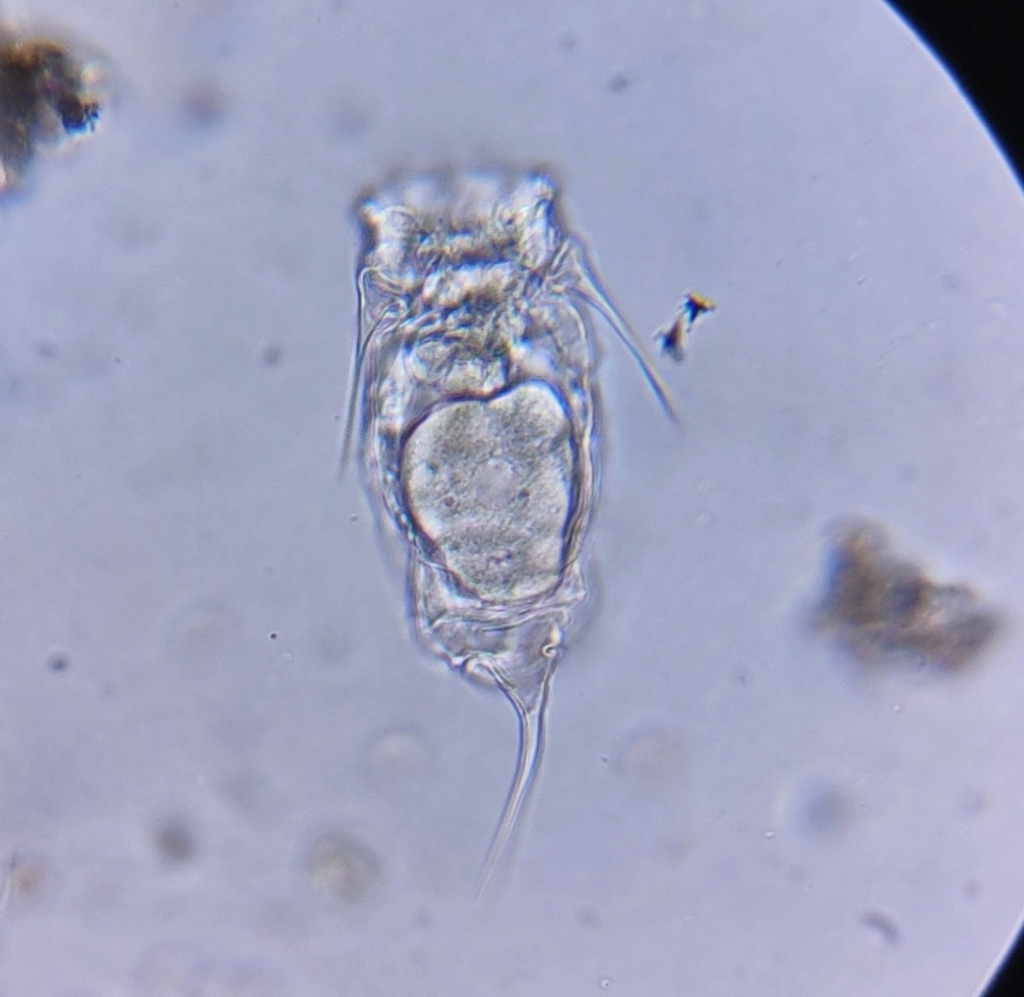
Filinia brachiata is a microscopic rotifer belonging to the family Filiniidae. Like all rotifers, it is too small to observe with the naked eye and requires microscopic examination for detailed identification. The genus Filinia is characterized by the presence of prominent, arm-like appendages called brachia, which give the species its scientific epithet brachiata (meaning “armed” or “possessing arms”).
Morphological Features
The defining characteristic of F. brachiata is its distinctive paired brachia—elongated, rigid projections that extend from the anterior region of the body. These structures are used in locomotion and feeding. The rotifer possesses a transparent or translucent body typical of the genus, allowing internal structures to be visible under magnification. The corona, or ciliated feeding apparatus, surrounds the mouth and consists of organized rings of cilia that generate feeding currents. A characteristic posterior foot or peduncle may be present, helping the organism attach to substrates or navigate aquatic environments.
Sexual dimorphism is minimal or absent in F. brachiata, as is common among rotifers. The species reproduces primarily through asexual parthenogenesis under favorable conditions, with sexual reproduction occurring only under environmental stress. Rotifers in this genus typically measure in the range of 100–500 micrometers, though exact dimensions for this particular species are not currently documented in standard reference databases. Identification in the field relies on the characteristic morphology of the brachia, corona structure, and overall body proportions as viewed under light microscopy.
Distribution and Habitat
Filinia brachiata is a freshwater rotifer with a scattered global distribution across ten countries. The species shows highest occurrence in Eastern Europe, particularly Ukraine (12 records) and Poland (10 records), where it appears to have established populations. Secondary records extend to Egypt (9 records), Italy (7 records), and France (5 records), suggesting a presence across both temperate and subtropical regions. Isolated occurrences in Sierra Leone, Australia, the Netherlands, Great Britain, and Thailand indicate broader dispersal capacity, though the species remains less common outside its primary range.
Elevation data for this species are not available, limiting precise assessment of altitudinal preferences. The absence of documented habitat restrictions suggests Filinia brachiata occupies standard freshwater environments typical of rotifers—likely small water bodies, ponds, and slow-moving systems where it feeds on algae and organic particles.
Seasonal occurrence patterns show pronounced summer activity. The species peaks in July, with six recorded observations during that month. Secondary increases occur in June (5 records) and March (3 records), indicating spring and early-summer reproduction periods. Winter months (November through February) show minimal to zero records, suggesting the population either enters dormancy or experiences reduced survival during cold periods. This pattern is consistent with temperate zooplankton phenology, where rotifers thrive during warmer months when algal food sources become abundant.
Biology and Behavior
Behavior
Filinia brachiata is a rotifer—a microscopic aquatic animal measuring typically 0.2 to 0.5 millimetres in length. As a member of the genus Filinia, this species is a planktonic organism that drifts passively through freshwater environments, though it possesses limited locomotor capability via its corona (a wheel-like ciliated structure used for movement and feeding). The animal exhibits typical rotifer behavior, remaining largely solitary within water columns where it responds to chemical and mechanical stimuli in its immediate surroundings.
Daily activity patterns in rotifers like F. brachiata are governed by environmental conditions such as temperature, light, and food availability. The species is primarily active during periods of suitable water chemistry, and populations can undergo rapid fluctuations in response to seasonal changes and nutrient levels in their aquatic habitats.
Diet
Filinia brachiata is a filter-feeding rotifer that sustains itself on microscopic particles suspended in water. Its primary food sources include bacteria, small algae, and organic detritus. The corona generates feeding currents that draw particles toward the mouth, allowing the organism to obtain nutrition from the surrounding water column without active predation.
The species plays a functional ecological role as a primary consumer in freshwater microbial food webs, converting bacterial and algal biomass into rotifer tissue that may subsequently feed larger zooplankton and larval fish.
Reproduction
Filinia brachiata reproduces through both asexual and sexual mechanisms typical of many rotifers. Asexual reproduction via parthenogenesis (cloning) allows rapid population growth under favorable conditions, enabling the species to exploit abundant food resources quickly. Sexual reproduction occurs when environmental stress or resource limitation triggers the production of males and the formation of dormant resting eggs, which can survive unfavorable periods and serve as a dispersal stage.
The reproductive cycle is closely tied to water temperature and food availability; warmer temperatures and rich nutrient conditions favor rapid asexual reproduction, while declining conditions stimulate sexual reproduction and the formation of resistant eggs. Generation times are short—often measured in days under optimal laboratory conditions—allowing populations to expand or contract rapidly in response to ecological change.
Conservation and Threats
Filinia brachiata is a rotifer with no formal conservation assessment on the IUCN Red List. Like most microscopic zooplankton species, it has not been subject to the standardized threat and status evaluation applied to larger organisms. However, the absence of an IUCN assessment does not indicate that the species faces no conservation challenges—it reflects the practical difficulty of monitoring populations of organisms measured in fractions of a millimetre across freshwater ecosystems worldwide.
The primary threats to Filinia brachiata and other rotifers stem from freshwater habitat degradation. Pollution, eutrophication, and alterations to water chemistry can directly harm these organisms or shift environmental conditions in favour of competing species. Habitat loss through wetland drainage, dam construction, and urban development reduces the diversity of freshwater microhabitats where such species persist. Climate change poses an emerging risk, as shifts in temperature and water availability may alter the seasonal patterns and geographic ranges of rotifer populations.
Conservation Efforts
No species-specific conservation programme exists for Filinia brachiata. Protection of this rotifer depends on broader freshwater conservation strategies, including the maintenance of clean water standards, protection of wetlands and shallow lakes, and restoration of degraded aquatic ecosystems. Many regions have implemented water quality legislation and habitat protection frameworks that indirectly benefit microscopic fauna like this species.
Fun Facts
- Filinia brachiata belongs to the family Trochosphaeridae, a group of rotifers that are among the smallest animals on Earth, typically measuring less than 0.5 millimetres in length.
- Like all rotifers, Filinia brachiata possesses a corona—a wheel-like structure of beating cilia around its mouth—which it uses to create water currents and capture microscopic food particles.
- This species is a bacterivore, feeding on bacteria and other microorganisms suspended in freshwater environments, making it a crucial link in aquatic food webs between bacteria and larger organisms.
- Rotifers in the genus Filinia are exclusively planktonic, drifting freely through water columns rather than settling on surfaces, and they respond rapidly to environmental changes in temperature and dissolved oxygen.
- Filinia brachiata can reproduce both sexually and asexually, with some populations capable of producing viable eggs without male fertilization—a reproductive flexibility that allows rapid population growth under favourable conditions.
- These microscopic animals are sensitive bioindicators of water quality; their presence and abundance are monitored by limnologists to assess the health and trophic status of freshwater systems.
- Despite their tiny size, rotifers like Filinia brachiata have well-developed nervous systems with about 1,000 neurons, and they can detect light, chemicals, and water movements with surprising precision.
Ecology
Diet
Behavior
Related Species
Was this profile helpful?