
Eurotatoria · Flosculariaceae
Filinia Passa
Filinia passa

Scientific Classification & Quick Facts
Classification
Known For
Detailed measurements for this species are still being verified.
Filinia passa is a microscopic rotifer—one of the smallest animals on Earth—that inhabits freshwater environments across at least 12 countries worldwide. Despite their diminutive size, rotifers like F. passa are formidable survivors, thriving in waters from pristine lakes to heavily disturbed urban ponds. This species remains largely unknown to the general public, yet it plays a critical ecological role as both predator and prey in aquatic food webs.
The conservation status of Filinia passa remains unknown, reflecting the broader challenge of monitoring microscopic species across fragmented habitats. Its wide distribution across multiple continents suggests adaptability to diverse freshwater conditions, though the true extent of its ecological range and population health remain poorly documented. Understanding this species illuminates the hidden diversity of aquatic microfauna and the importance of protecting freshwater ecosystems, even at scales invisible to the human eye.
Identification and Appearance
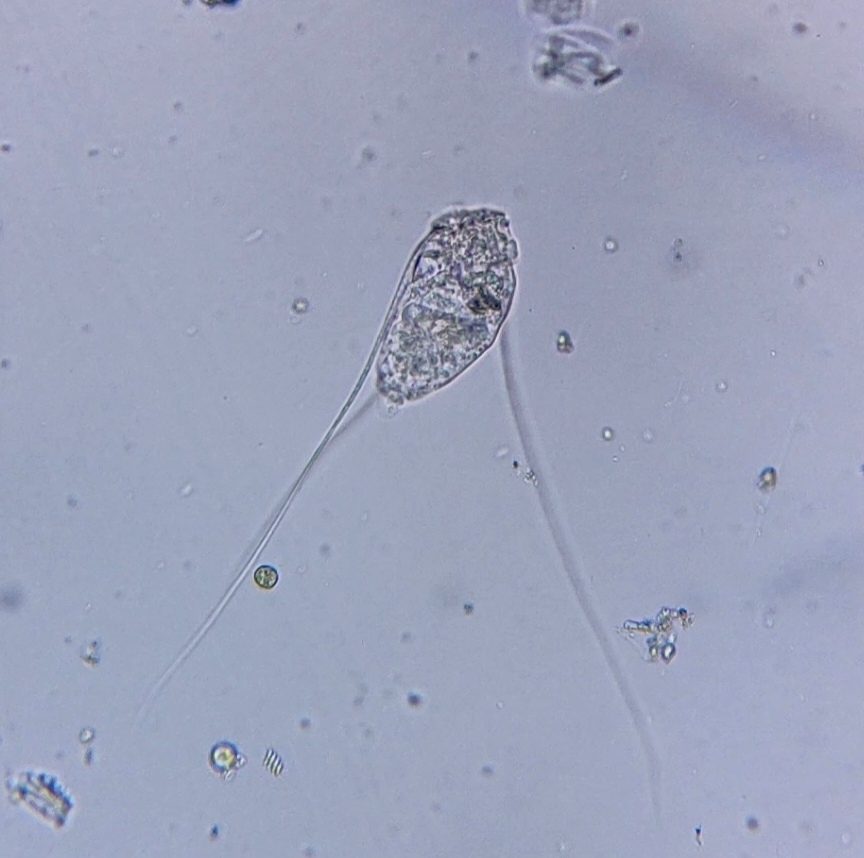
Filinia passa is a microscopic rotifer belonging to the family Trichocercidae. Like all rotifers, this organism is a transparent, aquatic invertebrate composed of fewer than 1,000 cells, making it invisible to the naked eye and requiring microscopic examination for identification and observation.
The genus Filinia comprises small, free-swimming rotifers that inhabit freshwater and brackish environments worldwide. Members of this genus are characterized by their elongated body form and the presence of distinctive appendages used for feeding and movement. Filinia passa, like other species in the genus, possesses the typical rotifer body plan: a transparent or translucent body with an anterior mouth region (the corona) lined with cilia, and a posterior foot region that may bear spines or other appendages. The internal organs—including the mastax (muscular pharynx), digestive tract, and reproductive structures—are often visible through the transparent body wall under high magnification, allowing researchers to identify species and assess reproductive status.
Precise morphological measurements and detailed descriptions of Filinia passa specific features require reference to the original species description and comparative rotifer taxonomy. The identification of Filinia passa relies on careful microscopic examination of body proportions, spine arrangement, corona structure, and other subtle anatomical characteristics that distinguish it from closely related Filinia species. Rotifers in this genus may exhibit both sexual and asexual reproduction, with females being the predominant or sole form observed in many populations, though males may appear seasonally or under specific environmental conditions.
Distribution and Habitat
Filinia passa has been recorded across 12 countries, with a pronounced concentration in northern and eastern Europe. The species shows particularly strong occurrence in Estonia, where 23 records have been documented, followed by Bulgaria with 13 records. This European dominance is complemented by scattered records in North Africa (Algeria with 6 records), East Africa (Kenya and Uganda with 3 and 2 records respectively), and isolated occurrences in Poland, Nigeria, the Netherlands, Canada, and Ukraine.
The seasonal activity of Filinia passa exhibits a clear pattern, with peak occurrence in September and October, when 9 records were logged in each month. Activity increases from April through June, builds substantially through summer, and declines sharply after October. Only minimal winter records (December shows no observations, while January and February each have 1 record) suggest the species is most active during warmer months or experiences reduced detection during colder periods.
No elevation range data is currently available for this species, and specific habitat associations have not been formally documented in existing records. The geographic spread across diverse climatic zones—from boreal Estonia to tropical Uganda and arid Algeria—indicates Filinia passa likely occupies a broad range of freshwater and brackish environments, though targeted survey work would be needed to clarify its precise habitat preferences and any environmental constraints.
Biology and Behavior
Behavior
Filinia passa is a microscopic rotifer that exhibits the sessile or semi-mobile lifestyle typical of its genus. These organisms inhabit freshwater environments where they remain relatively stationary, anchored to substrate or vegetation by their specialized foot structures. The species demonstrates the characteristic feeding posture of rotifers, with its corona (ciliated crown) extended to generate water currents that draw food particles toward the mouth.
Activity patterns in Filinia passa are governed by environmental conditions such as water temperature, dissolved oxygen levels, and food availability. The species responds to chemical gradients and mechanical disturbances, retracting its corona and contracting its body when threatened. Reproduction can be both sexual and asexual, with populations capable of rapid growth under favorable conditions through parthenogenetic (asexual) reproduction.
Diet
Filinia passa is a bacterivore, feeding exclusively on bacteria and small organic particles suspended in freshwater. Using its ciliated corona, the rotifer generates feeding currents that concentrate bacterial cells and detritus into the mouth opening. The species plays an important ecological role in microbial communities by controlling bacterial populations and cycling nutrients within its aquatic habitat.
Feeding efficiency in Filinia passa depends on bacterial density and water quality. The species can adjust its feeding rate in response to food availability, entering periods of reduced metabolic activity when resources become scarce. This flexibility allows the species to persist in nutrient-poor environments where food supply fluctuates seasonally.
Reproduction
Filinia passa reproduces through both asexual and sexual pathways. Under stable environmental conditions, populations increase rapidly via parthenogenesis, where females produce clones of themselves without male involvement. This reproductive strategy allows swift population expansion when conditions favor growth.
Sexual reproduction occurs when environmental stress triggers the production of males and the formation of resting eggs (diapauses). These hardy, dormant eggs can survive harsh conditions such as freezing, desiccation, and oxygen depletion, allowing the species to persist through unfavorable seasons. The shift between reproductive modes is governed by photoperiod, temperature, and nutritional status, enabling Filinia passa to optimize population dynamics across varying freshwater ecosystems.
Conservation and Threats
Filinia passa is a rotifer with no formal conservation status assigned by the International Union for Conservation of Nature (IUCN). This absence of formal evaluation reflects the limited research attention given to microscopic invertebrates, which are often overlooked in conservation planning despite their ecological importance in freshwater systems.
Threats
No specific threats to Filinia passa have been formally documented in the available literature. However, as a freshwater rotifer, the species is vulnerable to the same broad pressures affecting microscopic aquatic fauna: water pollution, habitat degradation, eutrophication, and climate-driven changes in water temperature and chemistry. Rotifers are particularly sensitive to chemical contaminants and shifts in pH, making water quality a critical factor for population persistence.
Conservation Efforts
No dedicated conservation programmes or legal protections specifically target Filinia passa. The species benefits indirectly from general freshwater habitat protection and water quality regulations in many regions, but targeted research and monitoring remain absent. Broader freshwater conservation efforts—such as wetland restoration and pollution control—provide the most meaningful protection for this and other microscopic freshwater organisms.
Fun Facts
Filinia passa is a rotifer—a microscopic animal barely visible to the naked eye—yet it plays a crucial role in freshwater ecosystems across the globe. These tiny creatures are found in lakes, ponds, and slow-moving rivers, where they filter organic particles from the water column.
Key Facts About Filinia Passa
- Invisible giant-killer. Despite being only 0.2–0.3 millimetres long, Filinia passa consumes bacteria, algae, and detritus far larger than its body proportionally, acting as a critical link between microscopic primary producers and larger aquatic food webs.
- Master filter feeders. Rotifers like Filinia passa possess a specialized structure called the corona—a ring of cilia that creates water currents and traps food particles—allowing them to filter hundreds of microorganisms per day.
- Reproduce at lightning speed. Under favourable conditions, Filinia passa can undergo asexual reproduction, producing clones that mature and reproduce again within just 3–5 days, enabling population explosions in nutrient-rich waters.
- Extreme survivors. Rotifers can enter cryptobiosis, a death-like state where they lose up to 99% of their body water and pause all metabolic activity—allowing them to survive desiccation, extreme cold, and starvation for years until conditions improve.
- Indicator species. Scientists use Filinia passa and related rotifers to monitor water quality and ecosystem health; their presence and abundance reveal nutrient levels and the overall functioning of freshwater habitats.
- Ancient lineage. Rotifers have remained virtually unchanged for over 300 million years, making them living fossils that have survived multiple mass extinction events on Earth.
- Bioindicators of pollution. The species’ sensitivity to environmental stress means it is often absent from heavily polluted waters, making it a valuable tool for aquatic ecologists assessing ecosystem degradation.
Ecology
Diet
Behavior
Related Species
Was this profile helpful?