
Eurotatoria · Flosculariaceae
Filinia Saltator
Filinia saltator

Scientific Classification & Quick Facts
Classification
Known For
Detailed measurements for this species are still being verified.
Filinia saltator, the Filinia Saltator, is a microscopic rotifer—a creature so small it exists at the threshold of visibility to the naked eye. Despite its diminutive size, this freshwater organism has earned its name through a distinctive behaviour: it “saltates,” or jumps, propelling itself through aquatic environments with remarkable agility. Found across at least eight countries on multiple continents, this rotifer inhabits the ephemeral waters that most larger organisms overlook—temporary pools, moss-covered stones, and biofilms—yet it thrives where conditions suit its peculiar lifestyle.
With a conservation status currently unknown and no formal population assessments published, Filinia saltator exemplifies a vast category of aquatic microfauna that science has only begun to catalogue systematically. Its global presence across diverse freshwater systems suggests broad ecological adaptability, yet its ecological role and sensitivity to environmental change remain largely unexplored. This species invites researchers and naturalists alike to reconsider what biodiversity means when it operates beyond conventional visibility.
Identification and Appearance
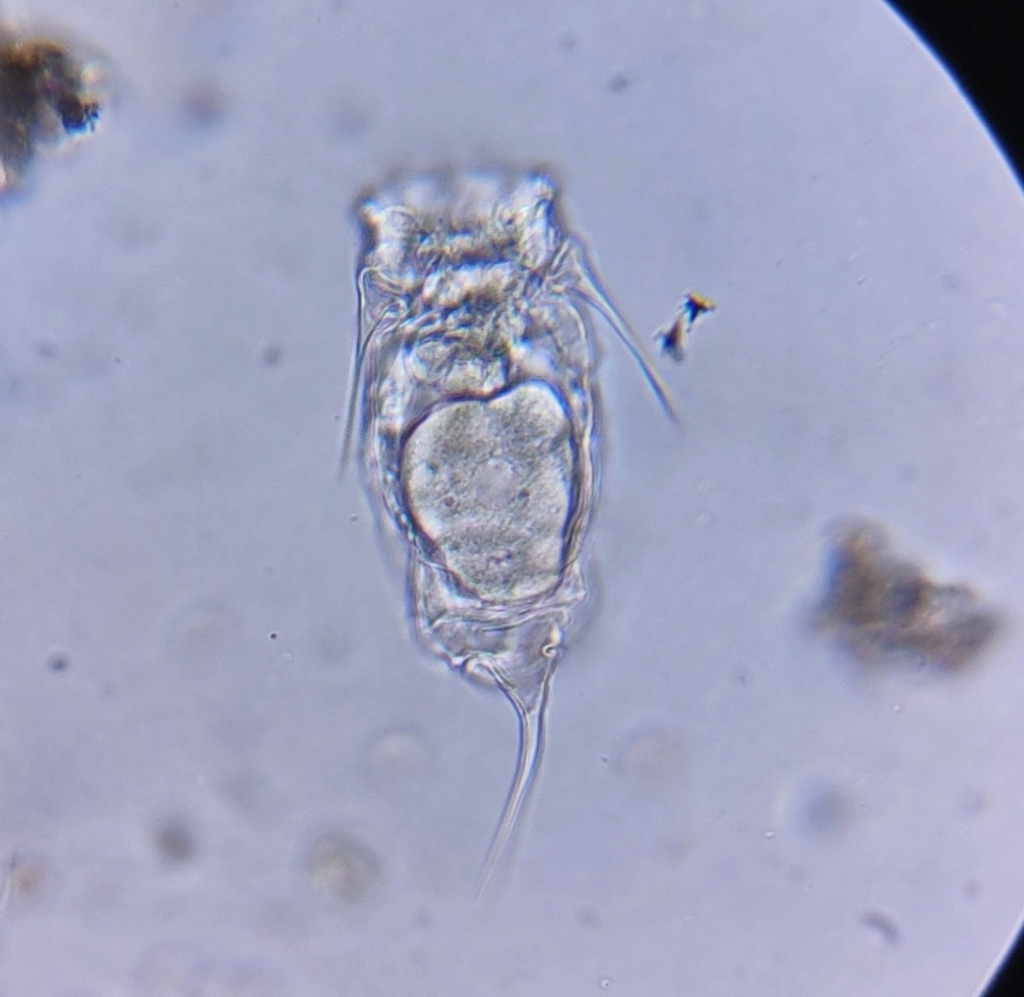
Filinia saltator is a microscopic rotifer, a member of the phylum Rotifera, and is too small to be observed with the naked eye. Like other rotifers, this species possesses a transparent or translucent body composed of a small number of cells organized into distinct anatomical regions. The organism exhibits the characteristic wheel-like corona (ciliated crown) at its anterior end, which is used for both locomotion and feeding.
The body of F. saltator is compact and symmetrical, with a clear distinction between the head region bearing the corona, a central trunk, and a posterior foot or tail-like structure. The transparency of the body allows observation of internal organs under magnification. Sexual dimorphism is minimal in rotifers; males are typically smaller and shorter-lived than females, though detailed comparative morphology for this particular species requires specialized microscopy.
This species occurs in freshwater environments worldwide, typically found in conditions ranging from slightly brackish to fully freshwater systems. Specimens are often encountered at low elevations, with recorded observations averaging around 91 metres elevation. The exact size measurements specific to F. saltator are not consistently standardized in accessible databases, though rotifers generally range from 0.1 to 0.5 millimetres in body length, making them invisible to unaided human vision.
Distribution and Habitat
Filinia saltator is found across tropical and subtropical regions, with the strongest concentrations in South America and Africa. GBIF records show the species has been documented in eight countries, with Colombia hosting the majority of observations at 21 records, followed by Burundi (7), Nigeria (4), Sudan (4), Mauritania (3), Thailand (1), Wallis and Futuna (1), and French Guiana (1).
The species occupies a narrow elevation band between 65 and 229 metres, with an average elevation of 91.2 metres, indicating a preference for lowland environments. This range reflects its association with freshwater aquatic systems in warm, low-altitude regions where water temperatures remain consistently elevated.
Seasonal patterns show clear peaks in activity during August, with secondary abundance in March and November. The limited records from other months suggest either genuine absence from these periods or reduced detection pressure rather than year-round residence. The concentration of observations in late summer and early autumn aligns with peak breeding or dispersal cycles typical of rotifers in tropical freshwater ecosystems.
Biology and Behavior
Behavior
Filinia saltator is a microscopic rotifer that inhabits freshwater environments. Despite its diminutive size, this organism exhibits distinctive locomotion patterns that inspired its common name—the term “saltator” refers to its characteristic jumping or saltatory movement through water. The animal uses its foot and toes to propel itself through aquatic spaces, alternating between periods of active movement and temporary attachment to substrates.
The species displays a planktonic lifestyle, drifting through water column layers while actively foraging for food particles. Its morphology, including a corona of cilia, enables it to generate feeding currents and navigate through microscopic environments. Like other rotifers, F. saltator responds to environmental cues such as food availability and water quality, adjusting its position and activity accordingly.
Diet
Filinia saltator is an omnivore, consuming a mixture of organic particles available in its freshwater habitat. The rotifer feeds on algae, bacteria, and detritus through its ciliated corona, which creates feeding currents that draw suspended particles toward its mouth. This generalist feeding strategy allows the species to exploit diverse food sources within its aquatic niche, adapting to seasonal and local variations in resource availability.
Reproduction
Filinia saltator reproduces through a process characteristic of many rotifer species: it employs both sexual and asexual reproduction modes depending on environmental conditions. Under favorable conditions with abundant food and stable water parameters, the species reproduces asexually through parthenogenesis, producing genetically identical female offspring without the need for males. This rapid reproductive strategy enables population growth when resources are plentiful.
When environmental stress increases—such as declining food availability, rising population density, or seasonal changes—the species shifts to sexual reproduction. Males are produced, and females produce fertilized eggs that develop thicker shells, allowing them to survive harsh conditions until favorable circumstances return. The rotifer’s flexible reproductive strategy, combined with its short generation time measured in days, makes it an important component of freshwater plankton communities.
Conservation and Threats
Filinia saltator is a rotifer—a microscopic animal belonging to the phylum Rotifera. Like many microorganisms, it has not been formally assessed by the International Union for the Conservation of Nature (IUCN) and therefore lacks an official Red List status. This absence of assessment is typical for most rotifers, which are rarely prioritized in large-scale conservation evaluations despite their ecological importance in freshwater and brackish systems worldwide.
The lack of population data, threat documentation, and conservation programs for this species reflects a broader gap in our understanding of microscopic biodiversity. Without baseline information on population size, trends, or specific threats, it is difficult to implement targeted conservation measures. However, the persistence of Filinia saltator depends indirectly on the health of the aquatic environments it inhabits—primarily freshwater systems where conditions support rotifer communities.
Threats and Environmental Factors
Like other microscopic fauna, Filinia saltator is vulnerable to broad-scale threats affecting freshwater ecosystems. Water pollution, eutrophication, habitat degradation, and climate-driven changes in water chemistry and temperature all pose risks to rotifer populations. The absence of documented specific threats in scientific literature suggests either that this species is relatively tolerant of environmental variation or that its ecology remains understudied. Microorganisms often respond rapidly to environmental stress, making them sensitive indicators of water quality, yet they rarely receive the monitoring attention afforded to larger organisms.
Conservation Efforts and Actions
No species-specific conservation programs or legal protections exist for Filinia saltator. The best pathway to safeguard this rotifer and others like it is through broader freshwater ecosystem protection and water quality management. Supporting wetland restoration, reducing nutrient runoff, and maintaining natural water bodies all contribute to healthy rotifer communities. Citizen science initiatives—including community water quality monitoring—help generate baseline data on microorganism distributions and can raise awareness of these often-overlooked organisms.
Fun Facts
Filinia saltator is a microscopic rotifer that inhabits freshwater and brackish environments worldwide. Despite its tiny size, this organism exhibits remarkable adaptations that make it a fascinating subject for aquatic ecology research.
- The name saltator refers to the rotifer’s distinctive jumping or saltatory locomotion, where it propels itself through water using powerful contractions of its muscular foot rather than relying solely on ciliary beating.
- As a member of the phylum Rotifera, Filinia saltator possesses a complete digestive system within a body barely 200 micrometers long—smaller than a grain of sand.
- This species is capable of both sexual and asexual reproduction, switching between the two strategies depending on environmental conditions such as food availability and crowding.
- Planktonic rotifers like Filinia saltator play a critical role in freshwater food webs, serving as a primary food source for fish larvae and other zooplankton predators.
- The species can enter a state of cryptobiosis, dramatically slowing its metabolism when environmental conditions become unfavorable, allowing it to survive desiccation and extreme temperatures.
- With a generation time of just 3–4 days under optimal conditions, Filinia saltator populations can explode rapidly, making it useful for assessing water quality and ecosystem health in freshwater systems.
Ecology
Diet
Behavior
Related Species
Was this profile helpful?