
Magnoliopsida · Asterales
Purple Coneflower
Echinacea purpurea
Also known as: Eastern Purple Coneflower, Eastern purple coneflower, Purple-coneflower, broad-leaved purple coneflower, eastern purple coneflower
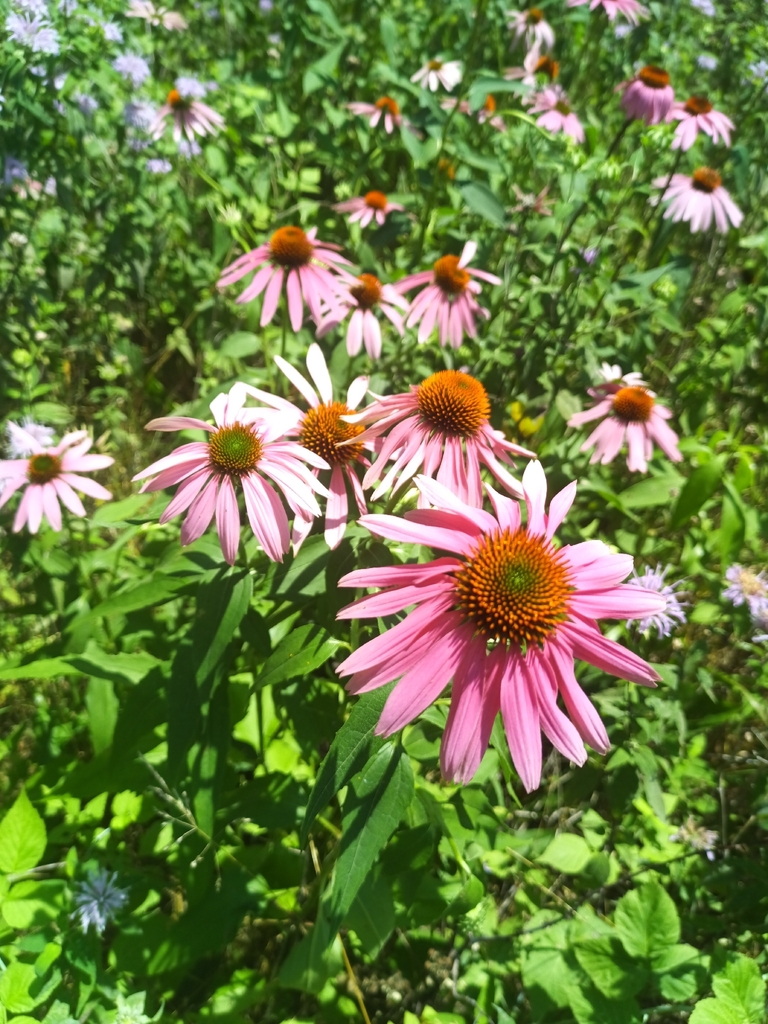
© no rights reserved · iNaturalist · CC0 1.0
Scientific Classification & Quick Facts
Classification
Known For
Detailed measurements for this species are still being verified.
Purple coneflower stands as one of North America’s most recognizable wildflowers, its distinctive magenta petals radiating outward from a spiky orange-brown disc that rises like a tiny crown above the meadow. Echinacea purpurea has earned its place in gardens, medicine cabinets, and ecological restoration projects across five countries, yet it remains understudied in terms of formal conservation assessment. The species belongs to the daisy family (Asteraceae), a lineage of flowering plants renowned for their composite flower heads and robust ecological success.
What makes E. purpurea especially compelling is its capacity to bridge two worlds: it thrives as a drought-tolerant perennial in contemporary gardens and landscape designs, while also sustaining native pollinators—particularly bees and butterflies—that depend on its abundant nectar and pollen. Its popularity in traditional medicine, particularly for immune support, has spawned a global industry, yet the plant’s true ecological role and genetic diversity in its native range remain areas ripe for deeper investigation. Understanding this species illuminates broader questions about how native plants adapt to cultivation, how human use shapes plant distribution, and what conservation strategies best serve both wild and domesticated populations.
Identification and Appearance
Echinacea purpurea is a herbaceous perennial that grows 60–120 centimetres tall and reaches 25 centimetres in width at maturity. The plant’s most distinctive feature is its cone-shaped flowering heads, which display purple ray florets (the outer petals) radiating outward from a spiky, golden-orange central cone. Individual flowers within the flower head are hermaphroditic, containing both male and female reproductive organs.
Leaves and Stems
The alternate leaves are borne on petioles (leaf stalks) ranging from 0 to 17 centimetres long. Leaf blades are oval to lanceolate in shape, measuring 5–30 centimetres in length and 5–12 centimetres in width. The leaf margins are tight and finely textured. Stems are sturdy and generally unbranched near the base, supporting the characteristic upright posture of the plant.
Flowers and Blooming
Purple coneflower produces its distinctive flowering heads throughout summer into autumn, with the exact blooming period dependent on local climate conditions. Cone-shaped flower heads are typically purple in wild populations, though cultivated varieties occasionally exhibit pink or white colouration. The plant is pollinated by butterflies and bees, which are attracted to the prominent central cone and accessible ray florets. There is no sexual dimorphism; all plants produce hermaphroditic flowers capable of reproduction.
Distribution and Habitat
Echinacea purpurea is predominantly recorded in North America, with the vast majority of observations concentrated in the United States (289 records). The species also occurs in Belgium (6 records), Canada (2 records), Sweden (2 records), and the United Kingdom (1 record), reflecting both its native range and widespread cultivation as an ornamental and medicinal plant across temperate regions.
Elevation data for this species are not currently available in occurrence records. The plant thrives in open, sunny locations with well-drained soils, typical of native prairie habitats and cultivated gardens throughout its range.
Seasonal Presence
Purple coneflower exhibits a pronounced seasonal flowering pattern, with peak activity in June (208 records). Flowering extends from April through early June, with observations declining sharply after mid-June. This concentrated bloom window reflects the plant’s typical summer flowering phenology in temperate climates.
Growth and Cultivation
Growth
Echinacea purpurea is a robust herbaceous perennial that forms dense clumps of upright stems. The plant typically reaches 60–120 centimetres in height, depending on growing conditions and cultivar selection. Leaves are lance-shaped and coarse-textured, arising alternately along sturdy, minimally branched stems. The root system is deep and fibrous, which contributes to the plant’s resilience in variable conditions.
Flowering
Purple coneflower produces distinctive composite flower heads composed of drooping ray florets in shades of purple, pink, or white surrounding a prominent orange-brown central disk. Flowering occurs over an extended period through summer and into autumn, with individual plants producing numerous blooms in succession. After pollination, the disk develops into a seed head that persists well into winter, providing food for finches and other seed-eating birds while adding architectural interest to the garden.
Cultivation
Purple coneflower thrives in full sun and performs best in well-draining soil of moderate fertility. The species tolerates a wide range of soil conditions and is notably drought-tolerant once established, making it suitable for gardens with limited water availability. Plants require minimal supplemental watering in temperate climates and benefit from deadheading spent flowers to encourage continuous bloom production.
Propagation occurs readily from seed sown in spring or autumn, with seedlings typically flowering in their second year. Established plants can be divided in spring or autumn to rejuvenate older clumps or increase stock. Echinacea purpurea is winter-hardy across most temperate regions and requires no special winter protection. Fertiliser is generally unnecessary; excessive nitrogen promotes vegetative growth at the expense of flowering.
Conservation and Threats
Echinacea purpurea, the purple coneflower, does not currently hold a formal IUCN Red List conservation status. This reflects the species’ widespread distribution across North America and its successful establishment in cultivation worldwide. The absence of an official status indicates that the species is not facing the level of threat that would warrant listing as Vulnerable, Endangered, or Critically Endangered.
Threats
While Echinacea purpurea is not formally threatened, the species faces pressures common to native prairie plants. Habitat loss through agricultural conversion and urban development affects wild populations, particularly in its native Midwestern range. Collection for the horticulture and herbal medicine trades can also impact wild stands if harvesting is unregulated or excessive. In cultivation, the species is susceptible to root rot in poorly drained soils and powdery mildew in humid conditions, though these are horticultural rather than conservation concerns.
Conservation Efforts
Purple coneflower benefits indirectly from broader prairie restoration programmes across North America, where native plant communities are being re-established on former agricultural land. The species’ popularity in gardens and native plant landscaping has inadvertently created a buffer against extinction risk, as it is maintained in extensive cultivation. Seed companies and botanical institutions hold germplasm reserves, ensuring genetic diversity is preserved should wild populations face unexpected decline.
Cultural Significance
Purple Coneflower has no documented cultural notes available in the current dataset. While the species may hold significance in traditional medicine, gardening practices, or regional folklore, these associations cannot be confirmed from the sources provided.
To develop a comprehensive cultural profile for Echinacea purpurea, additional ethnobotanical records, historical documentation, or community-contributed observations would be needed. If you have verified information about the cultural use or symbolism of this species, please contribute it to enhance this section.
Fun Facts
- Ancient Native American medicine: Echinacea purpurea was used by indigenous peoples of the Great Plains and eastern woodlands for centuries to treat infections and wounds, making it one of the most important medicinal plants in traditional North American herbalism.
- A daisy-family member with a dual structure: Despite its common name, the purple coneflower belongs to the Asteraceae family (the same family as daisies and sunflowers), and its distinctive spiky orange-red cone is actually composed of hundreds of tiny disk florets surrounded by purple ray florets.
- Geographic stronghold in river valleys: While native across much of the eastern and midwestern United States and Ontario, Canada, the species is most abundant in the Ozarks, Mississippi Valley, and Ohio Valley regions, where it thrives in the specific soil and climate conditions of these historic river systems.
- Pioneer of disturbed ground: Echinacea purpurea naturally colonizes dry open woods, prairies, and barrens—often appearing in areas recovering from fire or grazing—where its deep taproots help stabilize soil while its drought tolerance allows it to outcompete other species.
- A pollinator magnet with specialist appeal: The plant’s nectar and pollen attract a broad range of insects, but certain bee species and butterfly genera show strong preference for it, making it a keystone plant for maintaining pollinator populations in native plant gardens.
- Self-sowing persistence: Purple coneflowers produce abundant seeds that readily self-sow in favorable conditions, allowing a single planting to establish naturalized drifts across a landscape over several seasons without human intervention.
Photo Gallery
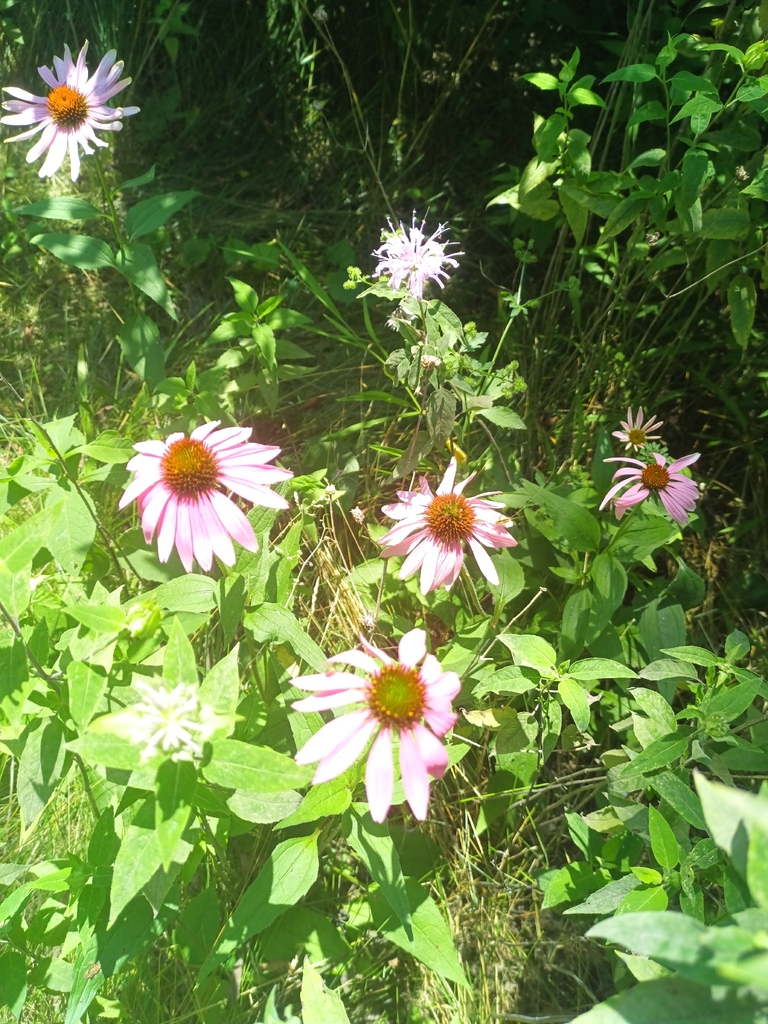
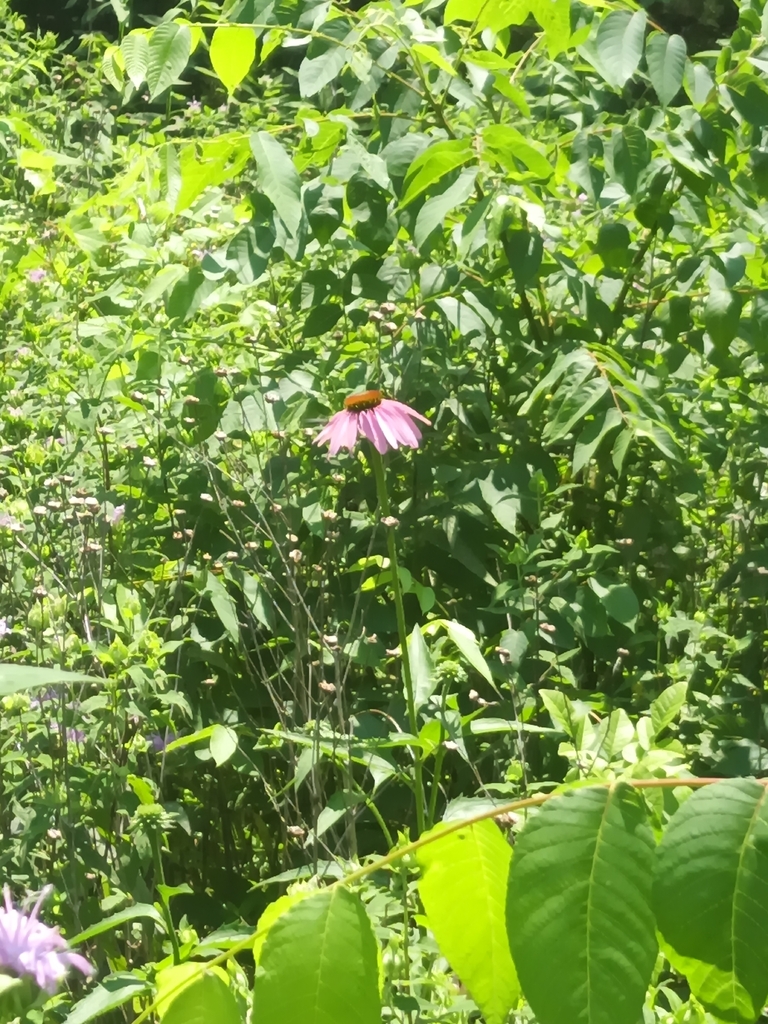
no rights reserved · CC0 1.0
Related Species
Was this profile helpful?