
Magnoliopsida · Rosales
Wild Strawberry
Fragaria vesca
Also known as: Alpine Strawberry, European Strawberry, Hillside Strawberry
© no rights reserved · iNaturalist · CC0 1.0
Scientific Classification & Quick Facts
Classification
Known For
Detailed measurements for this species are still being verified.
Fragaria vesca, the wild strawberry, is a modest herbaceous perennial that has captivated human cultures across the temperate world for millennia. Found across at least 21 countries spanning Europe, Asia, and North America, this diminutive member of the Rosaceae family produces fruits a fraction of the size of cultivated strawberries—yet packs an intensity of flavor that commercial varieties rarely achieve. Despite its small stature and delicate appearance, the wild strawberry has proven remarkably resilient, thriving in meadows, woodland edges, and disturbed ground from lowland valleys to montane slopes.
Its conservation status remains uncertain according to the IUCN, reflecting both its widespread distribution and the lack of systematic monitoring across its global range. Yet this very commonness masks an ecological and historical significance worth exploring: wild strawberries anchor food webs in temperate ecosystems, have been harvested and revered in folk traditions for centuries, and continue to offer unexpected insights into plant breeding and adaptation. What appears at first glance as a simple woodland berry reveals itself, on closer examination, as a keystone of both natural and cultural history.
Identification and Appearance
Flowers and Inflorescence
Fragaria vesca produces clusters of five to eleven flowers, each with soft, delicate white petals. These flowers emerge on green, hairy stalks that typically reach 3–15 centimetres in height and rise noticeably above the foliage, making them visible to pollinators. The flower stalks are fresh and tender, covered in fine hairs that give them a soft texture.
Leaves and Growth Pattern
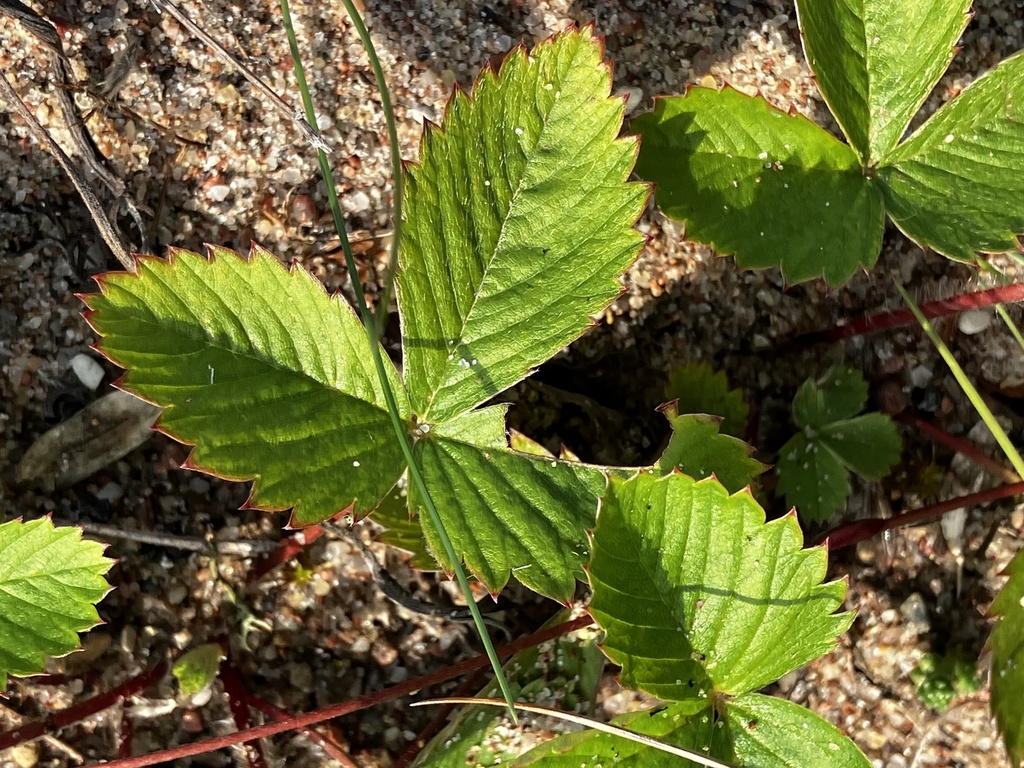
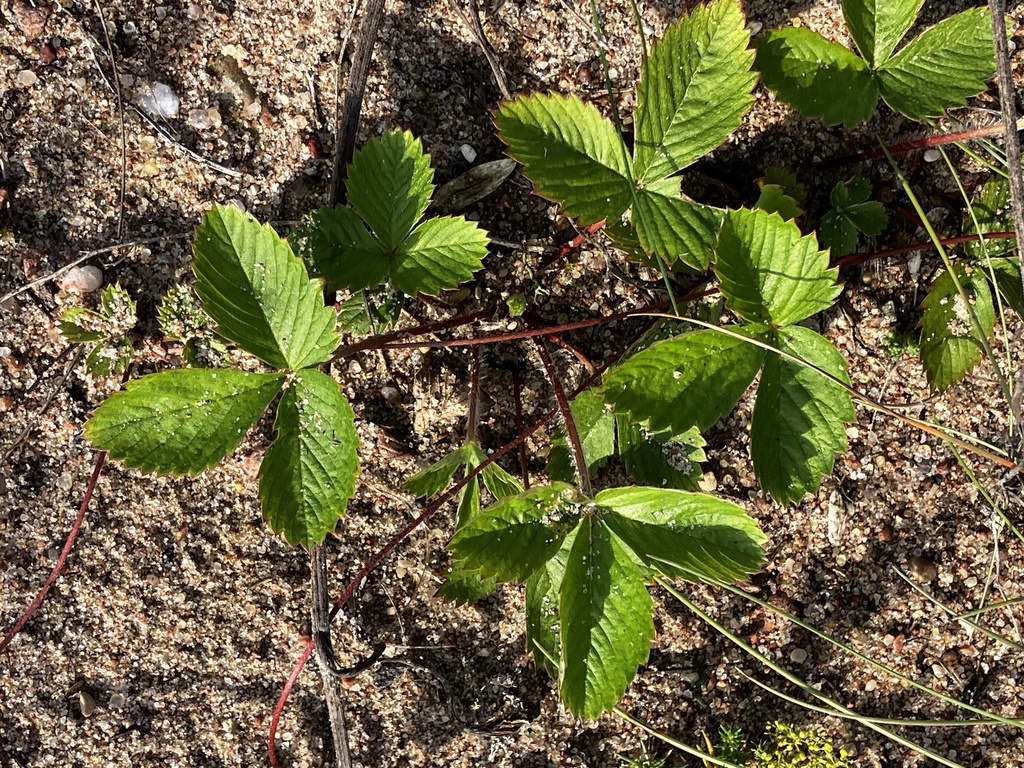
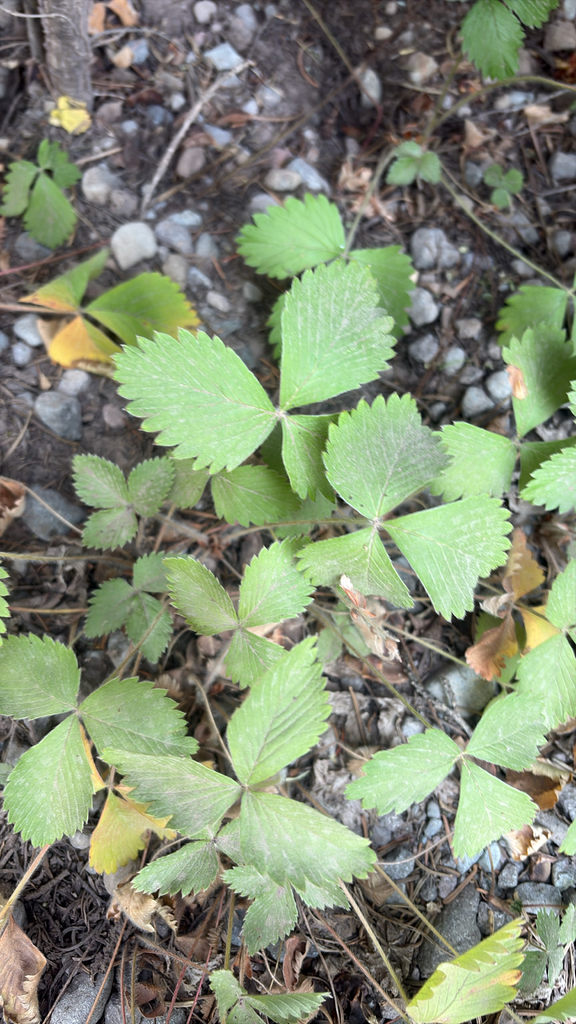
The leaves are characteristically trifoliate—arranged in groups of three leaflets—with light-green colouration and distinctly toothed margins. This three-part leaf structure is a reliable field mark that helps distinguish Fragaria vesca from other herbaceous plants in its range. The plant spreads primarily through runners, or stolons, which root at nodes and establish new rosettes at distance from the parent plant, creating dense colonies over time.
Reproduction and Establishment
While vegetative spread via stolons dominates the plant’s colonization strategy, Fragaria vesca also produces viable seeds capable of establishing entirely new populations in suitable habitats. This dual reproductive capacity—both asexual spread and sexual reproduction—contributes to the species’ flexibility and persistence across varied environments, particularly at elevations around 580 metres where it is commonly encountered.
Distribution and Habitat
Fragaria vesca occurs across 21 countries, with records concentrated in temperate and boreal regions of the Northern Hemisphere. The United States dominates occurrence records with 128 documented observations, followed by the Netherlands (35), Great Britain (33), Sweden (19), and Austria (18). Smaller populations are scattered across France, Germany, Canada, Norway, and Portugal, reflecting its broad but discontinuous range across Europe and North America.
The species occupies elevations between 312 and 974 metres, with an average of 580 metres. This relatively narrow vertical range suggests a preference for lowland and mid-elevation habitats, away from high mountain zones. Wild strawberry thrives in open woodlands, woodland margins, grasslands, and disturbed areas where light penetrates to the forest floor—environments that provide the moderate shade and moist soil conditions the plant requires.
The strong January peak in recorded observations aligns with the plant’s fruiting season in temperate regions, when ripe berries become visible and accessible to foragers and naturalists. The absence of records during other months does not indicate the species is dormant or absent—rather, it suggests that observer effort concentrates on fruit-bearing periods, when the plant is most readily identified and documented.
Growth and Cultivation
Growth
Fragaria vesca is a low-growing herbaceous perennial that spreads via stolons (runners) along the ground. The plant typically reaches 10–30 centimetres in height, forming dense mats of trifoliate leaves with serrated edges. It establishes easily from seed and expands vegetatively through rooted runners, making it an effective groundcover in suitable conditions. Mature plants produce numerous daughter rosettes that can be separated and transplanted to establish new colonies.
Flowering and Fruiting
Wild strawberry produces small white or pale pink flowers throughout spring and early summer, typically from April to June in temperate regions. Each flower is followed by a small, cone-shaped fruit (2–8 millimetres in diameter) that ripens red and remains fragrant. The fruits are structurally true strawberries, with the characteristic aggregate structure of small seeds embedded in the flesh. Plants often produce successive flushes of flowers and fruit across the growing season, extending the harvest window.
Cultivation
Wild strawberry thrives in open, sunny locations, though it tolerates partial shade reasonably well. The plant is adaptable to a wide range of soil types but prefers well-draining conditions to prevent rot. It establishes readily from seed sown in spring or autumn, and seeds benefit from a period of cold stratification (moist chilling) to break dormancy. Established plants are relatively hardy in cool to temperate climates and are commonly found from lowland meadows to mountain grasslands across the Northern Hemisphere.
Once established, Fragaria vesca requires minimal maintenance. Water moderately during dry spells, particularly in the first growing season; mature plants are fairly drought-tolerant once their root systems develop. The species responds well to occasional deadheading of flowers to encourage continued blooming, though allowing some flowers to fruit is desirable if seed production is intended. Its spreading habit makes it useful for stabilising banks and filling gaps in perennial borders, and it can also be grown in containers and hanging baskets where its trailing runners create an attractive display.
Conservation and Threats
Fragaria vesca, the wild strawberry, has not been formally assessed by the International Union for Conservation of Nature (IUCN) and therefore lacks a Red List status. This absence of formal assessment reflects the species’ widespread distribution across temperate regions of Europe, Asia, and North America, where it remains locally common in suitable habitats. The lack of urgent conservation designation does not indicate invulnerability, however; like many wild plant species, it faces a suite of environmental pressures that warrant attention.
Threats
Wild strawberry populations are affected primarily by habitat loss and fragmentation. Agricultural intensification, particularly the conversion of grasslands, woodland edges, and semi-natural habitats to monoculture farming, eliminates the loose, unmanaged ground cover where this species thrives. Urban development and the tidying of verges and field margins further reduce available niches. These changes are compounded by the application of broad-spectrum herbicides, which suppress wild strawberry alongside weeds, and by the removal of hedgerows and scrubland that provide microhabitats.
Secondary pressures include competition from invasive species, particularly aggressive non-native plants that dominate disturbed ground and shade out low-growing strawberry plants. Climate variability—shifts in growing season length and moisture availability—may also affect fruiting success and seedling establishment in marginal populations, though the species’ adaptability has allowed it to persist through past climatic fluctuations.
Conservation Efforts
No coordinated international conservation programme specifically targets Fragaria vesca. However, the species benefits indirectly from habitat protection schemes across Europe, particularly designations of special areas for conservation within the Natura 2000 network and from agri-environmental stewardship programmes that encourage the retention of field margins and hedgerows. In regions where wild strawberry has cultural or culinary significance, traditional management practices—such as coppicing woodlands and rotational grazing—help maintain the mosaic of open and semi-shaded habitats where it grows.
Cultural Significance
Fragaria vesca, the wild strawberry, has occupied a modest but persistent place in European cultural memory, though detailed records of its symbolic or mythological significance are sparse. Unlike cultivated strawberries, which became prominent in aristocratic gardens and cuisine during the Renaissance, the wild form remained largely a forager’s prize—encountered in meadows and woodlands rather than cultivated for display or elaborate preparation. Its small size and delicate flavor made it prized for its genuine scarcity rather than abundance, lending it a certain charm in folk tradition.
In medieval and early modern European contexts, strawberries generally (wild and cultivated alike) carried associations with virtue and purity, appearing in religious art and heraldic symbolism. The wild strawberry’s presence in natural settings made it a symbol of humble bounty and the earth’s simple gifts. However, systematic documentation of Fragaria vesca specifically in mythology, folklore narratives, or medicinal traditions from antiquity is limited. The species appears more frequently in botanical and horticultural literature than in literary or legendary sources, suggesting its cultural significance was practical—as food and mild medicine—rather than deeply embedded in narrative traditions. Modern interest in wild strawberries has grown with foraging and heritage food movements, but this represents contemporary revival rather than unbroken cultural continuity.
Fun Facts
- Fragaria vesca belongs to the rose family (Rosaceae), not a separate berry family, making it a close botanical relative of roses, almonds, and apples. This family connection reveals that strawberries are far more chemically and structurally aligned with ornamental flowers than most people assume.
- Wild strawberries are perennial herbaceous plants, meaning they return year after year without developing woody stems or trunk tissue. This soft-bodied persistence allows them to thrive in woodland environments across the Northern Hemisphere for multiple growing seasons.
- Fragaria vesca naturally colonises much of the Northern Hemisphere without human cultivation, an exceptionally wide native range for a fruit-bearing plant. Few berries spread so successfully across diverse climates and ecosystems on their own.
- The strawberry’s fleshy red fruit is botanically unique: it is not a true berry at all, but rather an accessory fruit where the actual seeds sit on the outside surface. The red flesh develops from the flower’s receptacle rather than from the ovary, making the visible “fruit” an elaborate botanical disguise.
- Wild strawberry plants reproduce both sexually through seeds and vegetatively by runners—horizontal stems that take root and form new plants. A single strawberry plant can establish an entire clone colony without producing a single seed.
- The tiny seeds embedded on the strawberry’s surface number in the hundreds, and each seed can germinate independently to establish a new plant. This multi-seed strategy maximises the plant’s chances of successful reproduction across variable growing conditions.
Ecology
Growing Conditions
Edibility
Photo Gallery
no rights reserved · CC0 1.0
Related Species
Was this profile helpful?