
Magnoliopsida · Rosales
Wild Cherry
Prunus avium
Least ConcernAlso known as: Bird Cherry, Gean, Gean Cherry, Gean, Wild Cherry
© Caleb Catto · iNaturalist · CC BY 4.0
Scientific Classification & Quick Facts
Classification
Known For
Detailed measurements for this species are still being verified.
Prunus avium, the wild cherry, is a deciduous tree that transforms landscapes across the temperate Northern Hemisphere with delicate white blossoms in spring and glossy red fruit in summer. Native to Europe, western Asia, and North Africa, this species has naturalized across at least 21 countries worldwide, thriving equally well in ancient woodlands and along disturbed roadsides. Listed as Least Concern by the IUCN, wild cherry demonstrates remarkable ecological resilience and cultural significance—from its role as a keystone food source for wildlife to its status as the ancestor of most cultivated cherry varieties grown today.
What makes wild cherry particularly compelling is its dual nature: it functions simultaneously as both a generous provider for forest communities and an aggressive colonizer of disturbed ground, capable of transforming abandoned fields and neglected land through rapid growth and prolific seed production. Whether encountered as a towering woodland giant exceeding 20 metres in height or as a pioneer species pioneering regeneration on cleared sites, wild cherry exemplifies the adaptive capacity that has sustained this species for millennia.
Identification and Appearance
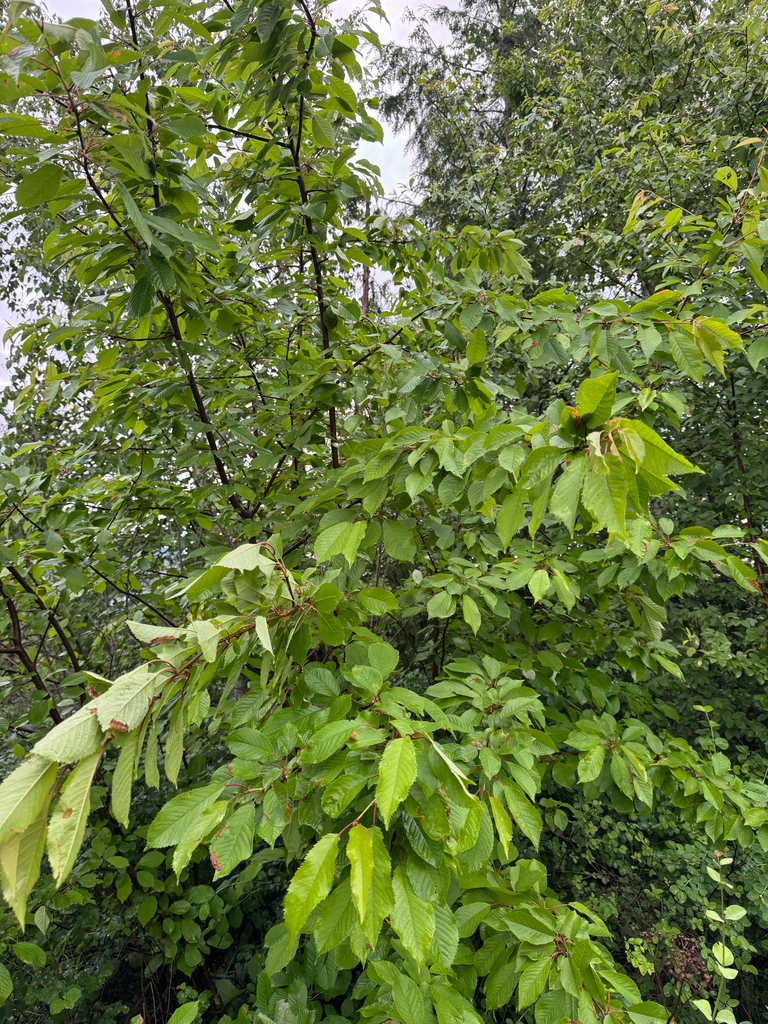
Prunus avium is a deciduous tree that reaches 5 to 25 metres in height, with a trunk diameter up to 1.5 metres. Young specimens display strong apical dominance, characterized by a straight trunk and symmetrical conical crown. As trees age, the crown becomes rounded or irregular in shape.
Bark and Stem Features
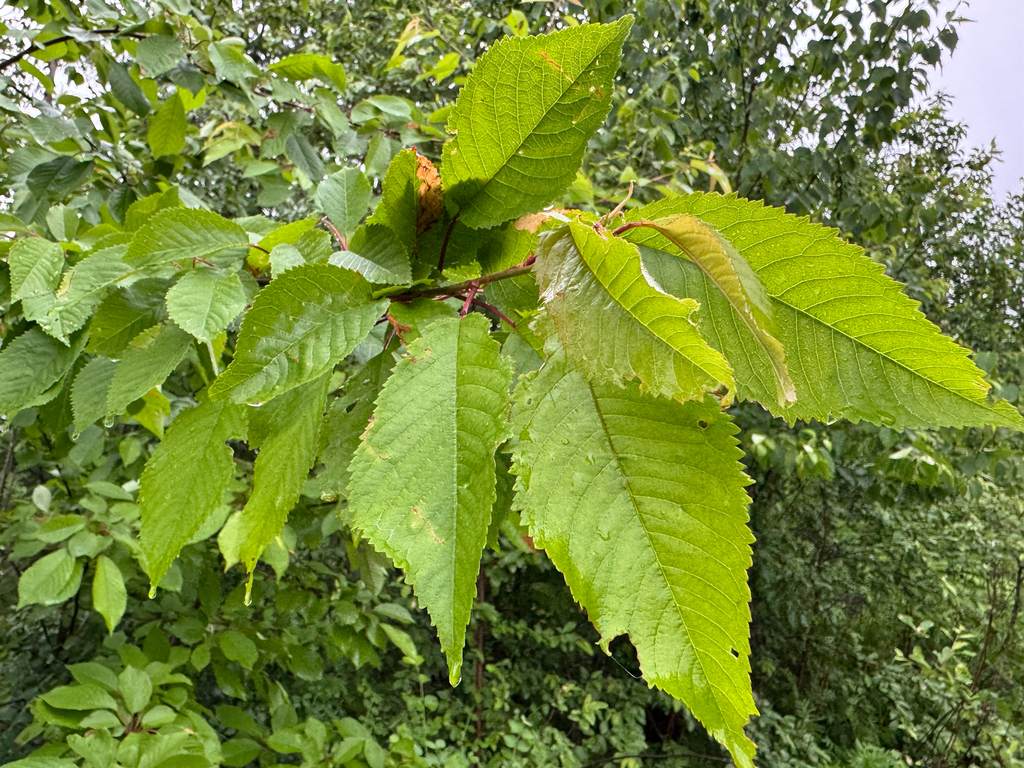
The bark is smooth and distinctly reddish in colour, a diagnostic feature that distinguishes wild cherry from many other Prunus species. The petioles (leaf stalks) bear conspicuous red extrafloral nectaries—small glands that produce nectar to attract beneficial insects. These glands are particularly visible on the upper portion of the petiole and serve as a reliable identification mark in the field.
Crown Development
Young trees present an elegant silhouette with their symmetrical conical form and strong vertical growth pattern. However, mature and older specimens develop more complex crown architecture, becoming rounded or increasingly irregular as lateral branches expand and the central leader diminishes in dominance. This transformation reflects the tree’s transition from youthful vigour to structural maturity.
Distribution and Habitat
Prunus avium is predominantly distributed across northern and central Europe, with the highest concentration of records in the Netherlands (127 observations), Germany (41), and Sweden (31). The species is also well-established in Austria, France, Great Britain, and Switzerland. Beyond Europe, it has naturalized in small numbers in North America, including the United States and Canada. Across all documented locations, the species spans 21 countries, indicating a wide but primarily temperate range.
Elevational range data shows that wild cherry occupies a moderate altitude zone, with records concentrated between 452.5 and 690 metres, averaging around 574 metres above sea level. This preference suggests the species thrives in lowland to submontane environments where growing seasons are sufficiently long and temperatures remain compatible with fruit development and seed maturation.
Seasonal observation patterns reveal a pronounced peak in March, with 149 recorded observations during this month. January and February also show notable activity (96 and 55 observations respectively), while records are absent from April through December. This dramatic seasonal clustering reflects the species’ flowering and early fruiting phenology in temperate climates; spring emergence and blossom production concentrate observer attention, whereas later stages of fruit ripening and seed dispersal generate far fewer documented sightings.
Growth and Cultivation
Growth
Prunus avium, commonly called wild cherry or sweet cherry, is a deciduous tree that grows as a single trunk with an upright, columnar crown. Mature specimens typically reach 15–25 metres in height, though some individuals can exceed 30 metres in optimal conditions. The bark is smooth and reddish-brown when young, darkening and becoming fissured with age. The canopy develops a dense, pyramidal form in youth before becoming more rounded and spreading in maturity.
The species produces a substantial root system that extends laterally and penetrates deeply into soil. Young trees establish relatively quickly when planted as nursery stock, though specific growth rate data varies with climate and site conditions. In temperate regions across Europe, Asia Minor, and North Africa—where the species is native—wild cherry demonstrates vigorous establishment in well-drained soils.
Flowering and Fruiting
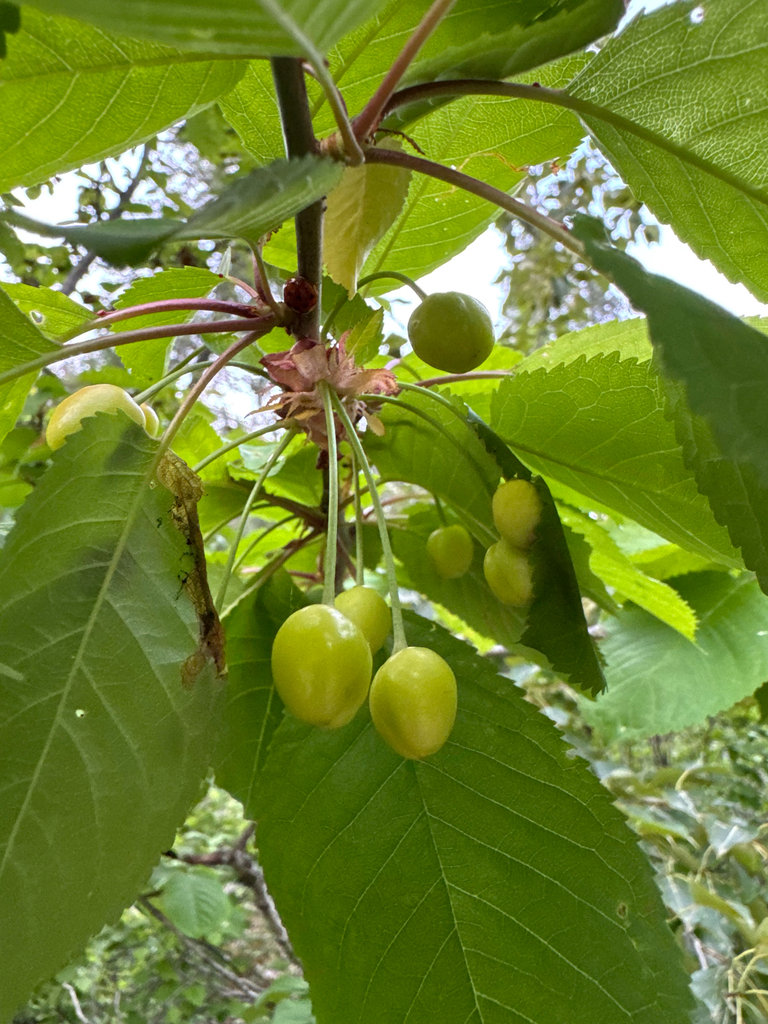
Wild cherry produces abundant white or pale pink flowers arranged in clusters that emerge on the branches before or as the leaves unfold in spring. The blossoms attract pollinating insects and are followed by small drupes—the characteristic fruits—that ripen from red to dark purple or black as the season progresses. These fruits contain a single stone and are consumed readily by birds and other wildlife, which facilitates seed dispersal across landscapes.
The flowering and fruiting cycle is typical of temperate deciduous species. Flowers appear in late winter to early spring depending on local climate, and fruits mature through summer. Seed viability is moderate, and germination is improved by cold stratification over winter, a natural process that occurs when seeds remain in soil through freezing temperatures.
Cultivation
Wild cherry thrives in full sun to partial shade and prefers well-drained soils ranging from neutral to slightly alkaline pH. The species tolerates a wide range of soil textures but performs poorly in waterlogged or severely compacted ground. While establishing quickly in temperate climates, it is less suitable for arid regions without supplemental irrigation during dry periods. The tree develops a deep, spreading root system that anchors it firmly against wind damage in exposed sites.
Pruning is minimal once the tree is established; young trees benefit from removal of crossing or damaged branches to encourage a strong central leader. Wild cherry can be propagated from seed (after cold stratification) or from cuttings, though seed-grown trees are more commonly produced in nurseries. The species is relatively pest-resistant but may occasionally encounter cherry leaf spot or aphids in humid climates. Formal hardiness data for this species is not universally standardized, but it is well-adapted to cool and temperate zones across the Northern Hemisphere where it has naturalized extensively.
Conservation and Threats
Prunus avium, the Wild Cherry, is listed as Least Concern on the IUCN Red List. This designation reflects the species’ wide geographic distribution across Europe and western Asia, its ability to establish itself in diverse habitats, and its current population trajectory. The Least Concern status indicates that the species faces no immediate risk of extinction and does not meet the criteria for more threatened categories.
The population trend for Wild Cherry is increasing in many regions. This growth is driven partly by the species’ capacity to colonize disturbed areas, abandoned agricultural land, and woodland margins. Its prolific seed production and bird-dispersal mechanisms enable rapid spread, particularly where human land use has created new opportunities for establishment. In some areas, this expansion has made it a conspicuous component of regenerating habitats.
Threats
Wild Cherry faces no documented major threats at the global scale. Unlike many tree species, it is not subject to intensive commercial logging, large-scale habitat destruction in its native range, or significant pest outbreaks that would threaten population viability. In its native European range, the species remains abundant in woodlands, hedgerows, and riparian zones. Regional pressures such as forest management practices, agricultural intensification, and climate change may affect local populations, but these do not constitute range-wide threats warranting a higher conservation status.
Conservation Efforts and Legal Protections
Wild Cherry benefits from its integration into protected woodland landscapes across Europe, though it is not the subject of dedicated conservation programmes. In many countries, it is protected under general forestry regulations and wildlife protection laws that safeguard native tree species and their habitats. The species is widely cultivated in parks, gardens, and agroforestry systems, which has reinforced its resilience and human cultural value. Its role as a food source for wildlife and its aesthetic appeal have secured its place in land management priorities across much of its range.
Cultural Significance
Prunus avium, the wild cherry tree, occupies a significant place in human culture across multiple continents. Its aesthetic appeal, symbolic weight, and practical applications have woven it into folklore, art, literature, and daily life. The tree’s prominence reflects both its visual beauty and its utility as a source of food, medicine, and material for cultural rituals.
In European traditions, the wild cherry features in customs and observances that date back centuries. Czechoslovakian practice, for instance, incorporates cherry branches into St. Day celebrations, embedding the tree within seasonal and religious customs. Beyond folklore, the species has held steady importance in traditional medicine systems. Historically, various parts of the cherry tree—bark, leaves, flowers, and seeds—have been employed to treat coughs and digestive ailments. In Ayurveda, documented references to Prunus avium (known as Elavālukaṃ) appear in 11th-century Kerala palm-leaf manuscripts, where physicians including Vagbhata praised its capacity to balance pitta conditions affecting the liver and skin. The tree’s medicinal scope extends further: traditional preparations address nephritis, cystitis, gallstones, and renal lithiasis, underscoring its role as a therapeutic resource across cultures.
The ethnopharmacological significance of wild cherry remains well documented in modern studies examining its fruits, leaves, and stems. This convergence of culinary, medicinal, and symbolic uses has ensured that Prunus avium retains cultural relevance from historical times into the present day, valued equally for its cherries and for the healing traditions built around it.
Fun Facts
Prunus avium, the wild cherry, holds a special place in both nature and human agriculture. Native to the woodlands and hillsides of western Eurasia, this flowering tree has spread across the globe and shaped the development of one of our most beloved cultivated fruits.
- Wild cherry is the wild ancestor of the modern sweet cherry we enjoy today—and also the parent species of sour cherry (Prunus cerasus), a hybrid that arose when wild cherry crossed with another Prunus species thousands of years ago.
- As a member of the Rosaceae family alongside apples, pears, and almonds, wild cherry shares the characteristic five-petaled flowers and fleshy fruit typical of this economically important plant family.
- The species has become naturalized far beyond its native range in western Eurasia, establishing wild populations on multiple continents through both deliberate planting and accidental dispersal by birds and humans.
- Wild cherry trees can live for over 100 years and reach heights of 15–25 metres, making them substantial forest trees rather than shrubs—their size and longevity allowing them to tower above competing vegetation.
- The fruit of wild cherry is smaller and more bitter than cultivated varieties, yet it remains fully edible and has been harvested and fermented by humans for millennia, particularly in traditional European liqueurs.
- Birds are the primary dispersers of wild cherry seeds; they consume the fruit and transport the pits across vast distances, which explains much of the species’ successful colonization of new territories.
- Wild cherry wood is valued by woodworkers and furniture makers for its warm reddish-brown colour and fine grain, adding economic value to trees that also provide ecological benefits through their flowers and fruit.
Ecology
Growing Conditions
Edibility
Conservation Status
LC (Least Concern) · NT · VU · EN · CR · EW · EX
Photo Gallery
Caleb Catto · CC BY 4.0
Related Species
Was this profile helpful?