
Magnoliopsida · Caryophyllales
Venus Flytrap
Dionaea muscipula
VulnerableAlso known as: Venus fly trap, Venus fly-trap, Venus' flytrap, Venus's flytrap
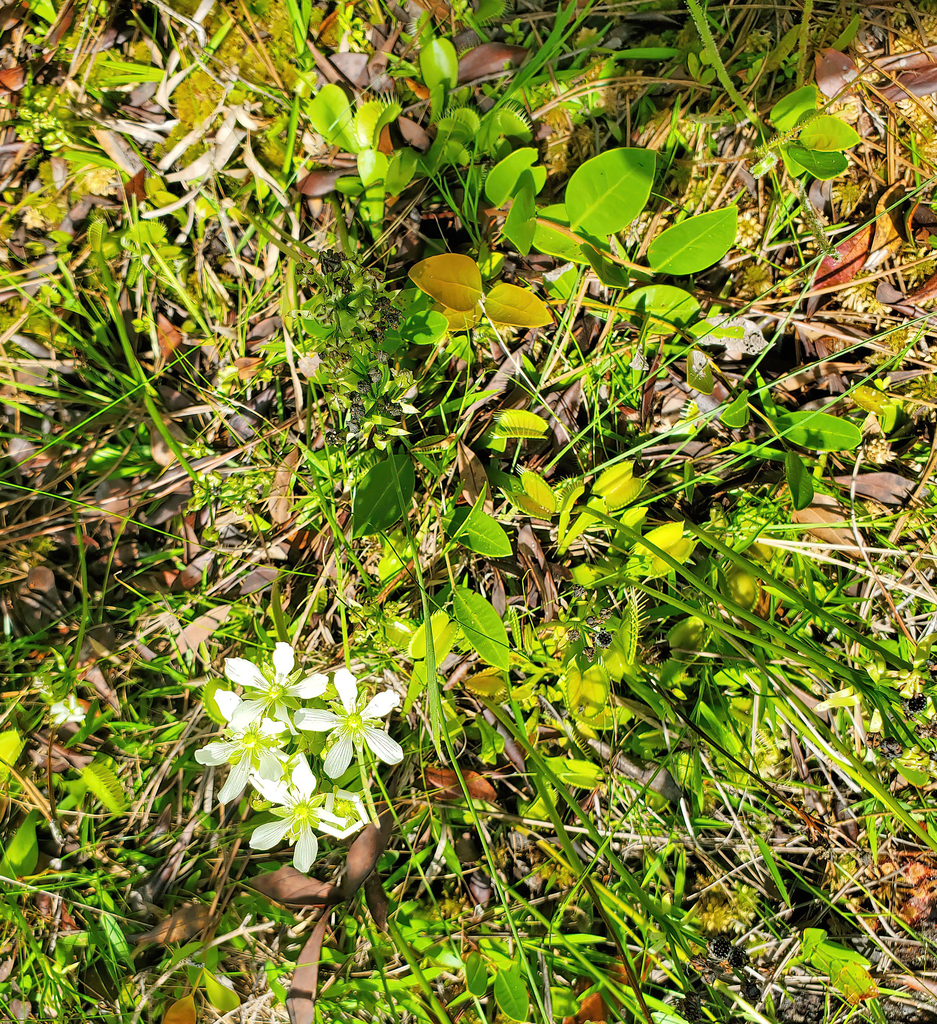
© Steve Collins · iNaturalist
Scientific Classification & Quick Facts
Classification
Known For
Detailed measurements for this species are still being verified.
The Venus Flytrap is a carnivorous plant that snaps shut on unsuspecting insects in less than a tenth of a second—a feat of predatory precision unmatched by any other flowering plant. Found naturally only in the pocosins and savannas of North Carolina, it has become one of the most recognizable plants on Earth, captivating gardeners and scientists alike for centuries. Despite its global fame, this botanical assassin remains confined to a single country, making it a conservation priority of considerable importance.
Listed as Vulnerable by the IUCN, the species faces mounting pressure from habitat loss, illegal collection, and the spread of a devastating fungal pathogen. Its restricted range and specialized habitat requirements make it particularly fragile—any significant disturbance to its native Carolinian ecosystem poses an existential threat. Understanding the Venus Flytrap’s biology and ecological needs is essential not only for its survival but for protecting the unique wetland communities upon which it depends.
Identification and Appearance
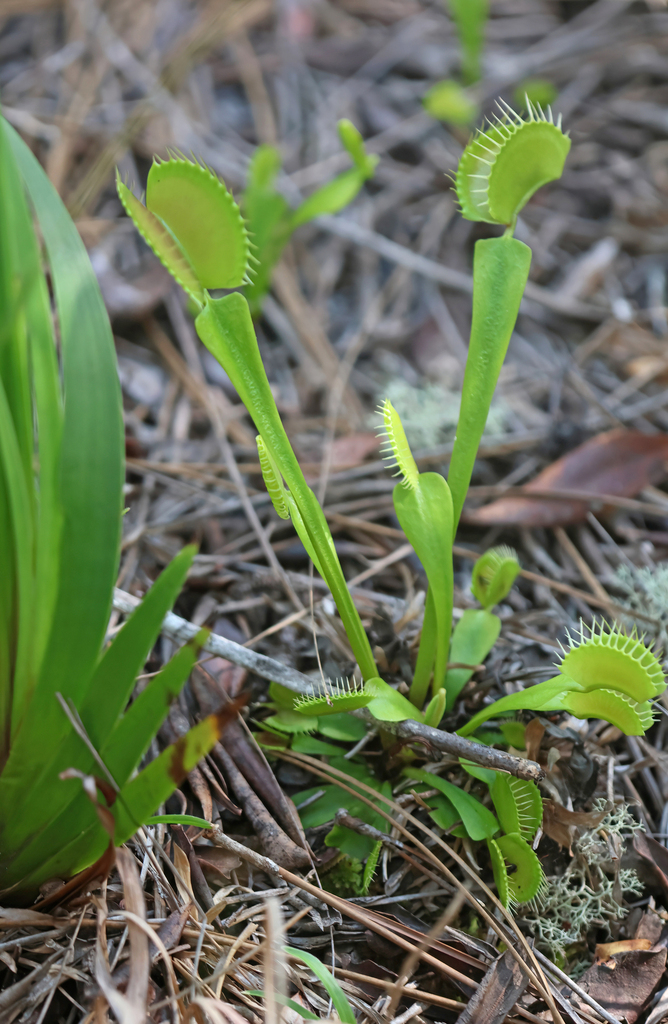
Dionaea muscipula is a small carnivorous plant with a distinctive rosette structure composed of four to seven leaves arising from a short underground stem that resembles a bulb. Each leaf stem typically reaches 3 to 10 centimetres in length, though this varies seasonally. The plant’s most recognizable feature is its modified trap leaves—hinged, jaw-like structures with red inner surfaces and trigger-sensitive hairs along their margins. These traps close rapidly when prey touches the trigger hairs, snapping shut to ensnare insects and other small organisms.
The trap lobes are bordered by tooth-like projections that interlock when the trap closes, preventing escape. The upper (outer) surface of the trap lobes is typically green, while the interior surfaces display a striking red coloration that may intensify under bright light. After flowering, flytraps produce longer, more robust trap leaves. Individual rosettes with more than seven leaves indicate colony formation, where multiple rosettes have emerged from a single root system rather than representing growth of a single crown.
The plant’s overall height remains modest, making it well-suited to its native wetland habitat where it grows among herbaceous vegetation and grasses. No significant sexual dimorphism has been documented in this species, as individual plants bear both male and female reproductive organs within their flowers.
Distribution and Habitat
Dionaea muscipula, the Venus Flytrap, has a highly restricted natural range confined to the southeastern United States. The species occurs exclusively in the US, where it is endemic to a narrow coastal region. This limited distribution makes it one of North America’s most geographically constrained carnivorous plants.
Within the United States, the Venus Flytrap is native to the pocosins and flatwoods of the Carolinas, particularly in North Carolina and South Carolina. These acid-loving plants thrive in sandy, nutrient-poor soils with high moisture. The species historically occupied seepage areas, pocosins (evergreen shrub bogs), and wet savannas where acidic conditions and seasonal water availability create ideal growing conditions. Elevation data for the species is not precisely documented in available records, though populations occur in the low-lying coastal plain regions of the Atlantic seaboard.
Seasonal activity patterns show a pronounced peak in May, with elevated observations recorded from March through May. This spring surge reflects the plant’s flowering and active growth period. Records from June show a sharp decline, and observations are absent from July through December, indicating either dormancy or reduced detectability during the warmer months. The clustering of sightings in spring aligns with field surveys and the plant’s peak reproductive season.
Growth and Cultivation
Growth
Dionaea muscipula is a small herbaceous perennial that grows from a rhizomatous base. The plant typically reaches 10–12 centimetres in height, with individual trap leaves extending up to 6 centimetres in length. Growth is modest and slow, forming low rosettes of modified leaves that constitute the famous snap traps. The distinctive leaf structure—each trap lined with sensitive trigger hairs and rimmed with tooth-like projections—develops progressively as the plant matures over several years.
Mature plants expand outward rather than upward, eventually forming dense clusters of leaves radiating from the central crown. This growth pattern allows the Venus Flytrap to maximize trap placement for catching prey while remaining close to ground level. In cultivation, well-established plants can produce numerous traps throughout the growing season.
Flowering
Venus Flytraps produce small white flowers arranged in clusters atop slender stalks that rise above the trap leaves. Flowering occurs in spring, typically from April to June in the Northern Hemisphere. Each flower is approximately 1 centimetre across and possess five petals. The plant allocates significant energy to reproduction, and flowering is followed by seed production in small capsules.
Cultivators often remove flower stalks to conserve the plant’s energy for trap production and growth, as flowering diverts resources from the carnivorous apparatus. Seeds are viable and can be collected from mature seed pods for propagation, though they require specific germination conditions to establish.
Cultivation
Venus Flytraps demand acidic soil and high humidity to thrive. Ideal conditions include a soil pH between 4.0 and 5.0, achieved using peat moss, sphagnum moss, or sandy peat mixtures. The plants require nutrient-poor, well-draining substrates; standard potting soil will cause decline. Distilled or rainwater is essential—tap water high in minerals will accumulate in soil and damage the roots.
Light requirements are high; plants need at least 4–6 hours of direct sunlight daily to maintain vigorous trap development. In temperate regions, Venus Flytraps are hardy outdoors year-round in zones where winter temperatures remain above −15 °C, though container cultivation allows winter protection in colder areas. Dormancy over winter months is natural and beneficial; reduce watering during this period but keep soil slightly moist.
Water management is critical. During the growing season (spring and summer), maintain soil moisture by keeping the pot in a tray of distilled water; allow 2–3 centimetres of water to remain available. Never allow soil to dry completely. Humidity should exceed 50 percent; misting or placing pots on humidity trays helps achieve this. Avoid fertilizer entirely—the plant’s carnivorous diet supplies necessary nutrients, and added fertilizer will harm the roots.
Conservation and Threats
Dionaea muscipula is classified as Vulnerable on the IUCN Red List, indicating that the species faces a high risk of extinction in the wild without continued conservation action. Despite this precarious status, the population trend is increasing, a result of active protection measures and the suppression of illegal harvesting. The species remains endemic to the coastal wetlands of North Carolina, making it exceptionally vulnerable to localized threats that could affect its entire natural range.
Threats
Habitat loss is the dominant threat to Venus Flytrap survival. A 2011 scientific review identified five major threat categories: agricultural expansion, road construction, biological resource use (poaching and timber extraction), natural systems modification (drainage of wetlands and fire suppression), and pollution from fertilizer runoff. The cumulative effect of these pressures has fragmented populations and reduced available breeding habitat across the species’ range.
Poaching remains a persistent and economically driven threat. Commercial demand for wild-collected plants has created a lucrative black market, with large plants preferentially targeted because they produce more flowers and seeds than smaller individuals. The removal of reproductive adults has a disproportionate impact on population recovery. In 2014, North Carolina elevated Venus Flytrap poaching to felony status, resulting in significant prosecutions: one poacher received 17 months in prison for stealing 970 plants, and another was charged with 73 felony counts in 2019. Despite these legal deterrents, the New York Times reported in 2016 that demand for wild plants persists, fueling what has been termed a “Venus flytrap crime ring.”
Conservation Efforts
The legal framework protecting Venus Flytrap has strengthened considerably. North Carolina’s felony designation serves as a powerful deterrent, and ongoing prosecutions demonstrate enforcement commitment. Habitat protection through wetland preservation and fire management in its native range supports population stability. Captive propagation programmes have reduced pressure on wild populations by providing an alternative source for horticultural and scientific use.
Fun Facts
The Venus flytrap is one of nature’s most sophisticated carnivorous plants, relying on a hair-trigger mechanism to snare its prey. Found nowhere else on Earth except the Carolinas, this botanical marvel has captivated naturalists and gardeners for centuries with its rapid, jaw-like movements and alien appearance.
- The Venus flytrap is the only species in the entire genus Dionaea, making it botanically unique and irreplaceable. Its singular status reflects millions of years of specialized evolution in the pocosins and savannas of North Carolina and South Carolina.
- Its spectacular “jaws” are not leaves with teeth—they are actually modified leaf tips that snap shut to trap insects and small arachnids. This weaponized foliage represents one of the plant kingdom’s most dramatic adaptations to nutrient-poor soils.
- The trap requires two separate touches of its trigger hairs within roughly 20 seconds to fully close and seal its prey inside. This dual-trigger system prevents the plant from wasting energy on false alarms from raindrops or debris.
- Once triggered, the trap can snap shut in as little as one-tenth of a second—among the fastest movements in the plant world. This explosive speed ensures that even quick-moving insects have little chance of escape.
- The Venus flytrap belongs to the sundew family, Droseraceae, and shares its carnivorous lifestyle with waterwheel plants and the famous sundews. Despite their kinship, the Venus flytrap’s active snapping mechanism is entirely unique within this family of sticky-trap predators.
- The plant thrives exclusively in the acidic, sandy wetlands of the Atlantic Coastal Plain, a habitat so specialized that it cannot survive in ordinary potting soil. Wild populations depend on seasonal fire to prevent woody plants from shading them out.
Ecology
Diet
Behavior
Growing Conditions
Conservation Status
LC · NT · VU (Vulnerable) · EN · CR · EW · EX
Photo Gallery
Steve Collins ·
Related Species
Was this profile helpful?