
Magnoliopsida · Brassicales
Arabidopsis
Arabidopsis thaliana
Also known as: Common Wall Cress, Mouse-ear Cress, Mouseear Cress
© no rights reserved · iNaturalist · CC0 1.0
Scientific Classification & Quick Facts
Classification
At a Glance
Arabidopsis thaliana, commonly known as Arabidopsis, is a small flowering plant in the Brassicaceae family that has become one of the most important organisms in modern biology. This unassuming herb, native to temperate regions across Eurasia and northern Africa, grows to just 20–25 centimetres tall and produces delicate white flowers. Yet despite its modest appearance, Arabidopsis has revolutionized plant science and genetics.
The species occurs across approximately 12 countries and carries an unknown conservation status, reflecting its widespread distribution and lack of immediate threat. Its significance, however, lies not in rarity but in accessibility: its short life cycle (6 weeks), small genome size, and ability to produce thousands of seeds make it ideal for laboratory cultivation. Arabidopsis has become indispensable for decoding how plants sense light, regulate growth, defend against pathogens, and respond to environmental stress—discoveries that directly inform crop improvement and our understanding of plant evolution.
Identification and Appearance
Arabidopsis thaliana is a small annual herb, rarely biennial, that typically reaches 20–25 centimetres in height, with a maximum recorded height of 22.5 centimetres. The plant is distinctive for its compact basal rosette of leaves, from which a single or few flowering stems emerge. This simple architecture makes it easy to identify in the field and has contributed to its widespread adoption as a model organism in botanical research.
Leaves and Stems
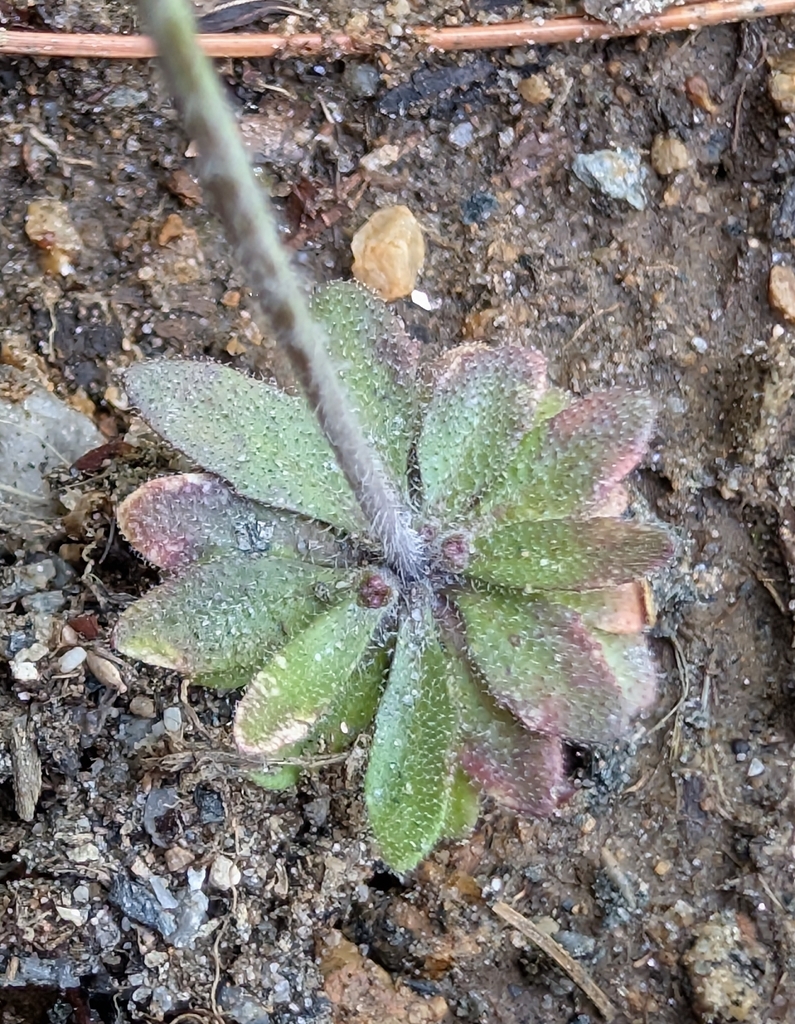
The basal leaves form a tight rosette at ground level and are the most prominent vegetative feature. These leaves range from 1.5 to 5 centimetres in length and 2 to 10 millimetres in width, with margins that vary from smooth to coarsely serrated. Their colour is typically green, though plants often display a slight purplish tint, particularly under stress or in cooler conditions. The stem leaves are considerably smaller than basal leaves, lack petioles (leaf stalks), and usually have entire margins. A defining characteristic of the species is the dense covering of small, unicellular hairs called trichomes on both leaf surfaces, giving the plant a slightly rough texture when touched.
Flowers
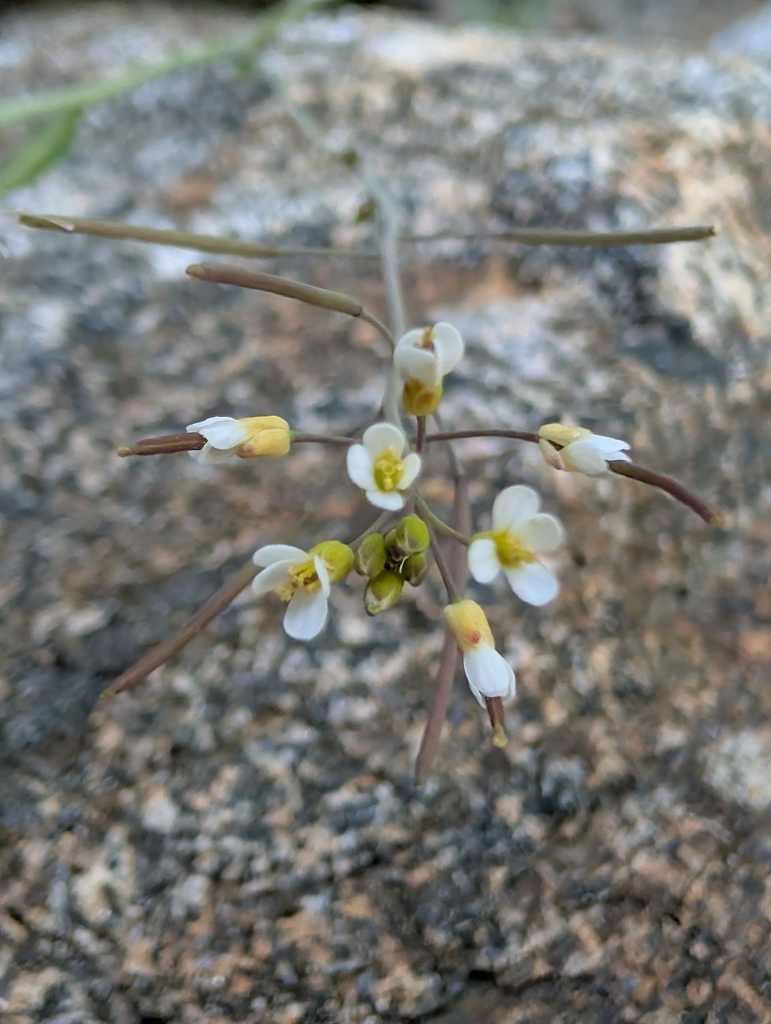
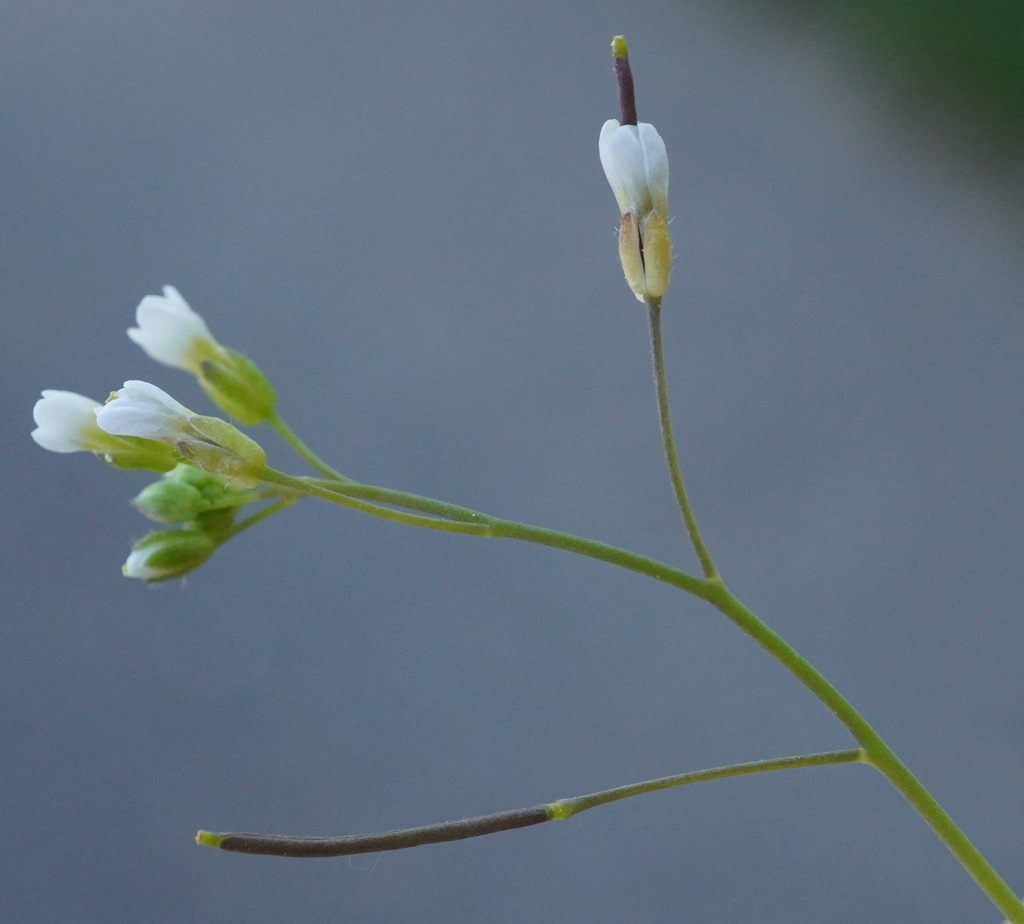
The flowers are minute, measuring only 3 millimetres in diameter, and are arranged in a corymb—a flat-topped or slightly domed flower cluster. Each flower displays the typical four-petaled structure of the mustard family (Brassicaceae), with white or pale pink petals. The flowers produce elongated silique fruits containing numerous small seeds. The overall delicate appearance of both flowers and seedpods, combined with the plant’s diminutive stature, makes mature Arabidopsis plants instantly recognizable despite their modest size.
Distribution and Habitat
Arabidopsis thaliana is widely distributed across Europe and has been recorded in North America. The species shows a strong concentration in temperate regions, with the Netherlands recording the highest observation count (198), followed by the United Kingdom (49) and Italy (15). France, the United States, Portugal, Spain, Germany, Austria, and Belgium complete the documented range across 12 countries. This distribution reflects both the plant’s natural presence in its native European range and its widespread adoption as a model organism in research institutions globally.
The species exhibits a pronounced seasonal presence pattern, with peak activity in February (137 observations) and elevated counts extending through January (80) and March (83). Records outside the winter months are absent from the available data, indicating a strong winter-annual or early spring lifecycle. This temporal pattern aligns with Arabidopsis thaliana‘s biology as a cool-season annual that germinates in autumn, overwinters, and flowers in spring before completing its lifecycle.
No elevation range data or specific habitat classifications are recorded in the available distribution records, suggesting that Arabidopsis thaliana occupies a broad ecological niche or that observations have been concentrated in lowland and agricultural areas across its documented range.
Biology
Growth
Arabidopsis thaliana is a small herbaceous annual plant that typically reaches 20–30 centimetres in height at maturity. It develops a rosette of basal leaves during its vegetative phase, with simple, pinnately lobed foliage. The plant produces a thin, branching stem that elongates as it transitions toward reproduction. Its compact stature and rapid life cycle make it ideally suited to laboratory cultivation and greenhouse environments.
The species completes its entire life cycle from seed to mature seed-bearing plant within 6–8 weeks under controlled conditions. This swift development, combined with its small size and minimal space requirements, has made Arabidopsis thaliana the model organism of choice for plant molecular biology and genetics research for more than two decades.
Flowering and Fruiting
Arabidopsis thaliana produces small, four-petaled flowers that are typically white, pale pink, or lavender in colour. Flowers appear in terminal racemes and develop sequentially along the elongating stem. The plant is self-fertile and produces copious quantities of small seeds enclosed in elongated silique pods (characteristic of the mustard family, Brassicaceae). Under standard growing conditions, flowering begins 3–4 weeks after germination and continues for several weeks as the plant produces successive flowering stems.
Cultivation
Cultivation of Arabidopsis thaliana requires minimal specialized care. The plant grows well in standard potting soil or soil-based growth medium and tolerates a wide pH range. It prefers full sunlight or bright artificial lighting and moderate, consistent soil moisture—neither waterlogged nor drought conditions. Indoors, a 16-hour photoperiod with cool to moderate temperatures (18–24°C) supports healthy growth and flowering. Outdoor cultivation is feasible in temperate climates during spring and autumn, though the plant is sensitive to temperature extremes and bolts rapidly in response to prolonged warm conditions.
No fertilizer is required for basic vegetative growth on standard potting soil, though dilute liquid fertilizer applied every two weeks can enhance flowering and seed production. The plant is not frost-hardy and is killed by freezing temperatures. Seeds germinate readily without special pretreatment and can be sown directly on moist soil surface under light, as Arabidopsis thaliana seeds require light for germination. Mature plants can be allowed to self-seed indoors for successive generations.
Conservation and Threats
Arabidopsis thaliana has not been formally assessed by the International Union for Conservation of Nature (IUCN) and therefore lacks an official Red List status. This reflects the species’ abundance and widespread distribution across temperate regions of Europe, western Asia, and northwestern Africa. The absence of a conservation designation does not indicate vulnerability; rather, it underscores that the species faces no immediate threat to its survival at a global scale. Population trends show the species is increasing in many regions, particularly in disturbed and agricultural habitats where it thrives as a pioneer plant.
Threats
No major threats have been identified for Arabidopsis thaliana at the species level. As a highly adaptable annual plant with broad ecological tolerance, it persists readily across varied environments—from roadsides and waste ground to cultivated fields and garden margins. The species’ rapid life cycle, prolific seed production, and established presence in temperate zones worldwide provide considerable resilience against local environmental pressures.
Conservation Efforts and Legal Status
Arabidopsis thaliana requires no formal conservation programmes or legal protection. Instead, the species is recognized internationally as a model organism in plant genetics and molecular biology research. Its importance to science ensures that genetic diversity and reference populations are actively maintained in seed banks, herbaria, and research institutions worldwide. This scientific stewardship effectively safeguards the species from any conceivable future risk while advancing fundamental understanding of plant development and evolution.
Fun Facts
- 1.The Plant Model OrganismArabidopsis thaliana was the first plant to have its entire genome sequenced in 2000, making it the foundation for understanding plant genetics across thousands of species worldwide.
- 2.Tiny but Mighty GenomeDespite its small size, this plant contains roughly 25,000 genes packed into just five chromosomes—about the same number of genes as the human body, compressed into a much smaller physical space.
- 3.Records Growth SpeedFrom seed to flowering takes only 5–6 weeks under standard laboratory conditions, allowing researchers to observe multiple generations and study inheritance patterns faster than almost any other plant.
- 4.Natural Stress DetectiveArabidopsis activates rapid molecular responses to drought, cold, and salt stress, making it invaluable for identifying genes that help plants survive harsh environments—knowledge directly applied to crop improvement.
- 5.Extreme Chromosome DoublingThis species underwent whole-genome duplication events in its evolutionary past, meaning many of its genes exist in duplicate copies that have since taken on specialized functions.
- 6.Produces Thousands of SeedsA single mature plant can produce over 10,000 seeds from its silique fruits, ensuring prolific dispersal and establishment in new disturbed habitats across temperate regions.
Ecology
Habitats
Growing Conditions
Edibility
Photo Gallery
no rights reserved · CC0 1.0
Related Species
Was this profile helpful?