
Gnetopsida · Welwitschiales
Angolan Welwitschia
Welwitschia mirabilis
Also known as: Namibian Welwitschia, Tree Tumbo
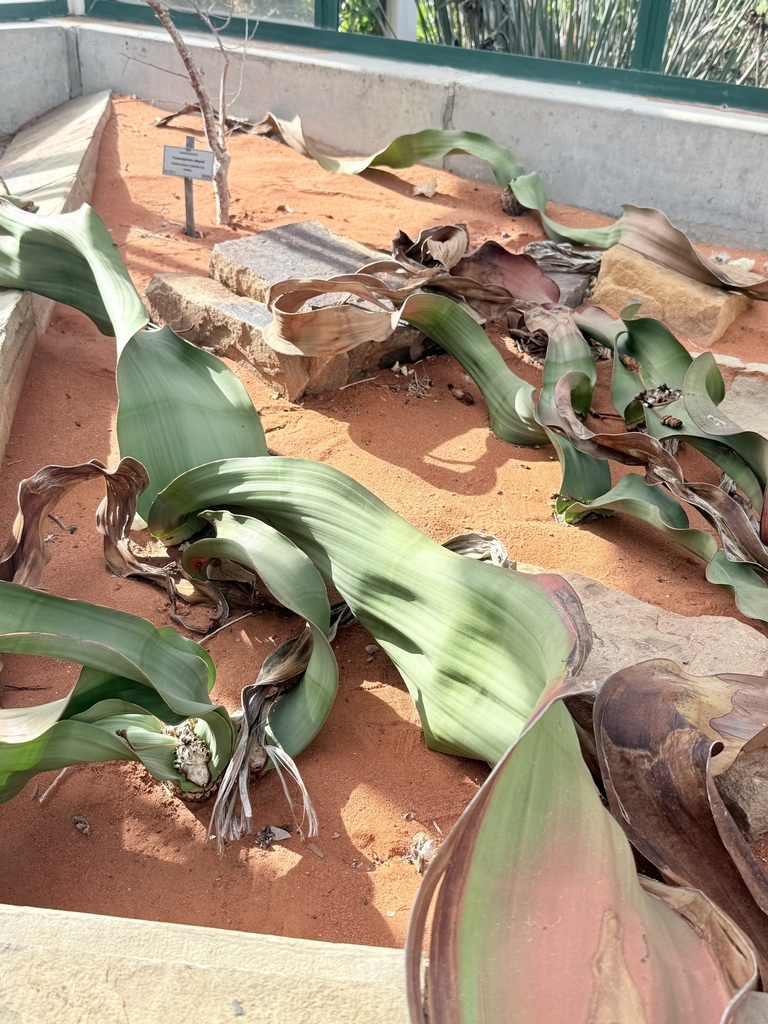
© Vladislav Isaev · iNaturalist · CC BY 4.0
Scientific Classification & Quick Facts
Classification
Known For
Detailed measurements for this species are still being verified.
Welwitschia mirabilis, the Angolan Welwitschia, is one of Africa’s most improbable plants. It occupies a taxonomic island unto itself—the sole living member of the order Welwitschiales and family Welwitschiaceae—growing in the hyperarid deserts of southern Africa. Confined to just two countries, this slow-growing succulent appears almost alien: a squat, woody base crowned by only two enormous leaves that can reach several metres in length and persist throughout the plant’s entire lifespan, growing continuously from their base even as their tips die and fray. The species has captured the imagination of botanists and desert ecologists for nearly two centuries, and its conservation status remains poorly understood.
What makes Welwitschia mirabilis truly exceptional is not merely its strange form, but its survival strategy in extreme aridity. The plant’s two leaves function as a massive water-harvesting system, condensing atmospheric moisture and channeling it to the roots below. Its subterranean biomass far exceeds what grows above ground—a deep taproot can extend several metres into the soil. This inverted architecture, combined with extraordinary longevity, represents one of nature’s most sophisticated adaptations to life on the margin of habitability.
Identification and Appearance
Welwitschia mirabilis is one of the world’s most distinctive plants, recognizable by its highly reduced morphology and extreme longevity. The plant consists of a large, woody crown (stem) that sits at or slightly above ground level, from which emerge only two permanent leaves throughout its entire life—a defining characteristic that sets it apart from nearly all other vascular plants.
Leaf Structure and Development
The two permanent leaves are long, ribbon-shaped, and grow continuously from their base at the crown. These leaves are produced opposite each other at right angles to the cotyledons (the initial seed leaves present after germination). The cotyledons themselves are small, measuring 25–35 mm in length, and begin pink before turning green shortly after germination. Unlike the short-lived cotyledons, the permanent leaves persist for the entire lifespan of the plant and constitute its primary photosynthetic tissue.
The leaves feature prominent veins running lengthwise along their structure, giving them a ribbed appearance. As the plant ages, these leaves often become tattered and split into irregular strap-like segments due to wind abrasion and weathering in the harsh desert environment where the species naturally occurs. This wear pattern is typical rather than a sign of disease or damage.
Overall Form
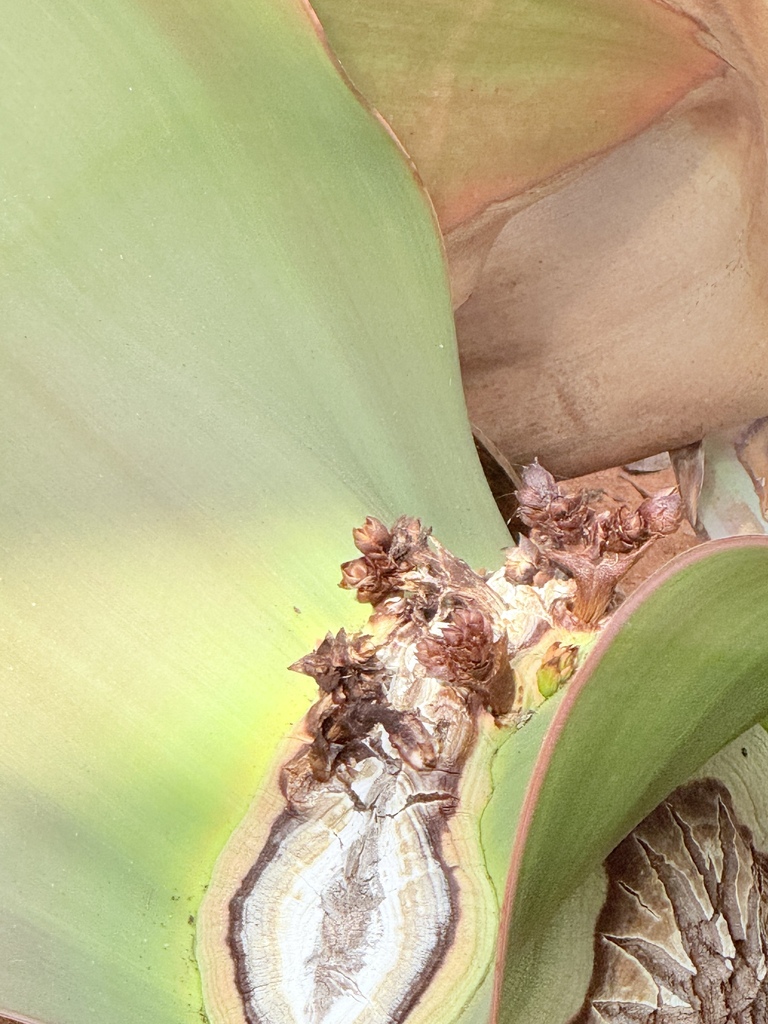
The woody crown of W. mirabilis forms a compact, often flattened or slightly concave structure, and may persist above ground or sit nearly flush with the soil surface. This crown serves as a water and nutrient reservoir, enabling the plant to survive prolonged drought periods characteristic of its native arid habitat. The entire plant presents a distinctive, almost alien appearance that has made it a subject of scientific fascination and botanical study for over a century.
Distribution and Habitat
Welwitschia mirabilis has a highly restricted geographic range, confined to two countries in southern Africa. GBIF records show 262 observations from Namibia and 38 from Angola, making Namibia by far the primary stronghold for this species. The species does not extend beyond this narrow region, representing one of Africa’s most geographically limited plant distributions.
The species occurs at moderate elevations, ranging from 338 metres to 749 metres above sea level, with an average elevation of approximately 721 metres. This relatively tight elevation band reflects the species’ specialization to the particular climatic and soil conditions of the Namib Desert and its margins, where temperature and moisture regimes remain fairly consistent across this range.
Observations peak during October, with a secondary peak in May, suggesting some seasonality in detection or visibility. GBIF data show 47 records in October and 42 in May, while the driest months of July and November record notably fewer sightings (14 and 11 respectively). This pattern likely reflects either increased field survey activity during favorable conditions or enhanced visibility of the plants following seasonal moisture availability.
Biology
Growth
Welwitschia mirabilis is one of the world’s most unusual plants, growing as a low, spreading rosette that hugs the ground in its native Namibian and Angolan desert habitat. The plant consists of a thick taproot anchoring a woody crown from which emerge just two long, leathery leaves that can reach several metres in length and continue growing throughout the plant’s life, eventually becoming tattered and split into many segments. Despite this simple structure, welwitschia is exceptionally long-lived; individual plants in the wild are known to exceed 1,000 years of age, making it one of the slowest-growing vascular plants on Earth.
Mature plants typically measure 0.5 to 1.5 metres across and rise only 15 to 30 centimetres above the soil surface. The crown develops a distinctive appearance as it ages, becoming deeply furrowed and woody. Growth is extremely slow, particularly in young plants, and patience is essential for anyone cultivating this species outside its native range.
Flowering
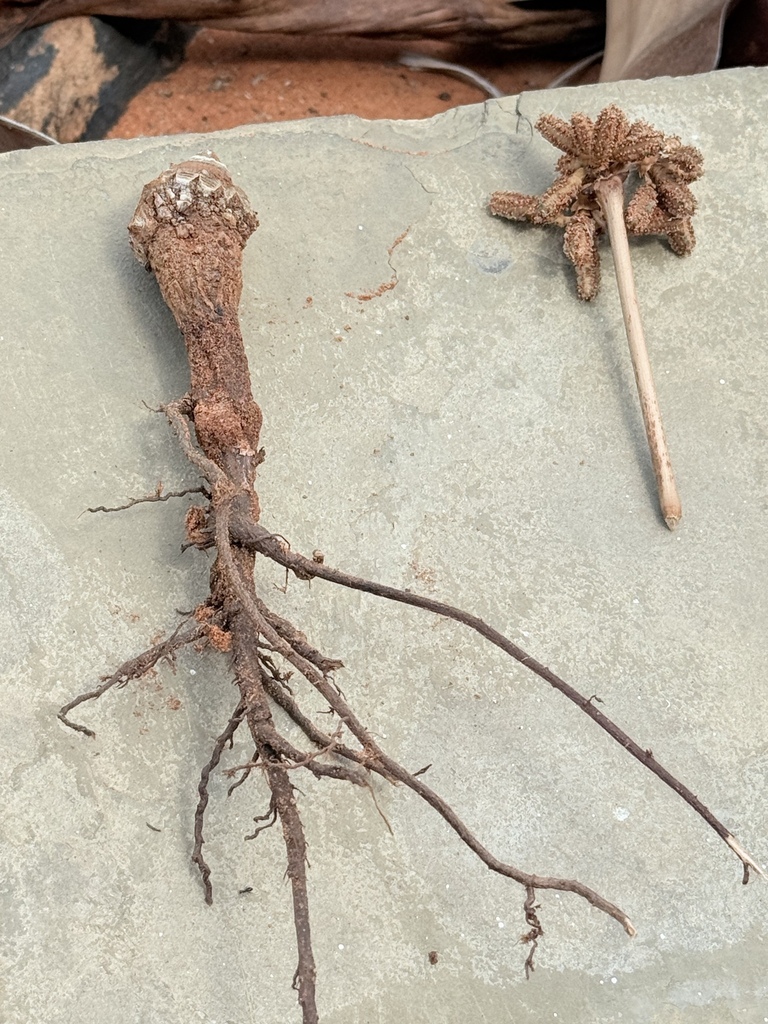
Welwitschia produces small, inconspicuous flowers arranged in dense, cone-like structures called strobili that emerge from the crown. The reproductive structures are distinct between male and female plants, with males producing numerous staminate cones and females bearing ovulate cones that develop into winged seeds. Flowering occurs sporadically in cultivation and depends heavily on plant maturity and environmental conditions; young plants may take many years to reach reproductive age.
Cultivation
Growing Welwitschia mirabilis outside its native desert requires exceptional drainage and a commitment to mimicking its harsh natural conditions. The plant demands gritty, sandy, or rocky soil with minimal organic matter and excellent drainage; standard potting mixes are unsuitable and will lead to root rot. Provide bright, intense light—full sun exposure is ideal. Water sparingly during the growing season, allowing soil to dry completely between waterings, and reduce watering further in winter. The plant is highly sensitive to overwatering and will not tolerate sitting in moist substrate.
Welwitschia is not frost-hardy and requires protection from freezing temperatures; it thrives in warm, arid conditions and will perish if exposed to prolonged cold. In regions with cool winters, cultivation in a heated greenhouse or sheltered conservatory is necessary. This species is a true challenge for even experienced collectors and is best reserved for gardeners with genuine enthusiasm for desert succulents and access to appropriate controlled environments.
Conservation and Threats
Welwitschia mirabilis currently lacks a formal IUCN Red List assessment, leaving its official conservation status undetermined. However, the species maintains a stable population trend, suggesting that existing populations are neither declining rapidly nor expanding significantly at present. This stability reflects the plant’s remarkable capacity to persist in its harsh desert habitat, though formal listing would provide clearer guidance for long-term protection efforts.
Threats
Despite its extraordinary longevity—individuals can survive for over a century—Welwitschia mirabilis faces direct anthropogenic pressures that its lifespan cannot mitigate. Overgrazing by livestock represents a primary threat, as goats and other animals consume seedlings and damage established plants in areas where the species occurs. This threat is particularly acute in regions where pastoral communities and conservation zones overlap.
Disease also poses a significant risk to populations. The plant’s slow growth and late reproductive maturity mean that recovery from disease outbreaks is gradual. Combined with habitat disturbance and the species’ restricted range in the Namib Desert, these factors create vulnerability despite current population stability.
Conservation Efforts
Welwitschia mirabilis benefits from protection within several conservation areas, particularly in Namibia where much of its range occurs. Legal protections restrict collection and export in key jurisdictions, though enforcement remains variable. The species is cultivated in botanical gardens and seed banks worldwide, creating an insurance population against catastrophic wild loss.
Fun Facts
- 1.Only Two Leaves EverThe entire plant produces just two massive leaves that grow continuously throughout its lifetime—sometimes reaching 2 metres in length. These same two leaves may persist for over 100 years, making them among the longest-living leaves in the plant kingdom.
- 2.Extreme Longevity RecordIndividual Welwitschia plants can live for 1,000 years or more, with some specimens in the Namib estimated to exceed 2,500 years old. This makes them older than many tree species despite their humble, sprawling appearance.
- 3.Fog-Drinking Root SystemThe plant’s deep taproot can reach over 3 metres into the desert sand, while specialized leaf structures absorb moisture directly from the rare fog that rolls in from the Atlantic Ocean. This dual moisture-harvesting strategy allows survival in one of Earth’s driest regions.
- 4.Male and Female Distinctly DifferentMale and female plants produce dramatically different cone structures, making them readily identifiable even from a distance. The sexual dimorphism is so pronounced that early botanists initially classified them as separate species.
- 5.Living Fossil ClassificationWelwitschia is the sole surviving member of its family, Welwitschiaceae, and represents a lineage dating back to the Triassic period over 200 million years ago. It shares characteristics with both conifers and flowering plants, occupying a unique evolutionary position.
- 6.Minimal Water RequirementsThe plant can survive on as little as 14 millimetres of rainfall per year by channelling every drop of moisture toward its root system through grooved leaf surfaces. This water-conservation mechanism is so efficient that the plant rarely needs to photosynthesize at maximum capacity.
- 7.Slow Growth Despite AgeDespite living for centuries, Welwitschia plants grow with remarkable slowness, sometimes adding only a few millimetres to their leaf length annually. A mature specimen may weigh over 1 tonne while occupying minimal surface area.
Sources and References
- Global Biodiversity Information Facility (GBIF)View source
- iNaturalistView source
- WikidataView source
- WikipediaView source
- Encyclopedia of Life (EOL)View source
- Plants of the World Online (POWO)View source
Photo Gallery
Vladislav Isaev · CC BY 4.0
Related Species
Was this profile helpful?