
Aves · Passeriformes
Black Monarch
Monarcha
Also known as: Monarch, Monarchs, Typical Monarchs
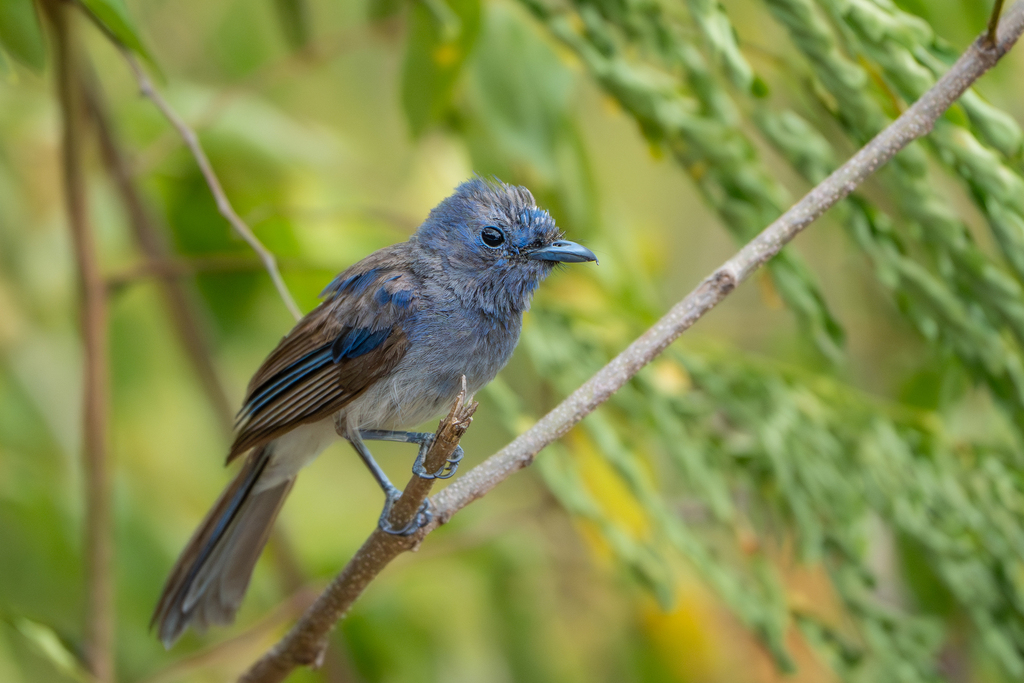
© Srivatsan Ramkumar · iNaturalist · CC BY 4.0
Scientific Classification & Quick Facts
Classification
Known For
Detailed measurements for this species are still being verified.
The Black Monarch is a striking flycatcher that patrols the forests and woodlands of the Indo-Pacific region with characteristic poise and aggression. Belonging to the family Monarchidae—a group of small to medium-sized passerines renowned for their bold territoriality and acrobatic hunting—this species cuts a distinctive silhouette with its dark plumage and alert bearing. Found across four countries, the Black Monarch remains relatively understudied in the wild, with its conservation status currently listed as Unknown by the IUCN, placing it among numerous tropical birds whose population dynamics and ecological requirements demand further investigation.
What elevates the Black Monarch among its relatives is its role as both a keystone predator of aerial arthropods and a sentinel species for forest health across its range. Its presence in woodlands indicates intact insect populations and canopy structure, making it valuable for understanding the broader condition of tropical and subtropical ecosystems. The genus Monarcha spans multiple continents and ecological zones, yet each species—including the Black Monarch—exhibits distinct behavioural and morphological refinements that reflect deep evolutionary specialization to local conditions.
Identification and Appearance
Monarcha is a genus of small to medium-sized flycatchers distributed across Australasia and the Indo-Pacific region. Members of this genus are characterized by their compact build, alert posture, and distinctive plumage patterns that vary considerably among species within the group. The Black Monarch and its congeners are aerial insectivores with specialized morphology adapted for catching insects in flight.
Plumage and coloration
Species within the Monarcha genus typically display bold contrasting plumages. Many possess predominantly dark upperparts contrasted with lighter underparts, though specific color patterns depend on the individual species. The head is often marked with distinctive facial patches or crests that aid in species identification and social signaling. Wing and tail feathers are generally darker and more heavily marked, providing contrast during flight displays.
Body structure
Monarchs have a characteristic upright posture when perched, with relatively long tails that aid in aerial maneuverability. Their bills are typically pointed and moderately strong, well-suited to capturing small insects. The overall body proportions reflect their ecological role as active foragers in woodland and forest canopies, with sufficient wing surface area to enable rapid, acrobatic flight patterns essential for insect pursuit.
Distribution and Habitat
Monarcha (Black Monarch) occurs across a limited range in the South Pacific, with records from four countries. Australia dominates the distribution, accounting for 296 of the 300 documented occurrences, making it the primary stronghold for this species. Additional sightings have been recorded in Solomon Islands, Papua New Guinea, and China, though these represent rare vagrant or captive records rather than established populations.
The species shows a pronounced seasonal pattern in observation records. January represents the peak month for sightings with 225 records, indicating a strong presence during the Australian summer. Observations decline sharply from February onwards, with only 43 records in February and 23 in March. By April through December, sightings become extremely sparse, suggesting either migration or reduced activity outside the peak season.
Specific elevation data for Monarcha are not currently available in the distribution records. The habitat preferences and altitudinal range remain undocumented in standardized sources, limiting detailed description of the species’ ecological niche at this time.
Biology and Behavior
Behavior
Black Monarchs are active, agile flycatchers that hunt insects in flight with remarkable precision. They employ a classic sit-and-wait strategy, perching on exposed branches or vines and launching swift aerial sallies to snatch prey from the air. These birds are highly territorial and often seen singly or in pairs, maintaining distinct feeding ranges throughout their habitat. They are vocal species, producing sharp calls and distinctive songs that help them communicate territorial boundaries and locate mates.
These monarchs are primarily diurnal, most active during morning and afternoon hours when insect activity peaks. They move through their territories with quick, purposeful flights and frequently change perches to scan for prey. In some populations, Black Monarchs may join loose associations with other bird species during mixed-species feeding flocks, though they typically remain independent foragers.
Diet
Black Monarchs are strict insectivores, feeding almost exclusively on flying insects and small arthropods. Their diet consists primarily of small flies, mosquitoes, gnats, and other aerial insects captured mid-flight. They occasionally supplement their diet with insects gleaned from foliage or branches, but aerial hawking remains their primary foraging method. Their hunting technique—sudden, explosive flights from a stationary perch followed by precise mid-air capture—is finely tuned to exploit the abundance of airborne prey in their forest and woodland habitats.
Reproduction
Black Monarchs are monogamous breeders that defend territories year-round or during the breeding season, depending on local environmental conditions. Breeding typically occurs during the warmer months when insect availability is highest, providing abundant food for developing chicks. Both sexes participate in nest construction, incubation, and chick-feeding, showing strong pair bonds and coordinated parental care.
Females lay small clutches of 2–3 eggs in cup-shaped nests built in tree forks, vines, or dense foliage. Incubation lasts approximately 14–16 days, and chicks fledge within 12–15 days of hatching. Pairs often raise multiple broods per breeding season if conditions remain favorable, with intervals between clutches allowing females to recover between reproductive cycles. Chicks remain dependent on their parents for several weeks after fledging, during which both adults intensify foraging to meet increased food demands.
Conservation and Threats
Monarcha species lack a formal IUCN Red List assessment, meaning their conservation status remains officially unclassified. This absence of data reflects wider gaps in monitoring for many flycatcher species across their ranges, particularly in remote or understudied regions. Without a documented population size or trend, conservation priorities for the genus cannot be formally ranked against other threatened species.
Threats
The primary threat to Monarcha species is habitat loss through deforestation and forest fragmentation in their native ranges. Conversion of tropical and subtropical forests to agricultural land, urban development, and logging reduces breeding sites and foraging habitat. Secondary forest degradation—including selective logging and edge effects from human settlement—further diminishes suitability for forest-dependent flycatchers that require intact canopy structure for nesting and insect prey availability.
Climate change poses an emerging risk through altered rainfall patterns and temperature shifts that affect insect abundance and breeding phenology. Introduced predators, particularly on islands where endemic Monarcha populations occur, can suppress populations through nest predation and competition. Trapping for the cage-bird trade has historically affected some populations, though current pressure varies by locality.
Conservation Efforts
Several Monarcha species occur within protected forest reserves and national parks across their ranges, offering some legal protection. Regional conservation frameworks in the Indo-Pacific region include habitat management initiatives focused on maintaining forest connectivity. However, formal species-level conservation programmes are limited, and most protection depends on landscape-scale forest conservation rather than species-specific intervention.
Fun Facts
- Black Monarchs are compact flycatchers, typically measuring 16–18 centimetres in length, making them small enough to perch on thin branches while hunting insects mid-flight. Their diminutive size belies their agility and precision as aerial predators.
- Despite their name, not all Black Monarchs are entirely black—many species in the genus display striking white underparts or facial patches that create bold contrast with their dark plumage. This colouration helps individuals recognise one another during territorial or courtship interactions.
- Black Monarchs are highly vocal birds, producing sharp, distinctive calls that carry across dense forest canopy to establish territory and maintain contact with mates. Their vocalizations are often one of the first signs of their presence in their habitat.
- These flycatchers are cavity nesters, building their small cup-shaped nests inside tree hollows, crevices, or even man-made nest boxes. Both parents typically share incubation and chick-rearing duties, though the female invests most of her time on the eggs.
- Black Monarchs exhibit strong site fidelity, with individuals returning to the same territory or even the same nest site across multiple breeding seasons. This loyalty can span several years, provided habitat remains suitable and predation rates stay low.
- The genus Monarcha is distributed across Australasia and the western Pacific, with species occupying rainforests, eucalypt woodlands, and mangrove environments. This wide geographic range reflects the group’s remarkable adaptability to diverse forest types.
- Black Monarchs often forage by “flycatching”—launching from a perch to snatch insects from the air or pluck them from foliage—a behaviour that requires split-second timing and exceptional eyesight. They may repeat the same foraging route multiple times per day, memorising productive feeding spots.
Ecology
Behavior
Photo Gallery
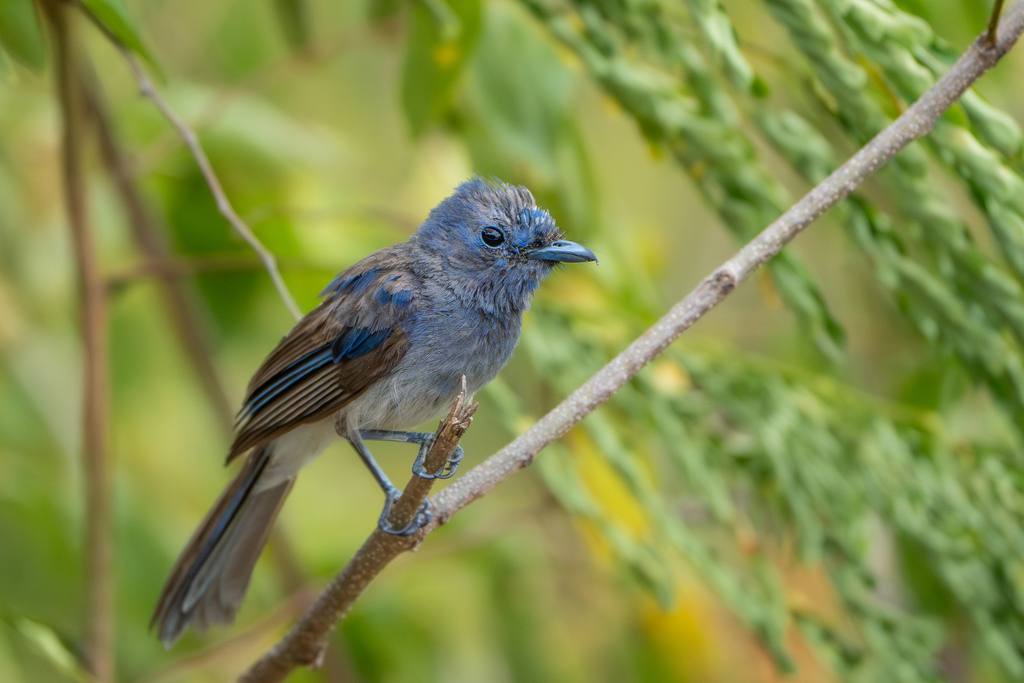
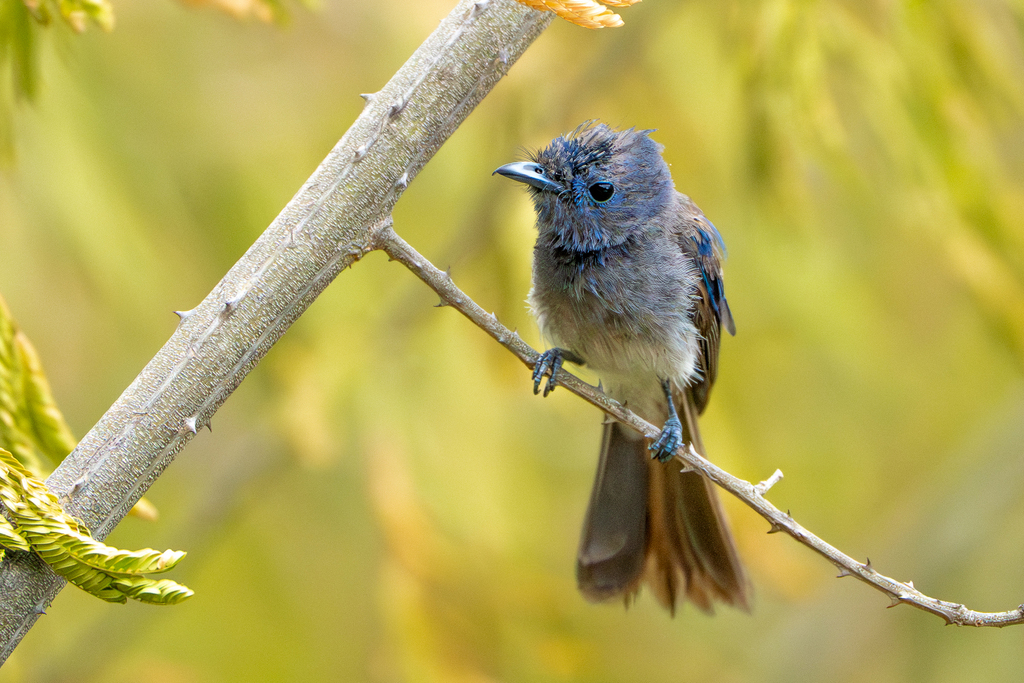
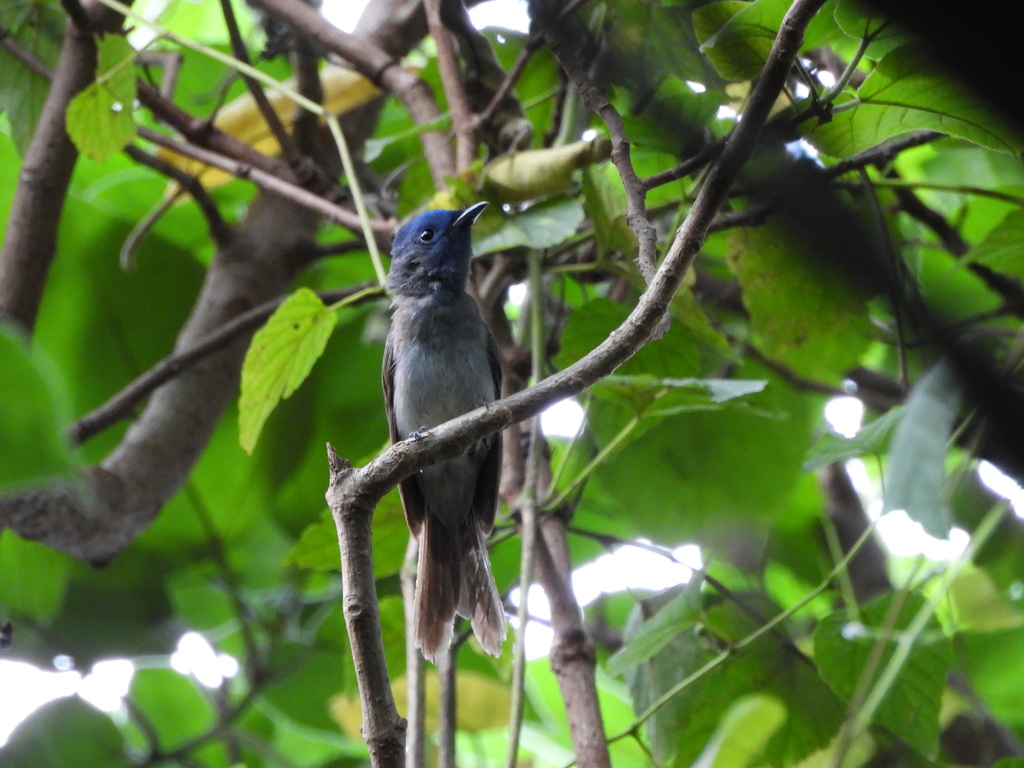
Srivatsan Ramkumar · CC BY 4.0
Related Species
Was this profile helpful?