
Aves · Passeriformes
Cardinal
Cardinalis cardinalis
Least ConcernAlso known as: Cardinal Grosbeak, Cardinal Redbird, Cardinal-bird, Common Cardinal, Crested Redbird
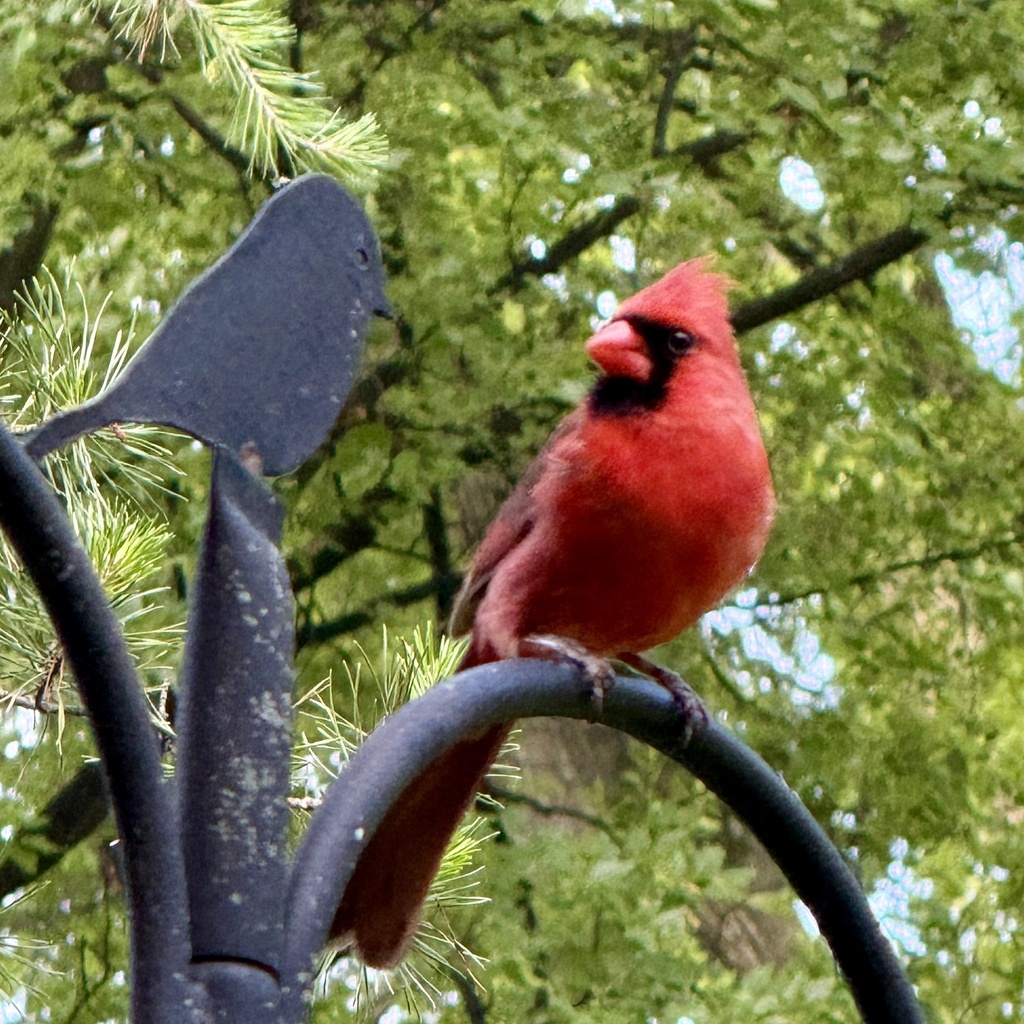
© Hill Craddock · iNaturalist · CC BY 4.0
Scientific Classification & Quick Facts
Classification
At a Glance
The Northern Cardinal is one of North America’s most recognizable birds, instantly identifiable by its brilliant red plumage and distinctive crest. Males display a vivid scarlet coat that makes them unmistakable in gardens, woodlands, and shrublands across their range. This member of the family Cardinalidae inhabits three countries and maintains a stable population classified as Least Concern by conservation authorities, making it one of the continent’s most successful songbirds.
What makes the Cardinal particularly notable is its year-round residency across much of its range, providing a constant source of colour and song even in winter when many other birds migrate southward. The species has also become deeply embedded in human culture, serving as the state bird for more U.S. states than any other species. Its adaptability to suburban environments and willingness to visit bird feeders have made it a beloved fixture in backyards throughout eastern and central North America.
Identification and Appearance
The northern cardinal is a mid-sized songbird with a compact, robust build. Adults measure 21 to 23.5 centimetres in length with a wingspan of 25 to 31 centimetres. Weight ranges from 33.6 to 65 grams, with an average of 44.8 grams. Males are noticeably larger than females on average, a distinction that extends to plumage colouration and intensity.
Male cardinals
Male cardinals are unmistakable in their brilliant red plumage. The entire body, wings, and tail display a vivid scarlet coloration that makes them one of North America’s most conspicuous songbirds. A striking black face mask surrounds the base of the stout, conical bill—a feature unique among cardinals and immediately diagnostic. The crest on the head is prominent and often raised when the bird is alert or singing. The bill itself is thick and reddish, perfectly adapted for cracking seeds.
Female cardinals
Female cardinals differ substantially from males. They are predominantly warm buff-brown or tan on the back and underparts, with reddish tinges on the wings, tail, and crest. Females lack the bold black face mask, though some darker markings may be present around the face. The crest is shorter and less pronounced than in males, though still visible. This sexual dimorphism in colouration is thought to relate to breeding behaviour and nest defence, with the conspicuous male attracting attention away from the nest site.
Distribution and Habitat
Cardinalis cardinalis is found across North America, with the vast majority of records concentrated in the United States. GBIF records show 248 observations from the US, 51 from Canada, and 1 from Mexico, reflecting the species’ primary stronghold in eastern and central North America. The cardinal has expanded its range northward over the past century, establishing populations in Canada where it was historically absent or rare.
Observation data reveals a pronounced seasonal pattern, with peak activity occurring in January. The concentration of sightings during winter months likely reflects increased visibility when vegetation has thinned and birds visit feeders more frequently, rather than a true range contraction. Beyond these winter peaks, detection rates drop substantially across the remaining months, though this reflects observer effort and visibility rather than the bird’s actual year-round presence across much of its range.
The cardinal inhabits woodland edges, shrubby areas, gardens, and suburban environments throughout its range. It thrives in deciduous and mixed forests with dense understory cover, as well as in human-modified landscapes including parks and residential areas with ornamental plantings. The species shows strong adaptability to fragmented habitats and is one of the few forest birds that have benefited from suburban expansion in North America.
Biology
Behavior
Cardinals are highly territorial birds, with males defending their breeding and feeding territories year-round. They are primarily diurnal, foraging and singing throughout daylight hours, especially at dawn and dusk. Males are recognizable by their loud, clear whistling song—a series of sharp cheer-cheer-cheer notes—which they deliver from exposed perches to advertise territory and attract mates. Females also sing, a less common behavior among North American songbirds. Both sexes remain relatively sedentary, seldom migrating and often using the same territory for multiple breeding seasons.
These birds are social outside the breeding season, often gathering in small flocks at feeders or in brushy areas. They move through vegetation with short hops and quick flights, and they visit the ground frequently to forage. Cardinals are vocal year-round, with winter singing helping pairs maintain contact and reinforce their bond. Their bright plumage and bold behavior make them conspicuous in their habitat, and they show little fear of humans near populated areas.
Diet
Cardinals are primarily granivorous, feeding heavily on seeds from wild plants, cultivated grains, and bird feeders. They favor sunflower seeds, safflower, and nyjer seed at feeders, cracking open tough seed husks with their thick, conical bills. Wild food sources include seeds from dogwood, smartweed, ragweed, and various grasses. During breeding season and when feeding young, they supplement their diet with insects—including grasshoppers, crickets, beetles, and caterpillars—to obtain the protein needed for chick development.
Foraging occurs on the ground and in low vegetation, where cardinals glean seeds and insects. They typically forage in pairs or small groups, and their visits to feeders are often brief, with birds carrying seeds away to eat in shelter nearby rather than lingering at the feeder itself.
Reproduction
Cardinals breed from March through August, with pairs forming monogamous bonds that often last multiple years. The female builds a cup nest from twigs, grass, and leaves, usually placed 1 to 3 meters high in shrubs, tangles, or low trees. She lays clutches of 2 to 5 eggs (typically 3 to 4) at one-day intervals and incubates them alone for 11 to 13 days. The male feeds the incubating female during this period, delivering insects and seeds.
After hatching, both parents feed the nestlings for 7 to 13 days until fledging. Cardinals often raise two or even three broods per season, with the female beginning nest construction for the next brood while the male continues to feed recently fledged young. This extended breeding season allows them to maximize reproductive success in favorable conditions. Males are notably attentive fathers, and pairs remain together year-round, spending much of winter singing duets to maintain their territorial bond.
Conservation and Threats
Cardinalis cardinalis, the Northern Cardinal, holds the conservation status of Least Concern on the IUCN Red List. This designation reflects a species with a large, stable range across eastern and central North America and populations that remain robust across much of its distribution. The cardinal is one of the most abundant songbirds in its range and has actually expanded its presence northward over the past century, with established populations now regular as far north as southern Canada—a range shift likely driven by warmer winters and the proliferation of bird feeders in suburban and urban areas.
Threats and Conservation Challenges
While the cardinal faces no imminent extinction risk, localized populations encounter several pressures. Habitat loss through deforestation and conversion of scrubland to urban development continues to reduce available breeding and foraging areas in some regions. Window collisions pose a significant but largely unquantified threat, particularly in densely built environments where cardinals mistake reflections for open space. Predation by domestic cats and native predators, combined with parasitism by brown-headed cowbirds in fragmented habitats, can depress local breeding success. Disease outbreaks, particularly avian trichomonellosis at feeders during years of high moisture and crowding, have caused localized die-offs in eastern populations.
Conservation Efforts and Legal Protections
In the United States and Canada, the Northern Cardinal is protected under the Migratory Bird Treaty Act, which prohibits capture, killing, or possession without permit. This legal framework, combined with the species’ adaptability to human-modified landscapes, ensures continued protection across its range. No dedicated conservation programmes are necessary for this species at present, as its population trajectory and broad geographic distribution do not warrant intervention.
Cultural Significance
The Northern cardinal holds deep significance across multiple cultural and mythological traditions. In Cherokee beliefs, a cardinal singing near the home signals the arrival of visitors, though the bird’s presence at the home itself may portend death, as it carries the souls of the dead. Cherokee lore also identifies the cardinal as the daughter of the sun and credits it with the ability to predict weather patterns. Beyond Native American traditions, ancient Greek mythology associates the cardinal with Apollo, the sun god, while Roman mythology represents it as a messenger of Jupiter. These symbolic connections to solar deities and divine communication underscore the species’ prominence in early Western thought.
Contemporary symbolism reflects both positive and cautionary meanings. The bird carries messages of good and ill fortune, earning it colloquial names like “redbirds.” In modern culture, cardinals are frequently interpreted as reincarnated souls of deceased loved ones, a belief that blends folk tradition with personal spiritual practice. Their striking plumage and conspicuous presence at feeders have made them beloved subjects in North American birding and popular culture, yet their cultural resonance extends far beyond casual observation. Cardinals embody transformation, spirituality, and the intersection of the natural and supernatural worlds across Indigenous, classical, and contemporary belief systems.
Fun Facts
- Both male and female cardinals sing, making them unusual among North American songbirds where males typically monopolize vocalizations. Females belt out their own territorial and nesting calls, which researchers have documented as equally complex and loud as the males’ famous whistles.
- Cardinals have been expanding their range northward over the past 50 years, with populations now breeding regularly in Canada and as far north as the Great Lakes region. This northward shift is partly attributed to suburban landscaping, bird feeders, and milder winters linked to climate change.
- The cardinal’s bright red coloration in males comes from carotenoid pigments in their diet; birds that consume more carotenoid-rich foods display deeper, more vibrant red plumage. This coloration signals health and nutritional status to potential mates.
- Cardinals maintain their pair bonds year-round and often stay together for multiple breeding seasons, with both partners defending territory even during winter. This is rare behavior for songbirds in temperate climates, where most species migrate or disperse seasonally.
- The cardinal’s thick, conical bill is perfectly adapted for cracking open tough seeds like sunflower and safflower, which make up a significant portion of their winter diet. This bill shape gives them a competitive advantage over smaller-beaked birds at seed feeders.
- Cardinals have been the state bird of more U.S. states than any other species—seven states claim the cardinal as their official bird. Their popularity stems from their striking appearance, non-migratory nature, and the distinctive “cheer-cheer-cheer” call that remains recognizable throughout the year.
- Male cardinals actively feed incubating females at the nest, a behavior called “courtship feeding” that strengthens pair bonds and provides crucial nutrition during the energy-intensive egg-laying period. Some males feed their mates so frequently that females rarely leave the nest until eggs hatch.
Ecology
Habitats
Diet
Behavior
Conservation Status
LC (Least Concern) · NT · VU · EN · CR · EW · EX
Photo Gallery
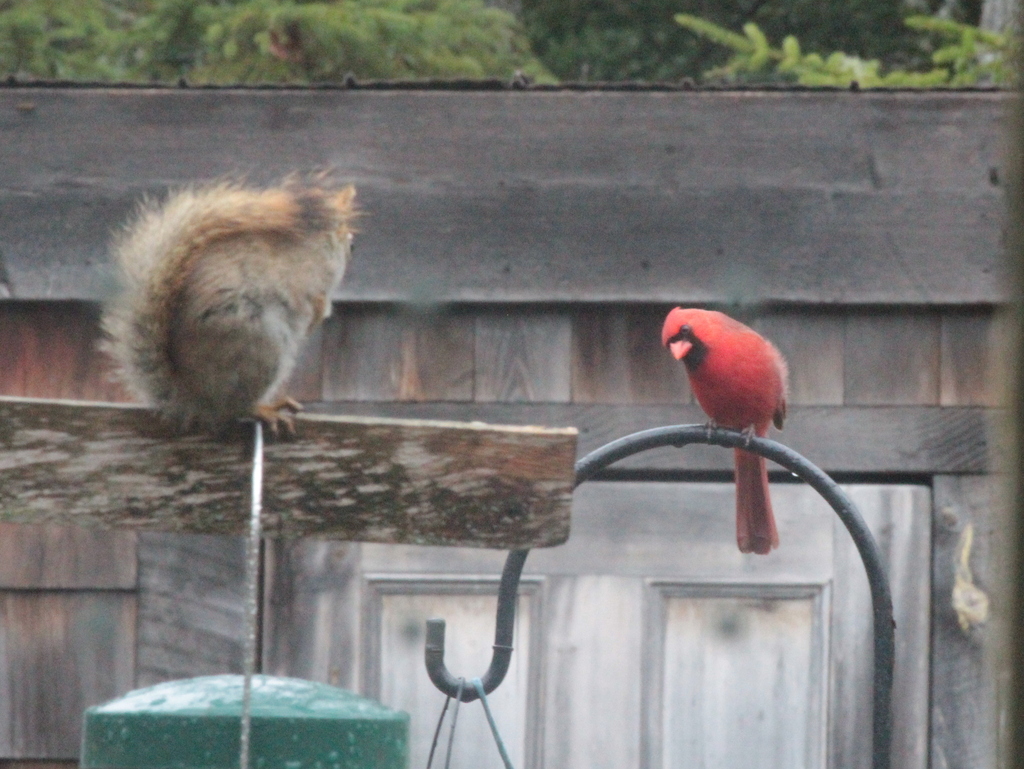
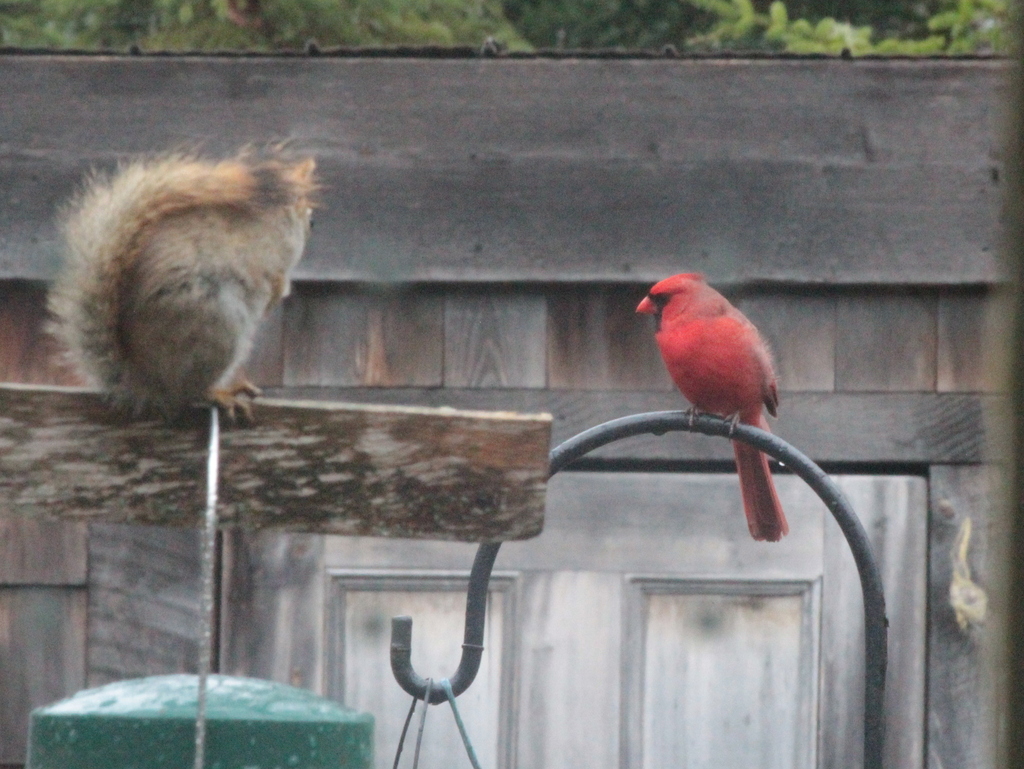
Hill Craddock · CC BY 4.0
Related Species

Was this profile helpful?